
Indiana Student Travel Wave Triggers Unprecedented Excursions Expansion Across Historic Wilderness Hubs And State Landscapes

Published
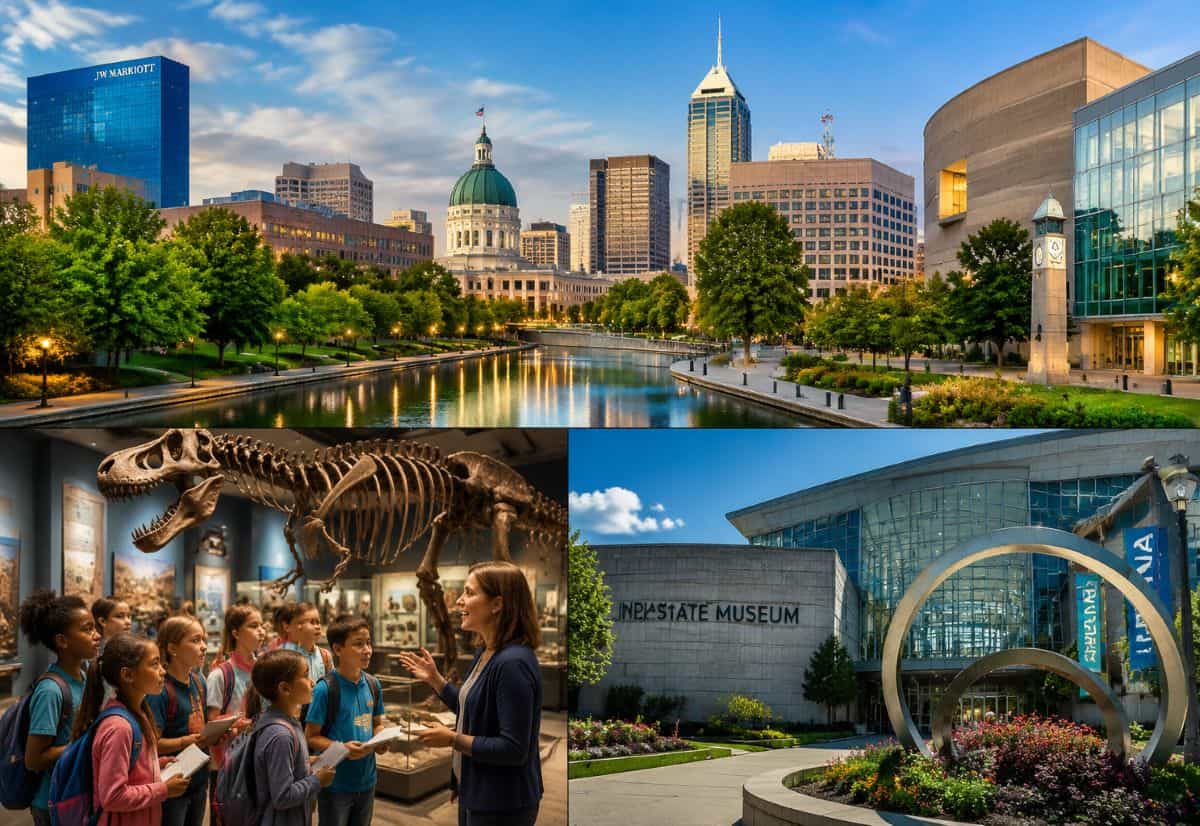
Waking up early to step off a noisy school bus and arriving at the Devonian fossil beds at Falls of the Ohio State Park, or listening to a quiet room full of teenagers gasp as a red fox runs through the tallgrass prairie at Prophetstown, are magical experiences that were once school field trips only a few lucky Hoosier kids got to experience. That magic, however, is now a daily occurrence for thousands of kids across the state, because Indiana’s state parks were able to offer field trip experiences to 5,623 schools in 2025. The state of Indiana broke attendance records for state parks, showing that learning doesn’t have to happen in one of the four walls of your classroom. Inspired by the efforts of park naturalists and community partners, Indiana made its green space available to its residents, and offered field trip opportunities to explore the wilderness. This report aims to celebrate the child that may have never come in contact with nature, those that may have muddy boots, and that unforgettable moment when a child actually experiences living history.
What Record Did Indiana Set for Outdoor Educational Excursions in 2025?
Indiana achieved an extraordinary milestone during the 2025–2026 academic cycle by setting an all-time record for student participation in outdoor educational field trips. Official reports released by the Indiana Natural Resources Foundation, working in direct partnership with the Indiana Department of Natural Resources, confirm that exactly 5,623 K–12 students ventured across state park lands. This impressive figure marks the highest single-year student arrival count in the history of the Discover the Outdoors initiative, underscoring a growing commitment to experiential outdoor education across the state.
A total of 63 primary and secondary schools received financial support, granting thousands of young scholars the opportunity to replace traditional classroom instruction with hands-on learning in natural environments. By trading textbook lessons for living ecological laboratories, students engaged directly with local wildlife habitats, botanical ecosystems, and complex regional geology. This monumental attendance record demonstrates how structured, state-backed conservation programs can effectively expand educational outreach while fostering a lifelong appreciation for natural resources among the youth of Indiana.
Advertisement
Advertisement
How Was Grant Funding Allocated via the Discover the Outdoors Program in Indiana?
The Indiana Natural Resources Foundation successfully distributed $27,691 in direct financial grants through the Discover the Outdoors program to eliminate long-standing logistical hurdles. By specifically targeting transportation and entrance costs, the initiative ensured that public, private, parochial, and home-school groups from varied socio-economic backgrounds could participate equally in off-site outdoor learning. Individual grant awards were capped at $500 per school application, offering crucial financial assistance that directly absorbed the rising costs of field trip logistics.
Advertisement
Advertisement
The allocation of these funds primarily prioritized bus transportation expenditures, which historically represent the single largest financial obstacle for school districts planning external excursions. In addition to covering transit costs, the grants offset mandatory park registration fees and provided essential classroom field supplies for interactive experiments. By removing these financial burdens from local school budgets and family households, Indiana established an accessible model that allowed educators to design comprehensive, real-world science curricula without financial constraints.
Which Key Destinations Received Student Excursion Arrivals Across Indiana State Parks?
Student excursion groups traveled across several flagship park properties managed by the Indiana Department of Natural Resources, immersing themselves in diverse ecological settings. Among the most popular destinations was Indiana Dunes State Park, situated along the dramatic southern shore of Lake Michigan, where students studied coastal dune ecology and rare plant biodiversity. Down along the southern border at Falls of the Ohio State Park, young researchers explored 386-million-year-old Devonian fossil beds embedded directly along the riverbank.
Further inland, groups explored the subterranean world of Spring Mill State Park, famous for its karst cave ecosystems and preserved 19th-century pioneer village. Meanwhile, Lincoln State Park welcomed classes to learn about forest conservation while walking the historic boyhood grounds of Abraham Lincoln, and Prophetstown State Park introduced students to native tallgrass prairies and rich indigenous history. Each distinct destination offered specialized, curriculum-aligned interpretive programs led by expert state park naturalists, successfully bridging the gap between theoretical science instruction and dynamic real-world exploration.
How Are Cultural and Historical Institutions Supporting Indiana Classrooms?
Beyond the sprawling borders of state parks, state-supported cultural institutions actively reinforce classroom education through structured, standards-aligned educational excursions. The Indiana State Museum and Historic Sites network offers dedicated group admission pricing ranging from $5 to $7 per student, accommodating group sizes from 15 to 220 learners per session. Key annual programs, such as Statehood Day celebrations, the Eco-Science Challenge, and interactive STEM workshops, allow students to deepen their understanding of scientific discovery and state history.
Advertisement
Advertisement
Regional cultural landmarks, including the Minnetrista Museum and Gardens in Muncie, deliver specialized curricula designed for Pre-K through Grade 12 learners. These tailored programs focus on Indiana’s native flora, regional wildlife habitats, and important industrial heritage, offering a balanced perspective on environmental and local history. By integrating indoor museum exhibits with hands-on workshops, these institutions complement outdoor park visits, providing schools with a holistic approach to history, art, and scientific research.
What Is the Economic Impact of Group Travel and Student Tourism in Indiana?
Educational field trips represent a vital economic driver within Indiana’s broader travel, hospitality, and tourism sectors. According to annual economic data published by the Indiana Destination Development Corporation, overall statewide visitation reached an astounding 83 million visitors, generating $16.9 billion in total economic impact. Student group travel plays an essential, sustained role in this overall growth, driving consistent visitation to regional state parks, historical sites, and surrounding commercial corridors.
The financial ripple effects of school excursions extend directly into rural communities adjacent to major state park destinations. School buses and private charter fleets require fuel, maintenance, and parking services, generating steady revenue for local transit providers and service stations. Furthermore, student groups support regional food establishments, retail shops, and park visitor centers, while mandatory entrance fees flow directly back into park infrastructure maintenance, conservation efforts, and site preservation jobs.
How Do Indiana Privacy Laws Protect Student Field Trip Data?
While state agencies carefully track aggregate attendance and economic impact numbers, individual student identities and location logs remain protected under strict legal frameworks. Indiana Code § 5-14-3, known as the Access to Public Records Act, governs the release of public information while strictly safeguarding confidential student data from public disclosure. This state regulation ensures that educational records, daily travel rosters, and personal details remain secure from unauthorized external access.
Advertisement
Advertisement
Complementing state regulations, the federal Family Educational Rights and Privacy Act strictly limits educational institutions from releasing identifiable student tracking data or field trip itineraries. Consequently, state agencies present field trip metrics exclusively through anonymized summary totals and overall grant program statistics. This dual-layer legal protection maintains complete public transparency regarding how state grant funds are spent while ensuring the personal privacy and safety of participating students.
How Do Outdoor Excursion Curricula Align with Indiana State Education Standards and Hands-On STEM Learning Objectives?
Educational field trips across Indiana are carefully structured to mirror classroom academic frameworks rather than serving as simple recreational outings. State park naturalists collaborate with educators to map every outdoor activity directly to the Indiana Academic Standards for Science and Social Studies, ensuring that students engage in rigorous, curriculum-aligned learning. Through targeted funding like the Indiana Department of Education’s STEM Integration Grant, schools across K–12 grade levels receive vital financial support to pursue problem-based experiential learning outside traditional classroom environments.
This deliberate alignment between outdoor exploration and formal education yields significant academic depth across every park visit. Over 85% of state park interpretive programs incorporate hands-on STEM modules, allowing students to conduct real-world scientific investigations. Young scholars perform water quality testing in local watersheds, classify ancient Devonian fossils, and measure tree canopy density in native forests. By transforming natural reserves into active field laboratories, Indiana ensures that experiential learning directly reinforces core academic competencies in life sciences, geology, and environmental stewardship.
What Seasonal Patterns and Peak Arrival Windows Define Indiana School Excursions Throughout the Academic Calendar?
Student group arrivals at Indiana state parks and cultural heritage sites follow distinct seasonal rhythms dictated by the primary school calendar. The annual excursion schedule peaks during two primary windows: early autumn, from September to October, when autumn ecology and plant biology studies take center stage, and late spring, from April to May, as schools conclude their academic year with immersive field studies. During these months, park facilities experience a substantial influx of school buses, requiring precise logistical scheduling to balance educational access with natural conservation.
Advertisement
Advertisement
To prevent environmental degradation and maintain high-quality educational experiences, state park naturalists rigorously manage visitor density and group movements. Official state park system records reveal that up to 65% of all annual student arrivals occur within a concentrated eight-week window between mid-April and late May. On peak days during this spring rush, major educational hubs accommodate up to 800 students simultaneously, utilizing staggered arrival schedules and rotating activity stations to protect delicate natural habitats while delivering rich educational instruction.
How Does Student Group Travel Generate Micro-Economic Growth and Local Revenue Across Indiana Rural Gateway Towns?
The economic footprint of school excursions extends far beyond park boundaries, providing vital financial support to the small towns and rural communities surrounding Indiana state parks. According to survey data from Indiana State Parks, visitors spend between $191 million and $344 million annually in surrounding gateway communities. While individual student spend is modest, the cumulative volume of group travel creates a steady economic multiplier effect that supports small, family-owned businesses during off-season travel periods.
Student groups actively generate local commerce through essential trip spending, driving sales for charter bus fuel stations, local lunch spots, family diners, and regional suppliers. Out-of-county school excursions contribute an estimated $15 to $22 per student per day in direct local spending on food, transit fuel, and facility site fees within a 15-mile radius of state parks. This continuous flow of educational visitors serves as a reliable micro-economic engine for rural gateway towns, helping sustain local employment and commercial stability throughout the academic year.
What Do Institutional Records Reveal About Student Attendance Trends at the Indiana State Museum and Regional Historic Sites?
Beyond outdoor state parks, state-funded cultural institutions play an essential role in accommodating student groups and enriching classroom learning. Official year-end records from the Indiana State Museum and Historic Sites confirm total annual attendance reaching 167,567 visitors, with dedicated school tour attendance jumping 6.8% to reach 45,251 students. These figures demonstrate a robust post-pandemic recovery in institutional field trips, reflecting a growing demand for hands-on history and scientific exhibits among regional educators.
Advertisement
Advertisement
To ensure equitable access for all school districts regardless of socio-economic standing, state cultural institutions maintain dedicated group admission pricing structured between $5 and $7 per student. This accessible price point allows underfunded rural and urban schools to participate in signature educational events such as Statehood Day and specialized hands-on STEM workshops. Notably, formal school tours accounted for over 27% of total museum attendance, highlighting that structured educational visits constitute the operational backbone of Indiana state cultural and historic sites.
What Ecological Benefits and Conservation Outcomes Stem from Immersive Outdoor Education Initiatives in Indiana?
Immersive field trips instill long-term environmental responsibility by connecting classroom concepts to active conservation practices. At flagship destinations like Indiana Dunes State Park and Prophetstown State Park, naturalists guide students through essential environmental principles, including leave-no-trace ethics, native tallgrass prairie restoration, and invasive species management. These direct experiences teach students the ecological value of biodiversity while highlighting the active management required to preserve public lands.
In addition to classroom learning, educational field trips generate immediate ecological benefits through group transportation and volunteer work. Utilizing consolidated charter bus transit significantly lowers the net carbon footprint per student compared to individual family vehicle trips to park locations. Furthermore, participating student groups contribute over 2,500 cumulative hours of hands-on habitat restoration and trail maintenance during guided park visits annually, actively aiding park staff in preserving native ecosystems for future generations.
How Are Transportation Grants and Bus Logistics Structured to Overcome Geographic and Financial Isolation for Indiana Schools?
Transportation logistics represent one of the most formidable financial hurdles for schools planning off-site educational trips. Charter and standard school bus transit expenses account for up to 70% of total field trip costs, frequently preventing rural and underfunded inner-city districts from accessing distant state parks and cultural monuments. Without dedicated financial assistance, geographic isolation creates severe disparities in experiential learning opportunities for students across the state.
Advertisement
Advertisement
The Indiana Natural Resources Foundation addresses this structural barrier directly through its Discover the Outdoors grant initiative, capping individual school awards at up to $500 to cover fuel, driver stipends, and mileage fees. Data shows that over 78% of total grant funds, amounting to $27,691, were remitted directly to school district transportation departments. This critical funding offset an average travel radius of 45 to 80 miles per excursion, enabling isolated student populations to travel to remote state natural landmarks without placing financial stress on district budgets or families.
How Do State Data Privacy Frameworks and Legal Statutes Protect Student Security During Large-Scale Excursions?
Managing large-scale student travel requires balancing public operational transparency with strict legal protections for child safety. State agencies coordinate trip tracking under the guidance of Indiana Code § 5-14-3, known as the Access to Public Records Act, alongside federal guidelines set by the Family Educational Rights and Privacy Act. These legal frameworks dictate how public agencies collect, store, and report visitor metrics without compromising student identity or safety.
Under these legal protections, sensitive travel details including exact arrival schedules, student names, and real-time transit rosters are legally exempt from open public records requests. To maintain total transparency regarding public expenditure while fully safeguarding student security, state agencies report performance metrics using 100% anonymized aggregate data. By tracking only grant allocation totals, participating school district identities, and overall headcount metrics, Indiana ensures complete fiscal accountability while protecting personal student privacy.
A Legacy Written in Muddy Boots and Starlit Skies
At the end of every school year, textbook lessons get pushed further and further down the list of priorities for school administrators. When Indiana’s state parks finally regain their quiet after end of the year school bus excursions to the thirty three new state parks, the record breaking attendance for the 2025 season is documented in the memories of the 5,623 school children. This year wasn’t typical for most of these students. For most, this year signaled the beginning of a connection to the real, ancient, and amazing natural world in a way that drew them away from their virtual reality.
Advertisement
Advertisement
Indiana knocked down barriers of financial and economic funding to allow school children to step outside of the confines of four classroom walls. It wasn’t enough to set a new attendance record. The record setting investment of $27,691 in grants established a value on curiosity, wonder, and a sense of stewardship for the natural world. The investment bought smiles, muddy boots, and confidence. The lessons learned beneath the Midwestern Skies will be remembered for years to come.
Frequently Asked Questions (FAQs)
- Q1: What is the Discover the Outdoors grant program?
A: It is a grant program managed by the Indiana Natural Resources Foundation and Indiana State Parks that provides funding of up to $500 per school to cover transportation, entrance, and material costs for K–12 outdoor field trips.
- Q2: How many students participated in Indiana’s outdoor state park excursions in 2025?
A: A program-record 5,623 students across 63 schools participated in funded outdoor educational excursions during the 2025 academic period.
- Q3: Which Indiana state parks hosted the largest educational groups in 2025?
A: Key destination parks included Indiana Dunes State Park, Falls of the Ohio State Park, Spring Mill State Park, Lincoln State Park, and Prophetstown State Park.
- Q4: How does student group travel impact Indiana’s broader economy?
A: Educational group travel forms an integral part of Indiana’s tourism sector, which saw 83 million total visitors spend $16.9 billion statewide. Field trips generate revenue for regional transport, hospitality, and park conservation programs.
- Q5: Are individual student field trip records accessible to the public?
A: No. Under Indiana Code § 5-14-3 (APRA) and federal FERPA laws, individual student records and personal travel logs are confidential. Only anonymized, aggregate data is released by state agencies.
Advertisement
