

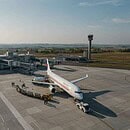
Image generated with Ai
A major schedule shake-up hit the busy East Coast corridor today after an emergency route adjustment changed hundreds of journey plans. American Airlines flight AA1556 from Boston to Washington diverts to Philadelphia International Airport, United States: what you need to know about this 14 July air travel disruption focuses on safety first.
The aircraft initially departed Logan Airport as scheduled but changed course mid-flight to land safely in Pennsylvania instead. Passengers faced immediate schedule delays while operations staff scrambled to re-route connecting passengers during this active travel event.
Advertisement
American Airlines flight AA1556 from Boston to Washington has unexpectedly diverted to Philadelphia International Airport due to air traffic control constraints and dynamic East Coast weather shifts. Operating an Airbus A319 with the registration N716UW, the flight departed Logan International Airport at 10:57 AM but altered course mid-flight, safely landing in Philadelphia at 12:33 PM instead of reaching its destination at Reagan National Airport.
Air traffic management systems frequently redirect commercial aircraft when localized congestion or adverse meteorological conditions drop landing capacities at congested urban hubs. The flight corridor between Boston and Washington remains one of the most heavily trafficked sectors globally, meaning minor disruptions prompt immediate contingency protocols. When Reagan National Airport faces reduced arrival rates, aircraft are systematically held or rerouted to nearby alternate hubs to ensure fleet safety.
Advertisement
Advertisement
Pilots and dispatchers constantly calculate changing parameters to optimize passenger safety while minimizing lengthy airborne holding patterns. By executing a calculated turn toward Philadelphia, the cockpit crew ensured they maintained required fuel reserves while landing at a fully equipped major hub. This prompt operational choice prevented unnecessary holding loops over the capital region, effectively keeping the airframe adaptable for rapid turnaround scheduling.
Commercial airlines execute diversions under strict regulatory frameworks dictated by both company policy and national aviation authorities. A complex communication network links the operating cockpit crew directly with regional air traffic control units and corporate dispatch stations during transit. Once an alternative runway becomes necessary, the system evaluates runway lengths, local engineering support, and immediate terminal gate availability before committing to a landing site.
The choice of Philadelphia International Airport provided American Airlines with optimal logistics due to their massive, pre-existing hub infrastructure there. By rerouting a mainline Airbus A319 to a station heavily populated by familiar ground crews, the carrier minimized the technical friction commonly associated with remote unscheduled landings. These tactical decisions allow ground operations to rapidly process passengers, replenish aircraft consumables, and coordinate onward regional travel seamlessly.

Image generated with Ai
A single diverted aircraft triggers an immediate logistical domino effect that influences downstream flight rotations across multiple coastal cities. Because commercial airliners are scheduled across tightly integrated multi-leg journeys, an disruption in the morning compromises subsequent afternoon departures. Crew duty limitations established by aviation watchdogs further complicate recovery plans, as delayed crews risk exceeding their legal operating hour thresholds.
Airlines rely on sophisticated scheduling software to swap airframes or call in reserve staff to contain network wide scheduling contamination. When N716UW landed unexpectedly in Pennsylvania, tracking systems immediately calculated how to best reallocate that specific hull for its upcoming regional assignments. Through careful management, carriers successfully isolate localized travel disruptions, preventing isolated terminal delays from escalating into widespread multi-hub system cancellations.
Managing a sudden aviation detour requires massive system-wide coordination across multiple states to reduce operational network friction. Affected travellers received direct gate updates while ground handling personnel quickly processed baggage and coordinated onward transit options.
While unforeseen diversions trigger temporary frustrations, they highlight the strict safety cultures that dictate modern commercial aviation networks. Carriers continue to refine their reactive logistics software to map quicker recovery flights for future passengers. Safe alternative landings remind the public that weather and congestion management remain paramount parameters for every single trip.
Managing a sudden aviation detour requires massive system-wide coordination across multiple states to reduce operational network friction. Affected travellers received direct gate updates while ground handling personnel quickly processed baggage and coordinated onward transit options. While unforeseen diversions trigger temporary frustrations, they highlight the strict safety cultures that dictate modern commercial aviation networks. Carriers continue to refine their reactive logistics software to map quicker recovery flights for future passengers. Safe alternative landings remind the public that weather and congestion management remain paramount parameters for every single trip.
Advertisement
Tags: AA1556, American Airlines, aviation news, flight diversion, philadelphia international airport
Advertisement
Advertisement













Friday, September 4, 2026
Friday, September 4, 2026

Friday, September 4, 2026

Friday, September 4, 2026

Thursday, September 3, 2026

Wednesday, September 2, 2026

Friday, September 4, 2026

Friday, September 4, 2026


