
Belgium Aligns With Germany, France, Greece, Italy, Luxembourg, Norway, Sweden, Spain and More as UK Travellers Face £17 EU Entry Shock Under New ETIAS Travel Rules Across Schengen Zone

Published
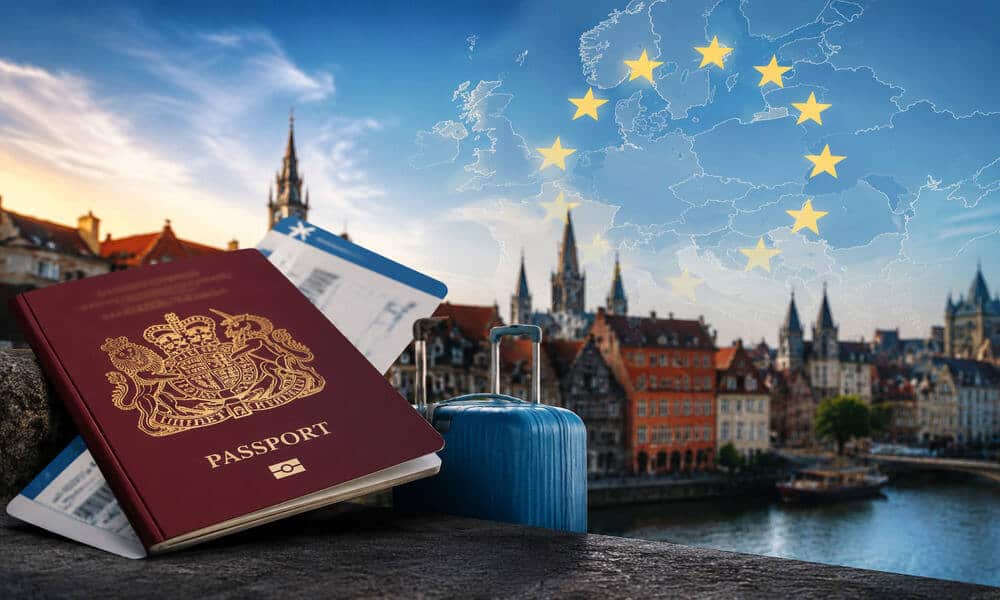
British passport holders will soon face a new mandatory entry requirement when travelling across much of Europe, as the European Union prepares to introduce a revised travel authorisation system designed to strengthen border security and streamline entry procedures across the Schengen Area.
The new framework, known as the European Travel Information and Authorisation System (ETIAS), will require visa-exempt travellers, including UK citizens, to obtain prior approval before entering participating European countries. The system introduces a fee of €20 (approximately £17) per applicant, replacing earlier expectations that the charge would be around €7.
The measure will affect millions of British travellers annually and marks one of the most significant post-Brexit changes to short-stay European travel.
What is the new ETIAS system and why is it being introduced?
The European Travel Information and Authorisation System (ETIAS) is a pre-travel screening mechanism created by the European Union to assess travellers from visa-free countries before they enter the Schengen Area.
Advertisement
Advertisement
The system is designed to:
- Improve border security
- Identify potential security or irregular migration risks before arrival
- Strengthen data-sharing across EU member states
Authorities within the EU describe ETIAS as a digital pre-approval tool rather than a visa. It is expected to operate fully online, with most applications approved within minutes, although some may require additional checks.
Advertisement
Advertisement
The system applies specifically to short-stay visits, allowing entry for tourism, business, or transit purposes.
How much will British travellers need to pay?
Under the finalised structure, applicants will be required to pay €20 (around £17) per application.
Key cost rules include:
- Standard fee: €20 / £17 per person
- Children: Exempt from payment
- Travellers aged over 70: Exempt from payment
- Validity period: up to 3 years or until passport expiry, whichever comes first
Once approved, the authorisation allows multiple entries into participating countries without needing to reapply each time.
When will ETIAS become mandatory?
The rollout of ETIAS has been repeatedly delayed due to technical and operational readiness issues across the EU border systems.
Current implementation timeline:
Advertisement
Advertisement
- Expected launch: Final quarter of 2026
- Transitional period: Short grace phase after launch
- Full enforcement: From 2027 onwards
During the initial phase, travellers may still be allowed to enter without ETIAS while authorities phase in compliance checks. However, once fully active, it will become a compulsory pre-travel requirement.
How long can travellers stay under ETIAS?
The authorisation does not change existing short-stay rules within Europe.
Travellers will still be allowed to stay:
- Up to 90 days within any 180-day period
- Across participating countries in the Schengen Area
This means frequent short trips are permitted, but long-term stays will still require separate visas or residency permissions depending on destination rules.
Which countries will require ETIAS approval?
Once implemented, the ETIAS requirement will apply to UK passport holders travelling to the following destinations:
- Austria
- Belgium
- Bulgaria
- Croatia
- Czech Republic
- Denmark
- Estonia
- Finland
- France
- Germany
- Greece
- Hungary
- Iceland
- Italy
- Latvia
- Liechtenstein
- Lithuania
- Luxembourg
- Malta
- Netherlands
- Norway
- Poland
- Portugal
- Romania
- Slovakia
- Slovenia
- Spain
- Sweden
- Switzerland
In addition, Cyprus is expected to join the scheme once it becomes part of the Schengen Area, expanding the reach of the system further.
Advertisement
Advertisement
What does this mean for UK holidaymakers?
The introduction of ETIAS represents a structural shift in post-Brexit European travel. While UK travellers will still enjoy visa-free access to much of Europe, the process will no longer be entirely automatic.
Key implications include:
- Additional pre-travel step for all eligible travellers
- Mandatory digital application before departure
- Slight increase in overall travel costs due to the £17 fee
- Requirement to ensure passport validity aligns with ETIAS approval period
Although the system is not expected to be complex, it introduces an administrative layer that did not exist for UK travellers prior to Brexit.
How ETIAS fits into Europe’s wider border strategy
The ETIAS system is part of a broader EU initiative to modernise external border control using digital systems and data-driven security screening.
It operates alongside other planned infrastructure upgrades such as biometric entry-exit tracking systems. Together, these measures aim to create a more centralised and automated border management framework across participating states.
Officials argue that these systems will improve efficiency while maintaining freedom of movement within the Schengen Area once travellers have been pre-screened.
Advertisement
Advertisement
What travellers should prepare for before 2027
As implementation approaches, UK travellers planning European trips should be aware of several practical considerations:
- Ensure passports remain valid for the entire ETIAS approval period
- Expect online applications before travel begins
- Factor in processing time during peak travel seasons
- Budget for the €20 (£17) application fee
While ETIAS is not expected to significantly restrict travel, it will formalise a new step in the journey process for millions of visitors.
Conclusion
The introduction of the European Travel Information and Authorisation System (ETIAS) marks a major change in how UK travellers access Europe. With a mandatory fee of €20 (£17), a validity of up to three years, and coverage across the Schengen Area, the system will reshape short-term European travel from 2026–2027 onwards. Although designed to enhance border security and streamline entry procedures, it introduces an additional requirement that British holidaymakers will need to integrate into their travel planning for every future European trip.
Advertisement
