
Ljubljana Goes Hand in Hand with Montenegro and More Countries to Fuel Croatia Tourism Takeoff as Cross-Border Adventures Attract More Travellers

Published
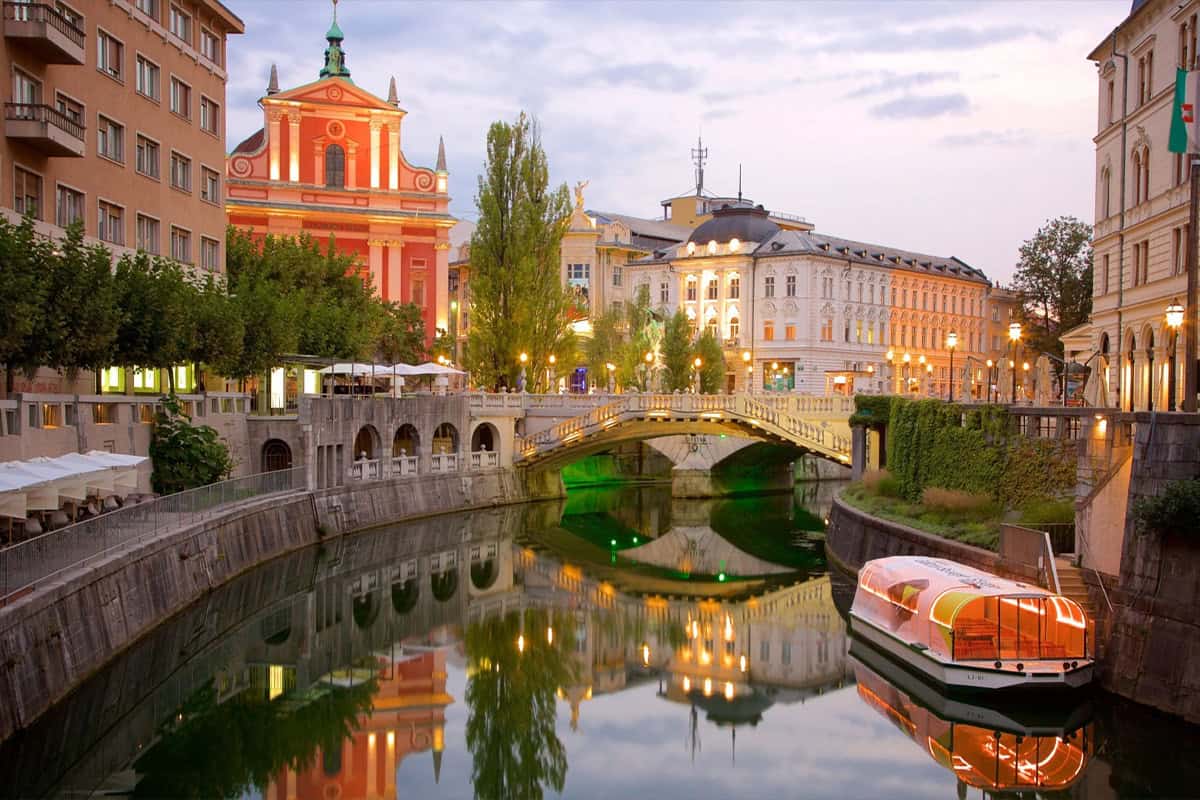
The collaboration between Slovenia, Croatia, and Montenegro has changed multidestination travel in Europe and shows what travelers can expect in the future from the different countries in the Mediterranean. Because of investments in sustainable development, better policies and effective collaboration, the advantages of the region have fast-tracked the development of the Croatian tourism industry. With the available data from September 2026, the project partners predicted further economic growth because of improved connectivity and transport in the region. The Western Balkans have numerous untapped tourist attractions and the potential to develop even more. The region continues to attract a larger number of tourists each year and can become an ideal place for cross-border cooperation. The area is bound to see continuous development as countries along the Adriatic Coast prioritize tourism to positively impact their economy.
The Dawn of a Regional Golden Age in the Adriatic
For decades, the Adriatic coastline has been fragmented by national borders, distinct currencies, and varying visa regulations, which traditionally forced international visitors to select a single destination for their summer holidays. However, the travel landscape of the Western Balkans has undergone a radical and highly lucrative transformation. A historic shift towards collaborative, multi-destination travel itineraries has permanently altered how global tourists consume the Mediterranean experience. As travellers increasingly reject isolated resort stays in favour of expansive, cross-border cultural adventures, a powerful tri-nation synergy has emerged. The strategic alignment of Slovenia, Montenegro, and Croatia has fundamentally dismantled old barriers, giving rise to an interconnected tourism powerhouse.
This structural evolution is not merely a post-pandemic recovery phase; it is a permanent realignment of European travel mechanics. By heavily promoting the seamless transition from the alpine elegance of Ljubljana to the rugged, dramatic fjords of Montenegro, regional tourism boards have strategically anchored Croatia as the indispensable geographical and cultural hub of the Adriatic. This cooperative framework has directly fuelled the Croatia Tourism Takeoff, transforming the nation from a standalone summer hotspot into the epicentre of a pan-Balkan travel network.
The integration of Croatia into the Schengen Area and the Eurozone laid the vital groundwork for this seamless movement. International visitors arriving in Ljubljana or Podgorica no longer view Croatia as a separate logistical hurdle, but rather as the logical, frictionless continuation of their journey. Consequently, travel agencies and global tour operators have aggressively pivoted towards selling the “Adriatic Corridor,” a comprehensive travel package that leverages the contrasting topographies of all three nations. This unified approach has diluted the negative impacts of hyper-seasonality, spreading visitor numbers more evenly across the calendar and deeply enriching the macro-economic stability of the entire region.
Advertisement
Advertisement
Record-Breaking Statistics: Quantifying the Croatia Tourism Takeoff
To truly comprehend the magnitude of the Croatia Tourism Takeoff, one must examine the verified data released by the Croatian Bureau of Statistics (DZS). The finalised figures for the 2025 tourist season shattered all historical precedents, registering a staggering 94.8 million overnight stays—the highest volume ever recorded in the history of the republic. This represented a robust 4% year-on-year growth compared to 2024, translating to an additional 3.6 million overnight stays. Furthermore, tourist arrivals surged to a record 21.4 million, marking a 5.2% increase from the previous year.
The momentum generated in 2025 has seamlessly cascaded into 2026. Official reports confirming the performance of the first half of 2026 reveal that Croatia welcomed over 7.6 million visitors, generating 29.5 million overnight stays. In July 2026 alone, tourist arrivals peaked at 4,065,279, a sharp acceleration from the 2.58 million recorded in June 2026. These colossal figures underscore the relentless demand for the Croatian coast.
Advertisement
Advertisement
Split-Dalmatia and the Dominance of Private Accommodation
Diving deeper into the DZS statistics, the geographical distribution of this tourism boom highlights specific epicentres of activity. Split-Dalmatia County emerged as the undisputed champion of the 2025 season, securing 12 million overnight stays. This singular region now accounts for an astonishing 32.4% of all overnight stays within Croatia, comfortably outpacing the Istrian County (10.1 million) and Primorje-Gorski Kotar (9.8 million). The Makarska Riviera alone contributed 2.8 million overnights, cementing its status as the busiest sub-destination.
Equally significant is the structural composition of the accommodation sector. The latest data confirms a profound shift in consumer preference, with private accommodation—spanning apartments and holiday homes—now accounting for 65% of all overnight stays in Croatia. This dwarfs the market share of traditional hotels, which captured 28%, and campsites at 7%. This overwhelming preference for private lodging perfectly complements the multi-destination travel trend, as cross-border road-trippers favour the flexibility, affordability, and localised experience that independent apartments provide when moving frequently between Slovenia, Croatia, and Montenegro.
Advertisement
Advertisement
Slovenia’s Strategic Role: Ljubljana as the Northern Gateway
The narrative of the Croatia Tourism Takeoff is inextricably linked to the economic and logistical contributions of its northern neighbour, Slovenia. Far from competing in a zero-sum game, the Slovenian Tourist Board (STO) and the Statistical Office of the Republic of Slovenia (SURS) report statistics that directly complement Croatia’s success. In 2025, Slovenia experienced its own record-breaking year, welcoming 7.0 million international and domestic tourists, representing a 6.2% increase over 2024.
This growth has continued aggressively into 2026. Between January and July 2026, Slovenia recorded 3.21 million foreign tourist arrivals, a 7.4% year-on-year increase. Ljubljana and the surrounding mountain municipalities serve as the perfect cultural and alpine prelude for international tourists who eventually migrate south toward the Croatian coastline. The spatial patterns of tourism demand in Slovenia show that foreign visitors overwhelmingly favour the capital city and the Julian Alps. Once they have consumed this alpine experience, the frictionless Schengen border allows them to effortlessly transit into Croatia’s Istrian peninsula or the Kvarner Gulf.
Slovenian Residents Fuelling Croatian Shores
Beyond acting as a transit hub for global tourists, Slovenia itself is one of the most critical source markets fuelling the Croatia Tourism Takeoff. According to SURS data published in September 2026, Slovenian residents are travelling in massive numbers. In the second quarter of 2026 alone, 816,000 Slovenian residents—representing 46% of the population aged 15 or more—made at least one tourist trip.
Crucially, when Slovenians travel abroad for private trips, Croatia is their undisputed destination of choice. SURS confirms that an overwhelming 54% of all private trips made abroad by Slovenians in Q2 2026 were to Croatia, completely dwarfing Italy (12%) and Bosnia and Herzegovina (9%). Within Croatia’s national statistics, Slovenians rank as the second-largest foreign market, accounting for 12% of all foreign overnights in 2025, sitting just behind Germany (18%). The intertwined nature of these two economies means that a prosperous Slovenia directly guarantees a bustling Croatian coastline.
Advertisement
Advertisement
Montenegro: The Eastern Pillar of the Multi-Destination Strategy
While Slovenia anchors the northern entry point, Montenegro serves as the vital southern extension of the Adriatic corridor. The spectacular geography of the Bay of Kotor, situated mere kilometres from the Croatian border, provides a natural continuation of the Dalmatian coast. The Statistical Office of Montenegro (MONSTAT) reported highly impressive figures for the 2025 season, logging 2,728,564 tourist arrivals and an exceptional 15,367,166 overnight stays.
Montenegro’s appeal lies in its compact yet dramatically diverse topography. It offers a powerful contrast of UNESCO-protected coastal heritage sites, expansive wetlands at Lake Skadar, and rugged alpine routes in Durmitor National Park. This density of attractions makes it an ideal two-to-three-day extension for tourists who have just completed a comprehensive tour of Croatia. The synergy between Dubrovnik (Croatia) and Kotor (Montenegro) is arguably the most lucrative cross-border micro-economy in the Western Balkans.
Montenegro’s 2026 Growth Trajectory
The latest MONSTAT releases from the summer of 2026 demonstrate sustained upward momentum. In July 2026, Montenegro witnessed a 4.4% year-on-year rise in tourist arrivals, reaching 244,754 for the month. This followed a robust 5.8% increase in June 2026. Foreign visitors dominate this landscape, accounting for 92.3% of the total arrivals in July.
Interestingly, while the overall numbers are rising, Montenegro shares a similar structural challenge with Croatia: hyper-concentration on the coast. In July 2026, seaside resorts accounted for 82.1% of all arrivals in Montenegro, while the capital region captured 9.4% and mountain resorts just 5.3%. To combat this coastal congestion, both Montenegrin and Croatian tourism boards are actively collaborating to promote cross-border hinterland routes, encouraging tourists to travel inland from the Dalmatian coast directly into the Montenegrin highlands, thereby relieving pressure on the congested coastal highways.
EU Cohesion and the Mediterranean Multi-Programme Mechanism
The Croatia Tourism Takeoff is not solely the result of organic consumer demand; it is heavily engineered and supported by strategic European Union funding and cooperative policy frameworks. One of the most critical developments in 2025 and 2026 has been the operational rollout of the Mediterranean Multi-Programme Mechanism (MMM). This monumental initiative represents a cooperation framework that merges ten distinct Interreg programmes, including Interreg Euro-MED, Interreg Italy-Croatia, Interreg Italy-Slovenia, and Interreg IPA South Adriatic.
The core mandate of this mechanism is to unify sustainable tourism strategies across the Mediterranean, a region that currently absorbs 35% of all international tourist arrivals globally. The Mediterranean is facing acute environmental vulnerabilities, warming approximately 20% faster than the global average. Recognising that isolated national policies cannot solve transnational environmental threats, the MMM has designated sustainable tourism as its primary pilot area of cooperation.
Advertisement
Advertisement
Strategic Alignment on June 16, 2026
The severity and ambition of this initiative were highlighted during a joint coordinated call and information day held on June 16, 2026. This online summit brought together ministries, regional authorities, and tourism boards from Croatia, Slovenia, Montenegro, and Italy to unlock millions of euros in EU Cohesion Policy funding. The funds are strictly earmarked for projects that reduce biodiversity loss, lower water and energy consumption in the hospitality sector, and mitigate the social challenges associated with the seasonal nature of the tourism economy.
By participating deeply in these Interreg programmes, Croatia has secured the financial backing required to upgrade its tourism infrastructure sustainably. This EU-level coordination ensures that as Slovenia, Croatia, and Montenegro heavily promote cross-border travel, they are simultaneously building the green infrastructure required to support the millions of transit passengers moving between their borders.
Government Announcements and Policy Implications
As the Croatia Tourism Takeoff reaches unprecedented heights, national governments are acutely aware that unregulated growth leads to overtourism, infrastructure collapse, and the alienation of local populations. Consequently, 2026 has witnessed a flurry of legislative reforms aimed at reigning in the chaotic elements of the tourism boom.
In March 2026, the Ministry of Tourism and Sport of the Republic of Croatia announced a comprehensive revamp of tourism regulations, introducing strict new guidelines for tourist guides and travel agencies. This initiative, heavily integrated with public consultation, is designed to enforce quality control, protect cultural preservation, and ensure deep community engagement in tourism development. The Croatian government has recognised that to maintain its premium destination status, it must pivot from chasing raw volume to enhancing the qualitative yield of each visitor.
Tackling Overtourism and Apartment Inflation
Perhaps the most aggressive policy interventions have targeted the runaway growth of private accommodations. With private apartments commanding 65% of all overnight stays in 2025, coastal cities have experienced severe housing shortages and property inflation. In response, the Croatian government introduced tougher tourism and property rules in late 2025 and early 2026 to curb coastal apartment inflation and restrict the unbridled conversion of residential units into short-term tourist rentals.
Simultaneously, major destinations have implemented localized restrictions to ensure survivability. The city of Dubrovnik, which recorded 4.2 million overnights in 2025, has strictly enforced limits on cruise ship arrivals to prevent the swarming of its historic UNESCO-protected Old Town. These legislative clampdowns are not designed to halt the Croatia Tourism Takeoff, but rather to domesticate it, ensuring that the wealth generated by the sector does not cannibalise the very local communities it is meant to support.
Advertisement
Advertisement
Economic Implications for the Western Balkans
The financial stakes underpinning this regional travel boom are astronomical. Tourism is not merely a sector of the economy in the Adriatic; it is the fundamental engine of national survival. In 2025, tourism revenues in Croatia reached a staggering 14.2 billion euros, which accounted for an immense 10.7% of the nation’s total gross domestic product (GDP).
Montenegro is even more heavily leveraged on the success of its visitor economy. According to the Central Bank of Montenegro’s annual reports, tourism revenues were equivalent to a massive 19.59% of the country’s estimated GDP. This extreme exposure means that cooperative initiatives with Croatia and Slovenia are matters of supreme national security and economic stability for Podgorica.
Extending the Season and Maximising Yield
One of the greatest economic victories of the cross-border travel strategy has been the successful extension of the traditional tourist season. Historically, the Adriatic economy suffered from a severe boom-and-bust cycle, hyper-concentrated in July and August. However, the promotion of multi-destination, culture-and-nature itineraries has successfully lured demographics that prefer cooler climates and less crowded periods.
This strategy yielded spectacular results in September 2025, which became a record-breaking shoulder-season month for Croatia, registering an 18% increase in overnight stays compared to September 2024. With the Adriatic Sea remaining a balmy 24-26°C, accommodation prices dropping by 30-40%, and restaurants staying open deeper into October, the economic window for wealth generation has expanded significantly. The ability to generate high-yield tourism outside the summer peak is the ultimate hallmark of the Croatia Tourism Takeoff.
Business, Infrastructure, and Aviation Impacts
The sheer volume of human movement between Ljubljana, the Croatian coast, and Montenegro has placed immense strain on existing infrastructure, prompting a wave of business adaptations and state-sponsored upgrades. While the Schengen border removal between Slovenia and Croatia eliminated the infamous summertime traffic bottlenecks at the Bregana and Macelj crossings, the southern border remains a challenge.
The Montenegrin government’s tourism-season coordination body explicitly identified border congestion between Croatia and Montenegro as a major strategic challenge for 2026. The Debeli Brijeg border crossing frequently experiences severe delays during the July and August peaks. To alleviate this, transport ministries are aggressively exploring upgraded ferry links, enhanced regional bus networks, and expanded border processing facilities to ensure the multi-destination narrative does not collapse under logistical friction.
Advertisement
Advertisement
Aviation Expansion and Capacity Limits
Aviation infrastructure is also scrambling to keep pace. Split Airport (SPU), serving the busiest county in Croatia, routinely operates at absolute capacity limits during summer weekends, leading to logistical chaos on the connecting A1 highway. In response, low-cost carriers and legacy airlines are increasingly dispersing their flight networks across the wider region.
Airlines are now heavily promoting “open-jaw” ticketing, where a tourist might fly into Ljubljana Jože Pučnik Airport (LJU) in Slovenia, travel overland down the Croatian coast, and fly out of Tivat (TIV) or Podgorica (TGD) airports in Montenegro. This aviation flexibility is the ultimate facilitator of the Croatia Tourism Takeoff, allowing travel agencies to construct highly efficient, linear itineraries that do not force tourists to backtrack to their original point of entry.
Expert Insights: What the Official Statistical Offices Tell Us
An analysis of the official data from DZS, SURS, and MONSTAT reveals several profound insights regarding consumer psychology in 2026. The Statistical Office of the Republic of Slovenia (SURS) noted a distinct spatial pattern regarding tourist demographics. In their 2025 wrap-up, they observed that while domestic Slovenian tourists heavily favour seaside and spa resorts, foreign tourists visiting Slovenia generated the highest overnight stays in mountain municipalities (35%) and the capital, Ljubljana (20.4%).
This data perfectly illustrates the cross-border pipeline. International tourists arrive in Slovenia explicitly for the alpine and urban cultural experience. Once satiated, they crave the Mediterranean coastline, driving the massive influx of foreign capital into Croatia. Furthermore, SURS data highlighted that tourists aged 35–54 generated the most overnight stays. This demographic typically commands higher disposable income, prefers independent travel, and is highly receptive to renting a vehicle to explore multiple countries, perfectly aligning with the economic objectives of the Croatia Tourism Takeoff.
The Future Outlook: Will the Regional Boom Persist?
As we look toward 2030, the trajectory of the Western Balkan travel sector appears exceptionally robust. The strategic fusion of Slovenia’s green alpine branding, Croatia’s unparalleled maritime infrastructure, and Montenegro’s dramatic untamed beauty has created a composite destination that rivals, and in many ways exceeds, the traditional appeal of Spain, Italy, or Greece.
However, the continued success of the Croatia Tourism Takeoff is entirely dependent on strict adherence to sustainable management. If private accommodation development outpaces municipal infrastructure, or if local populations are priced out of their own coastal cities, the political backlash will be severe. The legislative actions witnessed in 2026—from limiting cruise ships in Dubrovnik to curbing apartment inflation—are highly encouraging indicators that regional governments are taking a mature, long-term view of their most vital industry.
Advertisement
Advertisement
Ultimately, the era of the isolated Adriatic holiday is over. The modern global traveller views the Western Balkans as a unified, brilliantly diverse playground. So long as Ljubljana, Zagreb, and Podgorica continue to harmonise their transport links, environmental policies, and marketing strategies, the Adriatic corridor will remain the undisputed heavyweight champion of European travel.
Advertisement
