 Somudranil Sarkar
Somudranil Sarkar
Somudranil Sarkar
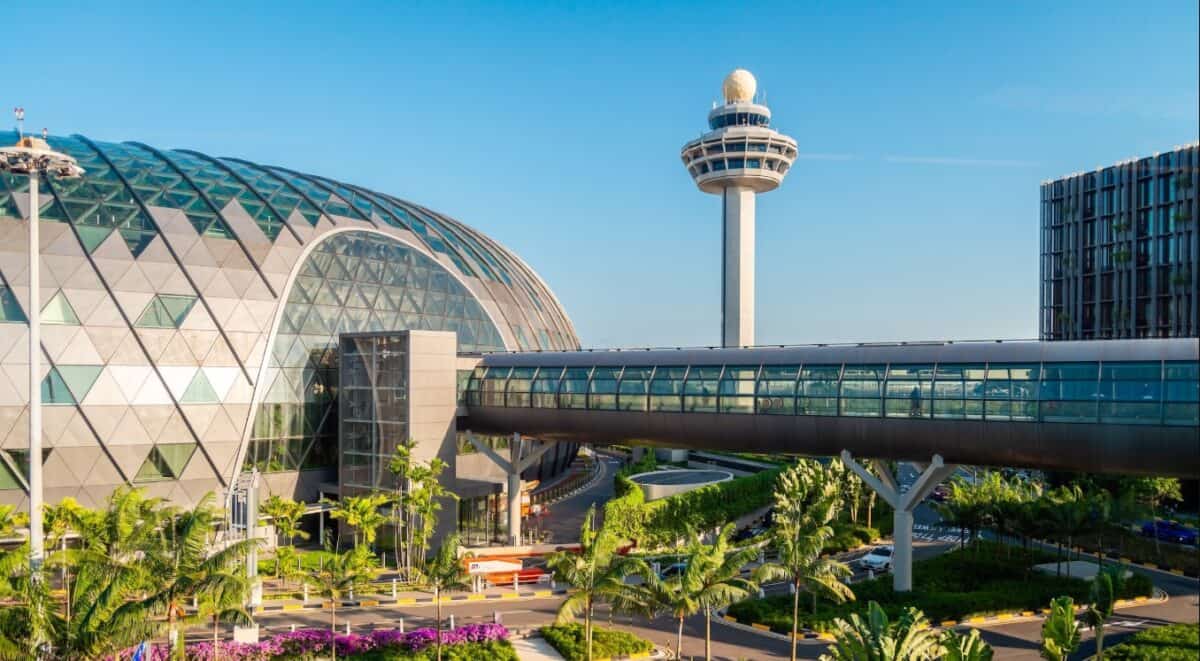
Image generated with Ai
The fluctuation of Changi Airport passenger traffic in 2026 shows Singapore’s aviation sector’s flexibility to changes in an uncertain world. According to recent statistics, Changi Airport clocked about 17.2 million passenger movements in the second quarter of 2026, an almost marginal slow down from the movements in the same period the previous year. The slower market movements are attributable to a combination of strong demand for long-distance travel and extraordinary cargo volume underpinned by semiconductor exports. The volatile nature of jet fuel and geopolitical tensions is perceived to impact regional travel. In response, Singapore is undertaking a multi-pronged intervention to ensure continued competitiveness in the global travel market. The interventions include the massive Terminal 5 project and a raft of other sustainable initiatives.
Singapore’s status as a premier global aviation hub has long been underpinned by strategic foresight, infrastructural excellence, and adaptive policy frameworks. Entering 2026, the Singapore aviation hub transitioned from an era of post-pandemic recovery into a phase of mature, stabilised growth. Following a record-breaking period where passenger numbers soared to an all-time high of approximately 70 million in 2025, industry stakeholders anticipated that 2026 would present a different set of complex challenges. These challenges include fluctuating energy markets, shifting consumer travel behaviours, and acute geopolitical tensions that directly impact international airspace.
Advertisement
The Changi Airport Group (CAG), in close collaboration with the Civil Aviation Authority of Singapore (CAAS), has actively managed these macroeconomic headwinds. Instead of merely chasing volume, the overarching strategy in 2026 has shifted towards sustainable capacity management, optimising network yields, and aggressively expanding the airfreight sector. This strategic pivot ensures that Changi Airport not only maintains its position as the preferred transit hub in the Asia-Pacific region but also insulates the domestic economy from external shocks. The extensive planning behind route development, coupled with heavy investments in technological innovation, sets the stage for a resilient operational year.
The latest data released in mid-2026 provides a comprehensive snapshot of the airport’s performance, highlighting an industry undergoing nuanced recalibration.
Advertisement
Advertisement
During the second quarter (April to June) of 2026, Changi Airport registered 17.2 million passenger movements. This figure represents a slight 1.5 per cent year-on-year contraction compared to the same period in 2025. The dip in Changi Airport passenger movements was directly mirrored by a corresponding decrease in commercial flight activity. Aircraft movements, which comprise both scheduled landings and take-offs, decreased by 1.3 per cent year-on-year, totalling 92,400 for the quarter.
While a quarterly decline often raises concerns, aviation analysts and official authorities interpret this contraction as a natural normalisation following the hyper-accelerated travel demand witnessed in the preceding year. Airlines proactively adjusted their schedules and capacity allocations to safeguard profitability against rising operational expenditures, leading to targeted frequency reductions on specific routes rather than a structural loss of market demand.
Despite the second-quarter slowdown, the broader first-half (H1) performance for 2026 remains in positive territory. Over the first six months of the year, overall passenger traffic grew by 0.4 per cent year-on-year, culminating in 34.8 million passenger movements. This was buoyed by an exceptionally strong first quarter, which saw 17.6 million passenger movements—a 2.3 per cent increase over Q1 2025.
Total aircraft movements for the first half of 2026 stood at 188,000, remaining broadly unchanged and statistically similar to the corresponding period in the previous year. These Changi Airport Group statistics confirm that the fundamental baseline of Singapore’s aviation connectivity remains exceptionally strong. The stability across the first half of the year provides a reliable foundation for tourism and retail sectors that depend heavily on consistent footfall through the airport’s terminals.
Advertisement
Advertisement
The headline figures for Changi Airport passenger traffic 2026 mask significant regional divergences. While some geographical markets experienced acute contractions, others surged ahead, driven by changing consumer preferences and strategic airline deployments.
The most notable downward pressure on Q2 statistics originated from the immediate region. Passenger traffic on Southeast Asian routes fell by 5.0 per cent during the quarter. This decline is primarily attributed to airlines reducing flight frequencies in response to a challenging operating environment characterised by elevated jet fuel prices and fuel supply constraints linked to Middle East geopolitical conflicts.
Low-cost carriers, which dominate the high-frequency Southeast Asian sector, are particularly sensitive to fuel price fluctuations. To maintain healthy profit margins, many regional airlines opted to consolidate their passenger loads onto fewer, larger flights, or temporarily suspend less profitable secondary routes. Despite this targeted contraction, major capital cities in the region continued to drive immense volume. Notably, Kuala Lumpur, Jakarta, Bangkok, and Denpasar (Bali) retained their positions among Changi’s top five busiest passenger routes for the quarter.
Conversely, Changi Airport experienced a robust renaissance in long-haul and medium-haul travel. Traffic to and from Europe surged by an impressive 8.7 per cent in Q2 2026. Similarly, travel to the Southwest Pacific region (including Australia and New Zealand) grew by 3.0 per cent. This growth was facilitated by international airlines strategically adding capacity and deploying larger wide-body aircraft to these regions to optimise their network operations and capture premium leisure and corporate travel demand.
Northeast Asia also demonstrated remarkable resilience, registering a 5.1 per cent growth in passenger traffic. This upswing was underpinned by robust demand on trunk routes connecting Singapore to Shanghai, Taipei, and Tokyo. Among individual markets, Vietnam emerged as the undisputed growth leader, recording a staggering 18.5 per cent year-on-year increase in passenger traffic. China and Japan followed closely, posting healthy gains of 8.3 per cent and 7.0 per cent, respectively. Consequently, China, Indonesia, Australia, Malaysia, and India consolidated their status as Changi’s top five passenger markets for the quarter.
While passenger metrics stabilised, Changi Airport’s cargo sector delivered a stellar performance, establishing itself as a critical growth engine for the broader aviation ecosystem.
In the second quarter of 2026, Changi Airport handled 567,000 tonnes of airfreight, representing a massive 9.8 per cent increase compared to the same period in 2025. This built upon the momentum of the first quarter, which saw 517,000 tonnes handled (a 7.6 per cent year-on-year increase).
The primary catalyst for this unprecedented airfreight boom is the explosive global demand for artificial intelligence (AI) infrastructure. Strong shipments of AI-related semiconductors, high-value electronics, and advanced microchips dominated the outbound and transit cargo flows. Because these highly sensitive, high-value components require rapid, secure transit, airfreight is the only viable logistical solution, rendering the sector highly lucrative for both the airport and cargo operators.
The geographical distribution of cargo highlights Singapore’s vital role in global supply chains. During Q2 2026, Changi’s top five air cargo markets were China, the United States of America, Australia, Hong Kong, and India. To support this soaring demand, the airport actively expanded its dedicated freighter network. A key milestone occurred on 15 June 2026, when Tianjin Air Cargo officially became Changi Airport’s newest freighter operator, commencing dedicated services between Singapore and Haikou.
This continuous enhancement of cargo capacity not only bolsters Changi’s revenue streams but also reinforces Singapore’s strategic positioning as a highly reliable logistics nexus connecting the manufacturing powerhouses of Asia with consumer markets in the West.
The statistical realities of Changi Airport passenger traffic 2026 cannot be fully understood without examining the macro-environmental pressures facing the international aviation community.
According to Changi Airport Group’s Executive Vice President for Air Hub and Cargo Development, Mr Lim Ching Kiat, airlines continue to navigate a highly dynamic and demanding operating landscape. The enduring conflict in the Middle East has heavily disrupted global energy supply chains, leading to acute spikes in jet fuel prices and regional supply constraints.
Furthermore, the geopolitical situation has forced several international carriers to reroute flights to avoid contested airspace. In Q1 2026 alone, passenger traffic between Singapore and the Middle East fell by 80 per cent year-on-year due to widespread flight cancellations and security concerns. Rerouting extends flight times, increases fuel burn, and escalates crew costs, placing immense pressure on airline profitability. The 5 per cent contraction in Southeast Asian traffic is a direct downstream consequence of airlines rationalising their operations to offset these inflated external costs.
To mitigate these challenges, the Civil Aviation Authority of Singapore (CAAS) and CAG have adopted an aggressively proactive stance. The airport authorities are engaged in continuous, active discussions with airline partners to identify viable pathways to restore suspended services as jet fuel prices begin to ease from their earlier peaks.
Concurrently, Changi has maintained its focus on expanding baseline connectivity. The second quarter of 2026 witnessed the successful introduction of several new routes and carriers. Shanghai Airlines launched daily services between Singapore and Shanghai in early June, while Oman Air commenced a four-times-weekly service to Muscat in July. Furthermore, regional connectivity was enhanced by Scoot, which launched new links to Belitung and Pontianak in Indonesia, alongside China Eastern’s new service to Dalian. These strategic route developments ensure that Changi maintains a highly diversified network, shielding the hub from over-reliance on any single geographical market.
Looking beyond the immediate statistical horizon, the Singapore government is executing long-term strategic blueprints designed to solidify Changi Airport’s dominance into the next decade. These initiatives balance environmental responsibility with massive infrastructural expansion.
A central pillar of Singapore’s aviation strategy is the transition towards decarbonisation. Under the Singapore Sustainable Air Hub Blueprint, CAAS has implemented forward-thinking environmental policies, most notably the Sustainable Aviation Fuel Levy.
Originally slated for implementation in April 2026 for flights departing from October 2026, the CAAS demonstrated pragmatic flexibility by deferring the levy’s implementation. Acknowledging the severe financial strain placed on airlines and passengers by the Middle East conflict, CAAS announced in March 2026 that the SAF Levy would instead apply to tickets sold from 1 October 2026, for flights departing from 1 January 2027.
When implemented, this mandatory levy will be applied to all origin-destination passengers and cargo shipments departing Singapore, calculated based on distance travelled and cabin class. The funds collected will be centrally managed to procure Sustainable Aviation Fuel, aiming to achieve a 1 per cent SAF uplift target initially, with a goal of reaching 3 to 5 per cent by 2030. This measured approach allows Singapore to pioneer sustainable aviation in the Asia-Pacific without instantly compromising the immediate cost-competitiveness of its air hub.
To ensure the physical infrastructure matches future demand, progress on the monumental Terminal 5 development continues to accelerate. Positioned within the massive Changi East urban district, T5 is slated to open in the mid-2030s and will effectively function as a second airport in terms of scale and capability.
In early 2026, CAG hosted the “T5 In the Making” public exhibition at Terminal 3, offering the public and industry stakeholders a tangible glimpse into the future of aviation. Running from January to March 2026, the exhibition showcased cutting-edge innovations poised for deployment. Highlights included autonomous robotic arms capable of handling end-to-end baggage operations, AI-powered smart systems designed to predict and mitigate flight delays, and autonomous mobility devices for passengers.
Furthermore, the Land Transport Authority (LTA) awarded a massive $757 million road improvement contract in May 2026 to enhance direct connectivity to the future mega-terminal. This holistic, whole-of-government approach guarantees that as global passenger traffic scales over the next decade, Changi Airport will possess both the technological sophistication and physical capacity to handle the surge seamlessly.
The stabilised yet dynamic Changi Airport passenger traffic 2026 statistics hold profound implications for Singapore’s broader macroeconomic health. The aviation sector is not an isolated industry; it is a fundamental catalyst for the nation’s tourism, retail, and foreign direct investment ecosystems.
The robust inflow of 17.2 million passengers in Q2 translates directly into tangible benefits for the domestic hospitality sector. The strong performance of long-haul routes from Europe and Northeast Asia is particularly lucrative, as travellers from these regions statistically exhibit longer average lengths of stay and higher per capita expenditures. This demographic heavily supports premium hotel occupancies, luxury retail revenues, and high-end dining establishments across the Marina Bay and Orchard Road precincts.
Additionally, Changi’s function as a premier transit hub directly fuels the commercial success of the Jewel Changi Airport retail complex. The steady flow of 34.8 million passengers in the first half of 2026 ensures high footfall for the over 700 retail and food & beverage outlets located within the airport’s ecosystem, reinforcing CAG’s non-aeronautical revenue streams. This financial insulation allows the airport to maintain highly competitive landing fees, further incentivising international airlines to maintain their Singapore routes despite global operational pressures.
Contextualising Changi’s 2026 performance requires looking at the broader international landscape governed by bodies such as the International Air Transport Association (IATA) and the International Civil Aviation Organization (ICAO). Globally, the aviation industry in 2026 is grappling with severe capacity constraints stemming from prolonged aircraft delivery delays from major manufacturers like Boeing and Airbus.
Many international hubs are struggling to accommodate passenger demand due to a lack of available aircraft and persistent ground handling labour shortages. Singapore’s proactive measures—such as investing in automation, refurbishing air traffic control systems, and enhancing recruitment packages for air traffic controllers (including $20,000 sign-on bonuses announced by CAAS)—set it apart as an operational gold standard. By successfully navigating the tightrope of global capacity shortages and high fuel costs to deliver 17.2 million passenger movements in a single quarter, Changi Airport reinforces its global reputation for unparalleled operational reliability and strategic competence.
As the industry looks toward the second half of 2026, aviation experts and official government forecasts project a period of sustained, cautious optimism. While the geopolitical landscape in the Middle East remains a volatile variable capable of disrupting fuel markets, the easing of jet fuel prices from their Q1 peaks offers a window of relief for airline operating margins.
The continued dominance of the semiconductor and AI hardware export market is expected to sustain the massive growth in airfreight throughput, providing a highly profitable buffer for airlines operating out of Singapore. On the passenger front, CAG’s ongoing joint marketing initiatives and aggressive route development strategies are expected to progressively reinstate the curtailed Southeast Asian frequencies, while further expanding the highly lucrative long-haul network into secondary European and North American cities.
Ultimately, the meticulous management of Changi Airport passenger traffic 2026 serves as a masterclass in modern aviation governance. By embracing sustainable practices, investing heavily in next-generation infrastructure, and maintaining deep, collaborative relationships with global airline partners, Singapore is unequivocally securing its position as the undisputed aviation crossroads of the future.
The changing passenger traffic at Changi Airport demonstrates innovative trends in the industry for 2026. Singapore has been able to manage high operational costs and volatile conditions in the region and has been able to develop long haul routes and a unique demand for air cargo. From developing Terminal 5 to the implementation of sustainable aviation frameworks, Singapore is developing a modern and future proof airport ecosystem. Changi Airport and the Singapore government have adopted a policy of innovation and partnerships which have enabled Changi Airport to defend its reputation for being the best airport and a gateway to Asia. The new and improved Changi Airport is deserving of the admiration of innovations for managing the complexity of future air travel.
Advertisement
Advertisement
Advertisement













Saturday, September 5, 2026

Friday, September 4, 2026

Saturday, September 5, 2026

Friday, September 4, 2026

Thursday, September 3, 2026

Wednesday, September 2, 2026

Saturday, September 5, 2026



