
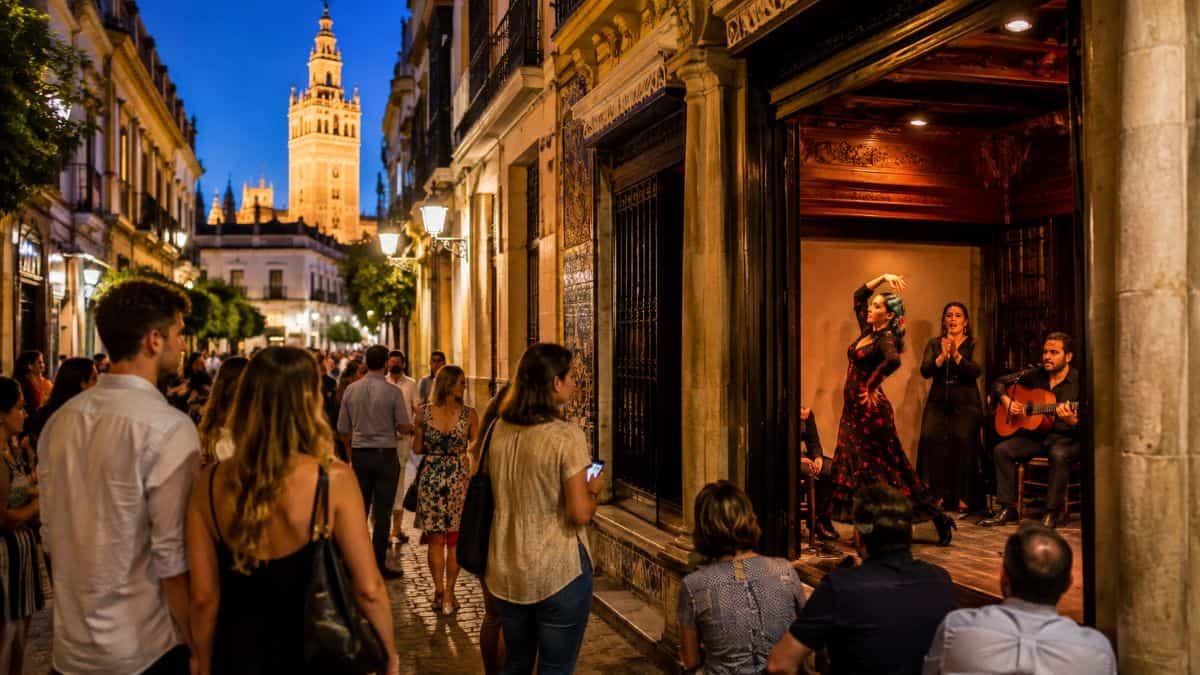
Image generated with Ai
Spain expands festival tourism as Seville Flamenco Biennial 2026 draws visitors for culture and heritage during a major autumn travel period. The event runs from September 9 to October 3 and brings flamenco into the heart of Seville tourism. Meanwhile, Spain expands festival tourism as Seville Flamenco Biennial 2026 draws visitors for culture and heritage through live performances, UNESCO recognition and city-break experiences. Travellers can combine flamenco with historic districts, gastronomy and major attractions. Therefore, the Biennial gives Seville a strong reason to attract first-time visitors, cultural travellers and overnight guests beyond the peak summer season.
The Seville Flamenco Biennial has been held every two years since 1980. Its official aim is to protect flamenco’s heritage while keeping the art relevant and active in the 21st century.
For travellers, that means the event offers more than entertainment. It creates a direct connection with a living cultural tradition rooted deeply in Andalusia.
The September 9 to October 3 dates also push festival activity well beyond the main European summer holiday period. This gives Seville a strong shoulder-season tourism advantage.
Advertisement
Advertisement
Visitors can attend performances while also exploring the city’s historic districts, food scene and major cultural attractions.
Flamenco has been included on UNESCO’s Representative List of the Intangible Cultural Heritage of Humanity since 2010.
UNESCO recognises flamenco as an artistic expression built around singing, dance and guitar music. Its strongest cultural roots are associated with Andalusia, making Seville a natural destination for travellers seeking an authentic flamenco experience.
This strengthens the Biennial’s appeal to international cultural tourists. Visitors are not simply watching a stage performance. They are experiencing an art form with formal global heritage recognition.
Official Seville tourism data shows that the city recorded 3,632,517 visitors staying in hotels and tourist apartments in 2024.
That was an increase of 2.53% compared with the previous year.
The city also exceeded 8 million overnight stays in 2024 for the first time. This gives the Biennial a strong base of existing overnight tourism.
Average visitor stay length also increased by 3.73%.
That matters for an event running for almost four weeks. Travellers can build multi-day stays around performances rather than treating the Biennial as a single-night activity.
The Biennial is not limited to flamenco experts.
Its official programme is designed to be accessible to newcomers as well as long-time followers. This helps broaden Seville’s cultural tourism market.
Visitors can combine performances with heritage sightseeing, gastronomy and neighbourhood exploration. That creates a richer city-break experience and gives travellers more reasons to stay overnight.
The Biennial therefore strengthens several tourism segments at once: festival tourism, heritage travel, performing-arts tourism, cultural city breaks and experiential tourism.
For Seville, the 2026 edition arrives at a time when visitor numbers, overnight stays and average stay length are already moving upward, giving the city a strong platform for another major autumn tourism period.
Spain expands festival tourism because the Seville Flamenco Biennial gives travellers nearly a month of culture, heritage and live performance. The 2026 event runs from September into October, helping Seville extend tourism beyond the main summer period. Flamenco’s UNESCO recognition strengthens its global cultural value, while Seville already records millions of visitors and more than eight million overnight stays. The Biennial also welcomes newcomers, not only flamenco experts. This combination explains why Seville can attract cultural travellers, encourage longer city breaks and strengthen autumn tourism through music, dance, heritage, gastronomy and authentic local experiences.
Advertisement
Tags: Flamenco Tourism, heritage tourism Spain, Seville Events 2026, Seville Flamenco Biennial 2026, Seville Tourism
Advertisement
Advertisement












Saturday, September 5, 2026

Saturday, September 5, 2026
Saturday, September 5, 2026

Saturday, September 5, 2026

Saturday, September 5, 2026
Saturday, September 5, 2026

Saturday, September 5, 2026

Saturday, September 5, 2026



