
Australia Is Now in Autumn Rush as Sydney Airport and Important Gateways Are Fully Occupied by Travelers

Published
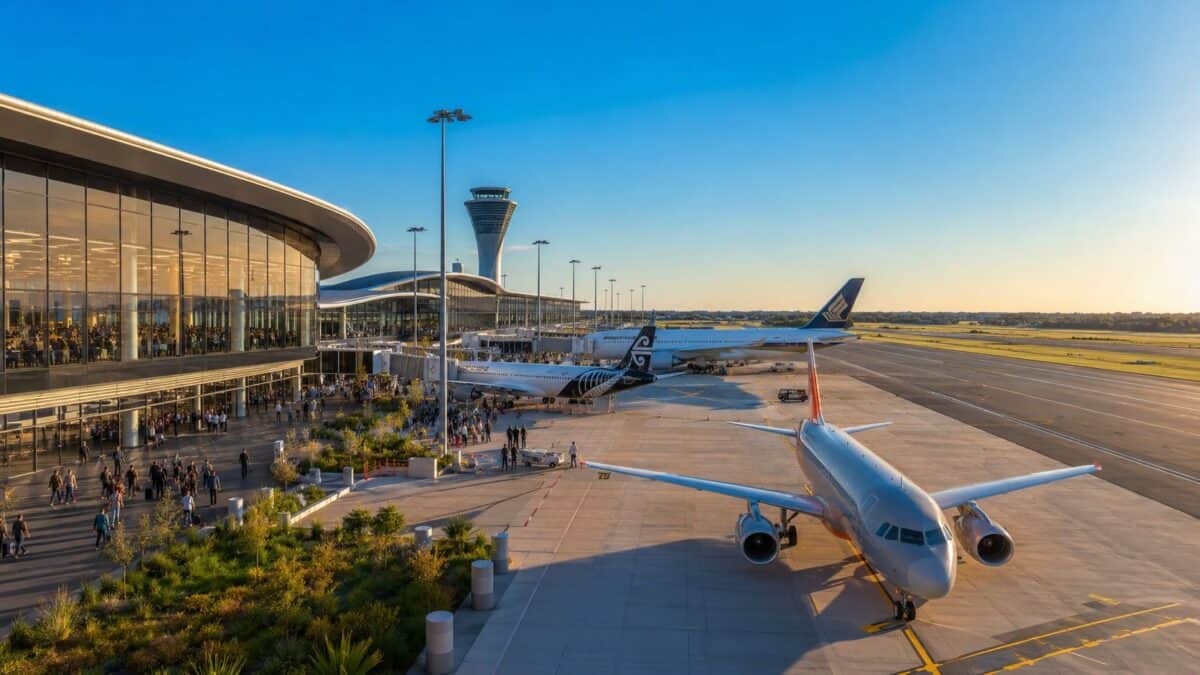
Australia is in full swing as the fall season has finally arrived! Sydney, Melbourne and Brisbane are emerging as Australia’s busiest airports for autumn travel, with Perth and Adelaide completing the country’s leading group as passenger demand strengthens across domestic and international networks. March 2026 figures show particularly heavy activity at the largest gateways. Sydney recorded about 2.18 million domestic passenger movements, Melbourne about 2.12 million and Brisbane around 1.47 million. Melbourne also benefited from major events, while Adelaide experienced a strong March surge. Perth maintained substantial traffic through its interstate, intrastate and international networks. Together, the figures show that Australia’s March-to-May autumn season is far from a quiet period for aviation.
The March-to-May season is becoming increasingly important for Australian aviation. Sydney holds the advantage through its enormous domestic and global network. Melbourne follows closely as festivals, sporting events and holiday traffic fill terminals. Brisbane remains another major gateway, supported by Queensland leisure demand. Perth and Adelaide add considerable passenger volumes. Meanwhile, Gold Coast and Cairns benefit from vacation traffic. The figures reveal why travelers should expect crowded terminals during key autumn periods.
Australia’s Busiest Airports for Autumn Travel 2026
| Airport | City/State | Latest benchmark | Key 2026 autumn evidence | Why autumn is busy | Overall autumn assessment |
| Sydney Airport (SYD) | Sydney, NSW | 25.41m domestic RPT passenger movements in 2025 | 2.18m domestic movements in March 2026; Q1 total traffic 10.78m | Easter, NSW school holidays, business traffic, international arrivals, Sydney–Melbourne/Brisbane routes | Extremely busy |
| Melbourne Airport (MEL) | Melbourne, Victoria | 24.59m domestic RPT movements in 2025 | 3.13m total passengers in March 2026; 3.01m April; 2.75m May | Australian Grand Prix, Labour Day, Easter, school holidays, AFL and international travel | Extremely busy |
| Brisbane Airport (BNE) | Brisbane, Queensland | 17.59m domestic RPT movements in 2025 | 1.47m domestic movements in March 2026; FY26 eventually reached 25.25m total passengers | Queensland leisure demand, Easter holidays, interstate traffic and expanding international capacity | Very busy |
| Perth Airport (PER) | Perth, WA | 9.36m domestic RPT movements in 2025 | 1.549m total passengers March; 1.556m April; 1.445m May 2026 | Interstate travel, WA regional/fly-in-fly-out traffic and strong international market | Very busy |
| Adelaide Airport (ADL) | Adelaide, SA | 7.54m domestic RPT movements in 2025 | 789,240 total passengers in March 2026, +6.6% YoY | Adelaide Festival season, WOMADelaide, AFL, Easter and school holidays | Busy with strong seasonal peaks |
| Gold Coast Airport (OOL) | Gold Coast, Queensland | 5.50m domestic RPT movements in 2025 | FY26 airport traffic eventually reached 6.5m total, +7.7% | Beaches, theme parks, Easter family holidays, Melbourne/Sydney traffic and Trans-Tasman travel | Major leisure hotspot |
| Cairns Airport (CNS) | Cairns, Queensland | 4.18m domestic RPT movements in 2025 | Seventh in BITRE’s 2025 domestic ranking | Tropical leisure traffic, Great Barrier Reef and gateway role for Far North Queensland | Strong leisure traffic |
| Hobart Airport (HBA) | Hobart, Tasmania | 2.87m domestic RPT movements in 2025, +5.0% | Fastest growth among several airports in BITRE top ten | Tasmania autumn breaks, nature, food, road trips and cooler-weather tourism | Strong seasonal leisure demand |
| Canberra Airport (CBR) | Canberra, ACT | 2.76m domestic RPT movements in 2025 | Ninth in BITRE top ten | Government/business travel plus autumn events and short breaks | Steady rather than holiday-led |
| Sunshine Coast Airport (MCY) | Queensland | 1.69m domestic RPT movements in 2025 | Tenth in BITRE top ten | Beach holidays, Easter family trips and interstate leisure demand | Seasonally busy |
Why Is Sydney Australia’s Busiest Airport for Autumn Travel?
Sydney Airport (SYD) enters the autumn travel picture from a position of considerable strength. Government aviation data shows that it recorded approximately 25.41 million domestic Regular Public Transport passenger movements during 2025, placing it ahead of every other Australian airport. That enormous base carries directly into the autumn season.
March 2026 illustrates the scale. Sydney recorded approximately 2.18 million domestic passenger movements during the month, making it the country’s busiest domestic airport. The Sydney-Melbourne corridor also remained Australia’s largest domestic aviation market, carrying around 727,000 passengers during March.
Advertisement
Advertisement
Sydney’s importance goes beyond domestic travel. During the first quarter of 2026, the airport handled approximately 10.78 million passengers overall, including 4.57 million international travelers.
This combination gives Sydney an unusual advantage. Business passengers, domestic vacationers and overseas visitors all move through the same gateway. Easter and school holidays can further increase leisure demand, while Sydney’s extensive route network keeps passenger volumes elevated even outside traditional peak vacation periods.
Advertisement
Advertisement
Why Does Melbourne Become Especially Busy During Autumn?
Melbourne may rank behind Sydney by annual domestic passenger numbers, but autumn creates conditions that make the Victorian capital particularly important.
Melbourne Airport processed 3,129,811 passengers in March 2026, representing growth of 6.3% compared with the same month a year earlier. Domestic traffic reached 2,127,222 passengers, while international passenger numbers surpassed one million during March for the first time, reaching 1,002,589.
Advertisement
Advertisement
Major events helped support this surge. The Formula 1 Australian Grand Prix brings substantial numbers of domestic and international visitors into Melbourne. Victoria’s Labour Day long weekend also contributes to short-break travel.
Demand did not disappear after March. Melbourne Airport handled 3,009,063 passengers during April and another 2,752,755 in May.
Combined, those figures put Melbourne at approximately 8.89 million passenger movements across the three Australian autumn months.
Easter, school holidays, sporting events and international tourism therefore turn Melbourne into one of Australia’s most intense autumn aviation markets.
Advertisement
Advertisement
Why Does Brisbane Remain a Major Autumn Aviation Gateway?
Brisbane occupies a strong third position within Australia’s major airport hierarchy.
The airport recorded approximately 17.59 million domestic Regular Public Transport passenger movements during 2025, according to government aviation statistics. March 2026 alone generated approximately 1.47 million domestic passenger movements.
Those figures demonstrate Brisbane’s significance for both Queensland residents and interstate travelers.
Its geographical position is particularly important. Brisbane connects major southern population centers with Queensland’s leisure destinations while simultaneously operating an increasingly important international network. Travelers can use the airport as a gateway for Brisbane itself, the wider southeast Queensland region and onward journeys.
Holiday periods can strengthen that role considerably. Easter and school breaks create additional family and leisure traffic, while year-round business movements provide a stable passenger base.
Brisbane Airport eventually recorded more than 25.24 million passengers during the 2025-26 financial year, including approximately 18.17 million domestic and 7.08 million international passengers.
Advertisement
Advertisement
That scale places Brisbane comfortably among Australia’s busiest airports and makes it a crucial airport to watch throughout autumn.
Why Is Perth One of Australia’s Most Important Autumn Airports?
Perth presents a different aviation story from Australia’s large eastern cities.
The airport handled 1,548,604 passengers in March 2026, followed by 1,555,974 during April and 1,445,028 in May. Combined, Perth processed approximately 4.55 million passenger movements across the three autumn months.
The composition of those passengers makes Perth particularly interesting.
March traffic included 450,996 international passengers, 538,070 interstate passengers and 559,538 intrastate travelers. This means Perth does not depend entirely on conventional vacation demand.
Western Australia’s enormous geography requires extensive air connectivity. Regional communities, mining operations and fly-in-fly-out employment generate substantial aviation activity alongside tourism and conventional business travel.
Advertisement
Advertisement
Perth accounted for 35.8% of Australia’s fixed-wing charter passengers during March 2026, highlighting this distinctive role.
International travel adds another dimension. Perth’s location gives Western Australia useful links toward Asia, the Middle East and other overseas markets.
Consequently, Perth can maintain high autumn passenger volumes even when purely leisure-driven airports experience greater seasonal fluctuations.
Why Does Adelaide Experience a Strong March Travel Surge?
Adelaide demonstrates how events can transform airport demand during the Australian autumn.
Adelaide Airport handled a record 789,240 passengers in March 2026, representing growth of 6.6% compared with March 2025. Domestic and regional passenger numbers reached 689,464, while international traffic increased significantly.
International passenger movements reached 99,776 for the month, representing year-over-year growth of 26.5%.
Advertisement
Advertisement
Several major events contribute to Adelaide’s particularly strong March travel market. The Adelaide Fringe, Adelaide Festival and WOMADelaide draw visitors into South Australia, while the beginning of the Australian Football League season generates additional movement.
The timing creates an important transition into another travel period. Easter and April school holidays can maintain leisure demand after the major March events conclude.
Adelaide therefore differs from Sydney or Melbourne in scale but remains important for understanding autumn aviation.
Its passenger surge demonstrates that airport congestion is not determined solely by annual rankings. Event calendars can temporarily generate unusually strong demand and create concentrated travel periods at smaller metropolitan airports.
Why Are Gold Coast and Cairns Important for Autumn Vacationers?
Passenger totals alone do not tell the entire story of Australian autumn travel.
Gold Coast and Cairns airports have particularly important positions because tourism forms a substantial part of their aviation markets.
Advertisement
Advertisement
Gold Coast Airport handled about 5.50 million domestic Regular Public Transport passenger movements during 2025. The airport later reached approximately 6.5 million total passengers across the 2025-26 financial year, representing growth of 7.7%.
Its appeal is straightforward. The Gold Coast combines beaches, theme parks, resorts and family attractions. Easter and school holidays can therefore produce strong leisure flows from Sydney, Melbourne and other Australian cities. Trans-Tasman connectivity also expands its international relevance.
Cairns recorded approximately 4.18 million domestic RPT passenger movements in 2025, making it Australia’s seventh-largest domestic airport by that measure.
Its tourism proposition is different but equally powerful. Cairns provides access to the Great Barrier Reef, tropical North Queensland and rainforest destinations.
For travelers specifically planning autumn vacations, these two airports can therefore matter considerably more than their national rankings initially suggest.
Why Are Hobart, Canberra and Sunshine Coast Airports Worth Watching?
Australia’s second tier of airports provides another perspective on autumn travel.
Advertisement
Advertisement
Hobart recorded approximately 2.87 million domestic RPT passenger movements during 2025, representing growth of about 5%. Tasmania’s autumn scenery, culinary tourism, outdoor experiences and road-trip opportunities can make the island particularly attractive during the cooler months.
Canberra followed with approximately 2.76 million domestic passenger movements. Its traffic profile differs substantially from Hobart’s. Government, corporate and administrative travel create a dependable business market, while museums, national attractions and events support leisure visits.
Sunshine Coast Airport recorded around 1.69 million domestic RPT passenger movements during 2025.
Although considerably smaller than Brisbane, its location gives travelers direct access to one of Queensland’s best-known vacation regions. Beach breaks and family holidays can strengthen traffic around Easter and school vacation periods.
These airports will not overtake Australia’s largest metropolitan hubs soon. However, their passenger patterns show how regional tourism, government activity and seasonal leisure demand contribute to Australia’s broader autumn aviation market.
What Do March 2026 Figures Reveal About Australian Air Travel?
March 2026 provides one of the clearest snapshots of the strength of Australia’s autumn aviation market.
Advertisement
Advertisement
Approximately 5.50 million passengers traveled on Australian domestic commercial aviation services during the month. That represented an 8.2% increase compared with March 2025 and placed traffic 4.4% above March 2019 levels.
Regular Public Transport services accounted for approximately 5.11 million passengers.
Aircraft were also operating relatively full. The national RPT load factor reached 81.6%, while airlines operated approximately 51,600 RPT aircraft trips during March.
Sydney, Melbourne and Brisbane dominated the country’s metropolitan passenger flows. Sydney recorded approximately 2.18 million domestic passenger movements, Melbourne about 2.12 million and Brisbane around 1.47 million.
The Melbourne-Sydney route alone carried approximately 727,000 passengers.
These figures demonstrate that Australian autumn should no longer automatically be viewed as a low-demand shoulder season. Major events, long weekends, Easter, school vacations, business travel and international tourism can overlap, generating substantial pressure across the country’s busiest aviation corridors.
Advertisement
Advertisement
Which Australian Airports Should Autumn Travelers Prepare for Most?
Travelers should expect the greatest overall passenger pressure at Sydney and Melbourne, followed by Brisbane, Perth and Adelaide.
Sydney’s position comes from sheer scale. Its domestic network, international connections and large local population consistently generate huge passenger volumes.
Melbourne becomes especially significant during autumn because events amplify an already enormous aviation market. The Australian Grand Prix and other cultural and sporting events combine with Easter and school holidays to support sustained traffic.
Brisbane remains the dominant Queensland metropolitan gateway, while Perth’s unusually diverse mix of interstate, intrastate, charter and international travel keeps terminals active.
Adelaide deserves particular attention during March because its festival calendar can generate pronounced passenger peaks.
For leisure-focused travel, Gold Coast and Cairns should not be underestimated. Their airports serve destinations where vacation demand can intensify rapidly during holiday periods.
Advertisement
Advertisement
Passengers traveling through these airports during busy autumn weekends should therefore consider arriving with additional time, completing online check-in where available and monitoring airline information before leaving for the terminal.
What Does the Autumn Airport Ranking Mean for Australian Tourism?
Australia’s busiest airports show that autumn is developing into a complex and highly active travel period rather than a simple gap between summer and winter peaks.
Sydney remains the country’s leading aviation gateway by overall scale, while Melbourne presents perhaps the strongest autumn-specific challenge because major events drive additional traffic into an already busy airport. Brisbane maintains a clear place among the three national leaders.
Perth demonstrates the importance of Western Australia’s regional, resources and international aviation networks. Adelaide shows how festivals and major sporting events can transform passenger demand. Gold Coast and Cairns underline the continuing importance of leisure travel, while Hobart benefits from Tasmania’s distinctive autumn appeal.
The central conclusion is clear. Sydney, Melbourne and Brisbane are Australia’s dominant airports for autumn travel, but Perth, Adelaide and the country’s leading leisure gateways create a much broader seasonal aviation story.
With Easter, school holidays, events, business travel and international tourism converging between March and May, travelers should increasingly treat Australian autumn as a significant aviation season rather than a quiet shoulder period.
Advertisement
Advertisement
Australia’s autumn aviation rush shows how seasonal vacations, major events and expanding air connectivity are reshaping passenger movements. Sydney remains the strongest overall gateway because its extensive domestic and international networks generate exceptional traffic. Melbourne gains additional momentum from sporting and cultural events, while Brisbane benefits from Queensland tourism and interstate demand. Perth stays busy through regional, business and overseas connections. Adelaide experiences sharp event-driven peaks. Gold Coast and Cairns strengthen the leisure market further. The reason is increasingly clear. Easter, school holidays, events and international tourism now converge between March and May, turning autumn into an important period for Australian air travel.
[Image: Western Sydney International Airport]
Advertisement
