
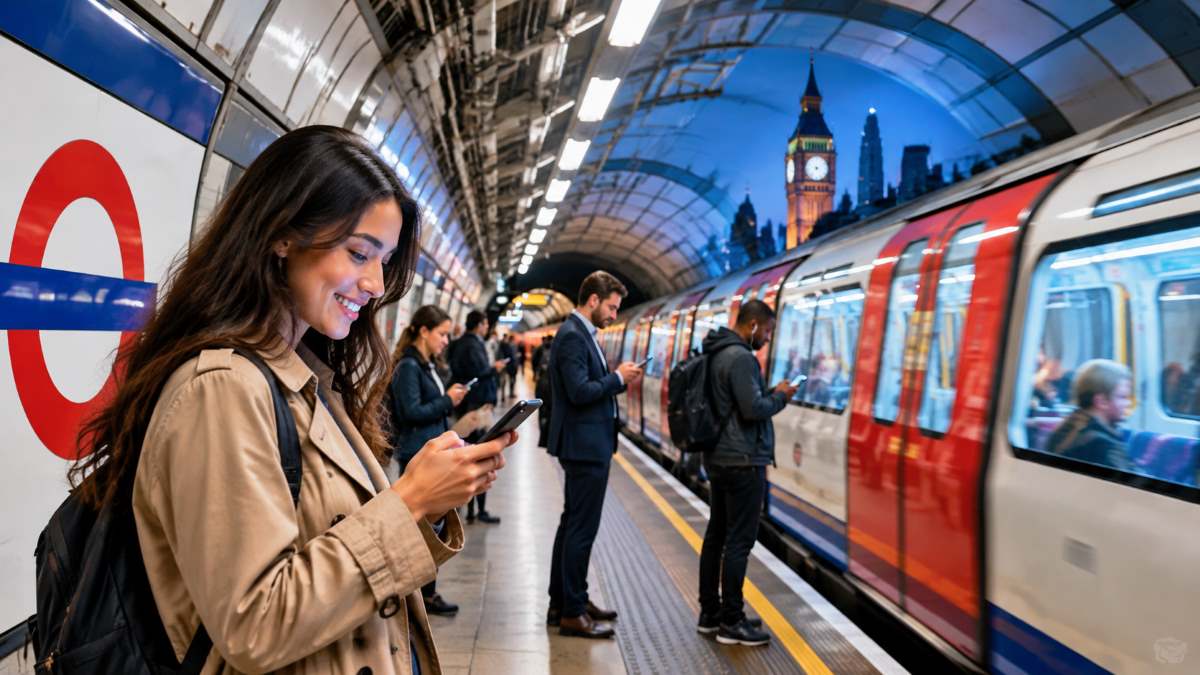
Image generated with Ai
Transport for London (TfL) is innovating transport within London through progressively connecting the Underground with high speed 4G and 5G infrastructure. 60% of Underground stations are now connected, with a full network expected by 2026. The purpose of this investment is to provide passengers with the ability to call, browse the internet, stream services and connect to other digital travel services as the trains travel under the City. This is made possible by a partnership with Boldyn Networks to deploy mobile networks within the tunnels and far from the station platforms and halls. This is one of the most significant upgrades to the London Underground in recent times.
The Underground connects millions of travelers to London’s Airports, Hotels, Attractions, and Business Districts every year, making the tube one of the fastest ways to navigate the city. This project solves one of the biggest challenges the London Underground has faced regarding digital connectivity. The improved Tube connectivity maps show London’s journey towards becoming a digitally connected transit network from being an underground mobile ‘not-spot’.
Advertisement
The latest rollout has expanded 4G and 5G services across more than half of London’s underground stations. TfL data shows that around 60 per cent of stations classified as underground now have mobile coverage, with further sections continuing to go live throughout 2026.
The programme is not limited to passenger areas. Unlike previous underground connectivity systems that focused mainly on station environments, the new network is designed to provide coverage inside running tunnels between stations. This means passengers travelling through deep-level sections of the Underground can increasingly remain connected throughout their journey rather than losing signal immediately after trains leave platforms.
Advertisement
Advertisement
The final target includes:Connectivity Goal Latest Progress Underground Tube stations Around 60% now connected with 4G/5G coverage Complete Underground network Target completion by end of 2026 Elizabeth line underground sections Fully connected Tunnel connectivity Expanding across major Tube lines Mobile operators included EE, Three UK, Vodafone, Virgin Media O2 Infrastructure partner Boldyn Networks
The wider programme aims to deliver coverage across Underground stations, tunnels and selected additional transport networks, creating a connected digital environment beneath London.
The expansion is reaching some of the busiest routes used by international visitors, commuters and corporate travellers.
The Central line has received extensive underground coverage across important central London locations. Connected sections include routes between Shepherd’s Bush and Bank, covering major stations such as:
Advertisement
Advertisement
This section is particularly important for visitors travelling between West London areas and central attractions, shopping districts and financial centres.
The Northern line has become one of the strongest examples of underground connectivity expansion.
Coverage now extends through key sections including:
The line connects several major visitor destinations, entertainment districts and newly developed areas of London.
The Jubilee line upgrade supports passengers travelling through some of London’s most important commercial and tourism zones.
Connected areas include:
For business travellers visiting London’s financial districts, improved underground connectivity provides easier access to emails, online meetings and digital services.
Additional connectivity has expanded across several historic Underground routes.
Recent connected sections include:Tube Line Connected Areas Bakerloo line Queen’s Park to Edgware Road sections Metropolitan line Euston Square to King’s Cross St Pancras and Barbican to Moorgate Circle line Cannon Street and Monument sections District line Sloane Square to Victoria and Bayswater to Paddington
Major transport hubs including King’s Cross St Pancras, Victoria and Paddington are also receiving phased connectivity upgrades across ticket halls, platforms and interchange areas.
The Elizabeth line has become the benchmark for underground connectivity in London.
All underground stations on the Elizabeth line are now connected, with 4G and 5G coverage available across key central London locations including:
The modern railway line demonstrates how future transport systems are increasingly combining high-speed travel with advanced digital infrastructure. For tourists, the Elizabeth line provides an important connection between Heathrow Airport and central London, making reliable underground connectivity especially valuable for international arrivals.
Delivering mobile coverage beneath one of the world’s busiest transport systems requires highly specialised engineering. The network uses a neutral-host model, allowing multiple mobile operators to share the same underground infrastructure instead of creating separate systems.
The participating operators are:
Passengers do not need special applications or additional registration. A compatible smartphone with mobile data enabled automatically connects to the underground network in the same way it connects above ground. The technology combines several advanced systems:
Boldyn Networks operates dedicated infrastructure facilities that host equipment from mobile operators. These locations distribute network capacity throughout the Underground system.
High-capacity fibre connections transfer mobile signals from central facilities into stations and tunnels.
Compact antenna systems installed across stations distribute 4G and 5G signals throughout passenger areas.
Special tunnel communication systems provide continuous coverage along underground routes, allowing passengers to stay connected between stations. Because the Underground operates for most of the day, engineering teams complete installation work during limited overnight maintenance periods. Hundreds of specialist engineers work during these short windows to install and test equipment without affecting normal passenger services.
The connectivity programme will deliver benefits beyond passenger convenience. The underground mobile infrastructure will also support the UK’s Emergency Services Network (ESN), providing emergency responders with improved communication capabilities beneath London. Police, fire and ambulance teams will gain access to faster data services, helping them respond more effectively during underground incidents.
The integration of emergency services technology into the same infrastructure highlights the importance of modern digital networks for transport safety and operational resilience.
London’s Underground is one of the world’s most recognisable transport networks, carrying millions of passengers across the capital every year. However, the lack of reliable mobile connectivity had remained a major challenge compared with other global cities. The new 4G and 5G rollout changes that situation by creating a smarter, more connected travel environment.
For leisure travellers, the upgrade means easier navigation, faster access to digital tickets, instant communication and improved access to online travel services. For corporate visitors, it supports productivity during journeys through London’s busiest business districts. For tourism operators, hotels and attractions, improved underground connectivity creates a more seamless visitor experience from arrival to departure.
TfL and Boldyn Networks project to connect the entire London Underground to mobile services by the end of 2026. The project is currently working to connect mobile services through the rest of the tube lines, tunnels, and additional transport lines, such as certain sections of the DLR and a larger portion of the London Overground.
This transformative change is unlike anything prior in London’s transport history. Since the London Underground has historically had communication blackouts, this system is modernizing into an entire urban digital network. When the project is complete, the improvements made to the Underground will benefit London’s residents and travelers more conveniently with an integrated digital Underground system.
Advertisement
Tags: Boldyn Networks Underground network, London tourism infrastructure, London travel technology 2026, London Underground 4G 5G coverage, TfL Tube mobile connectivity
Advertisement
Advertisement













Saturday, September 5, 2026

Saturday, September 5, 2026

Saturday, September 5, 2026

Saturday, September 5, 2026

Saturday, September 5, 2026

Saturday, September 5, 2026

Saturday, September 5, 2026

Saturday, September 5, 2026



