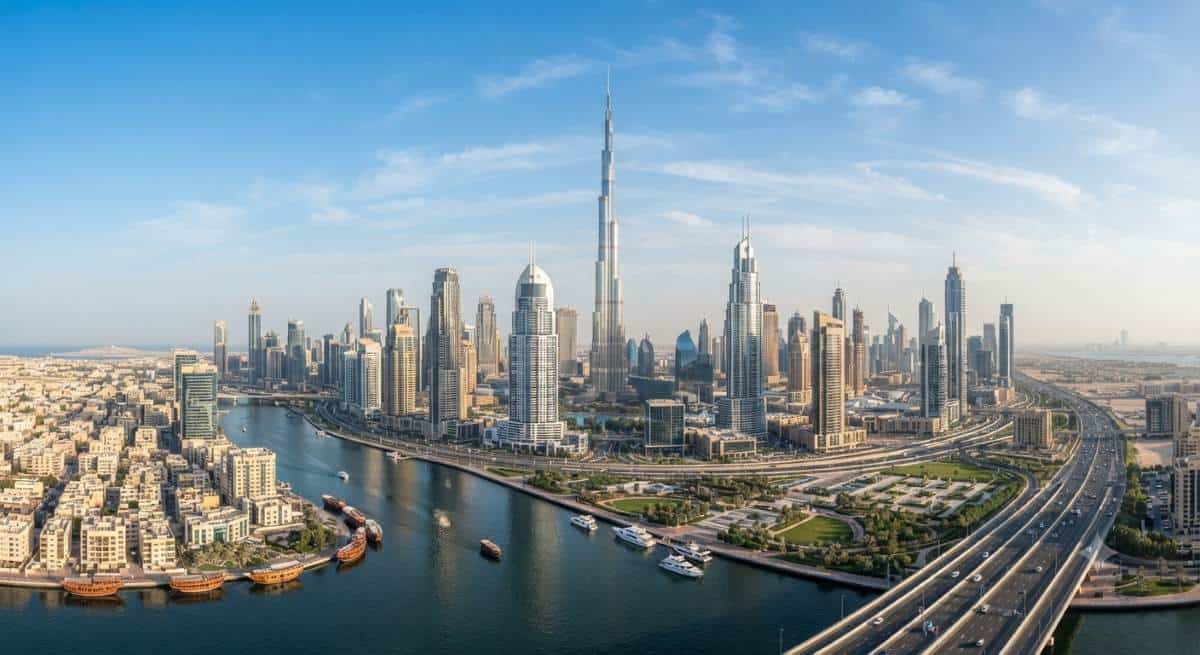
Image generated with Ai
Evaluating the safety of traveling to the United Arab Emirates requires looking closely at various factors. Dubai safety, travel risks, and UAE regulations are essential considerations for anyone planning a trip. Evaluating whether visiting Dubai is advisable involves balancing everyday security against broader regional complexities.
The current operational environment in the United Arab Emirates is shaped by a unique blend of ultra-modern cosmopolitan infrastructure and deeply rooted traditional governance. While the city-state maintains a reputation as a gleaming global hub for commerce and leisure, it operates under stringent state control. Regional geopolitical dynamics, including ongoing tensions across the Middle East, have influenced official government stances worldwide. Despite external uncertainties, the local municipal apparatus continues to project an image of stability, heavily relying on comprehensive surveillance, rapid emergency response times, and a powerful police force to maintain public order.
Advertisement
For people arriving for leisure or business, day-to-day life inside the city proceeds without interruption. Hotels, shopping malls, and coastal destinations operate at full capacity. However, visitors face specific adjustments regarding local laws and regional advisories. While street crime remains exceptionally low, international travelers are expected to navigate strict public behavioral standards. Public displays of affection, photography rules, and local dress codes are enforced rigidly. Furthermore, varying advisories issued by foreign governments mean that some tourists must exercise heightened personal vigilance, particularly concerning flight schedules and regional airspace fluctuations.
Tourism and aviation sectors within the emirate demonstrate high resilience amidst shifting global travel patterns. Industry experts note that while certain international bodies maintain cautious travel alerts due to broader Middle Eastern volatility, inbound passenger volumes remain robust. Hospitality providers and transport networks emphasize flexibility, offering adaptive booking policies to accommodate sudden schedule adjustments. Security analysts point out that the destination’s robust internal security framework successfully insulates domestic tourism zones from local criminal elements, making it one of the most physically secure metropolitan areas globally.
Advertisement
Advertisement
Passport and Visa Protocols: Travelers must ensure that their passports remain valid for a minimum of six months beyond their arrival date and secure all necessary entry documentation prior to departure.
Travel Insurance Recommendation: Purchasing comprehensive travel insurance is strongly advised to cover unexpected medical emergencies and potential itinerary disruptions.
Legal and Cultural Adherence: Visitors must strictly follow local legal frameworks, respect regional customs, and remain updated on official government communication channels throughout their stay.
Substance Regulations: Alcohol consumption is legally restricted and must be conducted exclusively within authorized, licensed venues.
Advertisement
Advertisement
Privacy and Photography Rules: Tourists must avoid photographing individuals without obtaining their explicit consent to prevent legal complications.
When contrasted with previous years, the entry and regulatory framework has grown progressively more streamlined digitally yet stricter in legal enforcement. Recent updates include enhanced biometric integrations at airports, streamlined electronic visa processing linked to local identification systems, and stricter penalties for overstays. While earlier years focused heavily on rapid post-pandemic tourism expansion, the current regulatory phase places equal emphasis on rigorous border control, digital compliance, and heightened geopolitical awareness, reflecting a maturing destination that balances openness with tight administrative oversight.
Advertisement
Tags: Dubai, Dubai laws, Middle East, Regulations, Safety
Advertisement
Advertisement












Tuesday, September 1, 2026

Tuesday, September 1, 2026

Tuesday, September 1, 2026

Tuesday, September 1, 2026

Tuesday, September 1, 2026

Tuesday, September 1, 2026

Tuesday, September 1, 2026

Tuesday, September 1, 2026