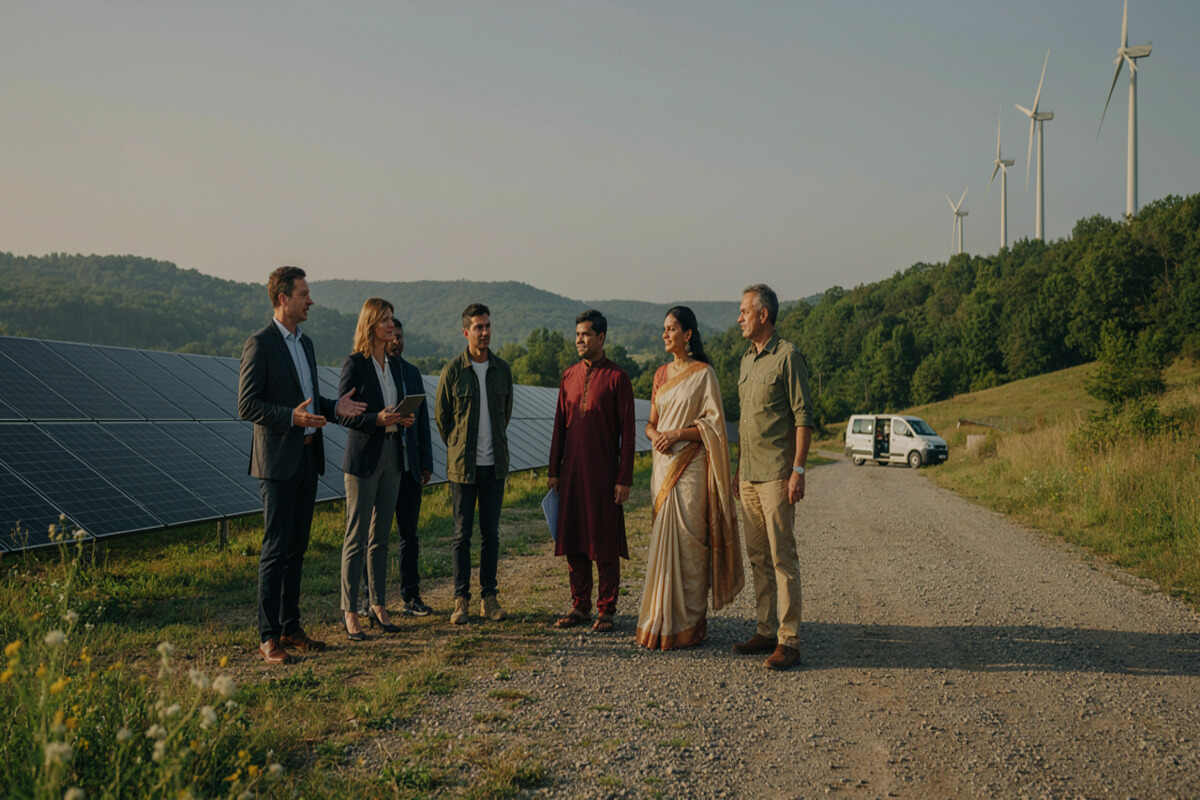
Image generated with Ai
Germany and India grow their green partnership as their climate action and clean energy cooperation grows. Both countries are striving to overcome the challenges of climate change as well as to modernize their respective economies through developing clean energy technologies. To improve their resilience to climate changes, Germany and India are developing innovations for climate adaptation, circular economy approaches, and sustainable and responsible management and use of resources.
The cooperation was reinforced during the fourth Indo-German Environment Forum in New Delhi, where both sides discussed new opportunities to strengthen joint action on environmental protection and sustainable development. The partnership reflects a shared commitment to creating resilient economies while protecting natural resources and supporting long-term growth.
Germany and India have identified climate resilience, renewable energy, sustainable agriculture, forest protection and efficient resource use as major areas where closer collaboration can deliver significant benefits. The partnership aims to combine technology, innovation and policy experience to address global environmental challenges.
The relationship between Germany and India is entering a deeper phase as both countries recognise the importance of environmental cooperation in securing future economic and social development.
Advertisement
Advertisement
The two nations share similar goals despite differences in geography, population and economic structures. Both are focused on creating stable economies that can withstand climate-related risks while ensuring better living conditions for their people.
Climate change has created growing challenges for countries around the world. Rising temperatures, extreme weather events, water shortages and environmental degradation are affecting communities and industries. Germany and India are working together to develop solutions that improve climate resilience and reduce economic vulnerabilities.
The partnership focuses on using resources more efficiently, expanding renewable energy capacity and promoting sustainable practices across different sectors. These efforts are expected to support economic growth while reducing pressure on natural ecosystems.
Through stronger cooperation, both countries aim to develop practical solutions that can contribute to global climate goals and encourage sustainable development models.
Renewable energy and circular economy development are emerging as central pillars of Germany and India’s environmental collaboration.
Both countries are working to increase the use of clean energy sources, including solar and wind power, to reduce dependence on traditional energy systems and support the transition towards greener economies.
The circular economy approach focuses on reducing waste, improving recycling systems and ensuring that resources are used more effectively. By adopting sustainable production and consumption models, industries can reduce environmental impact while improving efficiency.
Germany and India believe that better resource management can strengthen economic resilience. Efficient use of materials, improved recycling methods and sustainable manufacturing practices can help businesses manage future challenges while creating new economic opportunities.
The cooperation also supports innovation in green technologies, allowing both nations to exchange knowledge and develop solutions that can benefit industries, communities and the environment.
Climate adaptation has become a major priority for Germany and India as both countries face increasing environmental pressures.
Germany has experienced growing climate impacts, including heatwaves, drought conditions and water shortages. These challenges have increased the need for stronger adaptation strategies to protect communities, infrastructure and natural resources.
India is also facing serious climate-related risks, including changing weather patterns, extreme temperatures and pressure on water resources. Cooperation between the two countries provides opportunities to share knowledge and develop effective adaptation measures.
The Indo-German Environment Forum created a platform for discussions on how both nations can improve preparedness for climate challenges. The outcomes of the forum are expected to support future cooperation and strengthen coordination during international climate negotiations.
By combining scientific knowledge, policy experience and technological expertise, Germany and India aim to create stronger responses to climate risks.
Environmental cooperation between Germany and India also extends to sustainable agriculture and forest conservation.
Forests play a crucial role in protecting biodiversity, storing carbon and maintaining water systems. Both countries recognise that protecting forests and restoring damaged ecosystems are essential for reducing climate impacts.
Germany continues to support environmental initiatives in India through climate-focused programmes that encourage sustainable land management, forest restoration and biodiversity protection.
Forest conservation is considered a global priority as countries work to reduce carbon emissions and protect natural habitats. Healthy forests support wildlife, improve water security and provide economic benefits for local communities.
Sustainable agriculture is another important area of cooperation. Climate-friendly farming methods can help improve food security while reducing environmental damage.
Through shared knowledge and collaboration, Germany and India are working towards stronger environmental protection and more sustainable rural development.
The environmental partnership between Germany and India reflects a broader strategic relationship between the two countries.
Cooperation on climate action, renewable energy and sustainable development is becoming increasingly important as nations worldwide seek solutions to environmental and economic challenges.
The latest discussions have created a foundation for continued collaboration on environmental issues and future international climate initiatives.
Both countries are expected to continue working together on green technologies, climate adaptation strategies and sustainable resource management. The partnership highlights how international cooperation can support economic growth while addressing environmental concerns.
As climate change continues to reshape global priorities, Germany and India’s growing cooperation demonstrates the importance of combining innovation, policy action and international partnerships to create a more sustainable future.
Advertisement
Tags: Clean Energy, Climate Action, germany, Green Partnership, India
Advertisement
Advertisement












Thursday, September 3, 2026

Thursday, September 3, 2026

Thursday, September 3, 2026

Thursday, September 3, 2026

Wednesday, September 2, 2026

Wednesday, September 2, 2026

Thursday, September 3, 2026

Thursday, September 3, 2026



