
Airbus and All Nippon Airways Transform Pilot Development With Advanced Global Training Programme in Portugal

Published
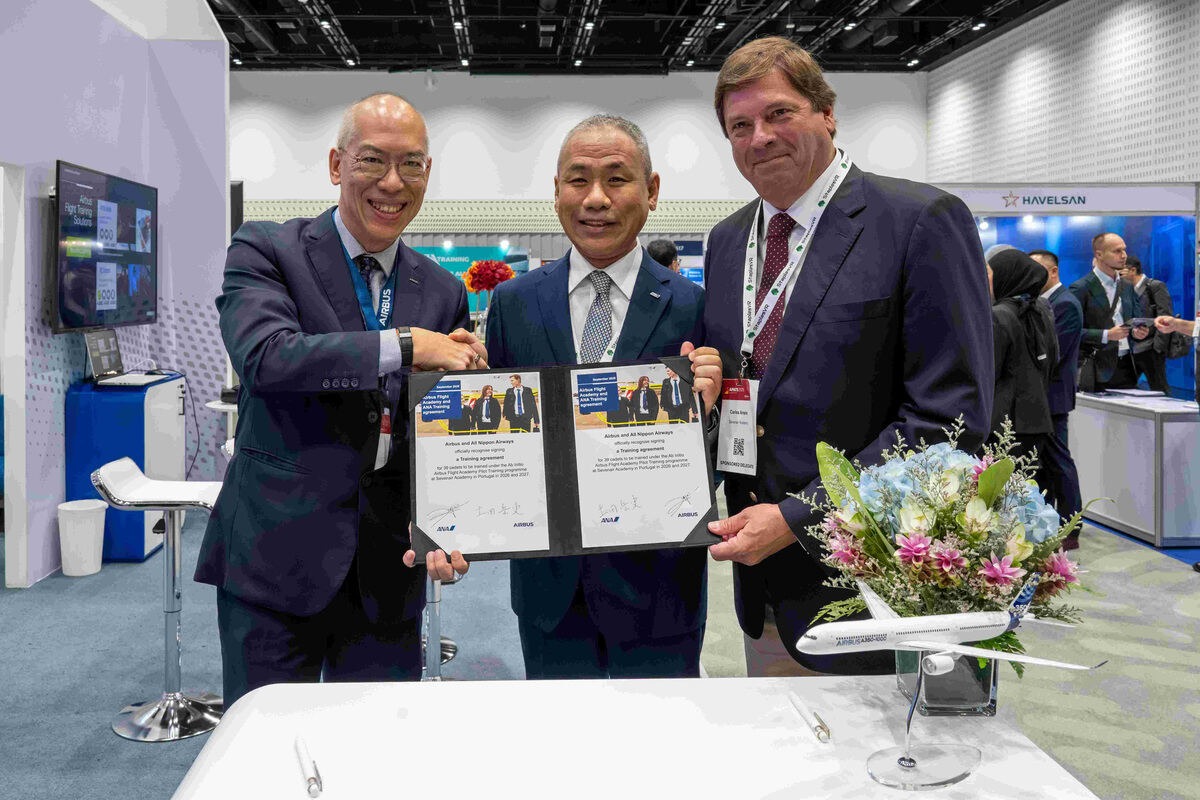
Airbus and All Nippon Airways (ANA) have entered into a new comprehensive pilot training partnership aimed at developing the next generation of aviation professionals. The agreement strengthens a strategic relationship between the two companies that has continued for almost 40 years.
Under the new initiative, Airbus will provide an ab-initio pilot training programme designed for cadets from the ANA Group and its affiliated airline partners. The programme will support aspiring pilots from the beginning of their aviation journey, guiding candidates with no previous flying experience through the complete training process required to earn a commercial pilot licence.
Advertisement
Advertisement
The training will take place at Sevenair Academy in Ponte de Sor, Portugal, where cadets will follow a structured learning pathway combining theoretical instruction, practical flight training and advanced aviation education. The first group of 19 cadets is expected to commence the programme later this year.
Through its integration into the Airbus training ecosystem, the programme will allow ANA’s future pilots to learn through a consistent and globally aligned curriculum. Cadets will be introduced from the start to Airbus’ established flight training principles, operational methods and advanced digital learning tools, helping prepare them for the demands of modern commercial aviation.
Advertisement
Advertisement
“We are very pleased to gain access to the latest pilot training programme offered by Airbus,” said Takeshi Tsuchida, Executive Vice President of Flight Operations at ANA. “This programme incorporates the latest safety insights and aligns directly with the Airbus philosophy of Competency-Based Training and Assessment (CBTA). It will equip our cadets with the essential competencies required to navigate complex operational environments and manage flight operations seamlessly.”
“ANA is globally renowned for its uncompromising commitment to safety, precision, and training excellence. For a world-class airline to entrust their next generation of pilots to our network is an immense honour,” said Thomas Aoudia, Head of Operations and Business Development at Airbus Training Services. “Our ab-initio pathway focuses on cultivating core competencies early. By leveraging the global standards of the Airbus flight training framework, we guarantee a harmonised, top-tier training experience from initial flight to the airline flight deck.”
Advertisement
Advertisement
The aviation industry is entering a period of significant transformation as airlines worldwide prepare for a growing demand for skilled pilots. The expanding global air travel market, combined with increasing fleet growth and retirements, is creating an urgent need for a new generation of highly trained aviation professionals.
According to Airbus’ latest Global Services Forecast, the commercial aviation sector will require approximately 633,000 new pilots over the next 20 years. The Asia-Pacific region alone is expected to account for around 104,000 of these future aviation roles, highlighting the importance of developing strong training systems across the region.
Advertisement
Advertisement
In response to this challenge, Airbus and All Nippon Airways (ANA) are strengthening their cooperation to create a sustainable and high-quality pilot development pathway. The expanded partnership focuses on preparing aspiring aviators with the skills, knowledge and experience needed to meet future industry requirements.
The collaboration is designed to support Japan’s aviation sector by building a dependable pipeline of qualified pilots. Through advanced training methods and globally recognised standards, Airbus and ANA are working to ensure that future flight crews receive consistent and comprehensive preparation from the beginning of their careers.
As the aviation industry continues to evolve, initiatives like this are becoming increasingly important for maintaining safe, efficient and reliable air connectivity. The Airbus-ANA partnership represents a long-term investment in aviation talent and aims to strengthen the workforce needed to support the future growth of Japan’s airline industry.
Advertisement
