

Alaska Airlines Boeing 737MAX 9 Passenger Flight ASA34 from Seattle to New York Diverts and Makes Emergency Landing at Los Angeles After Midday Disruption

Published
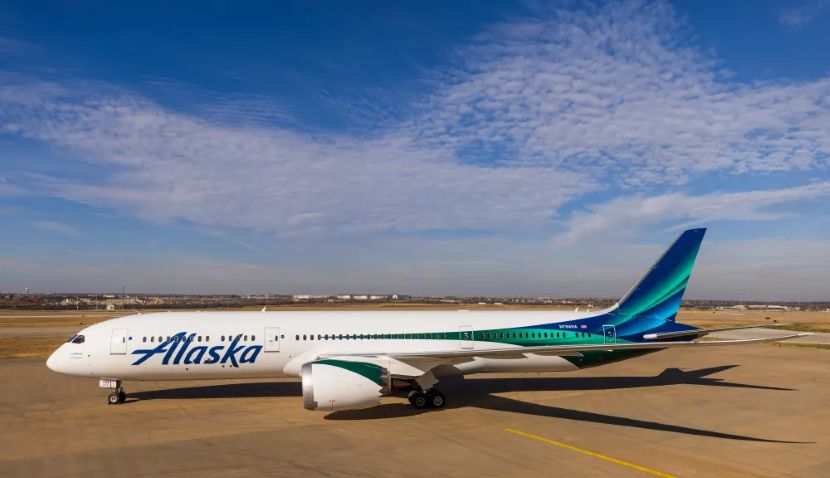
Alaska Airlines Boeing 737MAX 9 passenger flight ASA34 from Seattle to New York diverted and made an emergency landing at Los Angeles after a midday disruption triggered concern onboard, raising fresh questions over the cause behind the sudden rerouting.
Alaska Airlines Boeing 737MAX 9 passenger flight ASA34 from Seattle to New York diverted and made an emergency landing at Los Angeles after a serious midday disruption interrupted the scheduled cross-country journey. The aircraft had departed Seattle-Tacoma International Airport for New York JFK when the flight crew unexpectedly altered course and redirected the jet towards Los Angeles International Airport. Consequently, passengers onboard experienced uncertainty as the aircraft abandoned its planned route midway through the journey.
Advertisement
Advertisement
Although Alaska Airlines had not immediately confirmed the exact cause behind the diversion, the emergency landing rapidly attracted attention across aviation tracking platforms and social media. Meanwhile, operational flight data showed the aircraft landing safely at Los Angeles after the crew declared the diversion during the afternoon service. Importantly, no immediate reports of injuries emerged following the unscheduled arrival.
Furthermore, aviation experts note that diversions involving Boeing 737MAX 9 aircraft can occur for multiple operational reasons, including technical warnings, medical emergencies, weather complications or precautionary safety checks. Nevertheless, emergency landings remain highly sensitive events because airlines prioritise passenger safety above scheduling commitments. As investigators and airline officials assess the situation, travellers now await further clarification regarding what caused Alaska Airlines flight ASA34 to divert before reaching New York
Advertisement
Advertisement
Diversion Interrupts Scheduled Cross-Country Service
An Alaska Airlines flight traveling from Seattle to New York was diverted to Los Angeles on Friday, according to live flight tracking information displayed on the carrier’s operational status system.
Flight ASA34, operated by Alaska Airlines, had originally departed from Seattle-Tacoma International Airport en route to John F. Kennedy International Airport in New York City. The service was scheduled to leave Seattle at 9:01 a.m. PDT on May 15, 2026, but departed slightly behind schedule at 9:24 a.m. PDT.
Advertisement
Advertisement
The aircraft did not complete its planned transcontinental route to New York. Instead, flight tracking data showed the aircraft being redirected to Los Angeles International Airport, where it was listed as “Diverted to LAX.”
The airline’s tracking interface stated that the flight “landed at a different airport than originally scheduled” and advised passengers to contact the airline directly for further information regarding onward travel or revised departure plans.
Flight Arrived Hours Earlier Than Scheduled JFK Arrival
The flight had been scheduled to arrive at New York’s JFK Airport at 5:35 p.m. EDT. However, the operational display instead recorded an “actual” arrival time of 12:47 p.m. EDT associated with the diversion status.
Arrival information listed Terminal 6 and Gate 67 in New York, alongside baggage claim information marked as Carousel 63. It was not immediately clear whether those details reflected preassigned arrival information before the diversion or had been automatically retained within the airline’s system.
The flight tracker did not specify the reason for the diversion. Airlines typically reroute flights for a variety of operational and safety-related reasons, including medical emergencies, adverse weather conditions, mechanical concerns, crew duty limitations, or air traffic disruptions.
Neither Alaska Airlines nor airport authorities had publicly released additional details at the time the information was observed.
Advertisement
Advertisement
Passenger Impact Likely as Airline Coordinates Reaccommodation
Diversions on long-haul domestic routes often create cascading logistical complications for passengers, especially on heavily trafficked corridors such as Seattle to New York. Travelers may face missed connections, baggage delays, aircraft swaps, or overnight accommodation issues depending on the nature of the disruption.
Industry protocols generally require airlines to evaluate whether the original aircraft can continue onward to the intended destination or whether passengers must be reassigned onto alternative services. In some cases, flights resume after refueling or inspections at the diversion airport. In others, passengers are transferred to new aircraft or rebooked on later departures.
The Alaska Airlines system notice indicated that “usually the airline will depart at a later time to get to the original destination,” suggesting the possibility of a continuation service after operational review.
Diversions Remain Relatively Uncommon but Operationally Significant
While flight diversions are not unusual within commercial aviation, they remain comparatively rare relative to the total number of daily U.S. airline departures. Aviation analysts note that diversions are generally treated as precautionary operational decisions designed to prioritize passenger safety and regulatory compliance.
Los Angeles International Airport frequently serves as a diversion point for transcontinental and Pacific-bound traffic because of its extensive runway infrastructure, maintenance support capability, and high airline connectivity. Aircraft operating between the West Coast and East Coast can often reach Los Angeles efficiently when mid-route operational issues arise over the western United States.
Seattle-Tacoma International Airport, meanwhile, serves as one of Alaska Airlines’ largest hubs, with New York JFK representing a key long-distance route in the carrier’s domestic network.
Advertisement
Advertisement
Airline Yet to Release Detailed Explanation
As of Friday afternoon, no official statement explaining the diversion had appeared on Alaska Airlines’ public-facing communication channels. The absence of immediate disclosure is not uncommon during developing operational events, particularly while maintenance assessments or internal reviews are ongoing.
Passengers aboard Flight AS34 were expected to receive updated travel instructions directly from airline personnel or through Alaska Airlines’ mobile and digital notification systems.
Alaska Airlines Boeing 737MAX 9 passenger flight ASA34 from Seattle to New York diverted and made an emergency landing at Los Angeles after an unexplained midday disruption forced the crew to abandon the original route.
While the airline has yet to publicly confirm the precise cause, the diversion was likely triggered by an operational or safety-related concern requiring immediate attention. Importantly, the aircraft landed safely and no injuries were initially reported. The incident highlights how airlines respond rapidly to potential onboard risks, technical alerts or passenger emergencies. Investigators and Alaska Airlines are now expected to determine the exact reason behind the emergency diversion.
Advertisement
