

Munich Teams Up With Frankfurt and More as Germany’s Hottest Travel Destinations Prepare for Unforgettable Concert Holidays, Rooftop Magic and Stylish Hotel Escapes!

Updated
Published
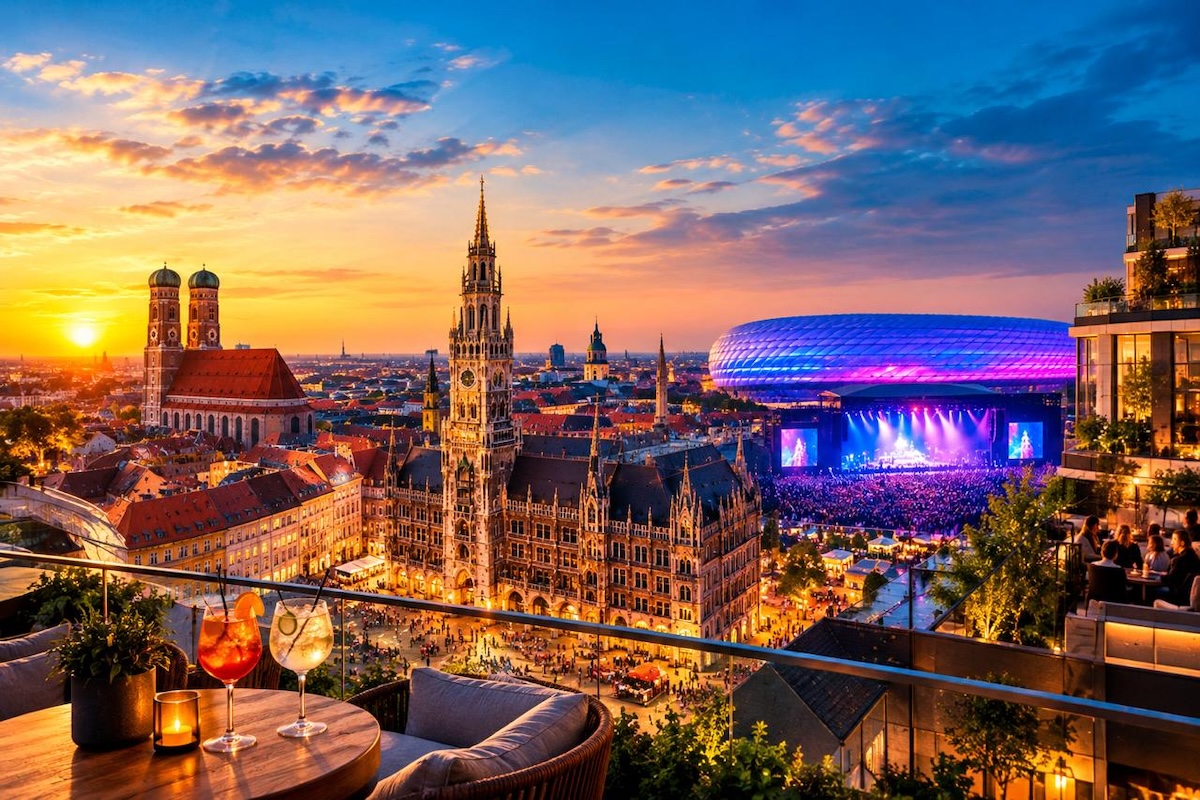
Munich teams up with Frankfurt and more as Germany’s hottest travel destinations prepare for unforgettable concert holidays, rooftop magic and stylish hotel escapes. Germany is attracting travellers seeking exciting music experiences, vibrant city breaks and memorable stays. Now, Munich teams up with Frankfurt and more to capture attention with concert holidays, rooftop magic and stylish hotel escapes that appeal to global tourists. From spectacular live performances to contemporary hotels, these destinations offer fresh reasons to explore Germany. Moreover, Travel And Tour World urges readers to discover how Munich’s upcoming Tempo by Hilton hotel could reshape concert travel and inspire unforgettable German holidays.
Tempo by Hilton Munich Airport Arena: How a New Concert Hotel Could Transform Germany’s Music Tourism and City Breaks
Munich is preparing for a new kind of hospitality experience that brings accommodation, live entertainment and airport convenience together. Tempo by Hilton Munich Airport Arena is scheduled to open in 2029, introducing a 199-room hotel beside the planned MUNICH ARENA concert venue. The development arrives as Munich continues to attract millions of overnight visitors through its cultural attractions, international exhibitions, sporting events and concerts.
Advertisement
Advertisement
For international travellers, this project represents more than another hotel opening. It highlights an emerging travel model in which visitors can choose accommodation around concerts and major events, then extend their trip to discover a destination’s food, architecture, museums and outdoor attractions.
The opportunity is significant. Munich recorded approximately 19.68 million overnight stays in 2025, following a record-breaking 2024. Its established tourism market provides an important backdrop for understanding how a new entertainment-focused hotel could fit into Germany’s wider travel landscape.
Advertisement
Advertisement
Tempo by Hilton Munich Airport Arena: Key Facts and Development Statistics
Hilton announced the hotel agreement on 2 October 2026. The property is planned for the MUNICH ARENA campus near Munich Airport and will mark the Tempo by Hilton brand’s debut in Germany. The company stated that the hotel is expected to open in 2029.
The project is being developed through a partnership involving Hilton, Allresto Munich Airport Hotel and Restaurants GmbH, and SWMUNICH Accommodation GmbH, part of the MUNICH ARENA group.
Advertisement
Advertisement
Table 1. Confirmed project information and planned facilities, based on Hilton’s announcement.
| Feature | Details |
|---|---|
| Hotel name | Tempo by Hilton Munich Airport Arena |
| Announced | 2 October 2026 |
| Expected opening | 2029 |
| Planned accommodation | 199 guest rooms |
| Brand significance | Tempo by Hilton’s German debut |
| Location | MUNICH ARENA campus near Munich Airport |
| Concert venue | Planned capacity of approximately 20,000 spectators |
| Guest-room feature | Dedicated Get Ready Zone with vanity mirror, desk and open wardrobe |
| Fitness facilities | Cardio equipment, weights and recovery area |
| Food and beverage | Ground-floor café and rooftop bar |
| Rooftop offering | Planned craft cocktails and small plates |
| Loyalty programme | Hilton Honors |
| Hotel agreement | Management agreement involving Allresto Munich Airport Hotel and Restaurants GmbH |
Source: Hilton’s official project announcement. The opening date and facilities remain planned rather than available for visitors today.
Advertisement
Advertisement
The hotel’s design is intended to support different stages of a visitor’s day. A dedicated preparation area could help guests organise their belongings and get ready for events, while the fitness centre offers an option for maintaining exercise routines during travel.
The rooftop bar is another defining feature. It is planned as a place for drinks and small plates, potentially appealing to visitors who want to meet friends before a performance or unwind afterwards.
However, the hotel should not be confused with a currently operating property. Travellers planning trips for 2029 should monitor official announcements for room rates, booking dates, transport arrangements and the final list of facilities.
Munich Tourism Statistics: Five Years of Recovery and International Demand
Munich’s tourism figures help explain why accommodation connected to major entertainment venues could attract interest. The city’s recovery after the pandemic was followed by record overnight stays in 2023 and 2024, with demand remaining strong in 2025.
Advertisement
Advertisement
The following table compares five consecutive years of citywide tourism activity. The figures count guest arrivals and overnight stays in commercial accommodation establishments covered by the official statistics. They should not be interpreted as total day visitors or all private accommodation stays.
Table 2. Munich’s annual tourism performance, 2021–2025.
| Year | Guest arrivals | Overnight stays | Annual change in overnight stays | Tourism context |
|---|---|---|---|---|
| 2021 | 3,097,212 | 7,947,780 | Not calculated here | Travel continued recovering from pandemic restrictions |
| 2022 | 6,940,221 | 16,018,285 | +101.5% | Major rebound as travel activity resumed |
| 2023 | 8,531,177 | 18,634,062 | +16.3% | New overnight-stay record |
| 2024 | 9,279,239 | 19,712,703 | +5.8% | New record, supported by major events |
| 2025 | 9,305,028 | 19,681,051 | −0.2% | Arrivals reached a new high while overnight stays remained close to the 2024 record |
Source: Munich Statistical Office and Munich Tourism annual statistics. Annual changes are calculated from the published overnight-stay totals.
What the five-year comparison reveals
2021: A tourism market still rebuilding
Munich recorded approximately 3.10 million arrivals and 7.95 million overnight stays. These totals reflected a tourism sector still dealing with the effects of the pandemic. The figures provide a useful baseline for measuring the recovery that followed.
2022: Overnight stays more than doubled
Advertisement
Advertisement
Arrivals increased to approximately 6.94 million, while overnight stays reached 16.02 million. Overnight stays rose by approximately 101.5% compared with 2021. The recovery demonstrated how quickly accommodation demand could return when travel conditions improved.
2023: Munich established a new record
The city recorded 8.53 million arrivals and 18.63 million overnight stays. Overnight stays increased by approximately 16.3% over 2022 and exceeded the 2019 pre-pandemic level of 18.29 million. Major events, business travel and international tourism contributed to the city’s performance.
2024: Concerts and major events supported another record
Munich registered approximately 9.28 million arrivals and 19.71 million overnight stays. Events included the UEFA European Football Championship, concerts, trade fairs and the Oktoberfest period. The year demonstrated the importance of combining cultural attractions with large-scale events.
2025: Visitor numbers remained exceptionally high
Advertisement
Advertisement
Arrivals reached 9.31 million, up approximately 0.3%, while overnight stays eased by 0.2% to 19.68 million. Munich also reported 99,584 available beds across 480 official accommodation establishments at the end of the year. Average room occupancy stood at 71.5%, compared with 70% in 2024, while average room revenue reached €102.84.
Five-year tourism comparison at a glance
Table 3. Changes across the 2021–2025 period.
| Indicator | 2021 | 2025 | Overall change |
|---|---|---|---|
| Guest arrivals | 3.10 million | 9.31 million | Approximately +200.4% |
| Overnight stays | 7.95 million | 19.68 million | Approximately +147.6% |
| Average length of stay, calculated from totals | 2.57 nights | 2.12 nights | Approximately −17.5% |
Calculations use annual arrivals and overnight stays. The average stay is calculated by dividing overnight stays by arrivals; it is not a separately quoted survey measure.
The comparison reveals two important patterns. First, Munich’s accommodation market recovered substantially from its 2021 position. Second, the average stay has shortened as arrivals have increased, making convenient accommodation increasingly relevant to visitors fitting several activities into a limited schedule.
This does not prove that the new hotel will generate additional demand by itself. It does, however, establish a substantial existing market for accommodation serving leisure, business and event travel.
International Visitors and Munich’s Wider Tourism Economy
International tourism is particularly relevant to a hotel connected with a major concert venue and an international airport.
Advertisement
Advertisement
In 2023, overseas visitors accounted for approximately 8.15 million of Munich’s 18.63 million overnight stays. In 2024, the international overnight-stay total reached approximately 8.88 million, while domestic visitors accounted for approximately 10.83 million.
In 2025, domestic visitors remained the larger market, accounting for 58.7% of arrivals. The city reported that domestic overnight stays increased by 0.8%, while international overnight stays declined by 1.4%.
Table 4. Domestic and international overnight stays.
| Year | Domestic overnight stays | International overnight stays | Total |
|---|---|---|---|
| 2021 | 5,555,716 | 2,392,064 | 7,947,780 |
| 2022 | 9,431,685 | 6,586,600 | 16,018,285 |
| 2023 | 10,488,058 | 8,146,004 | 18,634,062 |
| 2024 | 10,833,781 | 8,878,922 | 19,712,703 |
These figures illustrate why a hotel near an international transport hub may appeal to different visitor groups. Domestic guests might use it for concerts or weekend trips, while international travellers could combine a performance with a longer German holiday.
Munich’s wider tourism economy also extends beyond hotel bookings. The city’s 2024 tourism assessment estimated approximately 90 million day visitors and around eight million overnight stays in private accommodation or with friends and relatives, alongside roughly 20 million commercial overnight stays. It estimated total tourism-related turnover at €8.8 billion. These are separate estimates covering broader tourism activity, not figures that should be added indiscriminately to the commercial accommodation table.
For travellers, the practical lesson is straightforward: Munich offers reasons to visit throughout the year. A concert can become the anchor for a trip that also includes museums, markets, historic landmarks, shopping and Bavarian food.
Advertisement
Advertisement
Other Munich Hotels Offering Comparable Travel Experiences
Tempo by Hilton’s planned combination of event access, contemporary rooms, fitness facilities and social dining places it within a wider hotel market serving airport passengers, leisure visitors and business travellers.
The hotels below provide useful comparisons, but they are not identical products. Some prioritise airport convenience, others offer extensive wellness facilities or an urban lifestyle experience. Their room counts and amenities are based on official property or destination information where available.
Table 5. Comparable hotels for travellers visiting Munich.
| Hotel | Published room count or scale | Main features | Best suited to |
|---|---|---|---|
| Hilton Munich Airport | 550 rooms, including 43 suites | Indoor pool, spa, fitness centre, restaurants and Nightflight Bar | Long-haul arrivals, layovers and premium airport stays |
| Andaz Munich Schwabinger Tor | 277 rooms | Contemporary design, dining, spa and extensive conference facilities | Lifestyle stays, couples and business travellers |
| Tempo by Hilton Munich Airport Arena | 199 planned rooms | Rooftop bar, café, gym and planned concert-arena access | Future concert trips and event-led stays |
Hilton Munich Airport: Convenience for international arrivals
Hilton Munich Airport is located between the airport’s terminals and has 550 rooms, including 43 suites. Its facilities include an indoor pool, fitness centre, spa and several dining options.
This makes it an established option for travellers with early flights, late arrivals or short stopovers. The hotel also provides day-use rooms, which can be useful for passengers seeking rest between journeys.
Unlike the planned Tempo property, its main advantage is direct airport access rather than a location beside the proposed concert arena. Visitors whose primary purpose is a live performance should compare the complete journey to the venue before booking.
Advertisement
Advertisement
Andaz Munich Schwabinger Tor: A contemporary urban stay
Andaz Munich Schwabinger Tor offers a different experience. The property lists 277 rooms, approximately 2,000 square metres of spa facilities and a similarly sized conference area.
Its contemporary design, food and beverage experiences, wellness facilities and urban location make it relevant to travellers seeking a lifestyle-oriented hotel. It may suit visitors who want to combine restaurants, neighbourhood exploration and meetings during a city break.
The key difference is location. Andaz is an urban hotel, while Tempo is planned for an airport-area entertainment campus. Travellers should select between them according to their itinerary, transport needs and preferred surroundings.
Why the comparison matters
The hotel market serves several distinct travel needs. Airport hotels reduce transfer complexity, lifestyle hotels emphasise design and social experiences, and event-led accommodation places a particular attraction at the centre of the guest experience.
Tempo’s proposed positioning brings these priorities together, although its final rates, transport links and operating details will need to be assessed closer to opening.
What Travellers Can Do in Munich Beyond Concerts
A visit built around a future performance need not be limited to the concert campus. Munich’s official tourism information identifies historic landmarks, markets, parks and sporting attractions that can fill a weekend or longer holiday.
Advertisement
Advertisement
Table 6. Suggested attractions and travel experiences.
| Attraction | What to experience | Suggested time | Practical advice |
|---|---|---|---|
| Marienplatz | New Town Hall, historic square and Glockenspiel | 1–2 hours | Visit early for photographs and explore nearby streets on foot |
| Viktualienmarkt | Bavarian food, produce, baked goods and market stalls | 1–2 hours | Allow time for snacks and browsing |
| English Garden | Walking paths, green spaces and the Eisbach river wave | 2–3 hours | Check weather and seasonal conditions |
| Allianz Arena | Football-related experiences and stadium tours | 2–3 hours | Check tour schedules and match-day restrictions |
| Nymphenburg Palace | Palace architecture and landscaped grounds | Half a day | Confirm opening arrangements and ticket details |
The Old Town attractions are particularly convenient to combine. Marienplatz is within walking distance of Viktualienmarkt, Frauenkirche and other central landmarks. The city’s official visitor information provides practical access guidance for these locations.
Experience Munich’s Bavarian food culture
Food is another reason to extend an event-focused visit. Travellers can look for traditional Bavarian dishes such as Weisswurst, pretzels, roast pork and regional specialities.
Viktualienmarkt offers a convenient introduction to local ingredients and casual eating. Traditional restaurants around the Old Town provide opportunities to experience regional cooking, while Munich’s wider dining scene also includes international cuisine.
At the planned Tempo property, the ground-floor café and rooftop bar could offer convenient food and drink options without requiring guests to leave the campus. However, the final menus, prices and service hours have not yet been published in the announcement.
A Three-Day Munich Travel Itinerary for Future Concert Visitors
A three-day trip could combine a concert with Munich’s historic centre, food culture and green spaces. The following plan is illustrative; the actual schedule should depend on concert timings, public transport and the hotel’s eventual opening arrangements.
Advertisement
Advertisement
Table 7. Suggested three-day itinerary.
| Day | Morning | Afternoon | Evening |
|---|---|---|---|
| Day 1: Old Town | Explore Marienplatz and the New Town Hall | Walk through Viktualienmarkt and visit nearby landmarks | Enjoy Bavarian cuisine in the city centre |
| Day 2: Culture and concert | Visit a museum or explore the English Garden | Return to the hotel, rest and prepare for the performance | Attend the concert at MUNICH ARENA if an event is scheduled |
| Day 3: Leisure and departure | Visit Nymphenburg Palace or explore a neighbourhood | Shop, enjoy a relaxed lunch or visit another attraction | Travel to the airport or continue to another German destination |
For travellers arriving from outside Europe, the itinerary can be extended with additional days in Munich or onward travel to other Bavarian destinations.
Getting around: What airport visitors should know
Munich Airport is connected to the city by the S1 and S8 S-Bahn railway lines. The airport also lists bus services and other ground-transport options for arriving passengers.
However, a hotel described as being near the airport is not necessarily within walking distance of every terminal, railway station or attraction. Before booking Tempo, visitors should check its exact address, the final public transport arrangements and the estimated journey to their chosen destinations.
Concert visitors should also check event end times and the availability of return transport. A nearby hotel may simplify the evening, but visitors should not assume that every route or service will operate throughout the night.
Can the New Hotel Help Expand Munich’s Event Tourism?
The planned hotel and concert arena are part of a wider entertainment development. According to the project’s announcement, MUNICH ARENA is being designed for approximately 20,000 spectators and international touring productions.
Advertisement
Advertisement
That capacity provides useful context, but it should not be treated as a forecast of actual attendance or hotel occupancy. Concert schedules, ticket sales, audience travel patterns and the availability of competing accommodation will determine the eventual effect on tourism.
The project’s developer has cited an economic impact analysis by Deloitte that forecasts approximately €350 million in annual gross value added during operations, including indirect and induced effects. It also estimates approximately €390 million during the planning and construction phase. These are projected economic effects associated with the arena development, not guaranteed revenue for the hotel or the city.
A hotel on the same campus could provide several practical benefits:
- Simpler concert planning: Visitors may be able to reduce travel between accommodation and performances.
- More convenient short breaks: International visitors could plan a concert around arrival and departure schedules.
- Additional spending opportunities: Dining, drinks and other local activities could form part of an event-focused stay.
- Potential demand for longer visits: Some guests may choose to explore Munich before or after a concert, although the scale of this effect remains uncertain.
The project could also support demand from performers, production crews and business visitors. The announcement specifically describes the campus as an entertainment destination, but the proportion of future guests in each category is not yet known.
What Travellers Should Know Before Planning a 2029 Stay
The hotel is still a future development, so travellers should distinguish confirmed plans from details that have not been announced.
Table 8. Booking and trip-planning checklist.
Advertisement
Advertisement
| Planning consideration | Current position | Recommended action |
|---|---|---|
| Opening date | Scheduled for 2029 | Check official updates before arranging travel |
| Number of rooms | 199 planned rooms | Wait for the official room inventory and booking launch |
| Room rates | Not confirmed in the announcement | Compare rates when reservations become available |
| Concert schedule | Future programme needs confirmation | Check official venue and artist announcements |
| Rooftop bar | Planned facility | Verify opening hours, access rules and final offering |
| Transport to the arena | Final arrangements should be confirmed | Check the hotel’s exact location and transport information |
| Cancellation terms | Not yet established for future bookings | Read the applicable terms before paying |
| Loyalty benefits | Hilton Honors is identified as the programme | Confirm the benefits applicable to the specific reservation |
Travellers should also consider the timing of their trip. Major concerts, trade fairs and sporting events can affect hotel demand across a destination. Comparing different dates may provide more accommodation choices, while flexible reservations can reduce the risks associated with changing event schedules.
For those planning a wider German holiday, Munich can serve as a starting point for exploring Bavaria. Visitors should allow enough time for transport and check the schedules of any additional attractions before purchasing non-refundable tickets.
What the Development Means for Munich’s Hotel Market
Tempo by Hilton Munich Airport Arena combines three elements that appeal to different types of visitors: an international hotel brand, proximity to a planned concert venue and access to an international airport.
The city’s tourism figures provide a strong backdrop for the project. Overnight stays increased from approximately 7.95 million in 2021 to 19.68 million in 2025, while arrivals reached more than 9.3 million in 2025. At the same time, the city’s official statistics show a large accommodation market with nearly 100,000 beds at the end of that year.
These numbers show the scale of Munich’s visitor economy, but they do not establish how much demand the new property will capture. Its performance will depend on pricing, the concert calendar, competing hotels, transport convenience and the quality of the eventual guest experience.
For travellers, the most important consideration is how the hotel fits their plans. Visitors focused on concerts may value the arena location, while those prioritising historic attractions may prefer accommodation closer to central Munich. Airport passengers may find an established terminal hotel more convenient for a short stopover.
Advertisement
Advertisement
The strongest choice will depend on the purpose of the trip rather than the hotel brand alone.
Conclusion
Munich teams up with Frankfurt and more to put Germany’s hottest travel destinations in the spotlight for unforgettable concert holidays, rooftop magic and stylish hotel escapes. With Tempo by Hilton Munich Airport Arena planned to open in 2029, travellers can look forward to a new accommodation option near a major entertainment venue. Meanwhile, Frankfurt and other German destinations offer their own cultural attractions, lively events and memorable city breaks. Together, these destinations could inspire visitors to explore more of Germany. Travel And Tour World encourages global travellers to follow upcoming hotel developments, check concert schedules and plan their next German getaway around extraordinary experiences.
Advertisement
