
Morocco’s Oasis Valleys Put Earthen Heritage at the Heart of Sustainable Tourism

Published
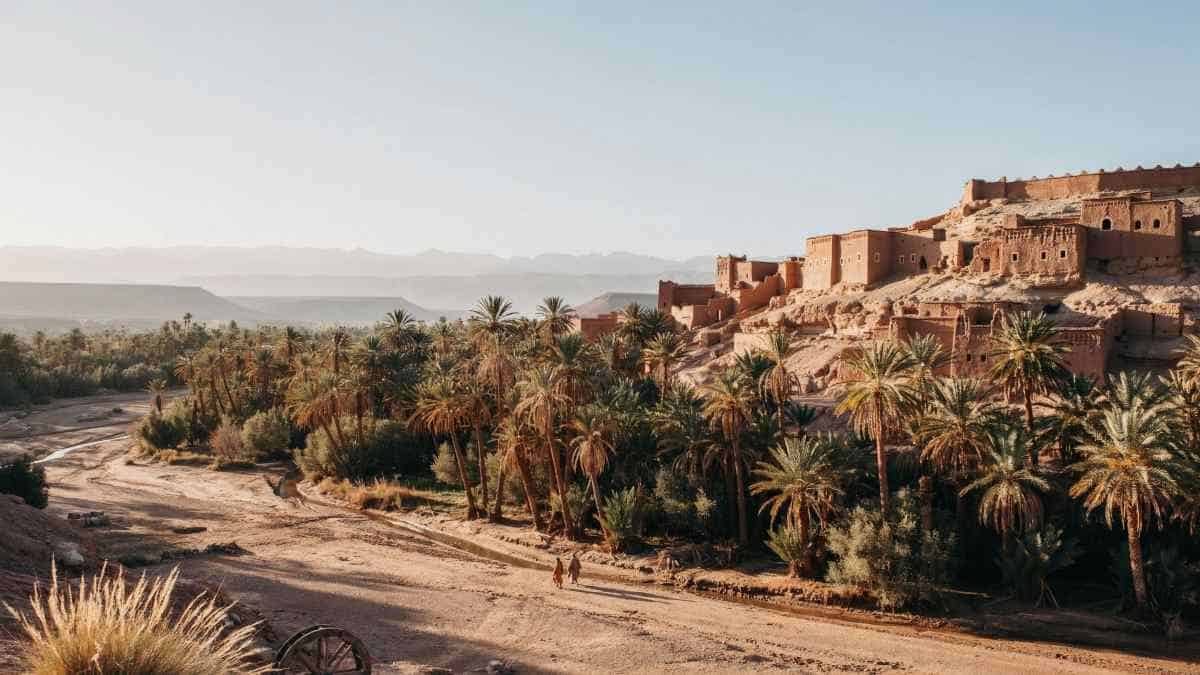
Image generated with Ai
The southern valleys of Morocco are taking an increasingly significant place in Morocco’s tourism narrative through the combination of heritage restoration and the rising popularity of eco-friendly tourism in Ouarzazate, Tinghir, Kelaat M’Gouna and Ait Benhaddou. A September 27-29 brief speaks about a new set of guidelines developed by the Ministry of Tourism, Handicrafts and Social and Solidarity Economy which would limit issuance of new permits for boutique tourism in the pre-Saharan valleys to restored rammed-earth kasbahs and mandate the use of greywater systems for irrigation of date-palm oases. The compliance guidelines and permit restrictions mentioned in the brief cannot be independently verified in the most recent sources. However, the current sources of information from the government of Morocco do confirm an emphasis on restoration of traditional architecture and heritage protection in places such as Ouarzazate and Ait Ben Haddou.
Ouarzazate Is Reconnecting Tourism With Heritage
Advertisement
Advertisement
Ouarzazate has long been known as a gateway to southern Morocco and as a major centre for film production. Its tourism appeal, however, extends well beyond cinema, with kasbahs, desert landscapes and historic settlements forming a major part of the visitor experience.
The Moroccan government is currently supporting restoration work around the city, including the Kasbah of Taourirt and the Ksar of Ait Ben Haddou. In June 2026, officials said restoration at Ait Ben Haddou was around 80–85% complete, with the next phase focused on increasing the site’s tourism activity throughout the year.
Advertisement
Advertisement
That creates an important opportunity for the region. Heritage tourism can bring visitors into historic buildings and communities while also supporting artisans, guides, accommodation providers and local food businesses.
Ait Benhaddou Shows the Value of Earthen Architecture
Advertisement
Advertisement
Ait Benhaddou is one of Morocco’s most recognisable examples of traditional earthen construction. The fortified ksar has been a UNESCO World Heritage Site since 1987 and remains a defining cultural attraction along the southern tourism route.
Its architecture is based on locally available earth and traditional building techniques that have evolved to suit the region’s dry climate.
Restoration therefore involves more than repairing walls. It also raises questions about maintaining the knowledge, craftsmanship and visual character that make the settlement distinctive.
For tourism, this matters because replacing traditional structures with generic modern accommodation could weaken the very identity that attracts visitors.
Tinghir Links Tourism With the Oasis Landscape
Tinghir provides another important stop along the southern route. The town is closely associated with its extensive palm oasis and the dramatic Todra Gorge, creating a tourism landscape where agriculture, geology and traditional settlement patterns sit alongside one another.
Advertisement
Advertisement
The Moroccan government itself highlights Tinghir and Ouarzazate as departure points for organised journeys along the country’s kasbah routes.
The oasis is particularly important because it represents a living landscape rather than a preserved monument. Date palms, irrigation channels, agricultural plots and villages form part of the visitor experience.
This makes water management especially significant. Any accommodation development around an oasis needs to consider the requirements of both tourism and agriculture.
Greywater Could Support the Oasis Economy
The reported requirement for local greywater recycling could not be verified as a newly introduced national rule. But the concept is particularly relevant to southern Morocco, where water availability is a longstanding environmental concern.
Reusing treated wastewater for appropriate landscape irrigation can reduce pressure on freshwater supplies when properly designed and managed.
Advertisement
Advertisement
For oasis destinations, the potential connection is straightforward. Hotels and guesthouses consume water, while surrounding palm groves depend on reliable irrigation.
A tourism model that links accommodation infrastructure with responsible water reuse could therefore support both visitor services and the agricultural landscapes that define the region.
Kelaat M’Gouna Adds a Living Cultural Layer
Kelaat M’Gouna, in the Dadès Valley, is widely associated with Morocco’s rose-growing landscape and the annual Rose Festival. The town sits within a wider valley environment shaped by agriculture, traditional settlements and the surrounding Atlas Mountains.
Its tourism potential lies partly in this combination of nature and everyday culture. Visitors can experience rose products, local crafts, agricultural landscapes and nearby kasbahs rather than relying exclusively on conventional sightseeing.
That type of experience can also encourage travellers to stay longer and distribute spending across smaller businesses.
Advertisement
Advertisement
The Kasbah Route Could Become More Sustainable
The broader southern tourism corridor connects Ouarzazate with Tinghir and other destinations through a landscape filled with ksour, kasbahs, palm groves and mountain scenery.
Morocco’s national tourism roadmap is already targeting substantial growth, with the government aiming for 26 million tourists by 2030. Its strategy also seeks to strengthen the diversity of the tourism offer rather than concentrating the visitor experience around a limited number of destinations.
That makes the southern valleys increasingly important. Their appeal is not based on mass attractions but on architecture, landscapes, culture and slower journeys.
The challenge will be ensuring that new tourism investment strengthens those qualities rather than replacing them.
Morocco’s Earthen Heritage Faces a New Tourism Test
While the specific plan outlined in the attached briefing is unconfirmed, specifically the alleged exclusive licensing of renovated pisé kasbahs and obligatory grey water restrictions, it seems apparent what the trend is at this point. Morocco is working to restore its old southern architecture so that Ouarzazate and Ait Benhaddou become better destinations for tourists all year round, and the kasbah route becomes a feature of the Moroccan destination offer. That means, for tourists travelling between Tinghir, Kelaat M’Gouna, Ouarzazate, and Ait Benhaddou, an increasingly place-based experience, with the help of the earthen structures, agricultural oases, crafts, and local communities. In this way, the success of southern Morocco tourism might be dependent upon maintaining traditional architectural practices and finding ways of integrating the new tourists without damaging those practices.
Advertisement
