
Emirates and Qatar Airways Hit by $4.3 Billion Gulf Airline Loss Forecast for 2026

Published
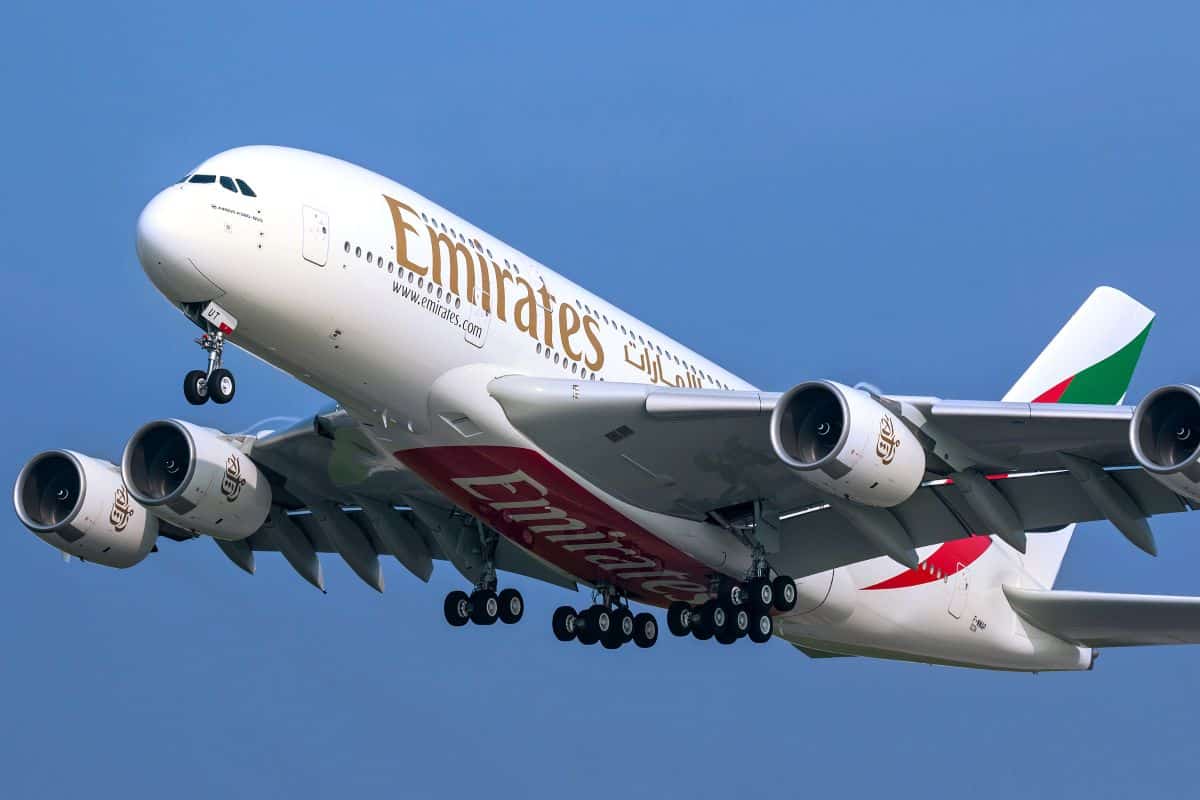
The Middle East airline industry is heading for a dramatic financial reversal in 2026. IATA forecasts regional carriers will move from a $7.2 billion profit in 2025 to a $4.3 billion net loss, making the Middle East the only major aviation region expected to fall into the red. The shock extends well beyond temporary airport closures, with transfer traffic, airspace restrictions and fuel costs now reshaping Gulf aviation economics. In June, Middle Eastern carriers recorded a 14% year-on-year demand decline, while global Europe-Asia traffic excluding Gulf connections grew strongly. Meanwhile, jet fuel is forecast to average $152 a barrel, almost 70% above 2025 levels.
Gulf Hubs Face a Deeper Aviation Shock
The scale of the reversal is striking because Gulf aviation entered 2026 from a position of exceptional strength. Middle Eastern airlines generated an estimated $7.2 billion net profit in 2025, with a 9.4% regional net margin. IATA now expects a $4.3 billion loss and a -6.1% margin for 2026.
That represents an $11.5 billion swing in one year. More importantly, it exposes the vulnerability of a business model built around enormous volumes of international connecting passengers.
The conflict began on 28 February 2026, when the United States and Israel struck targets in Iran. Iran responded with attacks, creating substantial risks across neighbouring airspace and triggering temporary restrictions. EASA subsequently revised its regional advisories several times as the security situation evolved.
Advertisement
Advertisement
For travellers, the key development is that reopening airspace did not restore the previous travel pattern. Airlines can resume schedules much faster than passengers regain confidence in a connection through a region perceived as vulnerable to sudden disruption.
That distinction matters enormously for Dubai, Doha and Abu Dhabi. These airports do not depend primarily on passengers beginning or ending their journeys locally. Their commercial strength comes from connecting travellers between major markets.
Advertisement
Advertisement
The Hub Model Is Taking the Hardest Hit
Gulf aviation has spent decades building a powerful geographic proposition. Airlines can connect Europe, Asia, Africa and Australasia through strategically located hubs within a single aircraft journey.
That model delivers enormous economies of scale. However, it also creates exposure when travellers begin choosing alternative routings.
Advertisement
Advertisement
IATA’s June data provides a revealing contrast. Europe-Asia traffic increased 11%, while Middle Eastern carriers experienced a 14% decline in passenger demand. Regional capacity also fell 11%, while the average passenger load factor dropped to 76.3%.
| Aviation Indicator | 2025 Position | 2026 Position | What It Means |
|---|---|---|---|
| Middle East airline net result | +$7.2bn | -$4.3bn | Dramatic regional reversal |
| Net margin | 9.4% | -6.1% | Profitability moves into negative territory |
| Passenger demand | +6.8% | -11.4% forecast | Demand suffers from disruption |
| Capacity | +5.9% | -4.4% forecast | Airlines are cutting available seats |
| Profit per passenger | $31.50 | -$21.40 | Economics deteriorate sharply |
| June demand | — | -14% year-on-year | Traffic remains heavily affected |
| June load factor | — | 76.3% | Significant pressure on aircraft economics |
The most important change is therefore not simply fewer flights. It is a change in passenger behaviour.
Travellers who once viewed Dubai or Doha as convenient gateways can increasingly choose direct services where available. Others may accept longer itineraries if they perceive them as less exposed to sudden regional disruption.
That creates a particularly difficult problem for network airlines. A seat occupied by a local passenger still generates revenue. An empty connecting seat can weaken the economics of an entire route.
Advertisement
Advertisement
Fuel Costs Are Turning the Screw
The second major pressure comes from energy markets. IATA expects the industry’s global fuel bill to climb from $252 billion in 2025 to $350 billion in 2026. Fuel is forecast to represent 31.4% of airline operating costs, compared with 25.4% previously.
Importantly, the $152 figure refers to jet fuel, not crude oil. IATA’s forecast assumes Brent crude averages $95 a barrel, while jet fuel reaches $152. The unusually wide crack spread demonstrates how severe the aviation fuel shock has become.
| Global Airline Metric | 2025 | 2026 Forecast | Change |
|---|---|---|---|
| Jet fuel average | $90/barrel | $152/barrel | Nearly +70% |
| Industry fuel bill | $252bn | $350bn | About +39% |
| Fuel share of operating costs | 25.4% | 31.4% | +6 percentage points |
| Global net profit | $45bn | $23bn | About -49% |
| Net margin | 4.2% | 2.0% | More than halved |
| Profit per passenger | $9.10 | $4.50 | About -51% |
IATA Director General Willie Walsh described the situation bluntly in June. “War-related disruptions in the Middle East and rising fuel costs have shifted the outlook for airlines to the worse,” he said.
For Gulf airlines, those pressures arrive simultaneously. They face weaker connecting demand while longer routings can increase fuel burn and operating complexity.
Airspace Risk Has Not Disappeared
For travellers, the assumption that reopened airports mean normal aviation has returned is increasingly misleading.
EASA’s latest advisory remains active for parts of the Persian Gulf and Gulf of Oman. Its current bulletin, revised on 31 August 2026, remains valid until 30 September 2026. It covers airspace associated with Bahrain, Kuwait, Qatar, the UAE and Oman, with specific restrictions and risk-management requirements.
Advertisement
Advertisement
The advisory does not mean ordinary passengers cannot travel to these destinations. Instead, it shows that airlines continue to operate within a dynamic security environment.
EASA recommends continuous monitoring, contingency planning and updated risk assessments for affected operations. It also warns of potential missile activity, drone activity, air-defence operations and falling debris.
That creates a new operating reality. Airlines must consider not only whether an airport is open, but whether the surrounding airspace remains suitable for planned routes.
Dubai’s Strength Also Creates Exposure
Dubai illustrates the paradox better than almost anywhere else.
Dubai International Airport (DXB) handled 95.2 million guests in 2025, maintaining its position as the world’s busiest airport for international passengers. Dubai Airports says DXB connects travellers to 291 destinations through 108 international carriers.
That scale is a competitive advantage during normal conditions. Yet it also means any prolonged reduction in connecting traffic has an outsized financial impact.
Advertisement
Advertisement
The airport’s performance shows why the Gulf hub model remains strategically important. However, the 2026 disruption demonstrates that connectivity alone cannot eliminate geopolitical risk.
The challenge extends beyond airlines. Hotels, airport retailers, limousine operators, conference organisers and tourism authorities all depend on predictable international flows.
Cargo Offers Relief, But Not Enough
Air freight might normally provide a counterweight when passenger aviation weakens. This time, however, cargo has offered only partial protection.
Global air cargo demand rose 8.5% year-on-year in June, while Middle Eastern carriers recorded 5.6% growth. Regional cargo capacity increased 2.5%.
That sounds encouraging until the comparison base is considered. IATA noted that June 2025 was particularly weak for Middle Eastern carriers because of military disruption.
| Cargo Indicator | Middle East | Global |
|---|---|---|
| June 2026 demand growth | 5.6% | 8.5% |
| June capacity growth | 2.5% | 4.4% |
| Demand advantage over capacity | Positive | Positive |
| Overall assessment | Recovery, but below global pace | Stronger expansion |
Cargo can therefore cushion some losses. It cannot replace the enormous economics generated by passenger connectivity.
Advertisement
Advertisement
Moreover, cargo operators face the same routing constraints. Longer journeys increase fuel consumption and can reduce available payload.
Travellers Could Face Higher Costs
The financial squeeze will eventually reach passengers. Airlines can absorb some fuel inflation, but their margins provide limited room.
IATA expects global airline profit per passenger to fall to just $4.50 in 2026, compared with $9.10 in 2025. At the same time, passenger ticket revenue is forecast to rise 9.2%.
That combination is important for travellers. Rising ticket revenue does not necessarily mean airlines are becoming more profitable. Instead, it indicates carriers are attempting to recover a portion of rapidly increasing costs.
For passengers, the effect could appear through higher fares, fewer seats, revised schedules or less flexible capacity.
The impact will vary by route. Travellers flying through highly competitive markets may still find attractive fares, while routes affected by limited competition can become considerably more expensive.
Advertisement
Advertisement
Emirates Tests a New Confidence Strategy
The Gulf’s airlines are also changing how they sell travel risk.
Emirates’ Comprehensive Travel Cover introduced an unusually broad package in June. Emirates said the product includes conflict-related medical protection, emergency assistance, disruption support and complimentary rebooking on other airlines during qualifying conflict-related cancellations.
The strategy addresses a problem that conventional travel insurance often leaves unresolved. War-related disruption can sit outside standard coverage, leaving travellers uncertain about their financial exposure.
Emirates has also expanded flexibility for Dubai-bound customers. Since 10 August, eligible customers can make unlimited free date changes across specified fare categories.
For passengers, such policies can become as important as the ticket price. Flexibility now has tangible value when geopolitical conditions can change quickly.
What Travellers Should Check Before Flying
The changing risk picture makes pre-departure planning more important. Travellers using Gulf hubs should check airline schedule updates shortly before departure and avoid assuming a previously published itinerary will operate unchanged.
Advertisement
Advertisement
Travel insurance terms also deserve closer scrutiny. Passengers should establish whether their policy covers cancellation, medical expenses, evacuation and disruption connected with conflict.
| Before Booking | What Travellers Should Check |
|---|---|
| Airline itinerary | Connection times and alternative routing |
| Travel insurance | Conflict exclusions and cancellation provisions |
| Flight status | Updates shortly before departure |
| Connection airport | Current operational and security conditions |
| Flexible fares | Date-change and refund provisions |
| Disruption support | Hotel, rebooking and onward-travel arrangements |
| Official advisories | Government and aviation authority guidance |
Passengers should also allow more time for complex connections. A disrupted regional airspace environment can produce knock-on delays even when the airport itself remains operational.
For long-haul journeys, a slightly more flexible fare may therefore offer better value than the cheapest restricted ticket.
Gulf Aviation Faces a Longer Recovery
The immediate financial numbers are severe, but the bigger issue is confidence.
IATA expects the global industry to remain profitable in 2026, with $23 billion in net profit. However, that figure is almost half the $45 billion estimated for 2025.
The Middle East is the clear outlier. Its airlines face weaker demand, higher fuel costs, reduced capacity and disrupted transfer flows at the same time.
Advertisement
Advertisement
| Region | 2026 Net Profit Forecast | Net Margin |
|---|---|---|
| Middle East | -$4.3bn | -6.1% |
| Asia-Pacific | $6.6bn | 2.1% |
| Global industry | $23bn | 2.0% |
Yet the Gulf retains formidable structural advantages. Its geography remains valuable, airport infrastructure remains world-class and major carriers retain extensive international networks.
The question is therefore not whether Dubai, Doha or Abu Dhabi remain important. They clearly do. The question is how quickly travellers will restore their previous willingness to use them as connecting hubs.
Confidence Will Shape The Next Chapter
The Middle East’s aviation crisis has moved beyond airport closures and flight cancellations. The deeper challenge is rebuilding confidence in a hub system that depends on predictable international connectivity. A reopened runway cannot instantly restore a disrupted network.
The numbers make that clear. Regional airlines face a projected $4.3 billion loss, while fuel costs have surged and June demand remained 14% below the previous year. At the same time, EASA continues to flag elevated risks across parts of the Gulf.
For travellers, flexibility is becoming a strategic consideration rather than a luxury. For airlines, the next phase will depend on restoring connecting traffic while controlling fuel and operational costs. The Gulf’s hub model remains powerful, but geopolitical resilience has now become part of its commercial equation.
Advertisement
