

Germany Aligns with Austria, France and Other Nations to Tighten New Border Checks Across Europe

Published
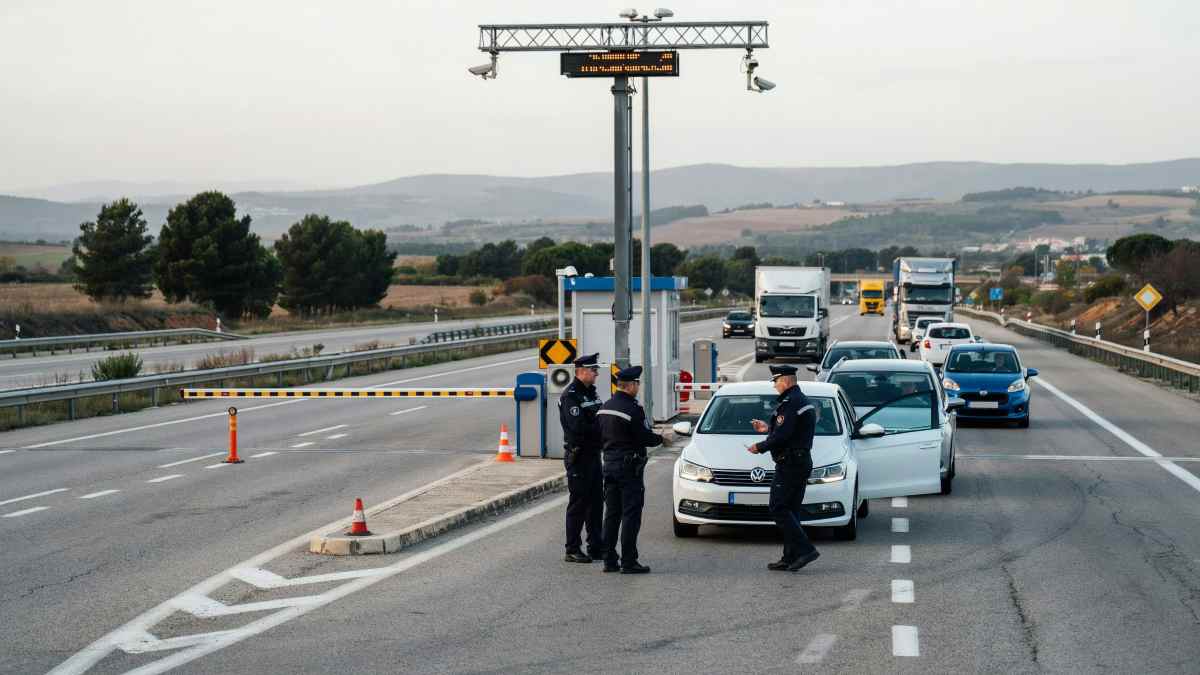
Image generated with Ai
News regarding the Schengen visa is gaining relevance among those who travel across Europe in September 2026, as some members retain their internal border control policies in addition to the general digitisation of the Schengen border procedures. Some of the countries that have applied for internal border control measures in the month under consideration are Germany, Austria, France, Italy, Denmark, the Netherlands and Sweden. These measures do not amount to the suspension of the Schengen agreement, nor are they the introduction of a new visa policy for travellers between the member countries. Rather, these measures enable the national administrations to carry out temporary checks at chosen internal borders due to security, immigration and public order concerns. According to the European Commission, these internal border controls are measures of last resort and must be kept limited and proportionate. It means that non-EU tourists, who use train, coach, car or ferry to travel through Europe, will have to undergo the passport control procedure even when they have entered the Schengen area.
Germany Maintains Extensive Internal Border Controls
Germany remains one of the most significant countries for travellers planning multi-country European journeys.
Its previous temporary controls covering all internal land borders ran until 15 September 2026. A further notification begins on 16 September, extending controls until 15 March 2027. The new period covers Germany’s land borders with France, Luxembourg, Belgium, the Netherlands, Denmark, Austria, Switzerland, Czechia and Poland.
The European Commission lists continued high levels of irregular migration and migrant smuggling, pressure on the asylum reception system and wider security considerations among the reasons given by Germany for the controls.
Advertisement
For tourists, this means a journey such as Amsterdam–Cologne–Prague, Paris–Frankfurt–Berlin or Vienna–Munich can involve document inspections at an internal border.
Travellers should therefore keep passports and relevant residence or visa documents accessible throughout an overland journey.
Austria’s September Controls Reach Their Scheduled End
Austria’s current notification runs from 16 June to 15 September 2026, covering its land and river borders with Slovakia and its land borders with Czechia, Hungary and Slovenia.
The controls are linked by Austrian authorities to irregular migration along Balkan routes, pressure on asylum and reception systems and wider security concerns.
Advertisement
Advertisement
For visitors travelling through Austria during the first half of September, this is particularly relevant on routes connecting Central Europe with Hungary, Slovenia, Czechia and Slovakia.
The scheduled Austrian period ends on 15 September unless a further notification changes the arrangement.
Italy Has Two Separate Border-Control Measures
Italy’s border situation is more complicated because two separate notifications apply.
Italy is conducting controls at its land border with Slovenia from 19 June to 18 December 2026, citing security concerns, irregular migration and the risk of terrorist infiltration into migration flows along the Western Balkan route.
Separately, Italy introduced controls at its internal air and sea borders with Spain from 1 to 16 September 2026, following developments connected with migration flows and the risk of secondary movements within the Schengen area.
That means travellers flying or travelling by sea between Spain and Italy during this period may encounter checks despite both countries being part of Schengen.
Spain Adds Checks on Italy Connections
Spain has also introduced temporary controls at its internal air and sea borders with Italy from 8 to 22 September 2026. The European Commission attributes the measure to concerns about public policy, internal security and the management of migration flows, including large-scale movements of third-country nationals within Schengen.
The overlapping Italian and Spanish measures mean that travellers using routes between the two countries during September should allow additional time for document checks.
For holidaymakers moving between Barcelona, Madrid, Rome, Milan, Naples or other destinations, the checks do not mean that a separate Spanish or Italian visa is required merely because temporary internal controls are operating.
France Continues Controls Across Multiple Borders
France’s temporary internal border controls run from 1 May to 31 October 2026.
The controls cover its internal land, air and sea borders with Belgium, Germany, Luxembourg, Switzerland, Spain and Italy. The notification cites security threats, irregular migration and smuggling networks as reasons for the measure.
This is significant for travellers using international rail and road routes. Popular journeys between Paris and Brussels, Paris and Luxembourg, France and Spain, or France and northern Italy can therefore involve document inspections.
For British travellers entering continental Europe from the UK, it is also important to distinguish these internal Schengen controls from the external border checks encountered when entering the Schengen area.
Netherlands, Denmark and Sweden Also Have Controls
The Netherlands’ current measures run until 30 September 2026, covering land borders with Belgium and Germany as well as intra-Schengen air borders. Authorities cite asylum applications, irregular migration, smuggling and secondary movements among the reasons.
Denmark has controls at its land and sea borders with Germany, currently scheduled through 11 November 2026. Sweden’s controls run through 11 November and cover all internal borders, including land, air and sea borders and its land border with Denmark.
These measures mean that travellers cannot assume that an internal Schengen journey will always involve no passport inspection.
What Non-EU Travellers Should Expect
The temporary controls are separate from the EU’s new Entry/Exit System (EES).
EES has been fully operational at all external Schengen border crossing points since 10 April 2026 and records passport information, fingerprints, facial images and entry and exit data for eligible non-EU short-stay travellers.
Once a non-EU traveller has legally entered Schengen, temporary internal controls may still require the traveller to present a passport or other appropriate documentation.
A Schengen visa remains generally valid throughout the Schengen area, subject to its conditions, and temporary internal controls do not automatically create new national tourist-visa requirements.
Official Link: https://home-affairs.ec.europa.eu/policies/schengen/schengen-area/temporary-reintroduction-border-control
European Multi-Country Holidays Need More Time
For those arranging journeys in September throughout multiple European states, the change is primarily pragmatic rather than an introduction to a different visa policy. Journeys by rail or bus will probably experience some delays as a result of the checks, and individuals who plan to drive from one state to another need to ensure that their documentation is readily accessible. Those travelling with connections need to budget extra time in particular, especially at the borders concerned. The European Commission observes that the majority of the internal border controls reintroduced are non-systematic random checks rather than systematic checks of all travellers. In September 2026, thus, the Schengen Area will still function in principle as a borderless travel area.
Advertisement
