

Texas, USA: 1 Pre-Delivery Boeing 777F Low Flyby Sparks Fury as Pilots Ask What Others Are Missing in Viral Safety Debate

Published
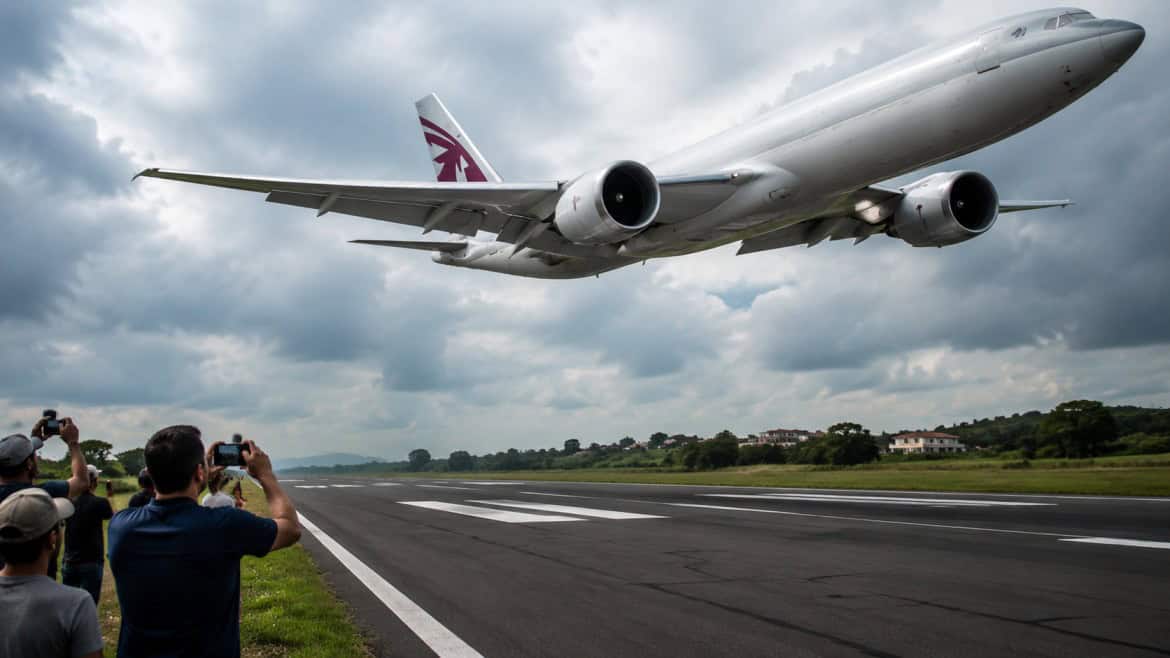
A dramatic aviation incident in Texas, United States, has triggered global debate after a 2009-built Boeing 777F freighter linked to Qatar Airways Cargo performed an extremely low flyby over Horseshoe Bay Resort Airport on 25 June 2026. The move, captured on video, has gone viral within hours and raised urgent questions about safety discipline during pre-delivery test flights.
The aircraft, registered N705DN, was not yet in active airline service but was undergoing final acceptance procedures before joining the cargo operator’s fleet. Within three sentences of the footage emerging, aviation communities, pilots, and safety analysts were already split over whether the manoeuvre was a routine calibration pass or an unnecessary and risky display. What makes this critical now is the rapid spread of the clip across social platforms, influencing public perception of aviation safety standards in real time.
The incident directly affects aviation professionals, regulators, and airlines involved in aircraft delivery operations, especially those managing widebody freighter transitions.
What Happened Over Horseshoe Bay: A Low Altitude Pass That Shocked Observers
The aircraft involved was a Boeing 777F previously delivered to Delta Air Lines in 2009 before being retired from passenger service and converted into a dedicated cargo platform. During its final pre-delivery flight, it diverted over the Texas region near Horseshoe Bay.
Advertisement
Advertisement
Witnesses at the airport reported a striking sequence:
- The aircraft approached at extremely low altitude
- Landing gear remained fully retracted
- A right bank manoeuvre brought one wingtip visually close to the runway
- The flyby occurred directly over the airfield environment
The aircraft was travelling between Grissom Aeroplex and Perot Field Fort Worth Alliance Airport, but reportedly made an unplanned detour over the airport associated with leasing operations.
Advertisement
Advertisement
While such acceptance flights are common in aviation manufacturing cycles, low-altitude flybys of this visual intensity are rare and typically discouraged unless part of structured test protocols.
Why Aviation Experts Are Calling It “Too Close for Comfort”
Experienced pilots and aviation commentators reacted swiftly after the footage circulated online. Several described the manoeuvre as inconsistent with conservative safety norms typically applied during ferry or acceptance flights.
Key concerns raised include:
- Lack of clear operational necessity for a low-altitude pass
- Potential perception risk to public safety confidence
- Questionable decision-making during a non-revenue flight
- Visual proximity to runway environment increasing risk perception
One senior aviation professional publicly described the manoeuvre as dangerously close to disaster territory, reflecting wider unease in the pilot community.
Although no official altitude data has been released, the visual evidence alone has been enough to escalate discussion across aviation forums and safety networks.
Pre-Delivery Flight Culture Under Scrutiny
The incident has reopened discussion on how aircraft are handled during final delivery stages. Pre-delivery acceptance flights are typically used to verify:
Advertisement
Advertisement
- Engine performance and systems integrity
- Avionics calibration and flight control response
- Structural and aerodynamic behaviour
- Compliance with regulatory certification standards
However, they are not intended for display-style manoeuvres. Aviation safety frameworks established under global regulators such as FAA-aligned operational guidance and EASA certification principles emphasise procedural discipline and risk minimisation during all non-commercial flights.
What makes this case unusual is not just the manoeuvre itself, but the visual framing of a large freighter aircraft appearing to “perform” near a public airfield environment.
This has created a tension between operational freedom during testing and the expectation of conservative safety optics in public spaces.
The Social Media Effect: When Aviation Becomes Instant Viral Content
A defining feature of this incident is how quickly it escalated beyond aviation circles. Within hours:
- Clips were reposted across global aviation forums
- Pilot communities began dissecting flight paths frame-by-frame
- Public audiences interpreted the manoeuvre as a near miss
- Aviation influencers amplified concerns over safety culture
This has created a new angle in aviation reporting: perception risk vs actual operational risk.
Even if technically within safe limits, the visual impact of a low flyby by a large freighter aircraft can significantly distort public understanding of aviation safety margins.
Advertisement
Advertisement
This is where the controversy has deepened. Experts argue that aviation safety is not only about technical compliance but also about maintaining trust through predictable operational behaviour.
Aircraft History Adds Another Layer to the Debate
The aircraft involved has a complex operational background. Originally delivered in 2009 to Delta Air Lines, the aircraft was retired from passenger service when the airline phased out its Boeing 777 fleet in 2020. It was later acquired by leasing specialist Jetran, converted into a freighter, and prepared for cargo operations with Qatar Airways Cargo.
According to industry transition norms, such aircraft often undergo:
- Structural modification for cargo payloads
- Full systems re-certification
- Multiple acceptance flights before delivery
The flyby occurred during what is believed to be a final validation stage. However, the absence of an official explanation has left room for speculation, intensifying scrutiny from both aviation professionals and the public.
Operator Response and Responsibility Debate
Following widespread attention, Jetran issued clarification stating that the aircraft was not yet owned or operated by Qatar Airways Cargo at the time of the incident. The company emphasised that the flight crew were not affiliated with the airline and that the aircraft was still under pre-delivery evaluation.
This distinction is important because it separates operational responsibility from branding perception. Even though the aircraft carried airline livery, control and decision-making remained outside the airline’s direct operational structure.
Advertisement
Advertisement
The company also indicated that aviation authorities may review the event to determine whether any procedural deviations occurred.
Aviation Branding Risk in the Age of Viral Flight Tracking
Beyond safety, the incident highlights an emerging industry challenge: branding exposure during pre-delivery operations.
In today’s environment:
- Aircraft liveries are instantly recognisable online
- Flight tracking is publicly accessible in real time
- Social media amplifies isolated events globally within minutes
This creates a scenario where even non-operational flights can influence airline reputation.
The key question emerging from this Texas incident is not only whether the manoeuvre was safe, but whether modern aviation logistics adequately account for reputational risk during non-revenue test operations.
A Small Flight Moment With Global Aviation Impact
What began as a single pre-delivery manoeuvre over Texas has now become a global talking point in aviation safety and perception. While no official breach has been confirmed, the intensity of public reaction shows how sensitive modern aviation audiences have become to visual cues of risk.
Advertisement
Advertisement
As discussions continue, the focus is likely to remain on how airlines, lessors, and manufacturers manage test-flight visibility in an era where every second of footage can redefine public trust.
Call to Action:
Stay updated with evolving aviation safety developments and follow emerging regulatory responses as this case continues to unfold across global aviation networks.
Advertisement
