
California Motorsport History Made as 24 Hours of Lemons Takes Its Anniversary Race to Laguna Seca

Published
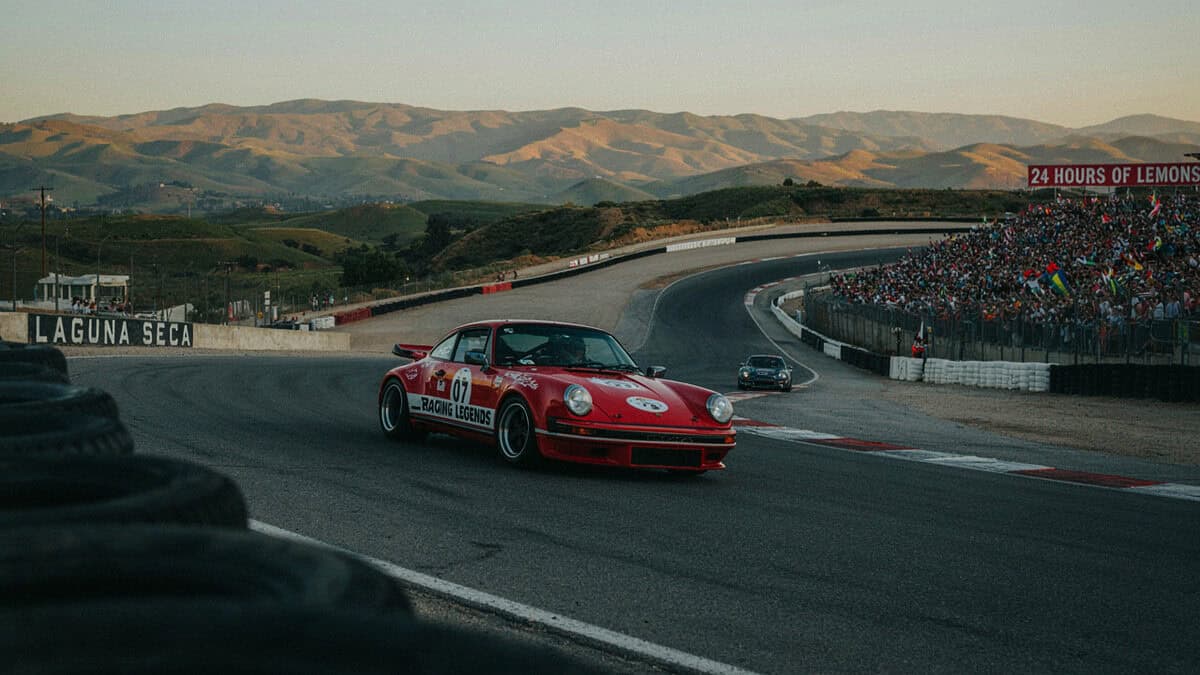
The 24 Hours of Lemons is set to celebrate two decades of budget endurance racing with its special event, “Twenty Ridiculous Years,” scheduled as a one-day race at WeatherTech Raceway Laguna Seca on Monday, October 12. The event will mark the series’ first-ever appearance at the iconic California circuit.
Since its launch in 2006, the foundation of the series has remained unchanged. Participants purchase affordable cars, modify them to meet strict safety requirements, and compete in full-contact endurance racing on professional road courses under official racing conditions, complete with regulations, flags and penalties. However, the community surrounding the event has grown significantly. More than 40,000 drivers have taken part in Lemons races, completing almost 18 million officially recorded racing miles.
Advertisement
Advertisement
Jay Lamm, Chief Perpetrator and Chief Executive Officer of the 24 Hours of Lemons, recalled that the series began as a simple experiment among car enthusiasts rather than a long-term motorsport venture.
“When we started in 2006, it was just meant to be a one-time event for me and a group of car-crazy friends. I never expected it to grow beyond that. I thought we would try to complete a 24-hour race, our cars would probably fail within the first few hours, and we would spend the rest of the weekend celebrating elsewhere,” Lamm said.
Advertisement
Advertisement
Over the years, the series has become a gateway into motorsport for thousands of first-time racers. A 2026 survey of participants revealed that 80% of respondents experienced wheel-to-wheel racing for the first time through the 24 Hours of Lemons.
The survey also highlighted the challenges that previously prevented many people from entering competitive racing. Among 735 racers who responded, 63% identified cost as the biggest barrier. Other common obstacles included not owning a suitable car (41%), lacking a racing team (40%), not knowing how to begin (36%), and being unaware that affordable motorsport opportunities were available (35%).
Advertisement
Advertisement
The anniversary event at Laguna Seca will celebrate the unusual spirit that has defined the 24 Hours of Lemons for twenty years — making racing more accessible while bringing together thousands of amateur drivers who turned inexpensive cars into competitive machines.
Racing has long carried a reputation for being an elite and intimidating world, but it does not have to feel impossible to enter. Much like skiing or golf, motorsport can be enjoyed by ordinary enthusiasts without needing to reach a professional level. Becoming a top competitor requires immense skill, but simply getting behind the wheel, staying safe and enjoying the experience is far more achievable than many people imagine.
Advertisement
Advertisement
The famous $500 car rule is often misunderstood. The regulation means teams must purchase a vehicle for no more than $500, while essential safety-related equipment is excluded from that calculation. Items such as wheels, tyres, brakes, wheel bearings, ball joints, windscreens, wipers, exhaust components after the header and many fuel-system parts are also outside the spending limit. If a team exceeds the budget, it is not removed from competition. Instead, officials review the expenses during technical inspection and apply electronic penalty laps based on the overspending amount. The goal is not to restrict participation but to prevent teams from buying a performance advantage. Spending on safety remains completely unrestricted.
Safety requirements remain the strictest part of the competition and cannot be compromised. Every vehicle must pass a detailed technical inspection before each event. Cars must feature a professionally welded roll cage, an approved fire suppression system meeting SFI 17.1 standards or an FIA equivalent, and a system that is maintained every two years. Drivers must use five- or six-point harnesses with anti-submarine belts, professional racing seats, collapsible steering columns, sealed engine firewalls, fuel-system barriers separating the cockpit and externally accessible electrical shut-off switches.
Vehicles are also required to remove airbags before racing. Drivers must wear approved full-face Snell SA2015 or newer helmets, certified head-and-neck restraint systems meeting SFI 38.1 or FIA 8858 standards, and complete fire-resistant racing gear including suits, gloves, footwear and socks. New competitors must attend a dedicated rookie briefing alongside the mandatory drivers’ meeting. Every race is supported by professional fire, rescue and ambulance teams, with emergency coverage included within the entry costs.
Aggressive driving and unsafe behaviour are treated seriously. Any form of unnecessary contact can result in a black flag, along with penalties for leaving the racing surface, ignoring official signals, speeding through the pits, reckless driving or poor sportsmanship. Punishments can escalate from formal warnings to public penalties, mandatory time penalties lasting one or three hours, and ultimately removal of an entire team from the event. Drivers are responsible for incidents occurring while they are driving, regardless of who initiated contact. Any competitor involved in a vehicle rollover faces a 12-month suspension from racing. These penalties are issued openly in the paddock, allowing spectators to see how race discipline is enforced.
Advertisement
Advertisement
Securing a place in the anniversary race was also highly competitive. More than 320 teams registered within the first two days, competing for only 45 available positions. Organisers created a unique selection process by writing team names on 10mm sockets, placing them into a container filled with used engine oil and drawing the final entries by hand on camera. The selected 45 teams have already registered 268 drivers, with organisers expecting the number to exceed 300 before race day.
For spectators, the event follows the same philosophy of accessibility. Entry is free, and every ticket includes Paddock All Access without requiring an additional payment. There are no premium barriers separating fans from the racing environment and no expensive upgrade system. Media members receive the same access as general visitors, with no special credential process required.
The location adds another historic element to the event. Laguna Seca traditionally limits races to a maximum of 45 cars, which is why the 24 Hours of Lemons had never previously competed there. The series is famous for attracting large grids, including recognition for setting the Guinness World Record for the largest number of participants in a car race in 2014.
For this anniversary celebration, however, organisers are embracing the challenge. A venue known worldwide for professional motorsport will welcome a field of inexpensive, creatively built race cars, while fans will be able to explore the paddock freely and experience the atmosphere up close.
Jay Lamm, Chief Perpetrator of the 24 Hours of Lemons, explained that Laguna Seca has always held a special place for him as a driver. Although the circuit’s strict 45-car limit made it unsuitable for the series in the past, the anniversary event provided a reason to finally bring the championship there.
He said the celebration allows the organisers to focus less on commercial considerations and more on the enjoyment of racing. For him, the opportunity means competing at his favourite circuit, driving an affordable car from a series he loves, alongside friends and fellow enthusiasts. After decades of waiting, the event represents a rare chance to celebrate the spirit of grassroots motorsport at one of the world’s most iconic tracks.
Advertisement
