
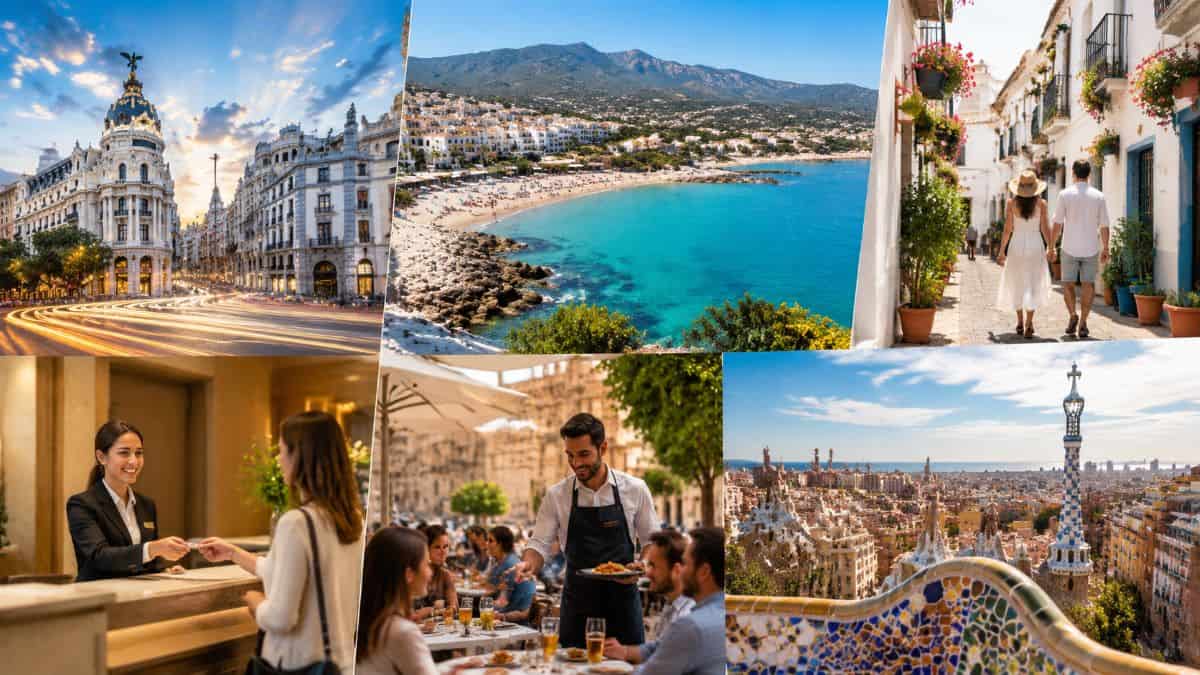
Image generated with Ai
Spain tourism is entering a new phase of growth as the UK aligns with France and Germany to strengthen international visitor demand and support a booming travel economy. Tourism is making Spain a growing economy. It is providing millions of jobs, making Spain an established tourism destination. Europe’s key markets are recognizing the potential in Spain. Hotels, and restaurants are opening up, as are tourist attractions and regional companies. The trends in tourism show that the economic impact is strengthening the industry, with employment and travel as main focuses. Sustainable destination programs are strengthening the international tourism industry by improving connectivity and giving people the opportunity for more travel experiences.
Spain tourism growth in 2026 continues to highlight the country’s position as one of Europe’s strongest travel destinations, supported by rising international demand, expanding hospitality activity and record employment levels across the tourism economy. Visitors from major European markets, including the UK, France and Germany, remain central to Spain’s tourism performance, helping drive demand across hotels, restaurants, transport services and attractions. According to official tourism and employment data, Spain’s tourism sector reached nearly 3.1 million workers in July 2026, showing the industry’s importance as a major contributor to economic activity and employment.
Advertisement
| Spain Tourism Employment Indicator 2026 | Data |
|---|---|
| Total tourism workers | Nearly 3.1 million |
| Annual employment growth | 3.7% |
| Additional workers added | 110,712 |
| Share of national employment | 13.9% |
| Salaried tourism worker growth | 4.1% |
Spain’s tourism sector has entered 2026 with strong momentum, supported by international travel demand and increased activity across accommodation, food services and visitor experiences. The country continues attracting millions of travellers seeking cultural tourism, coastal holidays, city breaks, heritage experiences and nature-based travel. European markets remain particularly important because of strong air connectivity, short travel distances and established holiday patterns. The UK continues to be one of Spain’s leading overseas visitor markets, while France and Germany provide consistent demand for destinations across mainland Spain and the islands.
The continued growth of Spain tourism reflects a broader transformation in the country’s travel industry. The sector is increasingly focused on extending visitor activity throughout the year, promoting regional destinations and strengthening tourism beyond traditional summer coastal travel. Cities, rural areas and cultural destinations are benefiting from growing interest among international travellers looking for authentic Spanish experiences.
Advertisement
Advertisement
Spain’s hospitality industry remains the strongest driver of tourism employment growth in 2026, with accommodation providers, restaurants and visitor services creating thousands of new opportunities. Official employment figures show that the hospitality sector recorded the largest increase among tourism-related activities, reflecting higher demand for hotels, resorts, restaurants and other tourism businesses.
The growth of hospitality employment demonstrates the scale of Spain’s tourism ecosystem, where visitor spending supports a wide network of businesses. Hotels, restaurants and tourism operators continue requiring larger workforces during periods of strong travel demand, particularly across popular destinations such as Andalusia, the Valencian Community, the Balearic Islands and the Canary Islands.
| Tourism Sector Employment Growth | July 2026 Change |
|---|---|
| Hospitality sector total | +70,409 workers |
| Accommodation services | +21,246 workers |
| Food and beverage services | +49,163 workers |
| Salaried tourism employment | +4.1% |
| Self-employed tourism employment | +1.8% |
Spain’s employment performance underlines the importance of tourism as a long-term economic sector. While tourism remains highly connected to international arrivals, the industry also supports millions of domestic economic activities, including transport, retail, entertainment and cultural services.
The increase in salaried employment highlights stronger business confidence within the tourism sector. Hotels, restaurants and tourism companies have expanded their workforce to meet demand from international and domestic travellers. Accommodation services recorded notable growth as travellers continued searching for quality stays, luxury experiences and diverse holiday options.
The food and beverage sector also played a significant role in tourism employment expansion. Restaurants, cafés and hospitality businesses benefited from higher visitor activity, particularly in major tourism regions. This growth reinforces Spain’s reputation as a destination where travel experiences extend beyond sightseeing into gastronomy, culture and local lifestyles.
The United Kingdom remains one of Spain’s most important international tourism markets, supporting visitor arrivals, hospitality demand and employment growth across major Spanish destinations. British travellers continue choosing Spain for Mediterranean holidays, city breaks, cultural experiences and extended stays, creating steady demand for hotels, restaurants, transport services and attractions. The strength of UK-Spain travel connections helps sustain tourism activity throughout the year, particularly in popular destinations such as the Balearic Islands, Canary Islands, Andalusia and the Valencian Community.
| UK Tourism Impact on Spain | Employment Contribution |
|---|---|
| Holiday tourism | Supports hotel, resort and accommodation jobs |
| City breaks | Increases demand for urban tourism services |
| Long-stay travel | Supports extended hospitality employment |
| Air connectivity | Creates demand for airport and transport services |
The continued flow of UK visitors contributes directly to Spain’s tourism employment performance. As international arrivals increase, businesses require more workers across accommodation, food services, travel operations and visitor activities. The growth of tourism-linked employment reflects how major source markets like the UK influence Spain’s wider economic performance.
France continues to play a crucial role in Spain’s tourism landscape due to its geographic proximity, strong transport links and frequent cross-border travel. French visitors contribute significantly to regional tourism growth, benefiting destinations that offer cultural experiences, gastronomy, heritage attractions and short-break opportunities. Easy access by road, rail and air allows French travellers to explore both major cities and lesser-known Spanish regions.
| French Tourism Impact on Spain | Employment Contribution |
|---|---|
| Cultural tourism | Supports museums, heritage sites and guided tours |
| Regional travel | Creates opportunities in smaller destinations |
| Gastronomy tourism | Supports restaurants and food services |
| Short breaks | Maintains steady hospitality demand |
French visitor demand supports Spain’s strategy of spreading tourism growth beyond traditional hotspots. Increased interest in smaller cities, rural destinations and cultural routes helps create employment opportunities in regions that previously depended less on international tourism.
The contribution of French travellers extends beyond visitor numbers. Their spending supports local tourism businesses, encourages destination development and strengthens employment opportunities across accommodation, restaurants, retail and tourism services.
Germany remains one of Spain’s strongest tourism markets, particularly for coastal destinations, island tourism and outdoor experiences. German travellers continue showing strong interest in Spain’s beaches, nature destinations, wellness experiences and longer holidays. Their contribution supports employment growth in regions that depend heavily on international leisure tourism.
| German Tourism Impact on Spain | Employment Contribution |
|---|---|
| Island tourism | Supports resorts, hotels and tourism services |
| Outdoor travel | Creates jobs in nature and adventure tourism |
| Longer holidays | Increases accommodation employment |
| Premium travel | Supports higher-value tourism services |
German tourism demand contributes to Spain’s growing focus on higher-value travel experiences. Increased interest in wellness tourism, sustainable travel and outdoor activities is helping diversify Spain’s tourism economy while creating new employment opportunities.
The combined impact of visitors from the UK, France and Germany demonstrates the importance of European markets in Spain’s tourism success. These three countries continue supporting millions of tourism-related activities, helping Spain maintain nearly 3.1 million tourism workers in 2026. Their contribution strengthens employment across hotels, restaurants, attractions, transport networks and regional tourism businesses, reinforcing Spain’s position as one of Europe’s leading tourism economies.
Spain tourism growth is reshaping the European travel landscape, with the UK aligning with France and Germany as key markets supporting the country’s expanding visitor economy. With its tourism boom, Spain is helping to reinforce the global tourism market, providing new opportunities in the hospitality segment, in the destinations and also in travel services. In Spain, record numbers of visitors are being welcomed and jobs are increasing, proving the strong link between international tourism and economic growth. Tourism employment is increasing and the variety of experiences and the sustainability strategies in travel and tourism make Spain a key destination in the future for tourists around the world.
Advertisement
Tags: European tourism growth, France tourism market, Germany visitors Spain, Global Travel Trends, Spain tourism 2026
Advertisement
Advertisement













Saturday, September 5, 2026

Friday, September 4, 2026

Saturday, September 5, 2026
Saturday, September 5, 2026

Thursday, September 3, 2026

Wednesday, September 2, 2026

Saturday, September 5, 2026



