
Bariloche Unites Iguazú, Bogotá, Rio, Quito, Santiago, And Huaraz Cities Are Currently Booming As The Ultimate Travel Frontiers Where Nahuel Huapi Park, Cotopaxi, Chingaza, And Tijuca Converge To Create An Adrenaline-Fueled Odyssey, Uncover Every Hidden Secret Of The Wild Across South America And Immerse Yourself In The Definitive Dossier Of The Latest Updates

Published
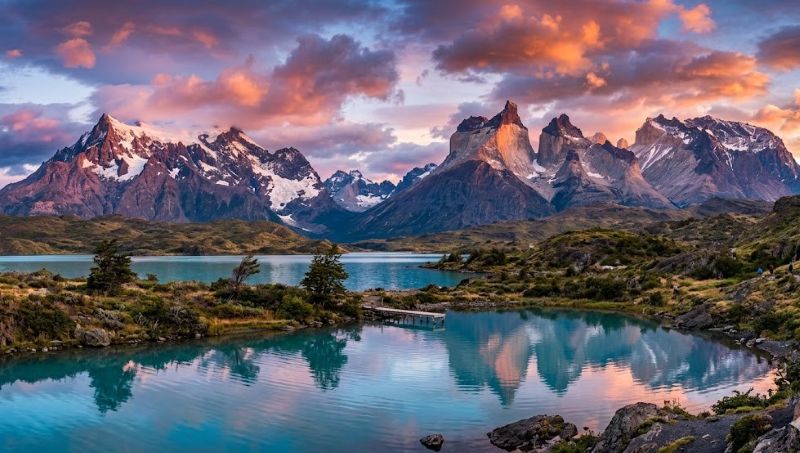 Image generated with Ai
Bariloche Unites Iguazú, Bogotá, Rio, Quito, Santiago, And Huaraz Cities Are Currently Booming As The Ultimate Travel Frontiers Where Nahuel Huapi Park, Cotopaxi, Chingaza, And Tijuca Converge To Create An Adrenaline-Fueled Odyssey, Uncover Every Hidden Secret Of The Wild Across South America And Immerse Yourself In The Definitive Dossier Of The Latest Updates! Travel And Tour World urges readers to pause and witness this skyrocketing global phenomenon. Bariloche unites with Iguazú, Bogotá, Rio, Quito, Santiago, and Huaraz Cities to ignite a total travel revolution. This booming travel landscape isn’t just growing; it is evolving into an adrenaline-fueled odyssey that defies every traditional boundary.
See how Nahuel Huapi Park, Cotopaxi, Chingaza, and Tijuca converge into a primal masterpiece of peaks and water. Every hidden secret of the wild across South America is being unmasked for the modern pioneer. This exclusive dossier serves as your tactical guide to the latest updates in high-octane exploration. From the urban verticality of Rio to the glacial heights of Santiago, the ultimate travel frontiers have arrived. The wild across South America is no longer a distant dream it is a booming reality. Dive into the latest updates now to master this dossier of the deep wild.
The Architecture of an Adventure Revolution
The current surge in South American adventure tourism is driven by a unique cause: the strategic integration of urban infrastructure with raw, protected wilderness. Historically, reaching the “wild” required days of arduous overland transit. However, in 2026, the reason for this booming market is the “point-to-point” connectivity revolution. Major hubs like Bogotá and Santiago have transformed into high-velocity gateways. They allow travellers to move from a cosmopolitan setting to the heart of Chingaza or Torres del Paine in record time. This accessibility has unlocked the ultimate travel frontiers for a demographic that demands both “grit” and efficiency.
Advertisement
Advertisement
The answer to why these Huaraz Cities and Rio sectors are skyrocketing lies in the “Soft Adventure” segment. This trillion-dollar market shift prioritises high-intensity exploration, such as climbing in Tijuca or trekking Nahuel Huapi Park, followed by premium recovery. Quito and Iguazú have adapted by embedding expert logistics directly into the visitor experience. Consequently, the hidden secret is no longer the destination itself, but the seamless way these cities facilitate the adrenaline-fueled odyssey.
 Image generated with Ai
Furthermore, the reason for this sustained growth is the transition toward evidence-based sustainability. Travellers now view their South America expeditions as direct investments in conservation. Every permit for Chingaza or Iguazú funds the very ecosystems they admire. This creates a virtuous cycle where the booming interest in the wild provides the financial shield necessary for its survival. As Bariloche unites the continent’s diverse terrains, the latest updates confirm that South America has become the definitive global benchmark for responsible, high-octane travel. This dossier proves that the boundary between the city and the sanctuary has finally, and successfully, dissolved.
Advertisement
Advertisement
The Vertical Frontier: A Definitive 2026 Analytical Report on South America’s Seven Greatest Adventure Hubs
Beyond the rhythmic pulse of samba and the colonial charm of cobblestone plazas lies a continent defined by its raw, unyielding verticality. South America is no longer merely a destination for the leisurely traveller; it has metamorphosed into the ultimate sanctuary for the adrenaline-starved soul. Here, adventure is not a distant destination reached by hours of monotonous transit. Instead, it is an immediate, visceral reality that sits right in the backyard of the world’s most vibrant metropolitan centres. From the misty, high-altitude wetlands of the Colombian Andes to the wind-scoured glacial steppes of deepest Patagonia, the continent offers a sensory overload that defies conventional travel narratives. This analytical exploration delves into the “Big Seven” urban adventure hubs where the boundary between civilisation and the wild has completely dissolved, creating a playground for those who seek to test their limits against the backdrop of the planet’s most dramatic landscapes.
Advertisement
Advertisement
The year 2026 marks a pivotal moment in the evolution of global travel. We are witnessing a monumental shift toward “Soft Adventure” a movement where hiking, trekking, and high-altitude immersion are no longer the exclusive domain of elite mountaineers but have become accessible to the curious and the determined. This shift is reflected in a global market projected to soar toward a staggering $994.63 billion. South America stands at the very vanguard of this revolution, driven by its unique ability to provide world-class infrastructure alongside untouched wilderness. As we dissect these seven iconic locations, we see a tapestry of conservation, indigenous heritage, and geological wonder. This report serves as a definitive guide for the modern explorer, providing an in-depth analysis of the national parks that define the South American spirit, the hiking trails that challenge the human spirit, and the profound impact that this surging tourism sector has on the environmental and social fabric of the continent.
The Sacred Echoes of the High-Altitude Páramo in Bogotá, Colombia
Perched on a sprawling plateau in the Eastern Cordillera, Bogotá serves as the ethereal gateway to a landscape that feels more Martian than terrestrial. The city is the primary launchpad for those seeking the Chingaza National Natural Park, a sanctuary that protects the high-Andean páramo ecosystem. This is a unique, sponge-like wetland found in only a handful of places across the globe, serving as the primary water source for millions of Colombians. The park is a realm of mist and mystery, where the silence is broken only by the wind whistling through the frailejones giant, furry-leaved plants that dominate the landscape.
The quintessential adventure within this high-altitude haven is the hike to the Cuchillas de Siecha. This trail is not merely a physical challenge; it is a pilgrimage into the ancestral heart of the Muisca people. As you ascend between 800 and 4,020 metres above sea level, the air grows thin and crisp, demanding respect and careful acclimatisation. The reward is a view of the sacred glacial lagoons, which were once the site of ancient rituals and the legendary tales of El Dorado. According to official government data, the ecological fragility of this site is so profound that visitors must register at least fifteen days in advance. This management strategy ensures that the impact of tourism remains minimal, preserving the delicate water-producing capacity of the park while allowing travellers to witness the raw, primitive beauty of the Colombian Andes.
Advertisement
Advertisement
The Emerald Crown of the Atlantic Rainforest in Rio de Janeiro, Brazil
Few cities on Earth possess a visual drama that rivals Rio de Janeiro. While the world looks to its beaches, the true soul of the city resides in the Tijuca National Park. This is one of the largest urban forests on the planet, a lush, emerald lung that breathes life into the sprawling metropolis below. It is a masterpiece of reforestation, a place where the rugged peaks of the Atlantic rainforest seem to surge directly out of the ocean, creating a skyline that is both urban and primal.
The adventure here is found on the vertical slopes of Pedra da Gávea and the winding paths of Pico da Tijuca. For the intrepid hiker, these trails offer a grueling ascent through dense canopies inhabited by capuchin monkeys and exotic birds. Reaching the summit provides a perspective of the Christ the Redeemer statue and the serpentine coastline that no tourist bus can ever replicate. Administered by the Chico Mendes Institute (ICMBio), the park is a UNESCO Biosphere Reserve, highlighting its critical role in biodiversity conservation. With over thirty waterfalls and a sprawling network of trails, Tijuca represents the perfect synergy between a modern global hub and an ancient, thriving ecosystem within Brazil.
Standing in the Shadow of the Volcanoes in Quito, Ecuador
Quito, the historic capital of Ecuador, is nestled in a narrow valley flanked by the towering titans of the Avenue of Volcanoes. This is a region where the earth is still very much alive, and nowhere is this more evident than in Cotopaxi National Park. The park is dominated by the near-perfect cone of the Cotopaxi Volcano, which rises to an intimidating 5,897 metres. It is a landscape of stark contrasts burnt volcanic soil against the brilliant white of perennial glaciers.
 Image generated with Ai
For those seeking the pinnacle of adventure, the summit attempt of Cotopaxi is a rite of passage. It requires technical gear, expert guides, and a resilience that only the high Andes can demand. However, the park also caters to the growing “Soft Adventure” market. The Laguna Limpiopungo trail offers a more meditative experience, allowing hikers to traverse high-altitude plains where wild horses roam freely against the backdrop of the smoking crater. The Ministry of Environment, Water and Ecological Transition maintains a 24/7 vigil over the volcano, ensuring that tourism and safety go hand-in-hand. This intersection of geological instability and recreational opportunity makes Quito a uniquely thrilling epicentre for adventure tourism.
Advertisement
Advertisement
The Threshold of the Granite Giants in Santiago, Chile
While Santiago is a sophisticated, cosmopolitan valley city, its gravity pulls every adventurer southward toward the rugged tip of the continent. It serves as the vital connection to Torres del Paine National Park in Chilean Patagonia. Often referred to as the “Eighth Wonder of the World,” this park is a cathedral of nature, defined by its massive glaciers, turquoise lakes, and the iconic granite towers that pierce the sky like the teeth of a giant.
The legends of hiking are written here on the “W” Trek and the more extensive “O” Circuit. These are multi-day expeditions that test the endurance of even the most seasoned trekkers. The weather in this region, managed by CONAF, is notoriously volatile, with “unstable trans-Andean” winds that can reach 120 km/h without warning. The logistical challenge of securing campsite reservations six months in advance only adds to the allure of the park. Torres del Paine is not just a hike; it is a battle of wills against the elements, situated at the very edge of the inhabited world in Chile.
The Roar of the Atlantic Water Wall in Puerto Iguazú, Argentina
At the humid, subtropical junction where Argentina, Brazil, and Paraguay meet, Puerto Iguazú offers an adventure defined by the power of water. The Iguazú National Park is home to the world’s most extensive waterfall system, a thundering collection of 275 individual drops that carve through the Interior Atlantic Rainforest. This is an environment of intense humidity, vibrant butterflies, and the constant, low-frequency hum of falling water.
The Macuco Trail provides a raw, 6-kilometre immersion into this jungle, leading hikers away from the crowds toward the hidden Arrechea Waterfall. This path is a biodiversity hotspot where lucky travellers might catch a glimpse of the elusive jaguar or the inquisitive coati. However, the true climax of any visit is the “Devil’s Throat” walkway. The Administración de Parques Nacionales has engineered a path that brings visitors to the very brink of the river’s collapse, where the water plunges over 80 metres into a misty abyss. It is a high-intensity sensory experience that underscores the raw, hydraulic power of the South American continent.
Advertisement
Advertisement
The Undisputed Capital of Mountaineering in Huaraz, Peru
While many flock to the ruins of the south, the true adventure seekers head north from Lima to Huaraz, the gateway to the Cordillera Blanca. This is the highest tropical mountain range in the world, and Huascarán National Park is its crowning jewel. The park is a jagged skyline of 27 peaks that exceed 6,000 metres, including the mighty Nevado Huascarán.
Hiking to Laguna 69 or embarking on the Santa Cruz Trek are experiences that define the Peruvian adventure. These trails lead through deep valleys carved by ancient ice, past neon-blue glacial lakes and under the gaze of ice-clad peaks. Because of the extreme altitude, SERNANP classifies this as a high-risk adventure zone. The threat of pulmonary edema is real, and the requirement for hikers to register at the central office in Huaraz reflects the serious nature of these mountains. For those who want to touch the sky, there is no place on the continent that offers such a concentrated dose of alpine majesty.
The Alpine Soul of the Lake District in San Carlos de Bariloche, Argentina
In the northern reaches of Argentine Patagonia, San Carlos de Bariloche sits on the shores of the glacial Nahuel Huapi Lake. Surrounded by the Nahuel Huapi National Park, this city is the spiritual home of Argentine trekking. The landscape is a breathtaking blend of sapphire water, ancient cypress forests, and jagged volcanic rock.
The “Refugio” Circuit is the definitive hiking experience here, allowing travellers to trek between high-mountain huts such as Refugio Frey. Staying overnight in these huts, perched on the edge of granite cirques, offers a communal mountain culture that is rare in the Americas. As Argentina’s first national park, the government places a heavy emphasis on protecting the unique biodiversity of the North Andean steppe. It is a place of profound quiet and immense beauty, where the adventure is as much about the silence of the forest as it is about the steepness of the climb in Argentina.
Advertisement
Advertisement
The 2026 Shift: The Socio-Economic Impact of Adventure Tourism
The rise of South America as a global adventure hub is not merely a trend for travellers; it is a transformative force for the continent’s economy and environment. With the global adventure market nearing the trillion-dollar mark in 2026, the impact of tourism is profound. In regions like Patagonia and the Andean Highlands, adventure tourism provides a sustainable alternative to extractive industries like mining or logging. By putting a financial value on standing forests and clean rivers, tourism becomes a powerful tool for conservation.

Furthermore, the Soft Adventure segment which accounts for over 51% of the market brings a more diverse demographic into these wild spaces. This influx of capital supports local communities, from the mountain guides in Huaraz to the lodge owners in Bariloche. However, this growth also necessitates a sophisticated management approach. The strict registration systems in Colombia and the reservation requirements in Chile are essential to prevent the “over-tourism” that has plagued other global landmarks. The challenge for 2026 and beyond is to balance this immense economic opportunity with the sacred duty of preserving the very wilderness that people travel thousands of miles to see.
The Vertical Frontier: A 2026 Analytical Comparison of Adventure Hubs
The following table provides a high-level comparison of the “Big Seven” cities, focusing on their primary high-altitude gateways and the institutional oversight that ensures their preservation. These hubs represent the core of South America’s urban-nature synergy in 2026.
| City & Country | Primary National Park | Adventure Challenge | Peak Elevation | Regulatory Authority |
| Bogotá, Colombia | Chingaza National Park | Siecha Sacred Lagoons | 4,020m | Parques Nacionales |
| Rio, Brazil | Tijuca National Park | Pedra da Gávea Climb | 1,021m | ICMBio Brazil |
| Quito, Ecuador | Cotopaxi National Park | Volcanic Summit Trek | 5,897m | Ministry of Environment |
| Santiago, Chile | Torres del Paine | The Iconic “W” Circuit | 2,884m | CONAF Chile |
| Iguazú, Argentina | Iguazú National Park | Macuco Rainforest Trail | 80m (Drop) | Parques Nacionales |
| Huaraz, Peru | Huascarán National Park | Laguna 69 Alpine Hike | 6,768m | SERNANP Peru |
| Bariloche, Argentina | Nahuel Huapi Park | Refugio Frey Circuit | 3,478m | Argentine Government |
The Skyward Surge: Redefining the 2026 Global Gateway to the Wild
Advertisement
Advertisement
The year 2026 marks a historic departure from traditional travel logistics, as the invisible walls between metropolitan luxury and raw wilderness crumble under the weight of a massive global aviation revolution. For decades, the most pristine corners of our planet were guarded by the “tax of time” the grueling twelve-hour bus rides and multi-day overland treks required to reach the heart of the wild. Today, that barrier is being dismantled by a strategic push in aviation infrastructure that prioritises direct access to the earth’s most remote frontiers.
Secondary Hubs: The New Cartography of Connectivity in India and Beyond
At the centre of this transformation is the rise of the regional secondary hub. These are not merely overflow facilities for congested capitals; they are precision-engineered gateways designed to drop adrenaline-seekers directly into the action. A prime example is the Noida International Airport (Jewar) in India. By offloading the saturated traffic of New Delhi, this mammoth infrastructure project serves as a high-speed conduit to the trekking circuits of the Himalayas and the wildlife sanctuaries of the north.
This trend is mirrored across the Southern Hemisphere. In South America, expanded routes are bypassing traditional coastal entries, creating a new map of point-to-point connectivity. Travellers are no longer tethered to major capitals like Bogotá or Santiago for days of transit. Instead, they are flying directly into the rugged interior, moving from a city skyscraper to a high-altitude trailhead in a matter of hours.
The Micro-Adventure: Turning Expeditions into Weekends
This aviation surge has birthed a new travel phenomenon: the high-intensity micro-adventure. In 2026, the logistical shorthand of aviation means that a week-long expedition into the Andean Páramo or the Amazonian fringes has been condensed into a manageable weekend escape. For the modern explorer, time is the new luxury, and these direct flight paths are the ultimate currency.
Advertisement
Advertisement
By eliminating the “dead time” of traditional travel, aviation is democratising the wild. Places that once required a sabbatical-length commitment are now accessible to the dedicated professional. This shift is forcing a rewrite of the adventure narrative moving away from the “slog” of the journey and focusing entirely on the visceral immersion of the destination.
Aviation as an Infrastructure for Global Conservation
The impact of these Wilderness Gateways extends far beyond mere convenience. By creating direct economic links between global aviation hubs and remote national parks, tourism is being positioned as a primary shield for conservation. In regions like Patagonia or the Cordillera Blanca, the influx of aviation arrivals provides the essential funding needed to maintain trail integrity and protect endangered biodiversity.
As we move further into 2026, the sky is no longer just a path to a city; it is a bridge to the primal. The surge in aviation infrastructure is not just about moving people it is about collapsing the distance between our modern lives and the ancient, unyielding power of the natural world.
The Basecamp Revolution: How 2026 is Redefining the Soul of Global Hospitality
The year 2026 has heralded a seismic shift in how we perceive world-class accommodation. The era where a hotel’s prestige was dictated solely by the thread count of its linens or the silence of its corridors has officially ended. In its place, a more visceral and profound standard has emerged: Experiential Engagement. For the modern pioneer, a hotel is no longer the final stop on a map; it is the high-octane engine that drives the entire expedition. This is the birth of the “functional sanctuary,” where luxury is measured by the quality of the climb and the depth of the wilderness immersion.
Advertisement
Advertisement
The Command Centre: Transitioning from Concierge to Expedition Specialist
Step into a premier lobby in 2026, and you will find that the traditional quietude has been replaced by the focused energy of an elite headquarters. Global giants like Hilton and Marriott have pivoted their philosophy, recognising that the sophisticated traveller no longer seeks a simple room they seek a gateway. These brands are now embedding world-class mountain guides and adventure specialists directly into the guest experience.
In the high-altitude heart of Quito, Ecuador, or the lakeside majesty of Bariloche, Argentina, the traditional check-in desk has evolved into a high-tech Adventure Hub. Guests are greeted not just with a key, but with comprehensive high-altitude briefings and satellite-linked topographical mapping sessions. This is Functional Hospitality in its purest form a bridge constructed to carry the traveller seamlessly from the lap of urban comfort into the heart of the unyielding wild.
Logistical Supremacy: The Hotel as a Technical Gear Forge
One of the most significant barriers to global adventure the daunting task of hauling heavy, technical equipment across continents has been dismantled by the 2026 hospitality model. Leading properties in the Andean and Patagonian corridors have transformed into sophisticated gear hubs. A traveller can now arrive with little more than their hiking boots and be professionally outfitted with the latest carbon-fibre trekking poles, high-performance weather shells, and precision GPS beacons.
 Image generated with Ai
Safety has become a seamless extension of the guest service. By providing “Active Safety Tracking,” hotels now maintain a digital lifeline to their guests. Whether you are traversing a remote ridge or navigating a glacial valley, the property provides real-time weather intelligence and emergency support via satellite. Coupled with private “direct-to-trailhead” shuttles, the logistical friction of mountain travel has vanished, allowing the explorer to focus entirely on the horizon.
Advertisement
Advertisement
The Basecamp Philosophy: Recovery and Community in South America
This metamorphosis is most strikingly visible across the “Big Seven” adventure hubs of South America. In the mountaineering mecca of Huaraz, Peru, and the sprawling valleys of Santiago, Chile, the Basecamp Philosophy has become the gold standard. In these establishments, the guest room is designed for a single purpose: optimal recovery. The real life of the hotel happens in the “mud rooms,” where gear is serviced, and in the communal “summit lounges,” where the day’s triumphs are shared over high-protein, nutritionally calibrated menus.
By evolving into a functional hub for gear and logistics, the hospitality industry has reclaimed its ancient role as a true sanctuary. The elite hotels of 2026 are those that possess the confidence to empower their guests to leave. They provide the tools, the intelligence, and the courage to conquer the world’s most formidable terrains, always standing ready to welcome the weary explorer back into a cradle of well-earned, high-performance rest.
The Expeditionary Shift: How 2026 is Redefining the Soul of Global Hospitality
The year 2026 has heralded a seismic shift in how we perceive world-class accommodation. The era where a hotel’s prestige was dictated solely by the thread count of its linens or the silence of its corridors has officially ended. In its place, a more visceral and profound standard has emerged: Experiential Engagement. For the modern pioneer, a hotel is no longer the final stop on a map; it is the high-octane engine that drives the entire expedition. This is the birth of the “functional sanctuary,” where luxury is measured by the quality of the climb and the depth of the wilderness immersion.
The Command Centre: Transitioning from Concierge to Expedition Specialist
Advertisement
Advertisement
Step into a premier lobby in 2026, and you will find that the traditional quietude has been replaced by the focused energy of an elite headquarters. Global giants have pivoted their philosophy, recognising that the sophisticated traveller no longer seeks a simple room they seek a gateway. These brands are now embedding world-class mountain guides and adventure specialists directly into the guest experience.
In the high-altitude heart of Quito, Ecuador, or the lakeside majesty of Bariloche, Argentina, the traditional check-in desk has evolved into a high-tech Adventure Hub. Guests are greeted not just with a key, but with comprehensive high-altitude briefings and satellite-linked topographical mapping sessions. This is Functional Hospitality in its purest form a bridge constructed to carry the traveller seamlessly from the lap of urban comfort into the heart of the unyielding wild.
Logistical Supremacy: The Hotel as a Technical Gear Forge
One of the most significant barriers to global adventure the daunting task of hauling heavy, technical equipment across continents has been dismantled by the 2026 hospitality model. Leading properties in the Andean and Patagonian corridors have transformed into sophisticated gear hubs. A traveller can now arrive with little more than their hiking boots and be professionally outfitted with the latest carbon-fibre trekking poles, high-performance weather shells, and precision GPS beacons.
Safety has become a seamless extension of the guest service. By providing Active Safety Tracking, hotels now maintain a digital lifeline to their guests. Whether you are traversing a remote ridge or navigating a glacial valley, the property provides real-time weather intelligence and emergency support via satellite. Coupled with private “direct-to-trailhead” shuttles, the logistical friction of mountain travel has vanished, allowing the explorer to focus entirely on the horizon.
The Hub of Recovery: Fostering Community and Grit in South America
Advertisement
Advertisement
This metamorphosis is most strikingly visible across the “Big Seven” adventure hubs of South America. In the mountaineering mecca of Huaraz, Peru, and the sprawling valleys of Santiago, Chile, the Functional Sanctuary model has become the gold standard. In these establishments, the guest room is designed for a single purpose: optimal recovery.
 Image generated with Ai
The real life of the hotel happens in the “mud rooms,” where gear is serviced, and in the communal “summit lounges,” where the day’s triumphs are shared over high-protein, nutritionally calibrated menus. By evolving into a functional hub for gear and logistics, the hospitality industry has reclaimed its ancient role as a true sanctuary. The elite hotels of 2026 are those that possess the confidence to empower their guests to leave, providing the tools and the intelligence needed to conquer the world’s most formidable terrains before returning to a cradle of high-performance rest.
The 2026 Market Evolution: Adventure Tourism Key Performance Indicators
This table dissects the economic and behavioural shifts driving the trillion-dollar adventure revolution. It focuses on the specific metrics that define how the “Soft Adventure” segment is reshaping global hospitality and infrastructure.
| Metric Category | 2026 Projected Data | Primary Growth Driver | Key Demographic | Market Focus |
| Market Valuation | $994.63 Billion | Soft Adventure Surge | 30–50 Year Olds | Sustainable Growth |
| Segment Dominance | 51% Market Share | Comfortable Grit Trend | Affluent Professionals | High-End Recovery |
| Sustainability Trust | 72% of Travellers | Evidence-Based Data | Ethical Explorers | Verified Eco-Credits |
| Aviation Logistics | 68% Increase | Point-to-Point Hubs | Time-Poor Travellers | Regional Connectivity |
| Hospitality Model | 45% Expansion | Expeditionary Hubs | Gear-Focused Guests | Functional Luxury |
The Trillion-Dollar Frontier: Navigating the 2026 Soft Adventure Revolution
The global travel landscape has reached a definitive crescendo in 2026. What was once a niche pursuit for the rugged elite has evolved into a gargantuan economic engine, with the adventure tourism market hurtling toward a staggering $994.63 billion valuation. However, this is not a revolution led by ice-axe-wielding mountaineers or extreme survivalists. Instead, the mantle has been seized by the “Soft Adventure” movement a sophisticated blend of adrenaline and elegance that now commands a dominant 51% of the global market.
Advertisement
Advertisement
The Rise of “Comfortable Grit”: Redefining the Modern Pioneer
At the heart of this billion-dollar shift is a specific and influential demographic: the 30-to-50-year-old traveller. This cohort is pioneering a concept known as “Comfortable Grit.” They are no longer satisfied with passive sightseeing, nor are they willing to sacrifice their physical well-being for a view. They seek the visceral intensity of a high-altitude trek or a remote jungle traverse by day, provided it is bookended by high-thread-count linens and world-class gastronomy by night.
In the dramatic corridors of South America and the rugged highlands of India, this trend is reshaping the very fabric of the journey. The modern pioneer wants to touch the sky in the Andean peaks but expects a temperature-controlled sanctuary to await them at the base. This is adventure without the “ache,” where the thrill of the wild is curated with the precision of a luxury concierge.
National Parks as Luxury Landscapes: The Evolution of the Wild
To meet this affluent surge, the world’s most iconic national parks are undergoing a radical metamorphosis. We are witnessing the end of the “roughing it” era. In places like Torres del Paine in Chile or the mist-shrouded Chingaza in Colombia, institutional management is pivoting toward high-end infrastructure.
The traditional wooden shack has been replaced by the Luxury Mountain Hut architectural marvels that offer panoramic views and spa-grade recovery facilities in the heart of the wilderness. This evolution allows travellers to immerse themselves in the “silent places” of the earth without forfeiting the amenities of a cosmopolitan capital. It is a strategic adaptation by government bodies to capture the spending power of a demographic that views nature as the ultimate luxury good.
Advertisement
Advertisement
Glamping and the Democratisation of the Wilderness
Perhaps the most visible symbol of this revolution is the global explosion of “Glamping.” From the volcanic foothills of Ecuador to the northern reaches of Argentina, sophisticated geodesic domes and safari-style tents are appearing in locations previously deemed inaccessible. These sites offer a sensory immersion that a traditional hotel cannot match allowing a guest to fall asleep under the crystalline stars of the Atacama or the Himalayas while resting on a plush mattress.
This isn’t just about glamour; it’s about accessibility. By removing the logistical friction of traditional camping, these high-end outposts have democratised the wild for a broader, wealthier audience. In 2026, the forest floor is no longer a place of discomfort; it is a theatre of high-performance hospitality.
The Economic Impact: Adventure as a Sustainable Investment
This trillion-dollar trajectory is doing more than just pampering travellers; it is providing the financial lifelines necessary for global conservation. Because the “Soft Adventure” segment is willing to pay a premium for pristine environments, their presence acts as a powerful deterrent against extractive industries.
In hubs like Huaraz, Peru, or Bariloche, Argentina, the “hospitality spend” of this booming market is being directly reinvested into trail maintenance, reforestation, and wildlife protection. In 2026, your desire for a comfortable bed after a long hike is quite literally funding the survival of the planet’s most vulnerable ecosystems. The Soft Adventure revolution has proven that the most effective way to save the wilderness is to make it both breathtakingly wild and undeniably comfortable.
Advertisement
Advertisement
The Future of the South American Frontier
South America stands at a crossroads of opportunity. The “Big Seven” hubs, Bogotá, Rio, Quito, Santiago, Puerto Iguazú, Huaraz, and Bariloche, represent more than just points on a map. They are the frontline of a new relationship between humanity and the natural world. Through rigorous management by national institutions like CONAF, SERNANP, and ICMBio, these parks are proving that adventure can be both thrilling and responsible.
 Image generated with Ai
As we look toward the remainder of the 2026 season, the message is clear: the modern traveller is no longer content with the view from the window. They want the wind of the Páramo in their face, the spray of Iguazú on their skin, and the thin air of the Cordillera in their lungs. South America is ready to meet them, offering a vertical frontier that is as challenging as it is beautiful, and as fragile as it is powerful.
The Final Ascent: Seizing the Future of the South American Frontier
As the dust settles on the mountain trails and the spray from the waterfalls recedes, one truth remains: we are witnessing a permanent metamorphosis of the global travel landscape. South America has successfully shed its image as a difficult-to-reach frontier, emerging instead as a high-velocity, high-performance sanctuary for the modern pioneer. The fusion of urban sophistication with raw, primal power has created a blueprint for the future of exploration, one where sustainability is not just a promise, but a verified, data-driven reality. Bariloche Unites Iguazú, Bogotá, Rio, Quito, Santiago, and Huaraz Cities are currently Booming as the ultimate Travel frontiers where Nahuel Huapi Park, Iguazú, Chingaza, and Tijuca converge to create an adrenaline-fueled odyssey, uncover every hidden secret of the wild across South America and immerse yourself in the definitive dossier of the latest updates!
This adventure revolution is more than a mere trend; it is a profound investment in the heartbeat of our planet. By choosing the “comfortable grit” of these secondary hubs, you are directly funding the survival of jaguar corridors, the restoration of high-altitude wetlands, and the protection of ancient glaciers. The wild is no longer a place you merely visit; it is a legacy you help build. Whether you are scaling the granite spires of the south or navigating the volcanic avenues of the north, the message of 2026 is clear: the most daring journey of your life starts the moment you step off the plane. The horizon is calling, will you answer?
Advertisement
