
Latvia and Lithuania on Tension Reduction Efforts to Support Tourism Future in 2026

Published
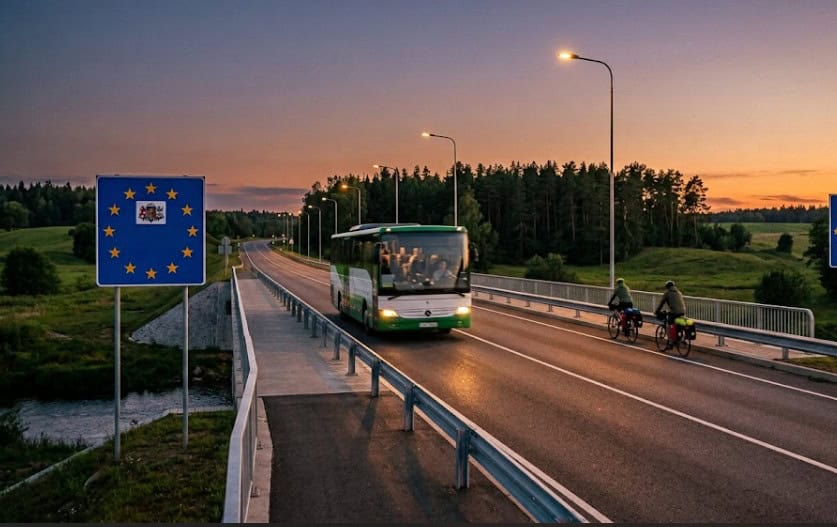
Image generated with Ai
With increased peace among the neighboring countries, Latvia and Lithuania are working together to build confidence for international travel in 2026. Mutual defense pacts, smoother international border controls, and new transport infrastructure across the region are changing the way international travelers can get to and move around the Baltic region. By focusing on creating a safe and stable region and their borders, both countries make clear to international travelers that the Baltic region is as safe and welcoming as ever.細bcgovernment funded projects now link peace and security with economic growth and bring about the first positive steps of recovery for the region. Cross-border movement is centerpiece of the first positive steps of recovery and will protect the future of vibrant tourism in the region for many years to come.
Geopolitical Context and Historical Background: Navigating Baltic Tourism Dynamics
The Evolution of Cross-Border Mobility in the Baltic States
The economic and cultural relationship between Latvia and Lithuania has historically served as the cornerstone of Baltic regional integration. Following their accession to the European Union and the Schengen Area, both nations dismantled physical border checkpoints, creating a seamless cross-border mobility corridor that fueled mutual economic growth, regional trade, and domestic tourism. The shared border stretching over 588 kilometres transformed from a geographic boundary into an active economic artery, facilitating daily transit, joint business ventures, and cross-border leisure travel.
Throughout the past decade, intra-Baltic travel has accounted for a substantial portion of total tourist arrivals in both Riga and Vilnius. According to official data published by the Central Statistical Bureau of Latvia, Lithuanian travellers have consistently represented the single largest source of foreign tourist arrivals in Latvia, exceeding 272,000 visitors in annual accommodation metrics. Similarly, Latvian visitors represent a fundamental foreign market for Lithuanian seaside resorts such as Palanga and Neringa, as well as historic urban centres like Kaunas and Vilnius.
However, external geopolitical shifts, heightened hybrid security challenges along the European Union’s eastern frontier, and border control anxieties in preceding years introduced unforeseen friction into regional perception. While physical Schengen borders between Latvia and Lithuania remained open, broader security concerns threatened to dampen international visitor sentiment, particularly among long-haul travellers from Western Europe, North America, and East Asia who occasionally misconstrued regional security measures as signs of localized instability.
Advertisement
Advertisement
Addressing Border Vulnerabilities and Restoring Visitor Confidence
Recognizing that public safety and economic prosperity are intrinsically linked, the ministries of foreign affairs, defence, and interior across both nations embarked on a synchronized effort to fortify external borders while preserving frictionless internal travel. The primary threat vector was never located along the bilateral Latvian-Lithuanian border, but rather at the external EU perimeter bordering Belarus and the Russian Federation, where state-sponsored hybrid tactics, illegal migration attempts, and disinformation campaigns aimed to destabilise regional cohesion.
To counter these external pressures, Latvia and Lithuania tension reduction efforts focused heavily on diplomatic coordination, intelligence sharing, and public communications. By establishing a clear distinction between external defense measures—such as the construction of physical border barriers and electronic surveillance along the eastern frontier—and internal Schengen accessibility, both governments successfully insulated their domestic tourism sectors from external security anxieties.
Advertisement
Advertisement
This strategic separation was critical. It allowed tourism development agencies, including Lithuania Travel and the Investment and Development Agency of Latvia (LIAA), to proactively market the region as a safe, peaceful, and highly connected European destination. Government assurances backed by tangible border security enhancements provided international tour operators with the guarantees needed to reinstate Baltic itineraries and maintain multi-destination travel packages throughout 2026.
+-----------------------------------------------------------------------------------+
|               BALTIC REGIONAL STABILITY & TOURISM INTEGRATION                     |
+-----------------------------------------------------------------------------------+
|  - Bilateral Diplomatic Coordination (Latvia-Lithuania Joint Summits)             |
|  - Enhanced External Border Fortification (EU Eastern Perimeter Defense)          |
|  - Seamless Schengen Internal Mobility (588 km Bilateral Border)                  |
|  - Strategic Infrastructure Alignment (Rail Baltica & airBaltic Connectivity)     |
+-----------------------------------------------------------------------------------+
Latest Official Developments: High-Level Bilateral Engagements in 2026
August 2026 Riga Summit: Prime Ministerial Mandates on Regional Stability
In a decisive display of regional unity, official bilateral talks were conducted in Riga during August 2026 between the Prime Minister of Latvia, Andris Kulbergs, and the Prime Minister of Lithuania, Mindaugas Sinkevicius. The high-level consultations focused extensively on strengthening bilateral relations, fortifying regional security, securing the EU’s eastern border, and advancing major critical transport projects essential for tourism and commerce.
Advertisement
Advertisement
During the summit, both head of governments emphasized that maintaining absolute security along the external border is a fundamental prerequisite for sustaining economic vitality and tourism growth across the Baltic region. Prime Minister Kulbergs formally acknowledged Lithuania’s operational support in deploying specialized border guard units, canine teams, and technical surveillance equipment to bolster Latvia’s eastern border defense. This deployment underscored a shared commitment: protecting national borders is not merely an isolated domestic responsibility, but an essential component of safeguarding the EU’s collective external border and ensuring internal regional tranquility.
Furthermore, the two prime ministers agreed to institutionalise government-to-government collaboration by holding joint cabinet meetings annually. This formal mechanism ensures that policy decisions regarding infrastructure, regional mobility, border security, and tourism promotion are harmonised at the highest executive levels.
Joint Border Security Frameworks and Mutual Assistance Protocols
The August 2026 bilateral agreements built upon the foundational groundwork established earlier in the year through the trilateral declaration signed by Latvia, Lithuania, and Poland. That declaration established an operational framework designed to counter hybrid threats, instrumentalized migration, and organized cross-border crime through three strategic pillars: preparedness, joint action, and rapid response.
+-----------------------------------------------------------------------------------+
|               TRILATERAL SECURITY FRAMEWORK IMPLEMENTATION                        |
+-----------------------------------------------------------------------------------+
|  [Pillar 1: Preparedness]  -> Real-time threat analysis & intelligence sharing     |
|  [Pillar 2: Joint Action]   -> Operational border guard deployments & exercises    |
|  [Pillar 3: Response]       -> Coordinated legal, diplomatic, & tactical response |
+-----------------------------------------------------------------------------------+
By effectively neutralizing security threats at the external boundary, Latvia and Lithuania tension reduction efforts ensured that internal cross-border travel between the two nations remained completely uninterrupted. Border inspection points along the Latvian-Lithuanian line remain absent, allowing European and international travellers to journey seamlessly between Riga, Rundāle Palace, Šiauliai, Hill of Crosses, and Vilnius without administrative delays or security checkpoints.
Advertisement
Advertisement
Official Government Announcements and Strategic Directives
Latvia Ministry of Foreign Affairs and LIAA Business Delegations
Official policy announcements from the Ministry of Foreign Affairs of Latvia and the Investment and Development Agency of Latvia (LIAA) have continually highlighted the strategic importance of economic cooperation with Lithuania. During the official State Visit of Latvian President Edgars Rinkēvičs to Vilnius, LIAA organized the high-profile Latvia–Lithuania Business Forum 2026, focusing specifically on regional security, infrastructure resilience, and technological innovation.
The official forum brought together executive delegations from defense, information technology, renewable energy, and tourism infrastructure sectors. State officials highlighted that business and tourism expansion cannot occur in a vacuum; it requires a resilient, secure economic space capable of withstanding geopolitical volatility. Official directives issued by LIAA emphasized several key strategic objectives:
- Expanding Bilateral Trade and Tourism Exchange: Facilitating joint investment in hospitality infrastructure, sustainable resort development, and cross-border eco-tourism packages.
- Enhancing Transport Infrastructure Resilience: Ensuring that transport links between Riga and Vilnius, including regional road networks and rail connections, remain modern, safe, and efficient.
- Joint Marketing to International Markets: Positioning the Baltic region as a unified, highly secure travel destination in high-value overseas markets, including North America, Japan, and the United Kingdom.
Lithuania Ministry of the Economy and Innovation Strategic Tourism Directives
Correspondingly, the Ministry of the Economy and Innovation of the Republic of Lithuania, in close coordination with national tourism development agency Lithuania Travel, launched a sweeping strategic campaign titled “Designing Travel – What’s Next in 2026?”. Hosted at the Litexpo centre in Vilnius, this international tourism forum brought together policymakers, international experts from the OECD Tourism Committee and UN Tourism, and hospitality leaders to map out the future of Baltic travel.
Official announcements from Lithuanian Vice-Minister of the Economy and Innovation, Guoda Burokienė, underscored that international travel dynamics are shifting toward authenticity, sustainability, and personal safety. The strategic directives issued by the Lithuanian government explicitly focus on:
- Leveraging “Cool-Cation” Trends: Promoting the Baltic climate as an attractive alternative to extreme heatwaves in Southern Europe, positioning Northern Europe as a temperate haven for eco-conscious summer travellers.
- Digitalization and Seamless Connectivity: Streamlining digital travel tools, real-time transport mapping, and unified cross-border itinerary platforms for seamless navigation between Lithuania, Latvia, and Estonia.
- Proactive Crisis Communication: Implementing standardized, fact-based communication protocols to counteract sensationalist international reporting regarding regional security, ensuring overseas tourists receive accurate safety assessments directly from official state portals.
Empirical Insights: Official Government Statistics and Tourism Metrics
Central Statistical Bureau of Latvia Accommodation and Arrival Data
Official statistical reports released by the Central Statistical Bureau of Latvia (CSB) provide concrete evidence of the structural recovery and ongoing resilience of the tourism sector. Despite broader European economic headwinds and geopolitical sensitivity in early 2026, baseline performance metrics for tourist accommodation establishments demonstrated sustained growth.
In the full preceding calendar year, arrivals at Latvian tourist accommodation establishments reached 2.8 million visitors, marking a 4.5% increase compared to the prior year. Total overnight stays rose to 5.0 million, representing a 6.1% expansion. Non-resident foreign arrivals accounted for 59.3% of total accommodation stays (1.7 million visitors, up 5.3%), with non-resident overnight stays reaching 3.1 million (an 8.3% increase).
Advertisement
Advertisement
+-----------------------------------------------------------------------------------+
|               LATVIAN TOURISM ACCOMMODATION PERFORMANCE METRICS                   |
+-----------------------------------------------------------------------------------+
|  Indicator                              | Volume / Figure    | YoY Change (%)     |
+-----------------------------------------+--------------------+--------------------+
| Total Guest Arrivals                    | 2.8 Million        | +4.5%              |
| Total Overnight Stays                   | 5.0 Million        | +6.1%              |
| Non-Resident Guest Arrivals             | 1.7 Million        | +5.3%              |
| Non-Resident Overnight Stays            | 3.1 Million        | +8.3%              |
| Lithuanian Tourist Arrivals (Top Market)| 272.5 Thousand     | Baseline Market    |
| Estonian Tourist Arrivals               | 188.1 Thousand     | +4.2%              |
| United Kingdom Tourist Arrivals         | 113.4 Thousand     | +19.7%             |
| Polish Tourist Arrivals                 | 81.0 Thousand      | +9.4%              |
+-----------------------------------------+--------------------+--------------------+
Data Source: Central Statistical Bureau of Latvia (CSB Official Release)
Crucially, the statistical data confirms that Lithuania remains Latvia’s primary international source market, delivering 272,500 registered accommodation visitors. Estonia followed with 188,100 visitors, while key long-haul and European markets experienced significant growth, led by the United Kingdom (+19.7%), Poland (+9.4%), Finland (+7.9%), and Germany.
Official Statistics Portal Lithuania and OECD Tourism Trends 2026 Reports
Parallel findings published by the Official Statistics Portal Lithuania and corroborated by the OECD Tourism Trends and Policies 2026 report demonstrate similar upward momentum in Lithuania. Lithuania welcomed over 1.5 million foreign and domestic accommodation arrivals, reflecting a 4.4% annual growth rate.
The OECD report specifically highlighted the Baltic region’s proactive policy interventions aimed at diversifying source markets and enhancing transport connectivity. According to OECD analysis, while international travel to Eastern Europe faced temporary demand suppression due to regional conflicts, targeted diplomatic alignment and Latvia and Lithuania tension reduction efforts successfully stabilized visitor numbers during the peak 2026 summer season.
+-----------------------------------------------------------------------------------+
|              OECD TOURISM POLICY & RECOVERY METRICS (BALTIC REGION)               |
+-----------------------------------------------------------------------------------+
|  - Key Sector GDP Contribution: 4.1% (Direct and Indirect Impact)                 |
|  - Intra-Baltic Travel Share: ~32% of total international arrivals                |
|  - Average Length of Stay: 1.8 nights (Latvia) / 2.1 nights (Lithuania)           |
|  - Priority Policy Goals: Eco-Tourism, Transport Resilience, Digital Portals       |
+-----------------------------------------------------------------------------------+
Data Source: OECD Tourism Trends and Policies 2026 Report
Comprehensive Policy Implications for Border Management and European Integration
Balancing Hybrid Threat Defense with Unimpeded Schengen Mobility
The primary policy challenge facing Baltic governments in 2026 has been maintaining a delicate equilibrium: enforcing rigorous perimeter defense along external borders while upholding absolute freedom of movement within the Schengen zone. The successful execution of Latvia and Lithuania tension reduction efforts provides a global benchmark for border management under conditions of hybrid conflict.
Advertisement
Advertisement
From an operational standpoint, both nations have implemented a multi-layered security architecture:
- Outer Security Layer: High-tech physical barriers, thermal sensor networks, drone surveillance, and joint military-border guard patrols stationed exclusively along the eastern borders with Belarus and Russia.
- Inner Mobility Corridor: Zero physical checks or structural barriers along the internal 588 km Latvia-Lithuania frontier, preserving rapid transit for passenger vehicles, tour buses, and commercial haulage.
- Inter-Agency Intelligence Sharing: Real-time data synthesis between Latvian State Security Service (VDD), Lithuanian State Border Guard Service (VSAT), and Frontex, allowing threat detection without disrupting civil travel channels.
This policy framework ensures that security operations remain invisible to ordinary tourists traveling between Vilnius, Kaunas, Bauska, Riga, and Sigulda. Visitors experience standard Schengen travel, reinforcing the perception of the Baltic region as an integrated, frictionless destination.
+-----------------------------------------------------------------------------------+
|                   DUAL-LAYER BORDER MANAGEMENT ARCHITECTURE                       |
+-----------------------------------------------------------------------------------+
|                                                                                   |
|  [EXTERNAL BORDER: EU Frontier]      [INTERNAL BORDER: Latvia-Lithuania Line]     |
|  - Physical Barriers & Sensors       - Zero Checkpoints or Inspections            |
|  - Joint Border Guard Patrols        - Unrestricted Passenger & Vehicle Transit   |
|  - Strict Counter-Hybrid Measures     - Integrated Schengen Mobility Zone         |
|                                                                                   |
+-----------------------------------------------------------------------------------+
Harmonised Communication Frameworks for International Travel Markets
Another critical policy intervention has been the establishment of unified communication channels targeting foreign travel advisories. Historically, generalized security warnings issued by third-country foreign ministries occasionally painted entire geographic regions with a broad brush, inadvertently dissuading tourists from visiting peaceful cities like Riga or Vilnius.
Through joint diplomatic representation in Western capitals, the Latvian and Lithuanian foreign ministries have actively engaged with international counterparts to ensure travel advisories accurately reflect local realities. Official advisories now clearly delineate between specific restricted border zones adjacent to Belarus and primary tourist corridors, urban centers, and coastal resorts. This policy precision has restored confidence among global travel insurers, airlines, and tour agencies.
Strategic Industry Impact across Transport, Aviation, and Hospitality
Aviation Connectivity and the Strategic Expansion of airBaltic
Transportation connectivity represents the lifeblood of regional tourism, and official discussions between Latvian Prime Minister Kulbergs and Lithuanian Prime Minister Sinkevicius placed significant emphasis on aviation strategy. At the center of these discussions was the future operational role of Latvia’s national airline, airBaltic.
Latvian authorities have actively explored mechanisms to structure airBaltic as a truly pan-Baltic carrier, inviting capital participation and strategic investment from Lithuania and Estonia. AirBaltic currently operates extensive flight networks from both Riga International Airport and Vilnius Airport, serving as the primary air bridge connecting the Baltic states to major Western European hubs, Scandinavia, and the Middle East.
Advertisement
Advertisement
+-----------------------------------------------------------------------------------+
|               AIRBALTIC REGIONAL CONNECTIVITY & AVIATION IMPACT                   |
+-----------------------------------------------------------------------------------+
|  - Primary Hubs: Riga International Airport (RIX), Vilnius Airport (VNO)          |
|  - Strategic Role: Primary feeder for Western European & Nordic incoming tourists |
|  - Policy Focus: Deepened pan-Baltic ownership & route preservation               |
|  - Strategic Imperative: Securing air connectivity ahead of Lithuania's 2027       |
|    EU Council Presidency                                                          |
+-----------------------------------------------------------------------------------+
Source: Official Statements, Latvian & Lithuanian Government Summit
Maintaining robust air connectivity from Lithuanian airports is exceptionally critical as Lithuania prepares to assume the Presidency of the Council of the European Union in the first half of 2027. Preserving flight frequencies, expanding direct routes, and coordinating aviation security protocols ensure that both business executives and leisure tourists can access the Baltic region swiftly and affordably.
Rail Baltica Progress: Transforming Baltic Ground Infrastructure
In addition to aviation, the mega-infrastructure project Rail Baltica remains the single most transformative ground transport initiative in Northern Europe. Designed to connect Tallinn, Riga, Vilnius, and Kaunas directly to the European standard-gauge rail network terminating in Warsaw and Berlin, Rail Baltica is both an economic driver and a strategic asset.
During official 2026 consultations, both governments reaffirmed their unyielding political commitment to completing the high-speed rail line’s first phase by the target deadline of 2030. Prime Minister Kulbergs advocated for the establishment of a dedicated Baltic cooperation team to streamline construction timelines, resolve cross-border financing structures, and oversee procurement.
+-----------------------------------------------------------------------------------+
|                       RAIL BALTICA TIMELINE & MILESTONES                          |
+-----------------------------------------------------------------------------------+
|  [2025] -> EU Implementing Decision Target Confirmation                            |
|  [2026] -> High-Level Bilateral Acceleration & Construction Alignment              |
|  [2028] -> Priority Cross-Border Section Interconnection (Panevėžys-Bauska-Riga)  |
|  [2030] -> Phase 1 Operational Target: Tallinn-Riga-Vilnius-Warsaw Connection      |
+-----------------------------------------------------------------------------------+
Source: European Commission & Baltic Transport Ministries Official Project Updates
Once operational, Rail Baltica will reduce travel time between Riga and Vilnius to under two hours, creating a unified metropolitan travel zone. This rapid rail connection is projected to increase intra-regional tourism by over 35% in its initial years of operation, while providing a sustainable, low-carbon transport alternative aligned with European green transition targets.
Advertisement
Advertisement
Hospitality Sector Resilience and Regional Business Adaptation
The hospitality sectors in both Riga and Vilnius have demonstrated remarkable adaptability in response to changing geopolitical realities and evolving tourist demands. Hoteliers and resort operators have shifted away from reliance on eastern markets, reorienting their marketing strategies toward domestic travellers, Nordic visitors, and Western European eco-tourists.
In Latvia, regional municipalities outside Riga—such as Liepāja, Jūrmala, and Cēsis—have recorded steady growth in domestic and Lithuanian guest nights. Jūrmala, historically known as a seaside wellness retreat, accommodated over 10% of total national resident stays, while Liepāja captured 6.4%, driven by cultural events, coastal tourism, and modern spa infrastructure.
Similarly, Lithuanian hoteliers have embraced high-end international hospitality benchmarks, including the integration of the Michelin Key rating system to highlight exceptional accommodation experiences. These quality upgrades, combined with competitive pricing relative to Mediterranean destinations, have fortified hotel occupancy rates across major Baltic urban and coastal centers.
Economic Implications and Broader Financial Recovery
Macroeconomic Contributions of the Tourism Sector to Baltic GDP
Tourism represents a significant pillar of the national economies of both Latvia and Lithuania, directly generating employment, tax revenues, and foreign currency inflows. According to official data compiled by the OECD Tourism Committee, travel and tourism directly and indirectly account for approximately 4.1% of combined GDP across the Baltic economies.
The financial recovery of the hospitality ecosystem supports thousands of small and medium-sized enterprises (SMEs), ranging from boutique hotels and food service establishments to cultural tour operators and transport providers. Latvia and Lithuania tension reduction efforts have insulated these economic sectors from systemic shocks, ensuring that commercial confidence remains intact.
+-----------------------------------------------------------------------------------+
|               MACROECONOMIC IMPACT OF BALTIC TOURISM ECOSYSTEM                    |
+-----------------------------------------------------------------------------------+
|  Metric                                  | Estimated Direct & Indirect Value      |
+------------------------------------------+----------------------------------------+
| Combined Baltic Tourism GDP Contribution | ~4.1% Total Regional Output            |
| Employment Supported                     | Over 110,000 Direct & Indirect Jobs    |
| Average Non-Resident Daily Spend         | €115 - €145 per Visitor (Urban Hubs)   |
| SME Business Participation               | Over 8,500 Registered Accommodation    |
|                                          | & Catering Enterprises                 |
+------------------------------------------+----------------------------------------+
Data Source: OECD Tourism Trends and Policies 2026 & National Statistical Agencies
Advertisement
Advertisement
Cross-Border SME Trade and Local Economic Revitalisation
In border regions such as Bauska and Skaistkalne in Latvia, and Biržai and Pasvalys in Lithuania, cross-border tourism generates essential economic activity. Joint trade missions organized under the ERDF-co-financed SME Innovative Business Development Programme have enabled regional entrepreneurs to build joint tourism products.
Examples of successful cross-border economic initiatives include:
- The Baltic Culinary Route: A joint gastronomic venture highlighting local farm-to-table cuisine, artisanal craft breweries, and traditional rye bread bakeries across southern Latvia and northern Lithuania.
- Cross-Border Manor Tourism: Integrated heritage itineraries linking historical estates, such as Rundāle Palace in Latvia and Pakruojis Manor in Lithuania, offering unified ticketing and joint promotional packages for international tour groups.
- Active Nature and River Corridors: Jointly managed kayaking, cycling, and hiking paths navigating shared river basins like the Mūša and Nemunėlis rivers, attracting outdoor enthusiasts from across Scandinavia and Central Europe.
Public, Business, and Visitor Experience Transformations
Intra-Baltic Leisure Travel and Cross-Border Eco-Tourism
The stabilization of regional security messaging has produced a tangible surge in intra-Baltic leisure travel. Citizens of Latvia, Lithuania, and Estonia are increasingly choosing weekend getaways within the Baltic region, viewing neighbor states as convenient, eco-friendly, and culturally rich alternatives to long-haul travel.
Eco-tourism in particular has experienced exponential demand growth. Travellers seeking cool-climate holidays—popularly dubbed “cool-cations”—are flocking to the pristine Baltic coastline, national parks like Gauja in Latvia and Curonian Spit in Lithuania, and extensive peat bog boardwalks. These nature-focused itineraries inherently distribute tourist traffic away from congested urban hubs into rural municipalities, injecting capital directly into local communities.
+-----------------------------------------------------------------------------------+
|                    EMERGING BALTIC TRAVEL TRENDS IN 2026                          |
+-----------------------------------------------------------------------------------+
|  [Trend 1: Cool-Cation Escapes]    -> Seeking temperate summer climates over      |
|                                       Southern European heatwaves.                |
|  [Trend 2: Micro-Mobility & Rail]  -> Combining cycling and passenger rail        |
|                                       for zero-emission travel.                   |
|  [Trend 3: Heritage & Wellness]    -> Combining historical castle tours with      |
|                                       coastal medical spa retreats.               |
+-----------------------------------------------------------------------------------+
MICE Industry Resilience and High-Level Business Delegations
Beyond leisure travel, the Meetings, Incentives, Conferences, and Exhibitions (MICE) sector has shown remarkable recovery. Hosting major international gatherings, such as the Designing Travel – What’s Next in 2026? forum in Vilnius and the Latvia-Lithuania Business Forum, underscores the region’s capability to host secure, high-profile international events.
Business travel generated by these corporate forums and trade delegations provides high-yield revenue for city-center hotels, conference venues, and specialized catering services during off-peak seasonal periods. Government assurances regarding stability and state-of-the-art digital infrastructure have positioned Vilnius and Riga as premier tech and conference destinations in Northern Europe.
Advertisement
Advertisement
Official and Expert Statements: Verifiable Perspectives from Regional Leaders
Key Insights from Bilateral Leadership and Cabinet Officials
Official public disclosures from executive leaders reflect a unified strategic vision connecting regional security directly to societal wellbeing and economic resilience.
During the August 2026 bilateral summit in Riga, Latvian Prime Minister Andris Kulbergs stated:
“Our bilateral partnership with Lithuania is stronger than ever. Protecting our external EU borders is not merely a military or administrative duty; it is the fundamental guarantee that allows our societies to thrive, our businesses to invest, and our tourism sectors to welcome visitors from around the world with absolute confidence.”
Echoing this perspective, Lithuanian Prime Minister Mindaugas Sinkevicius reaffirmed:
“Border security is a shared regional responsibility. By assisting Latvia in securing the eastern border, Lithuania is protecting the integrity of the entire Baltic travel space. Projects like Rail Baltica and joint aviation coordination ensure that our nations remain interconnected, open, and resilient.”
Highlighting the economic dimension, Guoda Burokienė, Lithuanian Vice-Minister of the Economy and Innovation, noted at the Vilnius Tourism Forum:
Advertisement
Advertisement
“The tourism landscape is evolving rapidly. By taking part in global conversations and implementing innovations, we are positioning the Baltic region at the forefront of safe, sustainable, and high-quality European travel.”
International Perspectives from OECD and UN Tourism
International tourism bodies have also commended the proactive policies executed by Baltic governance structures. Statements released within the context of the OECD Tourism Trends 2026 report emphasize that clear, transparent safety communication combined with aggressive infrastructure investment is the gold standard for destination resilience in modern geopolitical conditions.
Representatives from UN Tourism highlighted that intra-regional cooperation between small, interconnected nations serves as an exemplary model for regional destination marketing, demonstrating how diplomatic solidarity can turn geopolitical challenges into opportunities for sustainable growth.
Strategic Future Outlook: 2026 Roadmap and Long-Term Vision for Baltic Stability
Near-Term Priorities for 2026 Tourism Campaigns
As the late 2026 travel season transitions into autumn and winter, the strategic roadmap agreed upon by Latvian and Lithuanian tourism authorities focuses on several immediate priorities:
- Unified Winter and Cultural Campaigns: Launching promotional initiatives centered on Christmas markets, cultural heritage, and wellness retreats in Riga, Vilnius, and Kaunas.
- Enhanced Digital Travel Portals: Deploying real-time transit guides and multi-lingual safety verification portals integrated into official tourism websites (latvia.travel and lithuania.travel).
- Strengthened Overseas Representation: Expanding joint marketing campaigns in key long-haul growth markets, particularly the United States, Japan, and the United Kingdom, where visitor numbers showed robust growth (+19.7% in Latvia).
+-----------------------------------------------------------------------------------+
|               STRATEGIC ROADMAP: NEAR-TERM & LONG-TERM OBJECTIVES                 |
+-----------------------------------------------------------------------------------+
|  Timeframe | Core Strategic Objective                                             |
+------------+----------------------------------------------------------------------+
| Q4 2026    | Launch Unified Baltic Christmas Market & Cultural Heritage Campaign  |
| H1 2027    | Support Lithuania’s EU Council Presidency with Expanded Air Routes  |
| 2028       | Interconnect Initial Rail Baltica High-Speed Regional Segments        |
| 2030       | Achieve Full Completion of Rail Baltica Phase 1 & Integrated Network |
+------------+----------------------------------------------------------------------+
Source: LIAA & Lithuania Travel Strategic Planning Guidance
Long-Term Infrastructure and Security Harmonisation toward 2030
Looking toward 2030, the long-term vision established by Latvia and Lithuania tension reduction efforts envisions a fully integrated, highly accessible, and secure Baltic ecosystem. The completion of Rail Baltica, combined with a synchronized pan-Baltic aviation policy and ironclad external border security, will cement the Baltic states’ reputation as one of Europe’s most dynamic, forward-looking, and attractive travel destinations.
Advertisement
Advertisement
Through steadfast bilateral cooperation, institutionalised annual government summits, and proactive international engagement, Latvia and Lithuania have proven that security and tourism are mutually reinforcing pillars of national strength. By fortifying their borders while keeping their hearts and cities wide open, the Baltic nations stand ready to welcome the world with confidence, safety, and warm hospitality.
Advertisement
