
India’s BRICS Chairship Delivers New Delhi Declaration and More Than 50 Practical Outcomes

Updated
Published
India’s BRICS chairship has reached a major milestone with the adoption of the New Delhi BRICS Leaders’ Declaration, as leaders concluded the member session of the 18th BRICS Summit. Indian officials said the declaration reflects months of negotiations and more than 350 meetings held during India’s year-long chairship, with the focus firmly placed on resilience, innovation, cooperation and sustainability.
BRICS Leaders Back Stronger Multilateralism
The member session of the summit centred on “Inclusive Global Governance and Strengthening Multilateralism”. According to India’s Ministry of External Affairs briefing, leaders discussed their national perspectives while finding broad convergence around the need to strengthen multilateral institutions and make global governance more representative, inclusive, effective and responsive to current realities.
Advertisement
Advertisement
A major focus was reform of the United Nations, including the UN Security Council. BRICS leaders reiterated support for greater representation of developing countries. They also backed reform of the international financial architecture, with the objective of giving developing countries and the wider Global South a stronger voice in global decision-making.
The discussions also covered the geopolitical environment, ongoing conflicts and economic uncertainties. The Indian briefing said leaders underscored the importance of dialogue, diplomacy and peaceful resolution of differences, while reaffirming BRICS principles including mutual respect, equality, solidarity, openness, inclusiveness and consensus.
Advertisement
Advertisement
Modi Puts Forward Four BRICS Initiatives
Prime Minister Narendra Modi outlined four specific initiatives for greater cooperation within BRICS during the member session.
The first was the idea of a BRICS Troika mechanism. India also proposed developing a BRICS roadmap on global governance reform, aimed at building a more representative and inclusive international system.
Advertisement
Advertisement
Another proposal was the establishment of a seafarer emergency support initiative network to assist seafarers in distress around the world. The fourth was BRICS Global South negotiation support, designed to strengthen the capabilities of officials and young professionals from the Global South in emerging areas including technology and global rule-making.
These proposals form part of India’s stated effort to make BRICS cooperation more practical and development-oriented rather than limiting the grouping’s work to political discussions.
Advertisement
Advertisement
More Than 50 Practical Outcomes
One of the most significant outcomes highlighted by Indian officials was the adoption of the New Delhi BRICS Leaders’ Declaration.
The declaration establishes shared priorities and direction for BRICS cooperation going forward. India described its adoption as an important achievement of the chairship, arguing that it demonstrated the members’ ability to build consensus on issues of global importance.
The accompanying factsheet contains more than 50 practical outcomes organised around four central pillars: resilience, innovation, cooperation and sustainability. These areas formed the foundation of India’s BRICS chairship throughout the year.
Under resilience, initiatives include cooperation on food and health security. The briefing identified the BRICS Centres of Excellence on Agro-ecology, the BRICS Network on Digital Agriculture and the BRICS Mission for Healthy Lifestyle among the key initiatives. Mental wellness and disaster risk reduction and management were also included.
Advertisement
Advertisement
The innovation pillar focuses on technology, research and entrepreneurship. Key initiatives mentioned by India include cooperation on Digital Public Infrastructure, the BRICS Science and Research Repository, and the BRICS Startup Innovation Fund and Incubator Network.
The cooperation pillar is more directly linked to economic engagement. Initiatives include the BRICS MSME Cooperation Portal, work on global value chains and the BRICS Logistics Supply Chain Cooperation Framework. The agenda also covers traditional and indigenous knowledge and traditional complementary and integrative medicine.
Meanwhile, the sustainability pillar includes cooperation on smart grids, energy storage, climate-resilient urban infrastructure and sustainable urban mobility. The programme also includes initiatives supporting sustainable lifestyles and climate-resilient agriculture.
Terrorism Condemned in New Delhi Declaration
Security concerns also featured in the declaration. According to the Indian briefing, BRICS countries unequivocally condemned terrorism in all its forms and manifestations.
The declaration also condemned what Indian officials described as the terror attacks in Jammu and Kashmir that took place last year. The briefing presented this as a significant element of the summit’s outcome document.
The declaration additionally reaffirmed BRICS’ commitment to reforming global governance institutions and creating a more representative and inclusive multilateral system. India specifically highlighted the declaration’s reference to UN Security Council reform and the candidature of India and other BRICS members in that context.
Advertisement
Advertisement
Eight Months of Intensive BRICS Engagement
Although the summit represents the most visible part of India’s chairship, the Indian government stressed that the work began months earlier.
India assumed the BRICS chairship in January and organised more than 350 meetings, both physical and virtual, across ministerial meetings, working groups, business sessions and people-focused activities. The government described this as an eight-month effort leading into the summit.
The chairship was also presented as a whole-of-India effort. According to the briefing, central and state governments, industry, academia, young people, civil society and communities were brought into BRICS-related activities, with engagements organised across more than 30 cities in India.
The programme extended beyond formal government meetings. Initiatives and events included the BRICS Solidarity Run, BRICS Film Festival, BRICS Youth Summit and BRICS Artisan Bazaar. These activities were framed by India as part of a people-centric approach to the chairship.
Innovation and Indian Heritage on Display
The summit also provided an opportunity for India to showcase its technological and cultural capabilities.
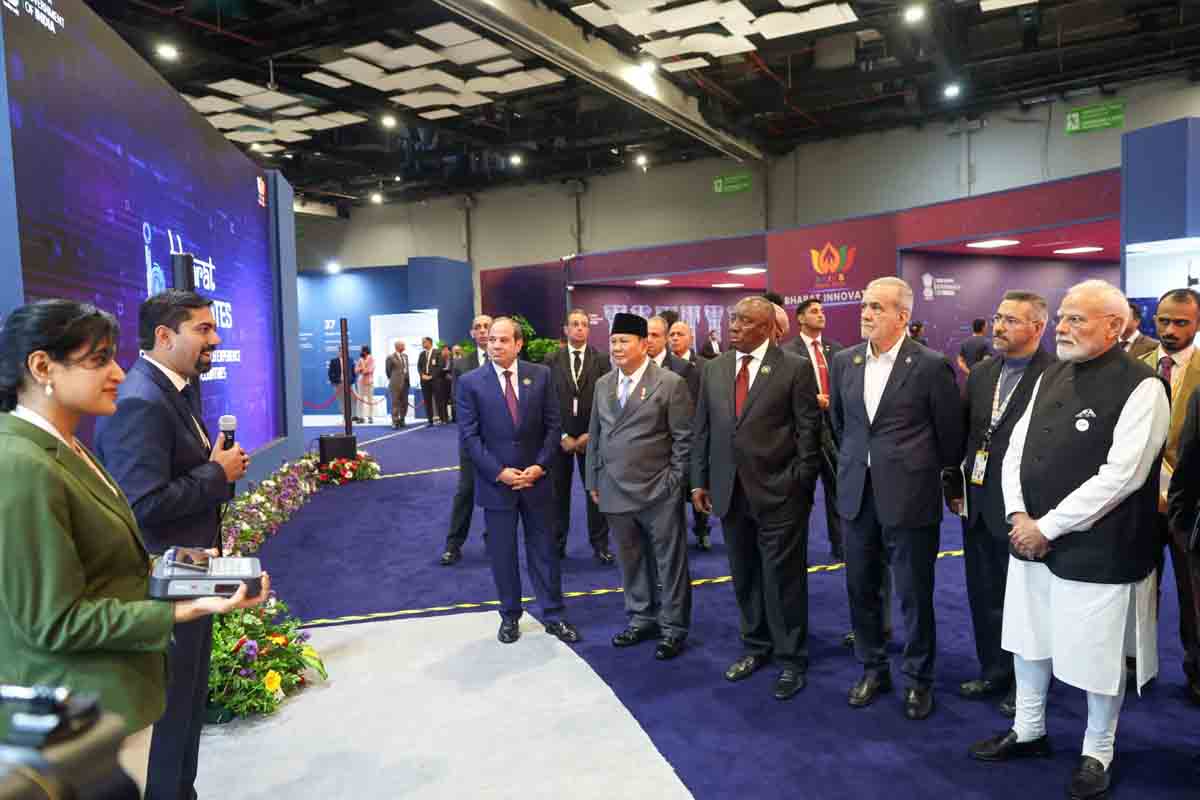
BRICS leaders toured the “Bharat Innovate” exhibition, which was curated for leaders, partners, delegation members and business participants attending the summit in Delhi. The exhibition highlighted Indian achievements and potential in innovation, entrepreneurship, technology and development.
Advertisement
Advertisement
A joint tree plantation was also held in line with India’s “Ek Ped Maa Ke Naam” initiative and the broader emphasis on sustainability and environmental stewardship. BRICS leaders were additionally presented with a postal stamp marking two decades of BRICS cooperation.
What Comes Next for BRICS
The conclusion of India’s chairship does not mark the end of the initiatives announced during the year. Indian officials said the country remains committed to the outcomes of the summit and the New Delhi Declaration.
The government’s assessment is that the effectiveness of a chairship should not be judged simply by the number of meetings held, but by participation, consensus-building and the outcomes produced. India argued that the extensive engagement, the declaration and the more than 50 practical outcomes provide a foundation for the next phase of BRICS cooperation.
The next stage will therefore depend on how these commitments develop through continued cooperation among BRICS members and partners. The summit has established the political direction, while the initiatives under resilience, innovation, cooperation and sustainability provide the practical framework identified by India.
For India, the central message of its chairship is clear: BRICS should give greater attention to the priorities of the Global South while pursuing practical cooperation that can produce development-oriented and people-focused outcomes. The New Delhi Declaration now provides the principal document through which that direction will be carried forward.
Advertisement
