
Kenya Joins Japan and Other Countries Around the World Targeting Middle East Visitors

Updated
Published
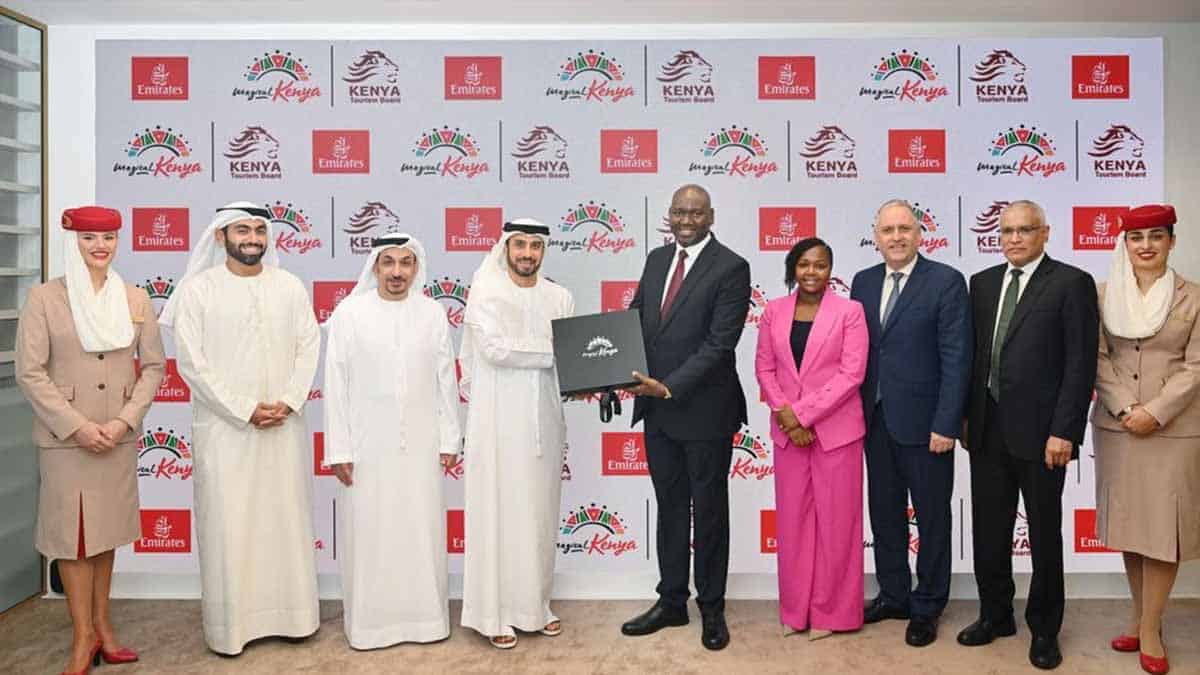
Kenya joins Japan and other countries around the world in a growing race to target Middle East visitors. Across continents, tourism boards are reshaping their strategies to attract affluent travellers from the Gulf. Meanwhile, airlines are becoming powerful partners in this push.
Kenya has now teamed up with Emirates and Qatar Airways to increase arrivals and tourism spending. Japan is also targeting the market with dedicated campaigns. Similarly, the Maldives, Thailand, Mauritius, Seychelles, Hong Kong, Finland and Madagascar are strengthening their Middle East strategies.
Advertisement
Advertisement
As competition grows, countries are promoting luxury, family holidays, wellness, wildlife, culture and business travel. Consequently, the Middle East is becoming an increasingly important tourism market.
The global tourism industry is increasingly turning towards the Middle East as destinations compete for affluent travellers, families, luxury holidaymakers, wellness seekers and business visitors from across the Gulf. From Kenya and the Maldives to Japan, Thailand, Mauritius and Seychelles, tourism authorities are combining destination marketing with airline partnerships, travel-trade engagement and targeted campaigns to strengthen their presence in the region.
Advertisement
Advertisement
The strategy is increasingly centred on value rather than visitor volume alone. Destinations want travellers who stay longer, spend more and explore multiple tourism products, while major Gulf aviation hubs such as Dubai and Doha provide the connectivity needed to reach both Middle Eastern residents and travellers connecting through the region.
“Kenya’s decision to strengthen its focus on Middle East visitors reflects the growing importance of strategic aviation and tourism partnerships. The collaboration with Emirates and Qatar Airways creates an important bridge between connectivity, destination marketing and international travel demand. What is particularly encouraging is Kenya’s focus on attracting high-value travellers while showcasing its diverse tourism proposition, from wildlife and conservation to coastal experiences, culture and MICE. The wider global movement involving Japan, the Maldives, Thailand and other destinations demonstrates how competitive the Middle Eastern outbound market has become. These partnerships can create new opportunities for Kenya’s tourism businesses, communities and the wider economy.”, says Anup Kumar Keshan, Editor-in-Chief, TTW
Advertisement
Advertisement
Kenya Targets 50,000 Middle East Visitors With Emirates and Qatar Airways
Kenya has set one of the clearest measurable targets among destinations pursuing Middle Eastern demand. The Kenya Tourism Board (KTB) is targeting 50,000 visitors from the Middle East, compared with 20,480 arrivals recorded from the region during the 2025/26 financial year.
The target is being supported by new Memoranda of Understanding with Emirates and Qatar Airways, signed during Arabian Travel Market in Dubai. The partnerships combine airline connectivity with destination marketing, publicity campaigns, travel-trade engagement and media familiarisation programmes.
Advertisement
Advertisement
Kenya’s Government has indicated an average contribution of approximately KSh300,000 per international visitor. If the 50,000-visitor target is achieved at that average, the envisaged economic contribution would be around KSh15 billion.
The country is targeting luxury travellers, families, short-break visitors, business travellers and MICE groups while promoting wildlife, conservation, the Indian Ocean Coast, culture, adventure and wellness.
What Does the Emirates Partnership Mean for Kenya?
The Emirates agreement gives Kenya an opportunity to use Dubai as a major international gateway for reaching potential visitors from the Gulf and beyond.
Emirates currently operates three daily services between Dubai and Nairobi, providing an established air connection between the United Arab Emirates and Kenya’s capital.
Advertisement
Advertisement
For Kenya’s tourism industry, the importance of this connectivity extends beyond passengers originating in Dubai. Dubai’s role as a major international aviation hub enables travellers from numerous markets to connect towards Nairobi, giving destination marketing campaigns a potentially wider audience.
Under the partnership, KTB and Emirates will work together on destination publicity and demand-generation initiatives. The programme will also include travel-trade and media familiarisation trips intended to give selected participants direct exposure to Kenya’s tourism products.
Emirates will provide agreed air tickets for these programmes, while KTB will coordinate accommodation and ground-handling arrangements within Kenya.
The model is designed to connect promotional activity with the travel industry professionals and media organisations capable of influencing future bookings and destination awareness.
How Will Qatar Airways Support Kenya’s Tourism Push?
Qatar Airways provides Kenya with another major international aviation gateway through Doha.
The airline’s extensive global network allows KTB to position Kenya before travellers who may not be considering the destination directly but can reach it through Doha.
Advertisement
Advertisement
The partnership will similarly focus on destination marketing, international exposure and conversion. The objective is to move potential customers from awareness of Kenya to an actual decision to travel.
Kenya’s tourism proposition gives the partnership a broad portfolio to promote. The country can appeal to visitors seeking wildlife and conservation experiences, coastal holidays, cultural tourism, adventure, wellness and business events.
This diversity also allows marketing campaigns to be tailored to different traveller segments rather than presenting Kenya as a single-product safari destination.
Can Airline Connectivity Turn Into More Tourist Arrivals?
Kenya’s tourism authorities are explicitly seeking to make the relationship between aviation capacity and visitor growth more commercially measurable.
Additional connectivity does not automatically produce additional tourism demand. Flights create the physical ability to travel, but destination marketing, distribution through travel agencies and tour operators, pricing, consumer interest and the overall visitor experience can all influence whether available seats translate into tourist arrivals.
The Emirates and Qatar Airways agreements are intended to address that conversion challenge by combining connectivity with promotional campaigns and travel-trade activity.
Advertisement
Advertisement
Kenya Tourism Board Chief Executive Officer June Chepkemei described the approach as a move from visibility towards conversion, with greater attention being placed on whether marketing activity ultimately generates bookings, arrivals and visitor spending.
That distinction is significant for tourism boards because promotional reach alone does not necessarily demonstrate economic impact. Measuring the movement from campaign exposure to bookings and arrivals provides a more direct connection between destination marketing expenditure and tourism performance.
What Is Behind Kenya’s KSh15 Billion Tourism Target?
The KSh15 billion figure is based on KTB’s target of 50,000 Middle East visitors and the Government’s indicative average contribution of approximately KSh300,000 per international visitor.
The calculation is straightforward: 50,000 visitors multiplied by KSh300,000 produces KSh15 billion.
It is important, however, to distinguish the figure from guaranteed additional tourism revenue. The KSh15 billion represents the envisaged economic contribution if the visitor target is achieved using the stated average contribution assumption.
Actual visitor spending can vary substantially depending on length of stay, accommodation category, travel purpose, activities, transport, shopping and other expenditure patterns.
Advertisement
Advertisement
The emphasis on higher-value travellers is therefore central to Kenya’s strategy. Visitors who stay longer and spend more can generate a larger economic effect across hotels, restaurants, tour operators, transport providers, attractions, retail businesses and local communities.
Which Travellers Is Kenya Trying to Attract?
Kenya’s Middle East strategy extends across several tourism segments.
Luxury travellers are an important audience because Kenya has established high-end safari lodges, private conservancies and premium coastal resorts. Families represent another opportunity, with wildlife experiences, beaches and cultural attractions offering products suitable for multi-generational holidays.
Short-break travellers could also benefit from the country’s proximity to major Gulf aviation hubs, while business travellers and MICE visitors provide opportunities beyond conventional leisure tourism.
The MICE segment is particularly relevant because conferences, incentives and corporate events can generate expenditure across accommodation, meetings, transport, dining and excursions.
By promoting these different products through airline and travel-trade channels, Kenya can position itself as a destination capable of serving several travel motivations.
Advertisement
Advertisement
How Does This Fit Kenya’s Wider Tourism Strategy?
The Emirates and Qatar Airways partnerships form part of a broader effort to diversify source markets and increase tourism’s contribution to the Kenyan economy.
According to the figures provided by KTB, Kenya generated approximately KSh500 billion in tourism earnings in 2025, supported by around 2.7 million international arrivals.
The Government is pursuing a longer-term trajectory towards KSh1 trillion in annual tourism earnings, making both visitor growth and visitor value important components of the strategy.
Expanding the Middle East market can contribute to this objective while also helping Kenya reduce reliance on individual source markets.
Market diversification can provide greater resilience because tourism demand is influenced by economic conditions, airline capacity, consumer confidence, geopolitical developments and travel trends in individual regions.
A broader portfolio of source markets can give destinations more opportunities to maintain demand when conditions change in one particular market.
Advertisement
Advertisement
Why Are Travel Trade and Media Familiarisation Trips Important?
The agreements place significant emphasis on travel-trade and media familiarisation programmes because direct destination knowledge can influence how Kenya is sold and presented internationally.
Travel agents, tour operators and other trade professionals can use first-hand knowledge of accommodation, attractions, safari circuits, transport connections and experiences when developing itineraries for customers.
Media familiarisation programmes serve a different but complementary purpose by giving journalists and content creators opportunities to experience destinations directly and communicate those experiences to potential travellers.
For Kenya, this creates an opportunity to move beyond generic destination advertising and demonstrate specific experiences available across the country.
The combination of airline access, trade distribution and editorial exposure can provide several routes through which potential visitors encounter Kenya before making a booking decision.
Maldives Focuses on Premium Middle East Tourism
The Maldives has established itself as one of the world’s most recognised luxury island destinations and continues to regard the Middle East as an important source of high-value visitors.
Advertisement
Advertisement
According to Visit Maldives, the country recorded 82,558 arrivals from the Middle East in 2025, with arrivals from the region increasing by 3.6%. The destination’s market analysis points towards demand for premium accommodation, family travel, private experiences, wellness and luxury products.
The Maldives’ strategy is particularly focused on visitor value. Private villas, resorts, yacht experiences, wellness programmes and personalised holidays can generate substantial expenditure compared with shorter, lower-cost forms of travel.
The destination is also looking beyond a traditional sun-and-sea proposition by promoting cultural and sporting experiences, helping diversify what Middle Eastern visitors can experience during their stay.
For the Maldives, the Middle East therefore represents both an established market and an opportunity to expand premium tourism.
Japan Builds a Dedicated GCC Tourism Strategy
Japan is taking a highly structured approach to the Gulf Cooperation Council market through the Japan National Tourism Organization (JNTO).
JNTO maintains a specific marketing strategy for the Middle East and identifies the GCC as an attractive market because of its purchasing power and travel expenditure potential. The strategy places particular attention on family travellers, alongside affluent couples, partners and groups of friends.
Advertisement
Advertisement
Japan’s challenge is different from that of nearby destinations because of its long-haul distance from the Gulf. As a result, the destination has to offer a sufficiently distinctive proposition to encourage travellers to undertake a longer journey.
Japanese culture, food, shopping, nature, seasonal experiences and premium hospitality provide multiple opportunities to build customised itineraries.
The country’s approach illustrates how a destination outside the immediate Gulf region can use targeted marketing to turn distance into a premium long-haul travel proposition.
Thailand Targets Middle Eastern Travellers Through Wellness and Premium Tourism
Thailand has also identified Middle Eastern travellers as part of its strategy to increase tourism value.
The Tourism Authority of Thailand’s 2026 direction places greater emphasis on value over volume, with customised products for high-value Middle Eastern markets, particularly in premium wellness and leisure.
Thailand has several advantages in this market. Its established luxury hotel infrastructure, international airports, medical and wellness facilities, beaches, shopping districts and food culture allow tourism marketers to construct different products for different customer groups.
Advertisement
Advertisement
Wellness is particularly significant because it can connect luxury accommodation with health, relaxation, spa treatments, food and longer stays.
The strategy also reflects a broader change in Thailand’s tourism policy: attracting large numbers remains important, but increasing expenditure and developing premium segments have become increasingly prominent objectives.
Mauritius Uses Emirates Connectivity to Grow Middle East Demand
Mauritius is another island destination using Gulf aviation connectivity to strengthen international tourism.
Emirates has worked with the Mauritius Tourism Promotion Authority on joint advertising, travel-agent engagement, tourism packages and familiarisation programmes. The partnership uses Dubai as a gateway connecting Mauritius with Middle Eastern and other international markets.
Emirates reported that arrivals to Mauritius from Middle Eastern markets increased by 10.5% during the first half of 2026 compared with the same period in 2025.
The Mauritius proposition is built around beaches, luxury resorts, family holidays, romance, nature and premium experiences. Its relatively strong resort infrastructure also allows travel companies to package the island for different spending categories.
Advertisement
Advertisement
The partnership demonstrates how an airline can function not only as a transport provider but also as a marketing and distribution partner for a destination.
Seychelles Strengthens Gulf Market Access
Seychelles is following a comparable route, with Emirates supporting the country’s efforts to reach international travellers.
Emirates and the Seychelles Tourism Board have worked together through joint marketing campaigns and familiarisation programmes involving travel-trade and media representatives. Emirates operates services between Dubai and Mahé, providing a direct link with one of the world’s largest aviation hubs.
For Seychelles, Middle Eastern demand fits naturally with its premium positioning. Private island experiences, luxury resorts, beaches, marine activities and romantic holidays all have potential appeal among affluent Gulf travellers.
The country’s smaller scale also makes high-value tourism particularly important. Increasing visitor expenditure can be significant without requiring the very large arrival volumes pursued by mass-market destinations.
Hong Kong Targets GCC Markets With Trade and Airline Partnerships
Hong Kong has developed a more targeted approach to attracting travellers from the Gulf.
Advertisement
Advertisement
The Hong Kong Tourism Board has focused promotional activity on markets including Saudi Arabia, the UAE, Bahrain, Kuwait, Oman and Qatar. Its activities have included destination campaigns, travel-trade engagement and familiarisation programmes involving media, influencers and industry representatives.
Partnerships with Emirates and Dnata Travel Group have supported this approach by linking destination promotion with travel distribution.
Hong Kong can appeal to several Middle Eastern segments, including leisure travellers, families, luxury shoppers and business visitors. Its position as a global commercial centre also gives it an advantage in the MICE and corporate travel markets.
The destination is therefore using a combination of tourism and business propositions rather than depending exclusively on conventional leisure tourism.
Finland Uses the Gulf as a Gateway to Global Travellers
Finland offers a different example of how the Middle East can function as both a source market and an international distribution channel.
Visit Finland has partnered with Emirates to promote Finnish tourism through the airline’s extensive network. The strategy reaches travellers in the Middle East while also using Dubai’s connectivity to access markets in Asia-Pacific, Africa and other regions.
Advertisement
Advertisement
Finland’s tourism proposition includes Lapland, Helsinki, the Finnish Lakeland region, the coast and archipelago, nature and sauna culture.
Winter tourism, particularly the Northern Lights and Lapland experience, provides a distinctive premium product that can be packaged for long-haul visitors.
The Finnish example demonstrates that destinations do not necessarily need to market exclusively to Gulf residents. They can also use Gulf aviation hubs to reach international travellers connecting through the region.
Madagascar Looks to Emirates for International Tourism Expansion
Madagascar is using a similar aviation-led model to expand international tourism.
The country has partnered with Emirates to support its ambition of reaching one million tourists by 2028. The cooperation includes joint advertising, engagement with tour operators and travel agencies, tailored packages and familiarisation programmes.
Madagascar offers a markedly different proposition from traditional Gulf holiday destinations. Its wildlife, biodiversity, landscapes, adventure opportunities and distinctive ecosystems provide the foundation for nature-based tourism.
Advertisement
Advertisement
Emirates’ Dubai network can help Madagascar reach travellers from the Middle East while also improving its international distribution through connecting markets.
For a destination with considerable geographical distance from many major tourism markets, such connectivity can be particularly valuable.
Why Are So Many Countries Targeting Middle Eastern Travellers?
The strategies adopted by these countries reveal several common priorities.
First, tourism authorities are increasingly interested in high-value visitors, rather than measuring success solely through arrival numbers. Luxury accommodation, wellness, shopping, private experiences, business travel and longer stays can increase tourism expenditure.
Second, family travel is becoming an important consideration. Destinations are adapting accommodation, food, experiences and itineraries to suit larger family groups and multi-generational holidays.
Third, airlines are becoming more closely integrated into destination marketing. Emirates and Qatar Airways provide access to large international networks, allowing tourism boards to combine advertising with actual travel connectivity.
Advertisement
Advertisement
Finally, destinations are increasingly measuring conversion. Awareness campaigns have limited value if potential travellers do not proceed to booking. Joint promotions with airlines, tour operators, travel agencies, media and influencers are therefore designed to move consumers through the travel decision-making process.
The Global Competition for Middle East Travellers Is Intensifying
Kenya’s new agreements with Emirates and Qatar Airways fit into a much larger international movement.
The Maldives is targeting premium Gulf demand through luxury and family tourism. Japan is building a dedicated GCC marketing strategy. Thailand is focusing on premium wellness and leisure. Mauritius and Seychelles are using Gulf aviation connectivity to strengthen island tourism, while Hong Kong is expanding targeted campaigns across GCC markets.
Meanwhile, Finland and Madagascar demonstrate how destinations can use Dubai and other Gulf aviation hubs to access not only Middle Eastern travellers but also wider international audiences.
The emerging model is increasingly straightforward: identify high-value travellers, develop products for their preferences, partner with airlines and travel distributors, and measure whether marketing activity produces bookings, arrivals and expenditure.
For Kenya, the immediate benchmark is its 50,000 Middle East visitor target and the envisaged KSh15 billion economic contribution. Globally, however, the competition is much broader, with destinations across Africa, Asia, Europe and the Indian Ocean increasingly positioning the Middle East as a strategic tourism market.
Advertisement
Advertisement
What Does This Mean for Kenya’s Aviation and Tourism Sectors?
The new agreements highlight the increasingly close relationship between aviation and destination marketing.
For tourism-dependent destinations, air connectivity is not simply a transport issue. It can determine which markets are commercially accessible and how easily travellers can build an itinerary.
Kenya’s partnership model seeks to use the networks of Emirates and Qatar Airways as distribution channels for the country’s tourism proposition, while KTB supplies destination expertise and promotional resources.
The strategy also provides an opportunity for Kenya to showcase tourism products beyond Nairobi and traditional safari circuits. Wildlife remains a major attraction, but the country can also promote the Indian Ocean Coast, cultural experiences, adventure tourism, wellness and business events.
That broader positioning could help increase both the geographical spread and economic value of tourism activity.
What Happens Next for Kenya’s Middle East Tourism Campaign?
The immediate focus will be on implementing the joint campaigns and converting international visibility into measurable travel demand.
Advertisement
Advertisement
KTB’s 50,000-visitor target provides a clear benchmark against which the Middle East initiative can eventually be assessed. The more significant indicators will include visitor arrivals, bookings, length of stay, tourism expenditure and the performance of individual source markets.
The partnerships also demonstrate Kenya’s attempt to build a more integrated tourism-growth model. Emirates and Qatar Airways bring international aviation reach; KTB contributes destination marketing and industry coordination; travel-trade and media programmes provide additional channels for converting awareness into demand.
For Kenya, the broader objective extends beyond filling aircraft seats. The strategy is to use those seats to bring international visitors into the country, encourage longer stays and higher spending, and distribute tourism benefits across businesses and communities.
The KSh15 billion Middle East opportunity therefore represents a targeted component of Kenya’s larger ambition to expand tourism earnings towards KSh1 trillion annually. The success of the initiative will ultimately depend on how effectively the new airline partnerships translate connectivity and destination promotion into actual bookings, arrivals and sustained visitor spending.
The cause is clear: countries want to diversify their visitor markets and attract travellers with strong spending potential. The answer is targeted marketing supported by airline connectivity, travel agencies, tour operators and destination campaigns. The reason is that Middle East visitors can generate substantial tourism value through premium accommodation, longer stays, shopping, wellness, luxury experiences and family travel.
Furthermore, major aviation hubs such as Dubai and Doha provide convenient connections between the Gulf and destinations worldwide. Therefore, Kenya joins Japan and other countries around the world by building partnerships designed to turn Middle East visitor interest into bookings, arrivals and higher tourism expenditure.
Advertisement
Advertisement
Kenya joins Japan and other countries around the world as the global tourism industry intensifies its focus on Middle East visitors. The shift reflects a broader move towards high-value tourism rather than simply pursuing larger arrival numbers. Kenya is using partnerships with Emirates and Qatar Airways to expand its reach, while Japan is developing a dedicated GCC strategy.
At the same time, the Maldives is promoting premium island experiences, Thailand is focusing on wellness and luxury, and Mauritius and Seychelles are strengthening airline-led tourism campaigns. Hong Kong is targeting Gulf markets through trade and media activity, while Finland and Madagascar are using international aviation networks to broaden access.
Together, these examples show how destinations are combining connectivity, marketing and travel-trade partnerships. Ultimately, the growing competition places Middle Eastern travellers at the centre of an expanding global tourism strategy, with countries seeking stronger bookings, longer stays, greater visitor spending and wider economic benefits.
Advertisement
