

Germany Teams Up With Austria And More To Advance Sustainable Tourism Through Bavarian Heritage Stays

Published
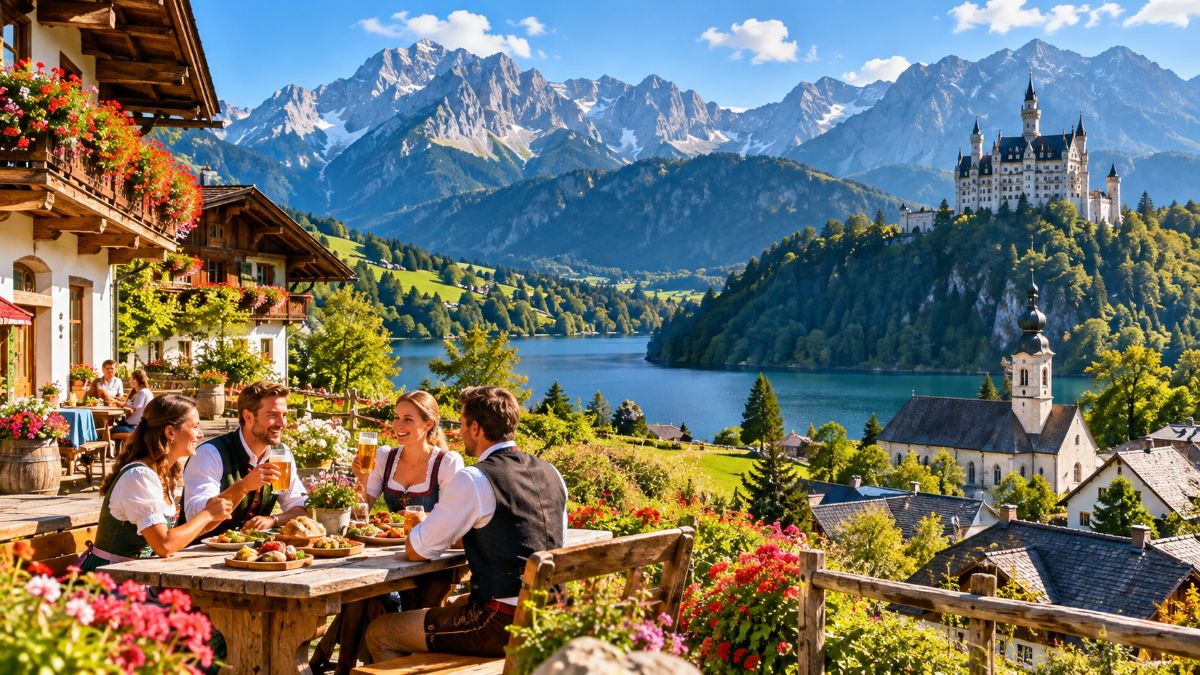
Germany’s Allgäu region in southern Bavaria is offering travellers a different perspective on sustainable tourism, combining distinctive accommodation with historic preservation, renewable energy and traditional rural life. From elevated treehouses built among mature beech trees to a centuries-old castle heated with locally sourced wood chips, the region demonstrates how tourism can support the conservation of natural and cultural assets. Historic farmhouses reconstructed as an open-air museum add another dimension, introducing visitors to traditional building techniques, local food production and low-impact living. Together, these experiences present a regional approach to responsible travel that connects accommodation, heritage and environmental awareness.
The developments also reflect the economic realities facing rural communities, where traditional farming and forestry increasingly require diversified income sources. In the Allgäu, tourism offers opportunities to maintain working farms, preserve historic properties and finance landscape management while creating distinctive experiences for visitors. The approach does not suggest that every holiday can be environmentally neutral. Instead, it illustrates how locally rooted businesses can integrate renewable energy, regional food supplies, biodiversity protection and cultural education into their operations. For travellers considering alternatives to conventional resort holidays, Bavaria provides examples of how a stay can contribute to the continued use and preservation of existing rural assets.
Bavaria Develops a Distinctive Model of Sustainable Tourism
The Allgäu region, close to Austria in southern Bavaria, brings together agricultural landscapes, woodland, historic architecture and traditional food culture. Within a relatively compact area, visitors can experience accommodation in unusual woodland structures, explore a family-owned castle and discover rural history through reconstructed farmhouses.
These attractions share an emphasis on making existing resources economically valuable without abandoning their original character. Working land becomes part of a visitor experience, historic buildings support accommodation and guided tours, and traditional practices are presented as lessons in resource efficiency.
Advertisement
Advertisement
For the regional tourism economy, the model demonstrates how smaller operators can distinguish themselves through authenticity and environmental responsibility. Rather than relying exclusively on large-scale construction, businesses use local materials, existing properties and regional knowledge to develop experiences that appeal to travellers seeking meaningful holidays.
Treehouse Accommodation Offers an Alternative to Conventional Hotels
At Baumhaushotel Allgäu, Katarina Zinnecker and her husband, Norbert Bechteler, have diversified their agricultural business through unusual holiday accommodation. Their property includes ten units, comprising four treehouses among approximately 180-year-old beech trees and six oval-shaped pods positioned on the ground.
Advertisement
Advertisement
The project emerged from the family’s search for additional income beyond its agricultural activities. After opening a holiday rental in the farmhouse in 2009, the couple explored further accommodation options and eventually developed the woodland concept.
The structures were built using the family’s own timber, linking the accommodation directly to local resources. Although the unusual designs may initially appear unconventional, the interiors provide practical facilities, including bathrooms, showers and fully equipped kitchens. The result combines distinctive architecture with the comforts expected by modern holidaymakers.
Renewable Energy Strengthens the Farm’s Environmental Approach
Energy management has become a central part of the treehouse property’s sustainability efforts. The buildings collectively have approximately 100 kilowatts of solar capacity, supported by a battery system capable of storing 260 kilowatt-hours of electricity.
According to Zinnecker, the property can operate entirely off-grid during summer. Before these investments, the farm’s annual electricity expenditure was approximately €25,000. She expects the battery system to repay its cost in around eight years, although the actual outcome will depend on energy production, consumption and future costs.
The business also purchases regional products where possible, including cheese, sausages and eggs. These measures connect renewable energy with local supply chains, showing how accommodation providers can address several aspects of environmental performance rather than concentrating on a single initiative.
Schloss Kronburg Connects Historic Preservation With Greener Heating
Approximately 15 miles north of the treehouse property, Schloss Kronburg demonstrates the challenges of operating historic accommodation sustainably. The castle has belonged to the von Vequel-Westernach family since 1619, although some parts of the building are older.
Advertisement
Advertisement
Maintaining such properties requires substantial expenditure, while heritage restrictions can limit the changes owners are permitted to make. The family supports the castle through several activities, including forestry, guided tours, weddings and guest apartments.
Until 2025, the property relied on oil for heating. It has since switched to a wood-chip system using material collected primarily from the family’s own forest. Installing the system required adapting the historic building, illustrating the practical difficulties of introducing modern environmental measures into older structures.
The guest apartments offer kitchens, making them suitable for families and travellers planning stays longer than a night or two.
Forestry and Biodiversity Shape the Castle’s Long-Term Strategy
The castle’s surrounding woodland is both an economic asset and an environmental responsibility. Maximilian von Vequel-Westernach manages approximately 270 hectares of forest and works professionally as a biologist, preparing environmental impact assessments for infrastructure and construction projects.
His experience highlights the effects of changing climate conditions on regional forestry. Spruce trees have suffered from bark beetle damage following dry summers, while ash trees across Europe face disease caused by an invasive fungus.
In response, the family is diversifying future plantings, including Douglas fir, sweet chestnut and black walnut. The strategy reflects uncertainty about which species will thrive under future conditions. However, the risks remain significant: one Douglas fir planting reportedly lost approximately 90 per cent of its seedlings after adverse weather.
Advertisement
Advertisement
The estate also reduces mowing in its meadows, allowing wildflowers to bloom and provide habitat for wild bees. Nesting structures, natural-garden practices and the presence of bats contribute to the wider landscape’s ecological value.
Historic Farm Museum Preserves Traditional Low-Impact Living
In Illerbeuren, the Schwäbisches Bauernhofmuseum offers a complementary perspective on sustainable tourism. The open-air museum has reconstructed 13 historic farmhouses from across the region, alongside gardens, fields, traditional plant varieties and animals.
The buildings illustrate how local communities adapted their homes to available materials and environmental conditions. Traditional construction used locally sourced timber and stone, while the positioning of living quarters and animal accommodation reflected practical considerations, including weather patterns.
Visitors can also learn through activities involving traditional baking, laundry techniques using ash, herbs and historic household practices. These programmes connect cultural tourism with practical education, showing how earlier generations made use of locally available resources.
The museum also explores traditional diets shaped by agricultural production and household budgets. Grain and dairy products formed important parts of everyday meals, while meat was consumed less frequently in many households.
Regional Food Adds Another Dimension to Responsible Travel
Food provides a further link between tourism and the Allgäu’s agricultural landscape. At Schloss Kronburg, breakfast is largely organic and locally sourced, continuing a practice established by the family several decades ago.
Advertisement
Advertisement
The farm museum also explains how geography influences local produce. Differences in soil and meadow vegetation affect what cattle eat, which in turn influences milk characteristics and the flavour of regional cheese.
For visitors, these connections provide a broader understanding of local food beyond restaurant menus. Regional purchasing can support producers, maintain established agricultural practices and reduce dependence on some distant supply chains, although the environmental benefits vary according to production methods, transport and seasonality.
The nearby Gromerhof restaurant complements a museum visit with food options that include vegan and vegetarian dishes, broadening the experience for travellers with different dietary preferences.
Key Sustainable Tourism Experiences in the Allgäu
| Attraction | Main Experience | Sustainability Focus |
|---|---|---|
| Baumhaushotel Allgäu | Treehouses and oval woodland pods | Solar power, battery storage, regional purchasing and farm diversification |
| Schloss Kronburg | Historic castle, guided tours and guest apartments | Wood-chip heating, woodland management and biodiversity protection |
| Schwäbisches Bauernhofmuseum | Reconstructed historic farmhouses and educational activities | Traditional construction, cultural preservation and resource-conscious living |
| Gromerhof | Restaurant near the open-air museum | Regional food and vegan and vegetarian choices |
These attractions provide different ways to explore the region, from overnight accommodation to educational day trips. Travellers can combine them according to their interests, available time and preferred pace.
What Travellers Should Know Before Planning a Visit
Baumhaushotel Allgäu’s accommodation can be particularly popular during summer, with bookings filling well in advance. Travellers interested in staying in the treehouses should therefore check availability before finalising their itineraries.
Schloss Kronburg offers apartments rather than conventional hotel rooms. Castle tours take place monthly or can be arranged for groups, so visitors should confirm the relevant arrangements before travelling. The farm museum is suited to a daytime visit, with its educational activities providing an additional reason to allow enough time for exploration.
Advertisement
Advertisement
Combining the three experiences offers a varied itinerary that includes woodland accommodation, historic architecture and traditional rural culture. Visitors should also check transport connections, seasonal opening arrangements and activity schedules before departure.
Sustainable Tourism Offers Economic and Cultural Value
The Allgäu’s approach illustrates how tourism can help rural communities maintain assets that might otherwise become expensive to preserve. Income from accommodation, events, guided visits and food services can contribute to the continued operation of farms, historic buildings and cultural institutions.
Nevertheless, responsible travel requires more than attractive sustainability claims. Energy use, transport emissions, construction impacts, water consumption and purchasing decisions all influence the overall footprint of a holiday. Solar installations and local food sourcing are meaningful measures, but they do not automatically make a property carbon-neutral.
The region’s most useful lesson is its emphasis on practical, locally adapted solutions. By combining renewable energy, forestry management, biodiversity initiatives and heritage education, these businesses show how tourism can contribute to rural resilience while giving visitors a deeper understanding of Bavaria’s landscapes and traditions.
Frequently Asked Questions
1. What makes the Allgäu region suitable for sustainable tourism?
The region combines rural landscapes, working farms, historic buildings, regional food production and nature-based accommodation, offering several ways to experience responsible travel.
Advertisement
Advertisement
2. Where is Baumhaushotel Allgäu located?
Baumhaushotel Allgäu is in the Allgäu region of southern Bavaria, Germany, near the Austrian border.
3. What accommodation is available at Baumhaushotel Allgäu?
The property has ten units, including four treehouses among mature beech trees and six oval-shaped pods on the ground.
4. How does Baumhaushotel Allgäu generate and store electricity?
The property uses solar panels with approximately 100 kilowatts of capacity and a battery system capable of storing 260 kilowatt-hours.
Advertisement
Advertisement
5. What can visitors experience at Schloss Kronburg?
Visitors can explore a historic castle through guided tours, attend events and stay in guest apartments beneath the castle walls.
6. How has Schloss Kronburg changed its heating system?
The property replaced oil heating with a wood-chip system that uses material collected primarily from the family’s forest.
7. What environmental measures are used around Schloss Kronburg?
Measures include diversified tree planting, reduced meadow mowing, wildflower protection and nesting structures intended to support biodiversity.
Advertisement
Advertisement
8. What can travellers learn at the Schwäbisches Bauernhofmuseum?
The open-air museum presents historic farmhouses, traditional construction, agricultural practices, food production and household techniques through exhibits and educational activities.
9. Can visitors find vegetarian and vegan food in the area?
Yes. The Gromerhof restaurant near the farm museum offers vegan and vegetarian dishes alongside other food options.
10. When should travellers plan a visit to the Allgäu?
Summer visitors should book popular treehouse accommodation well ahead. Travellers should also confirm castle tour dates, museum arrangements, transport and seasonal opening information before departure.
Advertisement
