
France Tourism Faces Disruption as Paris Protests Trigger Transport Closures, Curfews and Visitor Safety Concerns

Published
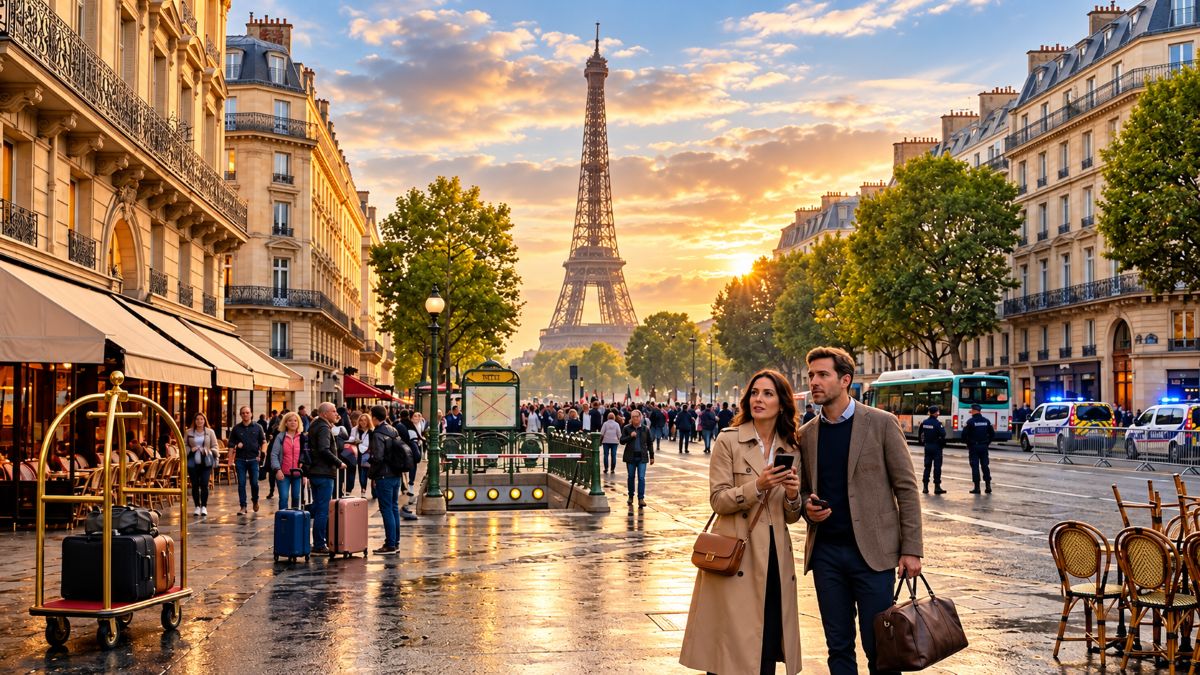
France is experiencing widespread demonstrations and localised unrest in October 2026, creating travel disruption in Paris and several other major cities. Temporary curfews, restrictions on gatherings and Metro station closures are affecting how visitors navigate the capital. Although the situation has raised concerns for tourism businesses, the disruption does not mean that every neighbourhood or attraction is inaccessible. Travellers should monitor official announcements, reconsider accommodation locations and prepare alternative transport arrangements before departing for sightseeing or other activities.
The unrest began with student protests over educational conditions and expanded to include wider concerns about living costs, fuel prices and social welfare. With further demonstrations planned, visitors need reliable information.
Advertisement
Advertisement
Why Protests Are Affecting Tourism in Paris
Demonstrations have continued since September, with high-school students and other groups demanding improvements to educational conditions and expressing opposition to rising living costs. On 17 October, protests took place across France, with authorities estimating approximately 550,000 participants nationwide, while organisers placed attendance at 800,000.
Although many demonstrations remained peaceful, violence, vandalism and looting were reported in several cities. The situation has prompted additional security measures, including restrictions on gatherings in central Paris. These developments have made advance planning increasingly important for international visitors, particularly those travelling during France’s autumn school holidays.
Advertisement
Advertisement
Paris Curfews and Restrictions Visitors Should Understand
Paris authorities introduced overnight curfews in selected central areas on 19 October, initially affecting locations around Place de la République and Les Halles. Restrictions were subsequently extended, with unauthorised demonstrations and gatherings prohibited in several areas between 8am and 8pm on 22 October.
The affected locations include the Louvre area, Champs-Élysées, Élysée Palace, Bastille, République and major railway stations. These measures target demonstrations and gatherings rather than automatically preventing tourists from visiting the entire area. Nevertheless, visitors should confirm local restrictions before travelling to individual attractions and follow police instructions.
Advertisement
Advertisement
Metro Closures and Transport Disruption in Paris
Public transport has become an important consideration for visitors navigating the capital. On 22 October, several Metro stations closed from 10am at the request of police authorities. Services on Line 10 were also interrupted between Gare d’Austerlitz and Jussieu.
The following table summarises the principal developments reported on that date.
| Travel consideration | Reported situation | Implication for visitors |
|---|---|---|
| Metro stations | Multiple stations temporarily closed | Check service information before departure |
| Metro Line 10 | Interruption between Gare d’Austerlitz and Jussieu | Consider alternative routes |
| Central Paris | Restrictions on unauthorised gatherings | Verify access arrangements |
| Overnight movement | Localised curfews introduced | Check the applicable hours and boundaries |
| Future demonstrations | Further action announced for 24 October | Allow flexibility in itineraries |
Transport arrangements can change at short notice during periods of unrest. Travellers should therefore verify current operating information before leaving their accommodation and avoid assuming that a familiar route will remain available throughout the day.
Which Paris Neighbourhoods Should Tourists Consider?
Accommodation location can influence how easily visitors navigate disruptions. Staying close to major squares or locations associated with demonstrations may increase the likelihood of encountering crowds, police operations or transport interruptions.
Quieter residential neighbourhoods may offer a practical alternative. The 13th, 14th and 15th arrondissements have been suggested as options for visitors seeking accommodation away from some prominent demonstration locations. However, no neighbourhood should be considered entirely unaffected without checking current conditions.
Travellers should also consider access to alternative Metro stations, bus services and walking routes. Before confirming a hotel, visitors should review cancellation policies and ask accommodation providers about transport access and any locally applicable restrictions.
Advertisement
Advertisement
Unrest Beyond Paris Raises Wider Tourism Concerns
Paris is not the only French destination affected. Lyon, Bordeaux, Lille, Marseille, Limoges and Angers have experienced demonstrations or incidents of violence, vandalism and property damage.
In Lyon, more than 20,000 people reportedly attended demonstrations, with clashes and damage to commercial premises in the central Presqu’île district. A tourist office was vandalised and set on fire. In Limoges, a fire severely damaged the historic Hôtel de Ville, while damage was also reported at municipal buildings in Marseille, Lille and Angers.
These incidents have raised concerns for the French tourism industry as the Toussaint school holidays begin. Some hotels have reportedly experienced cancellations and early departures, although the overall impact on bookings remained limited at the time of reporting.
Government Response and Further Demonstrations
French authorities are preparing additional security measures ahead of further demonstrations announced for 24 October. The planned response includes specialist police and gendarmerie units, armoured vehicles and military personnel from Operation Sentinelle.
Prime Minister Sébastien Lecornu held discussions with trade union representatives on 21 October, but no breakthrough was announced. Financial assistance was also being prepared for affected businesses, alongside funding to repair damaged public facilities. An inquiry into the handling of demonstrations and the police response has added another dimension to the unfolding situation.
For visitors, these developments underline the importance of checking official travel advice and local announcements rather than relying on assumptions based on previous visits.
Advertisement
Advertisement
Practical Travel Advice for Visitors to France
Travellers planning a Paris holiday should remain flexible and prioritise personal safety. Checking transport services, avoiding active demonstrations and maintaining access to essential information can help reduce the impact of sudden disruptions.
Visitors who encounter a demonstration should calmly move away from the gathering and follow instructions from local authorities. Keeping mobile phones charged, saving emergency contact details offline and identifying alternative routes to accommodation can also prove useful.
Those with upcoming travel arrangements should review airline, hotel and transport conditions before making changes. The situation reported on 22 October does not establish that all travel to Paris is unsafe, but local conditions may change rapidly.
Frequently Asked Questions
1. Is Paris safe for tourists in October 2026?
Paris remains accessible in many areas, but demonstrations, localised unrest and transport restrictions require visitors to exercise caution and check current conditions.
2. Why are protests taking place in France?
Advertisement
Advertisement
The demonstrations began with student demands for improved educational conditions and expanded to include concerns about living costs, fuel prices and social welfare.
3. Are Paris tourist attractions closed because of the protests?
Restrictions on gatherings have affected areas near major attractions, but these measures do not automatically prohibit tourists from visiting every location.
4. Which Paris Metro stations are affected?
On 22 October, reported closures included Bastille, Saint-Paul, Place d’Italie, Campo Formio, Saint-Marcel, Quai de la Rapée, Gare d’Austerlitz, Bréguet-Sabin and Chemin Vert.
5. Is Metro Line 10 operating normally?
Advertisement
Advertisement
Services were interrupted between Gare d’Austerlitz and Jussieu on 22 October. Travellers should check the latest service information before travelling.
6. Should visitors avoid central Paris?
Visitors should avoid active demonstrations and verify restrictions around major squares and landmarks. Conditions vary by location and time.
7. Which Paris neighbourhoods may offer alternative accommodation?
The 13th, 14th and 15th arrondissements have been suggested as quieter residential alternatives, although visitors should check local conditions before booking.
8. Are other French cities affected by unrest?
Advertisement
Advertisement
Yes. Lyon, Bordeaux, Lille, Marseille, Limoges and Angers have experienced demonstrations or related incidents.
9. Are further protests planned in France?
Further demonstrations were announced for 24 October, with additional student action also indicated for 3 and 5 November.
10. What should travellers do before visiting Paris?
Check official travel advisories, confirm transport services, monitor local news, keep emergency contacts accessible and prepare alternative routes and flexible sightseeing plans.
Advertisement
