

Emirates A380 Flights Bring 82 Extra Seats to Prague, While Glasgow Awaits Its October Return

Published
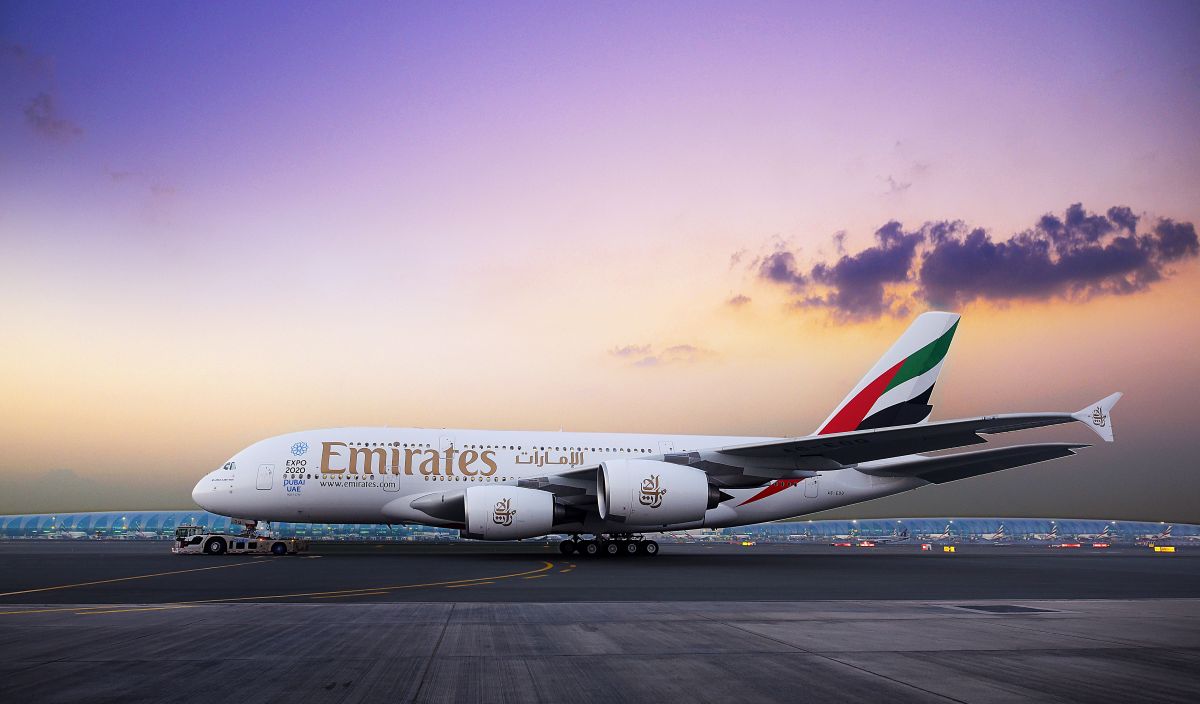
Emirates temporarily replaced Airbus A380 aircraft with Boeing 777-300ERs on its Dubai–Prague and Dubai–Glasgow routes from July to September 2026, while maintaining scheduled connectivity to both European destinations. Emirates A380 flights returned to Prague on 1 October, with a larger 569-seat configuration scheduled from 25 October. Glasgow’s published timetable, meanwhile, lists the superjumbo’s return from 30 October, creating a notable difference between the two routes. The aircraft changes affect available seats, cabin layouts and passenger choices, although neither destination lost its scheduled Emirates service. For travellers planning autumn journeys, the distinction between a route’s operating schedule and its assigned aircraft remains essential when selecting flights and cabin products.
Two European Routes See a Seasonal Aircraft Shift
The adjustment reflects a familiar airline capacity-management strategy. Carriers can deploy different aircraft according to seasonal demand, fleet availability and the number of seats required on individual routes. In this case, Emirates retained daily services while using the Boeing 777-300ER instead of the larger A380 during the third quarter. Prague and Glasgow therefore experienced a change in aircraft, rather than a withdrawal of service.
Prague Airport’s published information confirms the return of the A380 on 1 October. It also identifies the forthcoming three-class configuration as a significant change for passengers. The airline’s official Glasgow schedule, however, continues to display the Boeing 777-300ER, underlining why travellers should verify their individual departure details.
How the Aircraft Deployment Changed
The third-quarter schedule comparison identifies a clear distinction between the aircraft used during summer and those planned for the autumn timetable. Both routes retained scheduled connections to Dubai, but the temporary substitution changed the capacity and cabin products available on each departure.
Advertisement
Advertisement
| Route | Aircraft During July–September 2026 | Published A380 Return | Planned A380 Configuration |
|---|---|---|---|
| Dubai–Prague | Boeing 777-300ER | 1 October 2026 | 487 seats initially; 569 seats from 25 October |
| Dubai–Glasgow | Boeing 777-300ER | 30 October 2026, according to the schedule available on 11 October | 519 seats across four classes |
The Glasgow date requires particular attention because schedules published at different times may show different aircraft assignments. The 30 October date reflects the timetable information supplied for this report, rather than a guarantee that every flight will operate with an A380. Emirates’ current route page identifies the Boeing 777-300ER, so passengers should check their specific travel date before relying on the planned change.
The distinction matters commercially. Aircraft substitutions allow airlines to retain frequencies while redistributing available seats across their networks. However, passengers may experience different cabin arrangements even when their flight number, destination and scheduled departure remain unchanged.
Advertisement
Advertisement
Prague Gains More Seats and Premium Economy
Prague’s A380 restoration brings a more substantial development than the return of the double-decker aircraft alone. From 1 October, Emirates reinstated the aircraft on its daily Dubai–Prague service, initially using a 487-seat, four-class configuration. The planned transition from 25 October introduces a three-class version with 569 seats.
Prague A380 Capacity Comparison
| Configuration | Total Seats | Cabins |
| Initial A380 | 487 | First, Business, Premium Economy and Economy |
| Revised A380 | 569 | Business, Premium Economy and Economy |
| Difference | +82 seats | First Class removed |
The revised layout adds 82 seats, representing an increase of approximately 16.8% over the initial A380 configuration. Its 76 Business Class seats, 56 Premium Economy seats and 437 Economy Class seats redistribute capacity towards the lower and middle cabin segments. In particular, Premium Economy becomes an important option for passengers seeking more comfort without purchasing a Business Class ticket.
Advertisement
Advertisement
This shift could appeal to leisure travellers, families and corporate passengers comparing comfort against budget. However, the larger total capacity does not automatically mean cheaper fares. Pricing depends on demand, booking patterns, inventory and competition, rather than seat numbers alone.
Prague’s development also illustrates how aircraft refurbishment can influence the passenger experience on an established route. The service remains unchanged at the network level, yet the cabin product and seating supply evolve significantly. For travellers, the aircraft’s configuration can be as important as its headline model.
Glasgow Awaits Its Superjumbo Return
Glasgow’s position differs from Prague’s because the latest schedule available on 11 October placed its A380 transition later in the month. Emirates’ EK27 and EK28 services were listed with the Boeing 777-300ER through 29 October, with the A380 scheduled from 30 October. The airline’s current route information still identifies the Boeing 777, making advance verification particularly important.
The planned Glasgow aircraft offers 519 seats in a four-class arrangement. Unlike Prague’s forthcoming three-class aircraft, this version retains First Class alongside Business Class, Premium Economy and Economy Class. Its return would therefore restore both additional seating capacity and a premium cabin choice that the revised Prague configuration will not offer.
Advertisement
Advertisement
The difference demonstrates that an A380 return does not guarantee an identical onboard experience across destinations. Emirates can deploy different versions of the same aircraft, each with its own seating capacity and cabin layout. Consequently, passengers travelling through Dubai should consider the operating aircraft and cabin configuration when booking, particularly if they have selected a premium fare.
The route remains relevant to Scotland’s international travel market because Dubai provides connections to Emirates’ wider network. Maintaining scheduled service during the aircraft substitution preserved access to that hub, even while the available aircraft changed. The operational distinction is important for travellers planning onward journeys, although an aircraft change alone does not establish whether connecting itineraries or fares have become more convenient.
What the Change Means for Travellers
For passengers, the most immediate consequence is a difference in available seats and onboard products. The A380 can accommodate more passengers in the configurations planned for these routes, but the exact advantage depends on which aircraft operates each departure.
The practical implications extend beyond seat totals. Travellers who value First Class, want to try Premium Economy or have selected a particular cabin should verify that the booked product remains available. An aircraft substitution can affect seat maps, cabin availability and the precise configuration presented during booking.
| Traveller Priority | What to Check Before Departure |
|---|---|
| Premium Economy | Confirm that the selected flight offers this cabin on the assigned aircraft |
| First Class | Verify the configuration, especially on Prague services scheduled with the 569-seat A380 |
| Seat selection | Recheck the seat map after an aircraft change |
| Families and groups | Review seating availability and whether allocated seats remain together |
| Connecting journeys | Confirm flight timings and onward connections independently of the aircraft type |
| Business travel | Check cabin availability and fare conditions before finalising expenses |
These checks become especially valuable when booking several months ahead. Airline schedules remain subject to operational adjustments, and the aircraft displayed when a ticket is purchased may not be the aircraft ultimately assigned. Travellers should therefore consult Emirates’ official flight information and the relevant airport’s updates before departure.
Importantly, a larger aircraft does not necessarily produce a shorter journey. The main change concerns passenger capacity and the onboard environment, rather than the route itself. Travellers should continue to assess fares, timings, baggage allowances and connection requirements alongside aircraft preferences.
Advertisement
Advertisement
Why Airlines Reallocate Aircraft Seasonally
Aircraft deployment is a central part of airline network planning. Airlines must match capacity with demand while balancing aircraft availability, maintenance requirements and operational constraints across multiple destinations. A larger aircraft may be more suitable on one route during a particular period, while a smaller wide-body aircraft can serve another without reducing its scheduled frequency.
The Prague and Glasgow changes demonstrate this flexibility. Emirates used the Boeing 777-300ER during the summer period and scheduled the A380’s return during October. This approach maintained connectivity while allowing the airline to adjust the number of seats offered on individual departures.
The wider industry context also includes investment in cabin refurbishment. Emirates has been progressively modernising its long-haul fleet, introducing Premium Economy on selected aircraft while updating existing cabin interiors. The airline’s published material describes this as part of a broader fleet-modernisation programme, rather than a change confined to either European destination.
For airlines, the value of this strategy lies in managing capacity without necessarily adding frequencies. For airports, a larger aircraft can bring more passengers through an existing scheduled movement. For tourism businesses, the potential benefit depends on actual passenger demand, spending patterns and the availability of onward transport and accommodation.
However, additional seats should not be confused with confirmed passenger growth. An aircraft with more seats increases potential capacity, but the number of people travelling depends on bookings and load factors. Neither the A380’s return nor Prague’s additional 82 seats, on their own, establish a measurable increase in tourism arrivals.
How the Two Routes Compare
The contrasting cabin plans provide a useful illustration of how airlines can tailor aircraft deployment to different markets. Prague’s planned 569-seat A380 prioritises a larger combined Business, Premium Economy and Economy offering. Glasgow’s planned 519-seat aircraft retains a four-class arrangement, including First Class.
Advertisement
Advertisement
The difference is not simply a question of which aircraft carries more people. It also reflects the range of products offered to passengers on each route. Travellers who prioritise a particular cabin should therefore compare the actual configuration rather than assume that every A380 provides the same experience.
Historically, Emirates has used the A380 on its Glasgow service during selected periods. Its published announcement in 2018 described seasonal A380 deployment on the route, with Boeing 777 operations at other times. That earlier arrangement illustrates the airline’s longstanding use of aircraft changes to manage capacity, although it does not establish the reason for the specific 2026 timetable.
The latest changes are best understood as an adjustment to scheduled aircraft capacity, not a route expansion. Both cities retained their Dubai connections, while the return timetable and cabin layouts differed. This distinction helps travellers separate genuine network changes from operational decisions that affect the aircraft assigned to an existing service.
What Travellers Should Expect Next
The October timetable marks two distinct stages in Emirates’ aircraft deployment across Prague and Glasgow. Prague has already regained its A380 service, with a 569-seat configuration scheduled from 25 October. Glasgow’s published timetable lists the aircraft change from 30 October, although the airline’s live route information should take precedence when checking a specific departure.
For travellers, the central consideration is whether the assigned aircraft offers the cabin and seating arrangement they expect. For the aviation industry, the changes demonstrate how capacity can be adjusted without withdrawing an established route. Ultimately, aircraft type, seat availability and cabin configuration remain separate booking considerations. Checking all three can help passengers make informed decisions when planning European journeys through Dubai.
Advertisement
