
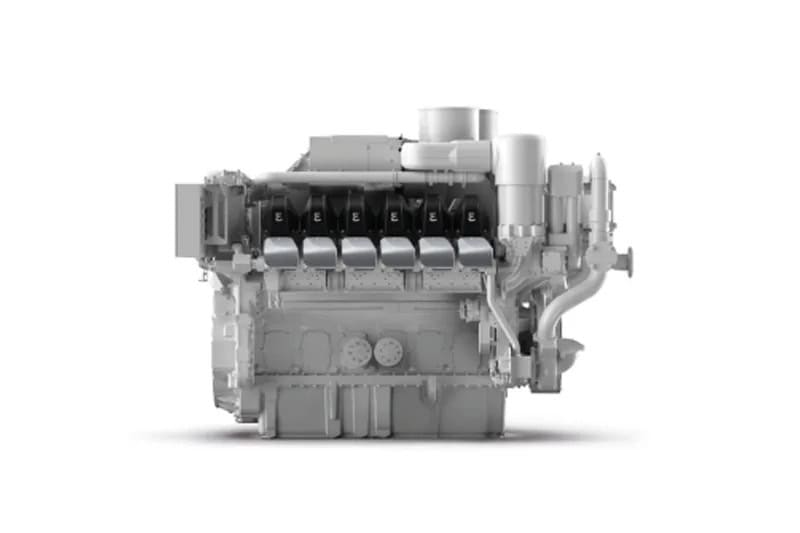
The first ever complete tests of the company’s Everllence methanol engine have been conducted by Everllence at the company’s Test and Research Center located in Frederikshavn, Denmark. This test is seen as a breakthrough in attempts made by the company to lower the carbon emission levels in maritime transportation. The 12-cylinder 175DF-M dual-fuel methanol engine was tested in two ways – in diesel and methanol modes.
The breakthrough occurs amid the efforts of the global shipping industry to increase investment into alternative fuel and technology solutions that would enable the companies to run their operations in low-carbon way. For cruise holidaymakers and the tourism industry in general, these breakthroughs may play an important role in shaping the future environmental performance of ships around the globe.
Advertisement
Everllence stated that the engine concept had been designed to give ship operators an easy path towards clean operations.
Everllence has moved the 175DF-M engine concept from earlier single-cylinder testing into a full-scale validation programme.
Advertisement
The company previously optimised the dual-fuel methanol concept on a single-cylinder test platform in 2025 before beginning full engine testing.
| Development | Details |
|---|---|
| Engine type | 12-cylinder 175DF-M dual-fuel methanol engine |
| Testing location | Everllence Test and Research Center, Frederikshavn, Denmark |
| Fuel capability | Methanol and diesel operation |
| Technology | Low-pressure port-fuel-injection (PFI) system |
| Future applications | Superyachts, passenger vessels, offshore vessels and other marine uses |
The full-scale testing campaign was designed to confirm how the engine performs under operational conditions and evaluate its potential for future commercial deployment.
Although engine technology operates behind the scenes, it plays an important role in shaping the future of travel.
Cruise ships, ferries, passenger vessels and private yachts are under increasing pressure to reduce emissions while continuing to provide reliable services.
Advertisement
Advertisement
For travellers, future marine technologies could influence how cruise companies design and operate next-generation fleets.
Everllence said the 175DF-M engine has been designed to operate with a high proportion of methanol while maintaining efficiency across a wide range of operating conditions.
The variable-speed version of the engine is designed to achieve its highest efficiency with more than 95 percent methanol share across a wide load range, according to the company.
The company said the technology approach could help shipowners move towards carbon-neutral operations when suitable fuel supplies become available.
The shipping sector is exploring multiple alternative fuels as governments and businesses work towards reducing greenhouse gas emissions.
Methanol has emerged as one possible pathway because it can be produced using renewable energy sources and integrated into existing maritime operations with suitable engine technologies.
The development of engines capable of operating with alternative fuels is becoming a key part of the maritime industry’s long-term strategy.
Everllence said the 175DF-M engine is being developed for several marine applications, extending beyond traditional commercial shipping.
The technology could support different vessel categories requiring reliable power systems.
The wide range of possible applications highlights how alternative fuel technology is being explored across multiple areas of maritime transport.
Everllence has already secured initial commercial orders for the high-speed engine.
The company said 12V and 16V175DF-M variable-speed generator sets are scheduled for delivery in mid-2027 to two separate superyacht customers.
| Area | Details |
|---|---|
| First orders | Secured by Everllence |
| Engine variants | 12V and 16V175DF-M variable-speed gensets |
| Delivery timeline | Mid-2027 |
| Customers | Two superyacht operators |
The early commercial adoption indicates growing interest among vessel owners looking for alternative propulsion and energy solutions.
Passengers are unlikely to notice changes from individual engine developments immediately, but these technologies could influence future cruise and marine travel.
The transition towards alternative fuels will depend on fuel availability, infrastructure investment and wider industry adoption.
Travellers interested in sustainable tourism will likely see more cruise operators highlighting environmental technology investments in the coming years.
The introduction and testing of methanol engines reflects a broader transformation in global maritime transport.
As shipping companies, cruise operators and technology providers explore cleaner solutions, engine innovation will become increasingly important.
For the cruise industry, cleaner engines could become an important part of meeting future environmental goals while maintaining global connectivity.
The 175DF-M is a dual-fuel methanol engine designed to operate using methanol and diesel fuel options.
The first full-scale tests were conducted at Everllence’s Test and Research Center in Frederikshavn, Denmark.
Potential applications include superyachts, passenger vessels, offshore vessels, tugboats and government vessels.
Everllence said 12V and 16V175DF-M variable-speed gensets are expected to be delivered in mid-2027.
Methanol is being considered as one option to support lower-carbon maritime operations and future decarbonisation goals.
Everllence’s first full-scale trials of the 175DF-M methanol engine are yet another stage in the maritime industry’s transition towards new kinds of fuel sources.Although their implementation will require certain conditions to be met, such technologies as dual-fuel methanol engines may have an impact on the future of cruise shipping.For tourists, it is a sign of their transition towards more environmentally-friendly trips at sea.
Advertisement
Tags: alternative marine fuels, Everllence methanol engine, green shipping technology, maritime decarbonisation, sustainable cruise travel
Advertisement
Advertisement













Friday, September 4, 2026

Friday, September 4, 2026

Friday, September 4, 2026

Friday, September 4, 2026

Thursday, September 3, 2026

Wednesday, September 2, 2026

Friday, September 4, 2026