
United States Joins Iran, France, Saudi Arabia, United Arab Emirates, Qatar, Oman, Bahrain and Lebanon as Versailles Peace Memorandum Signals Strait of Hormuz Reopening, Middle East Stability and New Opportunities for Global Travel, Aviation and Tourism

Updated
Published
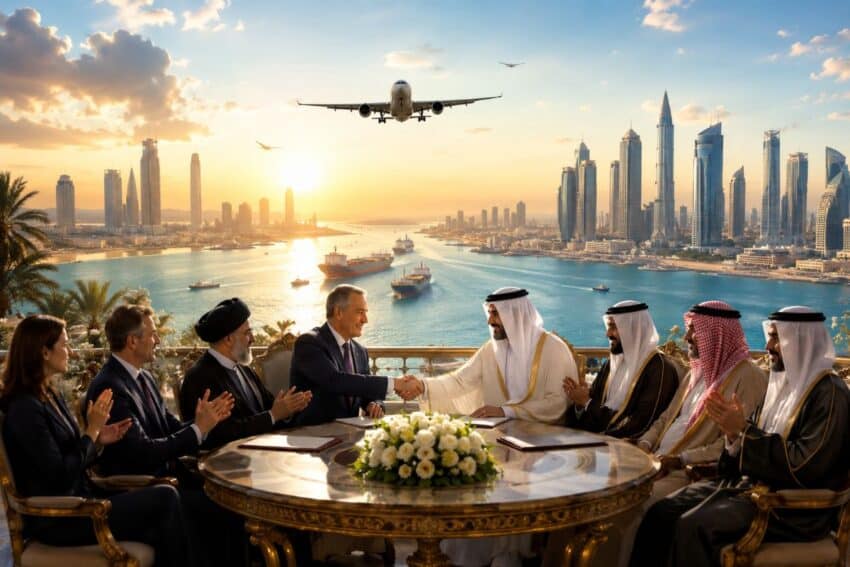
The United States has taken a significant diplomatic step alongside Iran and key Middle Eastern stakeholders by signing a memorandum of understanding during a high-profile gathering at the Palace of Versailles in France. The agreement, announced following discussions hosted by French President Emmanuel Macron, outlines a broad framework aimed at easing regional tensions, reopening the strategically vital Strait of Hormuz, promoting reconstruction initiatives, and supporting long-term stability across parts of the Middle East. While the memorandum represents an initial political understanding rather than a final treaty, the development has immediately drawn global attention from governments, airlines, cruise operators, tourism boards, logistics companies, and international investors.
For the global travel industry, the potential reopening and stabilization of one of the world’s busiest maritime corridors could have far-reaching implications. Airlines operating through Gulf airspace, cruise operators serving the Arabian Gulf, international business travelers, and leisure tourists may all benefit from improved regional security and enhanced connectivity if the proposed measures are successfully implemented. Industry observers believe that greater diplomatic cooperation between the United States, Iran, France, Gulf nations, and regional partners could strengthen confidence in Middle Eastern tourism while supporting aviation growth, hospitality investment, energy transportation, and international travel demand throughout the region.
Advertisement
Advertisement
United States and Iran Advance Diplomatic Framework in France
A memorandum of understanding was signed during an official gathering at the Palace of Versailles, where senior representatives from the United States and Iran participated alongside French leadership. The agreement outlines a fourteen-point framework intended to promote regional peace, encourage diplomatic cooperation, and establish mechanisms for reconstruction and economic recovery.
Although further negotiations and implementation remain necessary, the announcement has generated optimism across international markets, particularly within sectors closely connected to tourism, aviation, maritime trade, and hospitality.
Advertisement
Advertisement
| Agreement Element | Expected Objective |
|---|---|
| Peace memorandum | Strengthen diplomatic engagement |
| Regional dialogue | Reduce geopolitical tensions |
| Reconstruction framework | Support long-term recovery |
| International cooperation | Improve economic confidence |
Strait of Hormuz Reopening Could Transform Global Travel
One of the most significant aspects of the memorandum involves the proposed reopening and stabilization of the Strait of Hormuz, one of the world’s most strategically important maritime corridors.
For the travel industry, this development extends beyond shipping. Improved regional stability could encourage airlines to optimize flight routes, reduce operational risks, improve scheduling reliability, and strengthen traveler confidence in visiting Gulf destinations.
Advertisement
Advertisement
Cruise tourism operating within the Arabian Gulf may also experience renewed growth as international visitors gain greater confidence in regional security conditions.
| Travel Sector | Potential Impact |
|---|---|
| Airlines | Improved operational planning |
| Cruise operators | Expanded Gulf itineraries |
| Business travel | Higher corporate mobility |
| Leisure tourism | Increased visitor confidence |
| Hospitality | Greater hotel demand |
Middle East Tourism Could Enter a New Growth Phase
Countries throughout the Gulf have invested heavily in tourism diversification over recent years. Saudi Arabia, the United Arab Emirates, Qatar, Bahrain and Oman continue expanding airports, resorts, cultural attractions and international events to attract millions of global visitors.
Should regional stability improve further, these investments may receive an additional boost from stronger international demand.
International tour operators could introduce more multi-country itineraries connecting Gulf destinations with neighboring cultural and heritage attractions, while airlines may continue expanding regional and long-haul connectivity.
| Tourism Opportunity | Industry Benefit |
|---|---|
| Multi-country travel | Higher visitor spending |
| Luxury tourism | Increased premium bookings |
| Conference travel | Growth in MICE tourism |
| Cultural tourism | Expanded destination appeal |
Aviation Industry Watches Regional Developments Closely
Airlines have consistently monitored geopolitical developments across the Middle East because regional tensions can influence flight operations, insurance costs, scheduling flexibility and passenger confidence.
A more stable environment may encourage carriers to strengthen existing routes while evaluating additional destinations throughout the Gulf region. International airports may also benefit from increasing transit passengers connecting Europe, Asia and Africa through major Gulf aviation hubs.
Advertisement
Advertisement
Greater predictability across regional airspace could improve operational efficiency while supporting future tourism growth.
Reconstruction Plans Could Support Hospitality Investment
The memorandum also references a substantial reconstruction initiative intended to support long-term economic recovery.
Large-scale reconstruction often creates demand for hotels, business accommodation, transportation services, conference facilities and tourism infrastructure. International hospitality companies may monitor future investment opportunities as reconstruction projects evolve.
If implemented successfully, reconstruction activities could generate additional employment while supporting broader economic development across affected regions.
| Economic Area | Possible Tourism Impact |
|---|---|
| Infrastructure | Better visitor accessibility |
| Hotels | Increased investment |
| Transport | Enhanced regional mobility |
| Business services | More international travel |
Global Travel Industry Monitors Next Steps
While the memorandum represents an important diplomatic milestone, implementation will depend upon continued negotiations and cooperation among participating governments.
Travel companies, airlines, cruise operators, insurers and tourism authorities will closely monitor future developments before making significant operational adjustments.
Advertisement
Advertisement
If diplomatic progress continues, the agreement could contribute to improved regional confidence, expanded tourism opportunities and stronger international connectivity across one of the world’s most strategically important travel regions.
Frequently Asked Questions
1. What was signed at Versailles?
An initial memorandum of understanding outlining a framework for future diplomatic cooperation and regional peace initiatives.
2. Why is the Strait of Hormuz important for travel?
It is a critical international maritime corridor that influences regional stability, transportation and global connectivity.
3. How could airlines benefit from regional stability?
Advertisement
Advertisement
Airlines may experience improved operational planning, greater route flexibility and stronger passenger confidence.
4. Will tourism increase immediately?
Tourism growth will depend on the successful implementation of future diplomatic commitments and regional stability.
5. Which countries may benefit from increased tourism?
Saudi Arabia, the United Arab Emirates, Qatar, Bahrain, Oman and other Middle Eastern destinations could benefit.
6. How could cruise tourism be affected?
Advertisement
Advertisement
Greater regional stability could encourage cruise operators to expand Gulf itineraries and attract more international passengers.
7. Does the memorandum include reconstruction efforts?
Yes. The framework references long-term reconstruction initiatives intended to support economic recovery.
8. Why are hospitality companies monitoring the agreement?
Improved regional stability may encourage future hotel investment, business travel and tourism development.
9. Is the agreement legally binding?
Advertisement
Advertisement
The memorandum represents an initial framework and further negotiations are expected before full implementation.
10. Why is this development important for the global travel industry?
Greater regional stability has the potential to strengthen aviation, tourism, hospitality, cruise operations, business travel and international visitor confidence across the Middle East.
Advertisement
