

Royal Brunei Airlines (RB) Cancellation Across Saudi Arabian Routes Strands Hundreds of Umrah Pilgrims And Travellers On Their Spiritual Journeys

Published
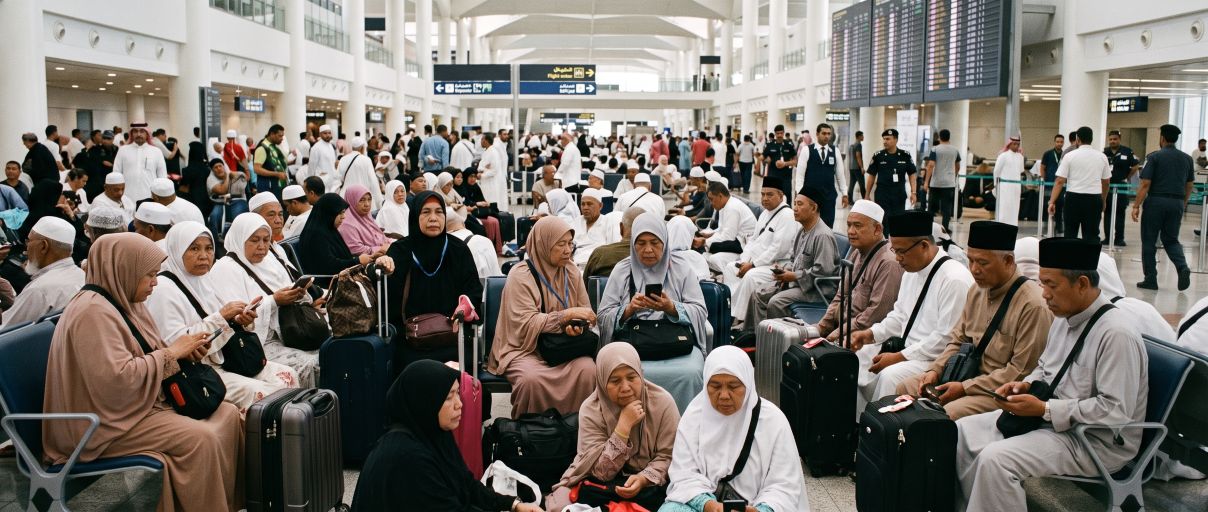
A sudden paralysis across commercial aviation corridors in the Arabian Peninsula has transformed thousands of spiritual journeys into an unfolding logistical and humanitarian crisis, after Royal Brunei Airlines (RB) grounded its primary Saudi Arabian routes following severe security escalations and strikes on regional transport nodes. Acting on emergency civil aviation risk assessments, the Sultanate’s flag carrier announced late on 12 October that it had cancelled scheduled intercontinental services connecting Bandar Seri Begawan and the Saudi Red Sea gateway of Jeddah for 13 October 2026. The grounding of outbound flight BI001 and its return service BI002 severs a vital link in the Southeast Asian pilgrimage corridor, stranding hundreds of registered Umrah travellers across both ends of the route.
While civil aviation regulators enforced the stoppage under international air safety mandates, the human fallout has hit vulnerable travelers immediately. Trapped between abruptly cancelled flights, expiring electronic entry permits, strictly regimented hotel turnover cycles in the holy cities of Makkah and Madinah, and dwindling supplies of essential prescription medicine, hundreds of Bruneian pilgrims—predominantly elderly retirees—now face an unprecedented operational vacuum with no immediate path home.
The Official Airline Directive: Royal Brunei Airlines Statement and Risk Assessment
The operational freeze was confirmed through an official corporate press release and security bulletin issued by Royal Brunei Airlines at 8:33 PM on 12 October 2026:
ROYAL BRUNEI AIRLINES OFFICIAL STATEMENT
Advertisement
Advertisement
Title: Royal Brunei Airlines Responds To Regional Escalation In Saudi Arabia (12 October 2026)
Issuance Timestamp: 12 October 2026, 8:33 PM
Advertisement
Advertisement
“Royal Brunei Airlines (RB) is closely monitoring the evolving safety and security situation in the Kingdom of Saudi Arabia and its potential impact on RB’s flight operations.
In view of the recent escalation and the associated safety and security considerations, RB has taken a precautionary approach and cancelled flight BI001 (Brunei–Jeddah) and flight BI002 (Jeddah–Brunei), scheduled for 13 October 2026, following a thorough and comprehensive assessment of the prevailing developing geopolitical situation. The decision has been made with the safety and security of our passengers, crew and operational personnel as our highest priority.
Advertisement
Advertisement
RB continues to assess the situation in coordination with relevant authorities. Other scheduled flights to and from Saudi Arabia remain under review, and any further operational decisions will be guided by ongoing risk assessments, prevailing conditions and applicable aviation safety requirements.
RB recognises that these developments may cause concern and inconvenience, particularly for our Umrah pilgrims, their families and other passengers travelling between Brunei Darussalam and Saudi Arabia. We remain committed to keeping affected passengers informed and will provide timely updates.
Passengers, Umrah pilgrims and members of the public are advised to monitor RB’s official communication channels for the latest updates and to check their flight status before proceeding to the airport. Passengers requiring assistance are encouraged to contact RB’s Customer Service Centre or their respective travel agents.
RB sincerely regrets the inconvenience caused and appreciate the patience, understanding and cooperation of all affected passengers during this period.”
Advertisement
Advertisement
+---------------------------------------------------------------------------------------+
|                    ROYAL BRUNEI AIRLINES - CANCELLATION SUMMARY                       |
+---------------+---------------------+---------------+---------------+-----------------+
| Flight Number | Route Sector        | Date          | Status        | Aircraft Type   |
+---------------+---------------------+---------------+---------------+-----------------+
| BI001         | Brunei (BWN) -> JED | 13 Oct 2026   | CANCELLED     | Boeing 787-8    |
| BI002         | Jeddah (JED) -> BWN | 13 Oct 2026   | CANCELLED     | Boeing 787-8    |
+---------------+---------------------+---------------+---------------+-----------------+
Risk Assessment Parameters and Regulatory Concurrence
Official sources within the civil aviation sector confirm that RB’s decision was taken in alignment with risk assessments formulated in response to official regulatory alerts:
- The General Authority of Civil Aviation (GACA) of Saudi Arabia: Issued emergency Notices to Airmen (NOTAMs) restricting flight levels, altering airway corridors, and prioritizing military airspace corridors across central and western flight information regions.
- The European Union Aviation Safety Agency (EASA): Released Conflict Zone Information Bulletins (CZIB) categorizing sectors of the Arabian Peninsula as areas of heightened operational vulnerability due to high-altitude projectile interception and drone activities.
- The Federal Aviation Administration (FAA) of the United States: Promulgated emergency advisories warning commercial air operators of potential misidentification risks, GPS jamming, and kinetic debris over civilian air transit corridors.
Confronted with the imperative of protecting its widebody Boeing 787-8 Dreamliner fleet and the hundreds of civilian lives aboard, RB’s executive flight operations command concluded that proceeding into King Abdulaziz International Airport (JED) on 13 October 2026 would violate the fundamental safety parameters established by international civil aviation conventions.
Why Umrah Pilgrims Are Exceptionally Vulnerable?
Unlike conventional business travelers or tourists, religious pilgrims participating in Umrah occupy a position of distinct systemic vulnerability when international aviation collapses. The pilgrimage—undertaken by millions of Muslims annually outside the specific Hajj season—is governed by an exceptionally rigid, digitally locked administrative and logistical architecture managed by the Saudi Ministry of Hajj and Umrah (Wizarat al-Hajj wal-Umrah).
                        THE PILGRIMAGE LOGISTICAL CHAIN

    [ NUSUK VISA ]           [ PRE-PAID HOTEL ]          [ RETURN FLIGHT ]
   Strict 30-day entry;    Non-refundable, fixed-date   Locked to tour package;
   monitored by Jawazat    blocks in Makkah/Madinah    zero individual autonomy
           |                       |                            |
           +---------------------->x<---------------------------+
                                   |
                          CRITICAL BREAKDOWN:
                 Aviation halts sever the entire chain,
                 triggering hotel evictions & overstay risks
Demographic Fragility
Official data maintained by the Haj Affairs Department (Jabatan Urusan Haji) under Brunei’s Ministry of Religious Affairs (KHEU) underscores that a disproportionate percentage of citizens embarking on Umrah belong to vulnerable demographic brackets:
- Elderly Citizens and Pensioners: A large majority of pilgrims are individuals aged 55 and older who have spent years accumulating life savings to fulfill this devotional aspiration.
- Multi-Generational Family Units: Delegations frequently include three generations traveling together—grandparents, parents, and young children—amplifying the logistical complexity of any sudden disruption.
- Fixed-Resource Travel: The financial reserves carried by these pilgrims are strictly calibrated to the pre-packaged 10-day, 12-day, or 14-day duration of their tour packages. Once these allotments are exhausted, pilgrims face immediate currency depletion.
The Inflexible Architecture of the Nusuk System
Under regulatory reforms enacted by the Saudi Ministry of Hajj and Umrah, international pilgrims cannot book their travel or lodge independently without verified pre-integration through the centralized Nusuk government digital platform. Every visa is electronically married to:
- A certified international air itinerary with a confirmed departure date.
- A certified hotel reservation in Makkah within designated municipal zones.
- A certified hotel reservation in Madinah.
- A pre-arranged ground transport contract operated by authorized Saudi transport syndicates.
When Royal Brunei Airlines cancelled BI001 and BI002, the digital integrity of this chain collapsed. Inbound pilgrims could not enter to occupy their reserved beds, and outbound pilgrims could not vacate theirs without overstaying into reservations pre-allocated to other arriving nationalities.
Advertisement
Advertisement
The Crisis on the Ground: Stranded in Makkah and Madinah
For the passengers scheduled to board flight BI002 from Jeddah back to Bandar Seri Begawan on 13 October, the cancellation triggered immediate housing distress across the holy cities of Makkah al-Mukarramah and Madinah al-Munawwarah.
+---------------------------------------------------------------------------------------+
|                    GROUND IMPACT LOCATIONS & HUMANITARIAN FACTORS                     |
+---------------------+-------------------+---------------------------------------------+
| Location            | Critical Nexus    | Primary Operational Challenge               |
+---------------------+-------------------+---------------------------------------------+
| Makkah al-Mukarramah| Central Haram Zone| Hotel checkout enforcement; room demand     |
| Madinah al-Munawwarah| Markaziyah Dist.  | Inter-city transfer halts; transit delays   |
| Jeddah              | King Abdulaziz    | Passenger containment outside Terminal 1;   |
|                     | Airport (JED)     | Hajj Terminal entry restrictions            |
+---------------------+-------------------+---------------------------------------------+
The Forced Checkout Dilemma
In Makkah’s high-density hotel clusters—particularly those situated in the Ibrahim Al-Khalil, Ajyad, and Jabal Omar districts adjacent to the Grand Mosque (Masjid al-Haram)—hotel administrations operate on 100% occupancy rotation models during the peak Umrah season.
When official notification of BI002’s cancellation reached hotel reception desks via local Umrah service companies (Sharikat Khidmat al-Mu’tamirin), hoteliers faced an immediate conflict:
- Check-Out Enforcement: Rooms previously occupied by Brunei pilgrims were pre-assigned to incoming international flights (originating from South Asia, North Africa, and Central Asia) that were still operating or rerouting through open corridors.
- Immediate Baggage Evictions: Pilgrim groups were subjected to noon check-out protocols. Hundreds of Brunei pilgrims found their luggage deposited in hotel lobbies while group leaders (Mutawwif) scrambled to negotiate emergency extensions.
- Unregulated Surge Pricing: Where extensions were theoretically possible, local hotel management cited market supply constraints, demanding ad-hoc cash rates of 600 to 1,500 Saudi Riyals (SAR) per room per night—sums far beyond the uncommitted personal cash reserves of pilgrims whose packages had legally concluded.
Transit Stranding Along the Haramain Corridor
The disruption was exacerbated for pilgrim cohorts in transit between Madinah and Jeddah:
- Many groups had already completed their farewell visitation (Ziyarah Wida’) at the Prophet’s Mosque (Masjid an-Nabawi) in Madinah and boarded inter-city coaches or the Haramain High-Speed Railway bound for King Abdulaziz International Airport in Jeddah.
- Upon arriving at the airport’s Terminal 1 or the dedicated Hajj Terminal, these travelers were informed that their flight had been cancelled, and that GACA terminal regulations barred stranded passengers without confirmed same-day boarding passes from remaining inside secure passenger waiting areas.
- This resulted in crowds of elderly pilgrims and families waiting in external terminal concourses, luggage handling zones, and transport bays under ambient temperatures exceeding 38°C, awaiting diplomatic intervention or tour operator guidance.
Legal and Immigration Perils: The Jawazat Visa Expiry Trap
Beyond lodging, the cancellation created immediate legal exposure under the administrative jurisdiction of the Saudi Ministry of Interior’s General Directorate of Passports (Al-Mudiriyyah al-‘Ammah lil-Jawazat).
                      THE LEGAL OVERSTAY TRAJECTORY

   [ VALID UMRAH VISA ] ===> [ FLIGHT CANCELLED ] ===> [ 24-HR EXPIRY WINDOW ]
                                                               |
                                                               v
   [ IMMIGRATION SANCTIONS ] <=== [ SYSTEM OVERSTAY ] <=== [ ADMINISTRATIVE HOLD ]
    - 5-year re-entry ban          - Automated SAR fines    - Lack of automated exit visa
    - Biometric blacklist          - Muassassah liability   - Manual Consular clearing needed
Compressed Visa Validities
Under recently revised regulations enacted by the Saudi Ministry of Hajj and Umrah and Jawazat, the entry and operational validity of Umrah visas has been strictly compressed:
Advertisement
Advertisement
- Historical vs. Current Framework: While Umrah visas historically maintained broader margins of procedural leniency, recent national border digitizations enforce automated tracking linked to the pilgrim’s passport number and biometric profile.
- Automated Expiry Timers: Pilgrims traveling on standard packages operate on tightly managed itineraries where the return flight on Day 12 or Day 14 coincides within hours of their authorized legal stay boundary.
- The “Haramain Overstay” Penalty: When flight BI002 was erased from the operational schedule, dozens of travelers immediately crossed—or faced imminent crossing of—their legal visa thresholds.
Administrative Sanctions and Bureaucratic Fear
Under standard Saudi immigration statutes:
- Financial Penalties (Gharama): An individual overstaying an entry visa is liable for escalating statutory fines, beginning at SAR 500 and climbing rapidly for extended unauthorized residence.
- Biometric Blacklisting: Automated border control gates (Bawwabat Jawazat) flag illegal overstayers, subjecting individuals to formal biometric blacklisting and potential bans on entering the Kingdom for religious or commercial purposes for up to five years.
- Local Sponsor Liability: Under Saudi commercial law, the licensed local Saudi Umrah company (Al-Wakil Al-Saudi) is legally penalized for every foreign pilgrim under its digital manifest who fails to exit on schedule. Consequently, local operators frequently retain physical control of pilgrim passports until confirmed airline tickets are uploaded to the Ministry’s electronic portal, leaving pilgrims legally and physically vulnerable when flights cancel unexpectedly.
Only explicit executive directives issued by the Ministry of Interior in coordination with the Ministry of Foreign Affairs can lift these automated enforcement protocols during declared force majeure events.
Humanitarian and Health Crisis: Elderly Pilgrims and Chronic Illness
The physical and psychological toll of the aviation suspension has manifested with acute severity across the healthcare profile of the affected pilgrims.
+---------------------------------------------------------------------------------------+
|                    MEDICAL & HUMANITARIAN RISK MATRIX                                 |
+---------------------+-------------------+---------------------------------------------+
| Health Category     | Typical Condition | Impact of Aviation Grounding                |
+---------------------+-------------------+---------------------------------------------+
| Endocrine           | Type 1 & 2        | Insulin refrigeration loss during transit;  |
|                     | Diabetes          | exhaustion of test strips and daily supply  |
+---------------------+-------------------+---------------------------------------------+
| Cardiovascular      | Hypertension,     | Interrupted daily medication courses;       |
|                     | Ischemic Disease  | stress-induced hypertensive crises          |
+---------------------+-------------------+---------------------------------------------+
| Geriatric / Mobility| Limited Mobility, | Stranded in terminal concourses; lack of    |
|                     | Frailty           | wheelchair assistance during transit halts  |
+---------------------+-------------------+---------------------------------------------+
| Psychological       | Acute Anxiety,    | Disorientation caused by language barriers  |
|                     | Cognitive Fatigue | and separation from official tour leaders   |
+---------------------+-------------------+---------------------------------------------+
Depletion of Critical Pharmaceuticals
Official health advisory protocols managed by the Brunei Ministry of Health (Kementerian Kesihatan) and the Haj Affairs Department instruct pilgrims to carry sufficient quantities of daily medications to cover the exact duration of their tour, plus a recommended two-to-three-day contingency buffer.
However, under indefinite or rolling regional cancellations:
- Exhaustion of Prescriptions: Chronic patients afflicted with diabetes, cardiovascular ailments, renal deficiencies, and hypertension have depleted their personal supplies.
- Prescription Incompatibility: Saudi pharmacy regulations strictly govern the dispensation of specialized medications, such as specific cardiac drugs, hormonal treatments, and insulin analogues. Foreign handwritten prescriptions or overseas medical cards are frequently rejected at retail pharmacies in Makkah and Madinah without formal verification by an accredited Saudi medical practitioner.
- Cold-Chain Failure: Pilgrims forced out of their hotel rooms and kept in transit coaches or airport terminals for prolonged periods lose access to refrigeration facilities required to preserve the viability of insulin and biological therapeutics.
Physical Exhaustion and Mental Distress
The physical demands of performing the Umrah—encompassing the Tawaf (seven circuits around the Holy Kaaba) and the Sa’i (walking between the hills of Safa and Marwah)—exert severe physical stress on older bodies.
Advertisement
Advertisement
When the spiritual completion of these rites is instantly followed by the psychological panic of being stranded, the uncertainty of military escalations overhead, and continuous displacements between hotel lobbies, the physical vulnerability of pilgrims escalates sharply. Consular officials have noted spikes in physical fatigue, dehydration, acute stress reactions, and hypertensive episodes among stranded pilgrims navigating the disruption.
The Outbound Paralyzation at Brunei International Airport (BWN)
While outbound returnees struggled in Saudi Arabia, a mirror humanitarian crisis of dashed hopes and financial peril unfolded at Brunei International Airport in Bandar Seri Begawan for travelers booked on the cancelled flight BI001.
                        OUTBOUND DISRUPTION FLOW

     [ FAMILY PREPARATION ]         [ THE DEPARTURE HALT ]         [ RECOVERY DISRUPTION ]
   Years of dedicated savings;    Precautionary cancellation     Uncertain rescheduling;
   formal *Doa Selamat* held      hours before embarkation;      non-refundable ground costs
   in ancestral villages          airport terminal confusion     locked in Saudi Arabia
              |                               |                             |
              +------------------------------>x<----------------------------+
Spiritual and Communal Heartbreak
In Brunei Darussalam, embarking on the Umrah is not merely an individual journey; it is an epochal family and communal milestone. In accordance with traditional religious practices across the Sultanate:
- The Farewell Rites (Majlis Doa Selamat): In the days leading up to the 13 October departure, extended families across Brunei-Muara, Tutong, Belait, and Temburong districts had gathered for religious ceremonies, seeking forgiveness and blessings for the intending pilgrims.
- Emotional Terminal Gatherings: Extended families accompanied elderly pilgrims to the departure hall at Berakas, only to be confronted with the formal flight status notice declaring BI001 cancelled.
- The Spiritual Shock: For pilgrims who had spent months mentally and spiritually preparing to enter the sacred state of Ihram (ritual consecration), the sudden indefinite postponement caused profound emotional disorientation and grief.
Sunk Financial Assets and Travel Agent Friction
For the outbound pilgrims, the suspension ignited an immediate commercial dispute regarding non-refundable commitments:
- Pre-Paid Hotel Allocations: Travel agencies licensed by the Haj Affairs Department had already transferred hundreds of thousands of Brunei Dollars to Saudi service providers via the Nusuk portal to lock in non-refundable rooms in Makkah and Madinah. Hoteliers in Makkah rarely offer full refunds for empty rooms caused by foreign flight cancellations unless a formal state of national emergency is officially decreed by Saudi authorities.
- Airline Ticket Waivers vs. Land Package Losses: While Royal Brunei Airlines announced policy allowances permitting refunds into RB credit vouchers or rebooking waivers, these airline vouchers do not cover the heavy land-arrangement expenses—ground transport, visa issuance fees, and guided tour contracts—already disbursed across the border.
- The Rescheduling Gridlock: If BI001 passengers are bumped to subsequent operational flights, they inevitably collide with downstream cohorts of pilgrims scheduled on later rotations. Because aircraft seat inventories on the BWN–JED route are limited, an operational backlog can defer an intending pilgrim’s spiritual journey by weeks or months.
Official Diplomatic Mobilisation: The Consulate General in Jeddah and KHEU
Faced with an escalating crisis across two continents, sovereign state apparatuses in both Bandar Seri Begawan and the Kingdom of Saudi Arabia initiated emergency inter-agency mobilisations.
+---------------------------------------------------------------------------------------+
|                    OFFICIAL DIPLOMATIC & MINISTERIAL CONTACTS                         |
+----------------------+-------------------+--------------------------------------------+
| State Organ          | Operating Hub     | Emergency Function                         |
+----------------------+-------------------+--------------------------------------------+
| Consulate General of | Umm Al Qura St.,  | Emergency Consular Hotline: +966 551660299;|
| Brunei Darussalam    | Al Rehab District,| Direct pilgrim tracking, diplomatic passes |
|                      | Jeddah            |                                            |
+----------------------+-------------------+--------------------------------------------+
| Ministry of Religious| Bandar Seri       | Haj Affairs Department (Jabatan Urusan     |
| Affairs (KHEU)       | Begawan           | Haji) oversight; monitoring tour operators |
+----------------------+-------------------+--------------------------------------------+
| Royal Embassy of     | Diplomatic        | Bilateral liaison with Saudi Ministry of   |
| Brunei Darussalam    | Quarter, Riyadh   | Foreign Affairs and Defense authorities    |
+----------------------+-------------------+--------------------------------------------+
| Royal Brunei         | Bandar Seri       | 24-Hour Operations Hotline: +673 2212222;  |
| Customer Support     | Begawan           | WhatsApp Desk: +673 8383111                |
+----------------------+-------------------+--------------------------------------------+
The Frontline Role of the Brunei Consulate General in Jeddah
The primary diplomatic shield for stranded citizens is the Consulate General of Negara Brunei Darussalam in Jeddah, operating from its chancery located on Umm Al Qura Street in the Al Rehab District of Jeddah:
Advertisement
Advertisement
- Consular Field Deployment: Consular attachés and diplomatic personnel were dispatched directly to King Abdulaziz International Airport and major hotel enclaves in Makkah to take direct census of stranded Bruneian groups.
- The 24-Hour Hotline Activation: The diplomatic post reinforced its dedicated emergency contact channel (+966 55 1660299), urging all registered group leaders (Ketua Rombongan) and individual Bruneians to register their physical coordinates, hotel room numbers, and health statuses immediately.
- Diplomatic Passports and Documentation: Consular officers initiated preparations to issue emergency travel documents, consular confirmation letters, and administrative affidavits for any pilgrims whose travel documents were locked in transit or whose electronic visas slipped into statutory expiration during the grounding.
The Ministry of Religious Affairs (KHEU) Mandate
Simultaneously, in Bandar Seri Begawan, the Ministry of Religious Affairs, through the Haj Affairs Department (Jabatan Urusan Haji), enacted emergency regulatory oversight:
- Auditing Accredited Tour Operators: KHEU summoned the executives of all licensed travel agencies (Syarikat Pengelola Jemaah Umrah) authorized to handle Umrah packages under Brunei law.
- Enforcing Operator Duty-of-Care: The department issued stern administrative directives reminding registered operators of their non-negotiable legal and moral obligations under ministerial regulations. Tour operators are legally required to maintain contingency welfare funds to cover emergency shelter, daily food stipends, and medical oversight for their clients during international service failures.
- Establishment of Family Liaison Cells: KHEU coordinated with Royal Brunei Airlines to establish real-time information channels for families in Brunei anxious over the safety of elderly relatives caught within the theater of regional escalation.
Sovereign Directives: The Saudi Ministry of Hajj and Umrah and GACA
Within the Kingdom of Saudi Arabia, the crisis engaged the executive authority of the Ministry of Hajj and Umrah and the General Authority of Civil Aviation (GACA).
                      SAUDI SOVEREIGN CRISIS DIRECTIVES

       [ GACA OPERATIONAL DIRECTIVES ]        [ HAJJ & UMRAH MINISTERIAL ORDERS ]
      - Strict airside security controls     - Compulsory shelter directives issued
      - Diversion corridor management         to licensed local service operators
      - Terminal crowd dispersal policies    - Coordination with Jawazat for overstays
                     |                                       |
                     +------------------->x<-----------------+
                                         |
                        EMERGENCY REGULATORY DIRECTIVES:
             Protecting foreign pilgrims from administrative penalization
Compulsory Shelter Mandates on Saudi Ground Providers
Under the statutory operating licenses granted to Saudi Umrah service companies (Sharikat Khidmat al-Mu’tamirin), the Ministry of Hajj and Umrah enforces clear force majeure obligations:
- The Protective Shelter Rule: Saudi operators are strictly prohibited by ministerial regulations from abandoning international pilgrims or permitting hotels to evict them onto public thoroughfares during civil crises, severe disruptions, or cancelled repatriation flights.
- Emergency Relocation Centers: In coordination with local municipal authorities in the Holy City of Makkah, the Ministry designated emergency overflow hospitality zones to absorb groups whose primary commercial hotel contracts had lapsed.
- Nusuk Record Flagging: The Ministry instructed all authorized field companies to manually flag the electronic files of stranded Brunei and international pilgrims within the Nusuk core database. This official digital status serves as a protective legal shield, alerting immigration servers that the pilgrim’s continued physical presence within the Kingdom is non-voluntary and driven by verified commercial flight cancellations.
GACA Airport Access Controls
Concurrently, the General Authority of Civil Aviation implemented robust crowd mitigation controls across King Abdulaziz International Airport (JED) in Jeddah, Prince Mohammad bin Abdulaziz International Airport (MED) in Madinah, and King Khalid International Airport (RUH) in Riyadh:
- No Ticket, No Entry Directives: GACA instructed airport security battalions to restrict vehicular access to departure terminal forecourts. Only passengers holding verified boarding passes for operational flights departing within four hours were permitted past perimeter checkpoints.
- Containment of Stranded Groups: This measure, while necessary to prevent stampedes and maintain airport security amid regional air defense alerts, meant that hundreds of stranded pilgrims who had prematurely checked out of hotels could not find refuge within modern airport terminal buildings, increasing reliance on emergency consular rescue missions.
Comprehensive Comparison: Impact on Regional Pilgrimage Corridors
Brunei Darussalam is not alone in confronting this crisis. Across Southeast and South Asia, sovereign governments and civil aviation departments have recorded parallel disruptions, highlighting the trans-continental scope of the aviation shutdown.
+---------------------------------------------------------------------------------------+
|              OFFICIAL REGIONAL PILGRIM DISRUPTIONS (GOVERNMENT BULLETINS)             |
+---------------------+-------------------+---------------------+-----------------------+
| Nation / Authority  | Stranded / Delayed| Primary Route       | Official Directive    |
|                     | Pilgrims Recorded | Impacted            | Issued                |
+---------------------+-------------------+---------------------+-----------------------+
| Brunei Darussalam   | Entire BI001/002  | Bandar Seri Begawan | KHEU / MFA emergency  |
| (KHEU / MFA / RB)   | manifests halted  | <-> Jeddah (JED)    | consular mobilization |
+---------------------+-------------------+---------------------+-----------------------+
| Indonesia           | 401+ registered   | Jakarta (CGK) via   | Soekarno-Hatta Int'l  |
| (Ministry of Rel.   | transit pilgrims  | Gulf Hubs <->       | Airport & Religious   |
| Affairs / Angkasa P)| stranded 12-13 Oct| Riyadh / Jeddah     | Ministry advisories   |
+---------------------+-------------------+---------------------+-----------------------+
| India               | Multiple flight   | Delhi, Mumbai,      | Ministry of Civil     |
| (DGCA / Air India / | cohorts across    | Kozhikode <->       | Aviation & Consular   |
| IndiGo advisories)  | major carriers    | RUH, DMM, JED       | alerts issued         |
+---------------------+-------------------+---------------------+-----------------------+
| Malaysia            | Transit cohorts   | Kuala Lumpur (KUL)  | Tabung Haji / MOT     |
| (MOT / Tabung Haji) | facing rolling    | <-> Jeddah /        | monitoring safe       |
|                     | Red Sea diversions| Madinah             | airspace routes       |
+---------------------+-------------------+---------------------+-----------------------+
The Indonesian Transit Bottleneck
Official operational releases issued by PT Angkasa Pura and communications authorities at Soekarno-Hatta International Airport (CGK) in Jakarta documented that at least 401 Umrah pilgrims had their outbound connections abruptly cancelled across five scheduled services on Monday, 12 October 2026 alone. The cancellations—impacting passengers routing through intermediate Gulf hubs connecting into Saudi Arabia—stranded entire village delegations within Indonesian transit terminals, forcing the Indonesian Ministry of Religious Affairs to issue emergency advisories urging pilgrim agencies to suspend terminal transfers.
Advertisement
Advertisement
South Asian Carrier Groundings
The Directorate General of Civil Aviation (DGCA) of India recorded widespread schedule collapses as Indian flag carriers—including Air India, Air India Express, and IndiGo—halted or cancelled operations serving King Khalid International Airport (RUH) in Riyadh, King Fahd International Airport (DMM) in Dammam, and impacted sectors connecting Jeddah. These groundings left thousands of Umrah pilgrims from the subcontinent stranded both at Indian embarkation ports and in transit staging facilities across the Gulf Cooperation Council (GCC) member states.
The Path to Repatriation: Air Corridors, Evacuation, and Recovery
As the initial shock of the 12–13 October cancellations subsides, the focus of sovereign authorities shifts toward establishing safe repatriation mechanisms. However, restoring commercial connectivity between Bandar Seri Begawan and Jeddah involves overcoming significant technical and security hurdles.
                        REPATRIATION PREREQUISITES

    [ 1. AIRSPACE CLEARANCE ] ===> [ 2. DIPLOMATIC SLOTS ] ===> [ 3. RELIEF FLIGHTS ]
     GACA & international bodies    Emergency clearances for     RB Boeing 787 deployment
     must certify safe transit      humanitarian repatriation    for backlogged pilgrims
     corridors free of defense fire  flights via non-threat paths
The Technical Prerequisites for Resumption
Before Royal Brunei Airlines can safely dispatch an empty Boeing 787-8 Dreamliner to King Abdulaziz International Airport to recover stranded citizens, three mandatory operational criteria must be certified by civil aviation authorities:
- Airway Verification: The flight path from the South China Sea, traversing the Bay of Bengal, the Arabian Sea, and entering the southern airspace of Oman and Saudi Arabia, must be certified free of active surface-to-air missile engagements, anti-air defense salvos, and unnotified military intercept corridors.
- War-Risk Insurance Underwriting: Commercial airlines operate under strict international insurance frameworks governed by global underwriting syndicates (such as Lloyd’s of London). If an airspace or airport is designated as an active war risk zone, hull and passenger liability policies are automatically voided unless specialized sovereign insurance indemnities are issued.
- Airport Ground Infrastructure Safety: King Abdulaziz International Airport in Jeddah must maintain certified emergency services, air traffic control radar integrity, and guaranteed jet-A1 fuel availability, all free from incoming projectile warnings.
The Phased Evacuation Scenarios
In bilateral discussions between the Brunei Ministry of Foreign Affairs, KHEU, and international aviation authorities, three contingency scenarios are under active consideration:
- Scenario A: Controlled Commercial Resumption: If regional de-escalation allows GACA and RB flight operations to verify airspace safety within 48 to 72 hours, scheduled services BI001 and BI002 will be restored with priority boarding allocated to the oldest stranded pilgrims, followed by sequential evacuation flights to clear backlogged manifests.
- Scenario B: Tactical Rerouting via Safe Neutral Hubs: If central and western Saudi airspace corridors remain volatile, Royal Brunei Airlines may coordinate with regional civil aviation authorities to execute rescue operations via safe secondary hubs, such as Muscat (Oman) or Dubai (United Arab Emirates), ferrying pilgrims overland or through domestic charter links out of Saudi territory.
- Scenario C: State-Sponsored Repatriation Mission: In the event of prolonged airspace closures, the Government of His Majesty the Sultan and Yang Di-Pertuan of Brunei Darussalam possesses the administrative apparatus to commission dedicated state repatriation missions, coordinating directly with the Royal Embassy in Riyadh and the Saudi Ministry of Defense to secure protected diplomatic air corridors.
What Pilgrims and Families Must Do: Official Directives
Until air corridors officially reopen and Royal Brunei Airlines announces the restoration of regular operations, government bodies in Bandar Seri Begawan and Jeddah have issued clear instructions for all affected parties.
+---------------------------------------------------------------------------------------+
|                    OFFICIAL ACTION CHECKLIST FOR AFFECTED PARTIES                     |
+---------------------+-----------------------------------------------------------------+
| Stakeholder Group   | Mandatory Action Protocol                                       |
+---------------------+-----------------------------------------------------------------+
| Stranded Pilgrims in| 1. Remain within assigned hotels; do not proceed to JED airport.|
| Saudi Arabia        | 2. Ensure group leaders register with the Consulate General.    |
|                     | 3. Retain all receipts for emergency lodging and meals.         |
|                     | 4. Maintain possession of civil identity and Umrah visa sheets. |
+---------------------+-----------------------------------------------------------------+
| Outbound Pilgrims   | 1. Do not proceed to Brunei International Airport (BWN).        |
| in Brunei           | 2. Maintain direct contact with licensed travel agents.         |
|                     | 3. Monitor RB official updates; verify passport validity.       |
|                     | 4. Await official rescheduling manifests from KHEU and RB.      |
+---------------------+-----------------------------------------------------------------+
Directives for Pilgrims Inside the Kingdom of Saudi Arabia
- Remain at Current Hotel Accommodations: Pilgrims must under no circumstances vacate their current lodgings to camp inside airport terminal forecourts. Under GACA directives, passengers without active, confirmed boarding passes will be turned away by airport perimeter security forces.
- Consular Registration: Every group leader (Ketua Rombongan) and independent traveler must ensure their full passport manifest is transmitted to the Consulate General of Brunei Darussalam in Jeddah via emergency channels (+966 55 1660299 or [email protected]).
- Preservation of Documentation: Pilgrims must safeguard their original flight booking printouts, Nusuk registration barcodes, Umrah visa slips, and hotel receipts. These official documents are legally necessary to substantiate visa overstay exemption claims before the Jawazat authorities.
- Medical Reporting: Pilgrims with depleted life-saving medications must report their clinical needs immediately to their tour leaders, who are instructed to liaise with the Brunei Consular Mission and Saudi Ministry of Health emergency clinics across Makkah and Madinah.
Directives for Families and Pilgrims in Brunei Darussalam
- Airport Stand-Down: Passengers scheduled on flight BI001 and subsequent rotations must remain at home and refrain from gathering at the Brunei International Airport departure terminal in Berakas until a formal flight restoration notice is published.
- Official Communication Channels Only: Travelers and their families must rely exclusively on formal updates released through Royal Brunei Airlines’ corporate portal (flyroyalbrunei.com), official press releases, the Ministry of Religious Affairs (kheu.gov.bn), and the Ministry of Foreign Affairs (mfa.gov.bn).
- Travel Agent Accountability: Intending pilgrims must maintain continuous communication with their accredited travel agency to ensure that seat bookings, visa rollover applications, and hotel adjustments in Makkah and Madinah remain active under consumer protection agreements managed by the Haj Affairs Department.
The crisis sparked by the grounding of BI001 and BI002 demonstrates the deep interconnectedness of modern civil aviation and religious devotion. As diplomatic missions work with Saudi authorities to guarantee safe passage, hundreds of pilgrims wait patiently in the holy cities, their spiritual devotion tested by the sudden geopolitical realities of the airspace above.
Advertisement
