
Australia Alongside Germany and Other Countries Deploy Agentic Wearables to Stop Pilot Fatigue

Published
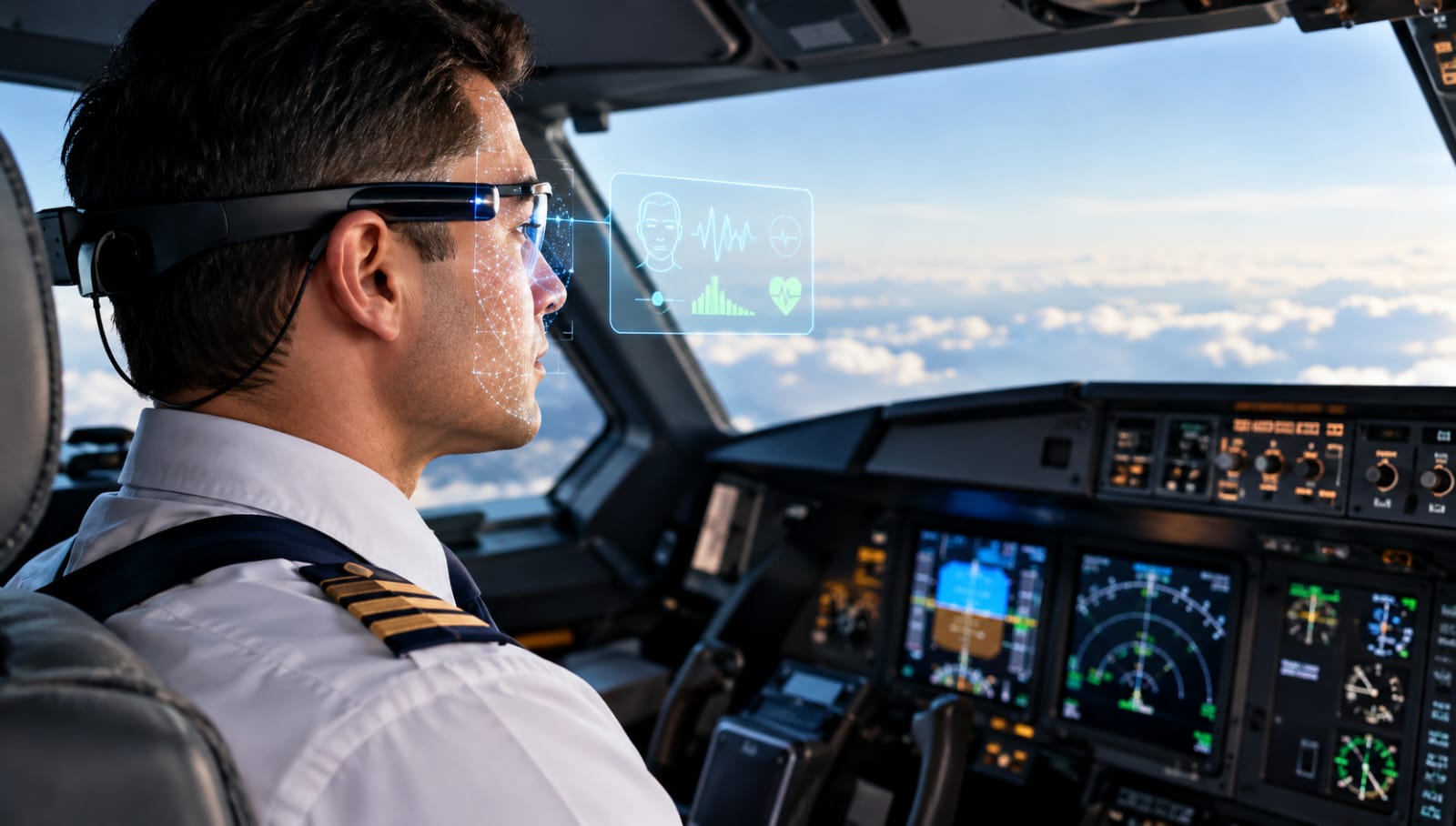
Image generated with Ai
Australia in addition to Germany and other nations are using agentic wearables to prevent pilot fatigue thus completely changing commercial aviation safety. Modern day international airlines are using real-time biometric tracking to totally avoid human caused errors due to sleep loss and has been rolled out to protect millions of passengers across the globe.
Aviation safety is seeing a revolution as global airlines replace monthly rosters with agentic-native wearables and real-time biometric tracking to totally eliminate crew fatigue on ultra-long-haul routes.
How Are Agentic-Native Wearables Transforming Pilot Rosters?
Aviation scheduling is experiencing a monumental shift away from rigid administrative calendars toward dynamic health-first optimization models. Modern international flight crews are now outfitted with secure biometric rings and advanced smartwatches that continuously measure vital physiological indicators. These wearable devices track critical circadian rhythms, autonomic nervous system responses, and cumulative sleep debt with unprecedented precision. The harvested telemetry feeds directly into an autonomous artificial intelligence matrix designed to evaluate real-time human performance factors. Consequently, airlines can dynamically re-route crew assignments and adjust rest windows before hidden fatigue compromises flight deck safety.
This technological evolution fundamentally redefines how commercial carriers manage human capital in high-stress operational environments. Traditional rostering systems historically relied on generalized clock-based limitations that frequently failed to account for individual chronotypes and poor in-flight sleep quality. By integrating agentic AI networks, modern operators ensure that human fatigue is intercepted at the molecular and physiological level. The system actively protects passengers and crew members by eliminating the root causes of human error on ultra-long-haul journeys. Ultimately, this proactive methodology establishes an uncompromising baseline of physiological safety across global aviation networks.
Advertisement
Advertisement
Why Is Australia Spearheading Ultra-Long-Haul Endurance?
Australia has firmly established itself as the global epicentre for extreme endurance flight operations through ambitious undertakings like Qantas’s non-stop Project Sunrise missions. Operating continuous routes connecting Sydney and London demands an extraordinary level of physiological endurance from both flight and cabin crews. Traditional scheduling paradigms simply cannot cope with the profound circadian disruption caused by crossing multiple time zones on ultra-long flights. Therefore, Australian aviation stakeholders have embraced continuous wearable tracking to monitor pilot readiness weeks ahead of departure. This rigorous oversight guarantees that extreme fatigue is managed through empirical physiological data rather than guesswork.
Furthermore, collaborative frameworks between Australian carriers and aviation unions have fostered an environment of absolute trust regarding biometric data usage. The implemented AI matrices dynamically adapt mid-flight relief schedules and rest rotations based on live telemetry streams. If a pilot exhibits suppressed heart rate variability or dangerous sleep deprivation, the system orchestrates seamless crew swaps. This seamless intervention prevents timing-out disruptions and ensures that aircraft are always commanded by fully alert professionals. Australia’s pioneering initiatives thus serve as the blueprint for long-haul endurance safety worldwide.
Advertisement
Advertisement
How Do US Regulators Balance Compliance and Biometrics?
United States federal aviation authorities are actively working alongside commercial carriers and software developers to build robust compliance pathways for biometric scheduling algorithms. Shifting away from legacy rules requires establishing new regulatory sandboxes that safely test autonomous duty-time modifications. Instead of adhering strictly to static administrative hours, American aviation is transitioning toward Performance-Based Compliance models. These progressive frameworks allow real-time biometric validation to override outdated restrictions, granting safe operational extensions or mandatory stand-downs based on verified physiological readiness. Non-intrusive photoplethysmography sensors ensure that data collection remains seamless without distracting pilots during critical flight phases.
This regulatory modernization represents a vital step toward integrating artificial intelligence safely into heavily regulated commercial environments. Aviation watchdogs must carefully evaluate algorithm transparency and data integrity to ensure that commercial pressures never compromise pilot wellbeing. By certifying these advanced telemetry pipelines, the United States is creating standardized legal structures for next-generation flight operations. The resulting compliance protocols protect both the airline industry’s operational continuity and the traveling public’s safety. Strict oversight ensures that technological innovation always aligns with the highest standards of aviation accountability.
Advertisement
Advertisement
“The rapid integration of agentic-native wearables and real-time biometric telemetry marks a monumental turning point for global aviation safety. For decades, the industry relied on rigid, calendar-based scheduling that completely ignored individual human biology and cumulative sleep debt. By shifting toward dynamic, health-first artificial intelligence matrices, international carriers are finally treating crew fatigue with the scientific rigor it demands. This proactive methodology not only safeguards pilots and passengers on grueling ultra-long-haul journeys, but it also establishes an enduring new gold standard for high-stakes operational compliance worldwide.”
— Anup Kumar Keshan, Founder and Editor-in-Chief, Travel And Tour World
What Privacy Hurdles Do German Carriers Navigate?
European carriers based in Germany face a uniquely complex challenge when attempting to merge cutting-edge health telemetry with uncompromising data protection laws. Strict European Union GDPR mandates and powerful domestic works council regulations prohibit any invasive tracking of employee health metrics. To comply with these legal boundaries, German aviation engineering relies heavily on zero-knowledge encryption and fully anonymized data pipelines. Raw biometric feeds are tokenized directly on the wearable device before transmission, ensuring that airline management never sees individual health records. The AI matrix receives only a generalized operational safety index, effectively safeguarding worker privacy while maintaining network safety.
This privacy-first architectural design proves that advanced telemetry can coexist harmoniously with stringent European labor rights. Decentralized federated learning models allow AI systems to optimize crew rosters across major hubs without exposing sensitive personal information. Flight crews can wear biometric rings with complete confidence that their private health data cannot be used punitively by human resource schedulers. Germany’s meticulous approach demonstrates that technological progress does not require sacrificing individual civil liberties or legal protections. Consequently, this privacy-centric model provides a scalable framework for adoption across the entire European Union.
Advertisement
Advertisement
For official regulatory guidance, aviation operators can review compliance updates directly through the US Federal Aviation Administration Fatigue Risk Management Portal.
How Does Singapore Sync Wearables With Total Airport Management?
Singapore Changi Airport has successfully integrated wearable-driven biometric data feeds directly into its comprehensive Total Airport Management infrastructure. As a premier global aviation mega-hub, Singapore requires absolute synchronization between incoming flight crews and ground logistics. When an inbound trans-Pacific flight lands, the TAM system instantly accesses the crew’s real-time fatigue profile and sleep debt metrics. This immediate visibility allows port operators to proactively coordinate gate allocators, hotel transport, and outbound standby rosters before the aircraft even touches down. Ground turnarounds are thus streamlined entirely, preventing the cascading network delays traditionally caused by unexpected crew scheduling conflicts.
This closed-loop operational ecosystem transforms airport management from a reactive chore into a fully synchronized predictive science. By merging crew physiological data with airport-wide logistics, Singapore maximizes both operational efficiency and human safety margins. Standby crews are automatically alerted and positioned days in advance based on objective biometric forecasts rather than administrative estimates. This seamless integration ensures that passenger departures remain punctual even amid severe global weather disruptions. Singapore’s holistic methodology highlights the ultimate destination of agentic-native aviation technology.
| Country / Region | Primary Focus | Wearable & Tech Integration | Regulatory & Privacy Framework |
| Australia | Ultra-Long-Haul Endurance | Continuous physiological rings for Project Sunrise routes | Collaborative union-airline health standards |
| United States | Regulatory Modernization | Non-intrusive PPG and ECG sensor streams | Performance-Based Compliance (PBC) pathways |
| Germany | Data Privacy & Labor Rights | Zero-knowledge tokenized telemetry pipelines | Strict GDPR compliance and works council rules |
| Singapore | Mega-Hub Operations | Closed-loop Total Airport Management (TAM) sync | Integrated port-wide data sharing and logistics |
Ultimately, with the help of agentic-native wearables, it is possible to transform inflexible flight schedules into adaptable physiological safety features. Thanks to the constant influx of deep telemetries into independent artificial intelligence matrices, all international carriers managed to eliminate unplanned risks of fatigue. As a result, the safety level during ultra-long-haul flights was significantly reinforced.
Severe sleep debt with outdated rostering procedures was the leading cause of possible safety concerns on ultra-long-haul flights. Advanced smartwatches and secure artificial intelligence matrices constantly track pilots’ deep physiology to ensure that no schedule changes create unacceptable risks. Thus, airlines received an opportunity to plan flight schedules more efficiently and avoid any unplanned delays or safety issues.
Advertisement
