
Vietnam’s Phong Nha-Kẻ Bàng Expands Big High-End Cave Tourism With Strict Access

Published
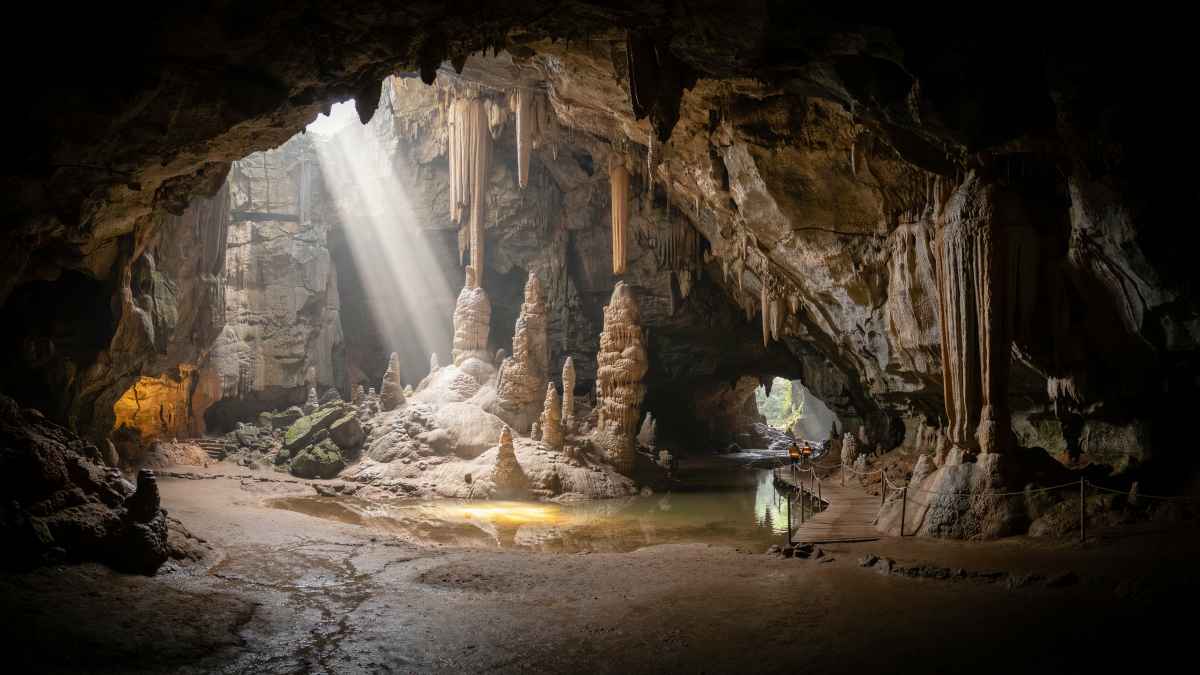
Image generated with Ai
Phong Nha-Kẻ Bàng, which is situated in Vietnam, has been increasing its status as a world-class adventure tourism destination through multi-day cave expeditions, controlled tourist flow, and discoveries below the surface, along with trekking activities. This destination is in a new era after being listed in 2025 as a transboundary World Heritage site with Hin Nam No National Park in Laos. In 2026, Phong Nha-Kẻ Bàng is recognised as a tourism area of the province, encompassing 167,250.4 hectares.
Son Doong Remains the Region’s Most Restricted Expedition
Son Doong, the world’s largest known cave passage, remains the headline attraction for high-end expedition travel in the region. Access is deliberately restricted, with approximately 1,000 visitors permitted annually and small expedition groups operating under controlled conditions.
Demand remains substantially higher than available capacity. The 2026 and 2027 Son Doong expedition schedules have been reported as fully booked, with the annual limit maintained at about 1,000 visitors to protect the cave environment.
Advertisement
Advertisement
The expedition is not a conventional sightseeing tour. Travellers undertake multi-day trekking through forest and cave terrain, cross underground rivers and camp inside the cave system. The journey requires physical preparation and specialist equipment, with guides, safety personnel, cooks and porters supporting each expedition.
New Cave Discoveries Expand the Adventure Map
Advertisement
Advertisement
The region’s subterranean tourism potential is continuing to grow as exploration teams document previously unrecorded caves.
Between 21 March and 11 April 2026, a British cave expedition worked with local guides, porters and residents to survey caves across several areas of Phong Nha-Kẻ Bàng. The survey identified 26 new caves and extensions to three previously known caves, covering 13,643 metres of newly surveyed passages.
Advertisement
Advertisement
Among the discoveries was Thien Cung Cave, measuring 4,206 metres, while Nuoc Lan Cave was surveyed at 2,721 metres. Several other systems were identified as having potential for future adventure tourism, although conservation and environmental management remain important considerations before wider visitor access.
The discoveries demonstrate that the destination’s tourism offer is not limited to its established headline caves.
Tu Lan Connects Cave Trekking With Rural Travel
The Tu Lan cave system, near Tan Hoa, provides another major multi-day expedition route. The area lies approximately 70 kilometres from Phong Nha and combines forest trekking, cave exploration, underground rivers, swimming sections and overnight camping.
Advertisement
Advertisement
Current tourism information from Quang Tri’s tourism authority describes routes that take visitors from Phong Nha towards Tan Hoa before continuing into the cave system. Expeditions include Hung Ton, Kim, Tu Lan and other caves, with some itineraries incorporating local meals and accommodation.
Tu Lan also demonstrates how adventure tourism is being connected with nearby communities. The wider Tan Hoa area has developed tourism services around trekking, accommodation, food and outdoor experiences, creating a broader itinerary beyond the cave itself.
Porters Remain Central to Expedition Tourism
Multi-day cave expeditions depend heavily on local support teams. Porters transport camping equipment, food, safety supplies and other materials through difficult forest and cave terrain, making their role integral to the operation of longer journeys.
The 2026 cave survey itself involved local guides, porters and residents alongside international specialists. This illustrates how local participation is built into exploration and tourism operations across the region.
Community participation is also relevant to conservation. UNESCO identifies local communities as an important part of the management context for the wider transboundary World Heritage property, while the region’s tourism development is expected to balance visitor access with protection of its geological and ecological values.
Advertisement
Advertisement
Conservation Controls Shape the Visitor Experience
Phong Nha-Kẻ Bàng’s tourism model is closely linked to carrying capacity. UNESCO has repeatedly called for tourism development to remain compatible with the property’s Outstanding Universal Value and for visitor numbers and infrastructure to be carefully controlled.
The 2025 World Heritage decision specifically called on Vietnam and Laos to ensure that tourism remains within the ecological carrying capacity of the transboundary property.
This approach is particularly relevant to caves because underground environments can be sensitive to physical disturbance, waste, lighting, humidity changes and repeated foot traffic.
The strict access model therefore places cave tourism within a controlled conservation framework rather than treating every newly discovered cave as an immediately accessible attraction.
Phong Nha-Kẻ Bàng Gains a Larger Tourism Framework
Advertisement
Advertisement
In July 2026, Quang Tri officially recognised Phong Nha-Kẻ Bàng as a provincial-level tourism area. The designated area covers the national park and parts of its buffer zone, providing a formal framework for tourism management, conservation, infrastructure and visitor development.
Between 2020 and 2025, the national park received more than 3.6 million visitors, including more than 500,000 international visitors. In 2025 alone, visitor numbers exceeded 900,000, according to the provincial tourism authority.
Planning a Phong Nha Expedition
The travellers who want to participate in an exclusive cave adventure expedition need to know the difference between traditional caving tourism and exclusive multi-day adventures. Booking is essential for Son Doong Cave as a result of the annual number limit of tourists that can visit it, whereas Tu Lan and other adventure tours take place in special programs. Phong Nha represents the main tourist destination point for visitors, but Dong Hoi is available as the closest airport. Moreover, one should take into account additional transfer time to distant starting points. The future of 2026 places Phong Nha-Kẻ Bàng in the middle of the developing Vietnamese adventure tourism industry.
Advertisement
