
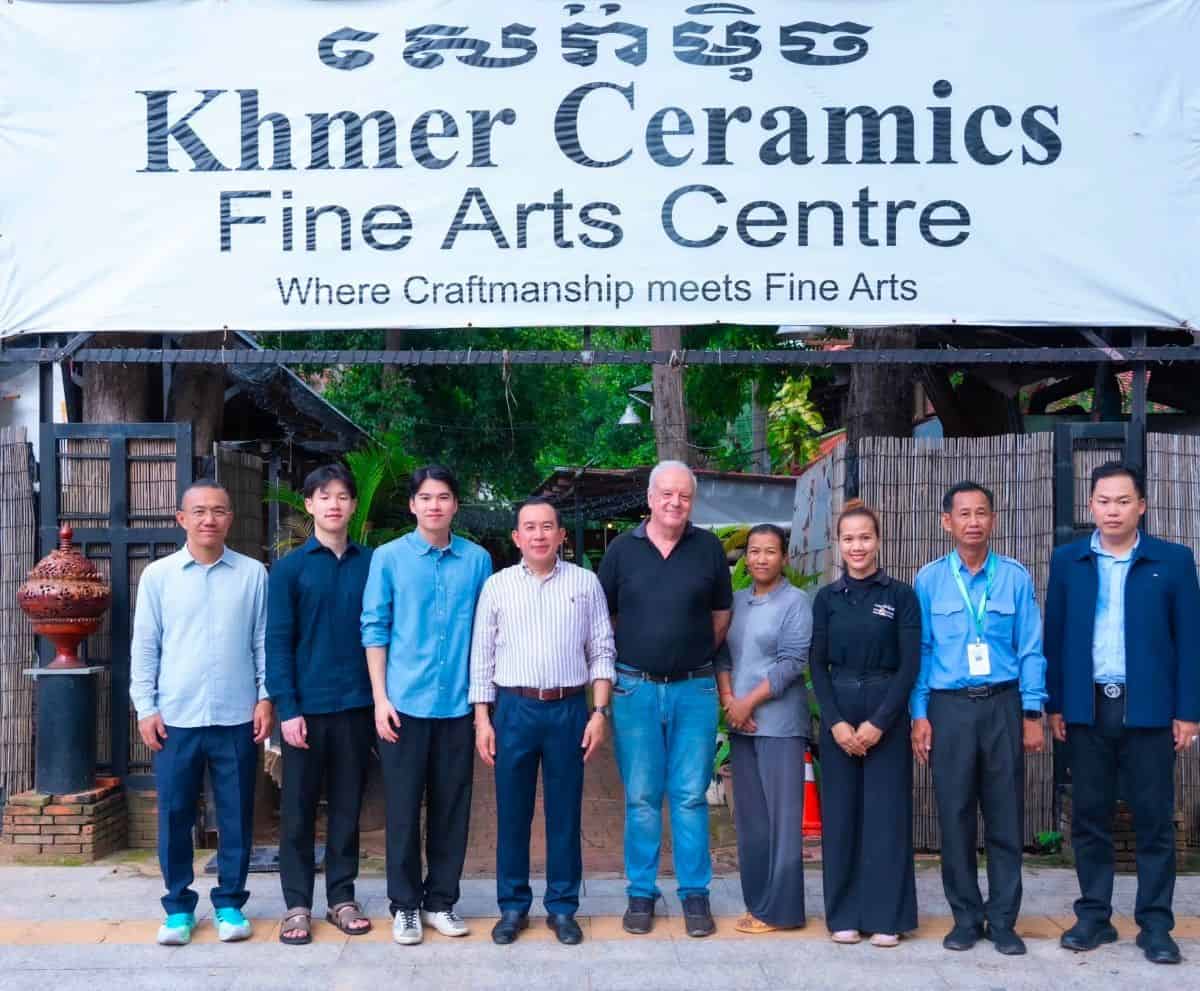
Cambodia is working on building up links between cultural heritage and tourism through its promotion of traditional ceramic handicraft in the province of Siem Reap. H.E. HUOT Hak, the Minister of Tourism of Cambodia, inspected a workshop in Siem Reap dedicated to ceramics handicraft in order to look into how it can be linked with tourism products.
This visit involved exploring the production process, the creative process, the approach to product development, as well as the ways in which handmade ceramics can help build up the tourism offer of Cambodia. The authorities see that traditional handicraft can become an integral element of the experience of visitors because it will provide direct interaction with local community and heritage.
During the workshop visit, H.E. HUOT Hak encouraged business owners, artisans and local producers to continue improving the quality, creativity and market appeal of Cambodian ceramic products. The Minister highlighted the importance of developing designs that respond to changing visitor preferences while maintaining Cambodia’s unique cultural identity. Local handicrafts play an important role in tourism economies because they allow visitors to take home authentic products connected to the destinations they explore.
By strengthening the quality and creativity of Made in Cambodia products, artisans can create additional economic opportunities while helping preserve traditional skills. The Tourism Ministry believes that improved handicraft development can support local communities, encourage entrepreneurship and increase the value of tourism experiences in Siem Reap.
Advertisement
One of the key opportunities identified during the visit was the development of creative tourism experiences where visitors can actively participate in traditional ceramic-making activities. Instead of simply purchasing finished products, travellers could learn about the history of Cambodian ceramics, observe production techniques and take part in creating or decorating their own pieces. Such interactive experiences are becoming increasingly popular among international travellers who seek deeper connections with destinations.
Creative tourism allows visitors to understand local culture through direct participation while providing additional income opportunities for artisans and communities. For Siem Reap, the development of ceramic workshops as visitor attractions could complement existing tourism strengths, including ancient temples, cultural sites and local traditions. The approach supports the creation of more diverse tourism products that encourage longer stays and greater visitor spending.
Cambodia’s cultural heritage extends beyond its famous archaeological landmarks, with traditional arts, crafts and local production methods representing important elements of national identity. Ceramic craftsmanship reflects generations of artistic knowledge and local creativity. Integrating these traditions into tourism experiences allows visitors to discover a different side of Cambodia while supporting the preservation of cultural practices.
Tourism officials are increasingly focusing on experiences that combine heritage conservation with economic benefits for local communities. Handicraft-based tourism can create stronger links between travellers and artisans while ensuring that cultural skills continue being passed to future generations. The promotion of ceramic products also supports Cambodia’s goal of increasing the visibility of locally produced goods within the tourism sector.
Advertisement
Advertisement
Siem Reap remains one of Cambodia’s most important tourism destinations, primarily known worldwide for the Angkor Archaeological Park and its cultural attractions. The integration of traditional crafts into tourism products also supports sustainable destination management by encouraging responsible tourism activities connected to local culture.
However, tourism authorities are increasingly working to diversify the visitor experience by introducing additional activities that encourage travellers to explore local communities and creative industries. Developing handicraft experiences provides opportunities to expand tourism beyond major attractions and distribute economic benefits more widely. Visitors can combine heritage sightseeing with workshops, cultural activities and community-based experiences, creating more complete travel itineraries.
The Tourism Ministry has emphasized the importance of balancing innovation with cultural preservation. Artisans are being encouraged to experiment with new designs, improve production quality and develop products suitable for modern tourism markets.
However, maintaining Cambodia’s artistic traditions remains a central priority. The challenge for local producers is creating products that appeal to contemporary travellers while preserving the authenticity and cultural meaning behind traditional craftsmanship. By combining creativity with heritage protection, Cambodian handicrafts can achieve stronger recognition in domestic and international markets. This approach supports both economic development and cultural sustainability.
The promotion of ceramic workshops demonstrates how tourism can support community-based economic development. Local artisans, small businesses and producers can benefit directly when visitors purchase handmade products or participate in cultural experiences. Such initiatives help ensure that tourism revenue reaches communities beyond major hotels and attractions.
Community involvement is increasingly recognized as an important element of sustainable tourism because it creates stronger connections between visitors and residents. By supporting local craftsmanship, Cambodia can provide travellers with more authentic experiences while strengthening the livelihoods of people involved in traditional industries.
The visit by H.E. HUOT Hak underscores the fact that the Cambodian government remains committed to the promotion of high-quality tourism through the process of diversification and creative practices. It is clear that the production of ceramics as tourism products contributes to the overall strategy of providing tourists with experiences which are authentic, educational and identity-driven.
Through the promotion of Made in Cambodia products, innovation among artisans and creative tourism practices, Cambodia hopes to make its tourism sector resilient and sustainable. The inclusion of traditional craft in tourism is a trend that is being seen worldwide, where travelers today look for experiences rather than just attractions. Ceramic craftsmanship stands out as one such practice for Siem Reap.
Image Source: Ministry of Tourism, Cambodia
Advertisement
Tags: Cambodia artisan workshops for visitors, Cambodia cultural tourism development strategy, Siem Reap ceramic handicrafts tourism Cambodia, sustainable heritage tourism in Siem Reap, traditional crafts as tourism experiences
Advertisement
Advertisement













Saturday, September 5, 2026

Friday, September 4, 2026

Saturday, September 5, 2026
Saturday, September 5, 2026

Thursday, September 3, 2026

Wednesday, September 2, 2026

Saturday, September 5, 2026

Saturday, September 5, 2026


