
Greece Takes Centre Stage in Europe Transport Race as Black Sea Aegean Corridor Boosts Rail Port and Road Growth

Published
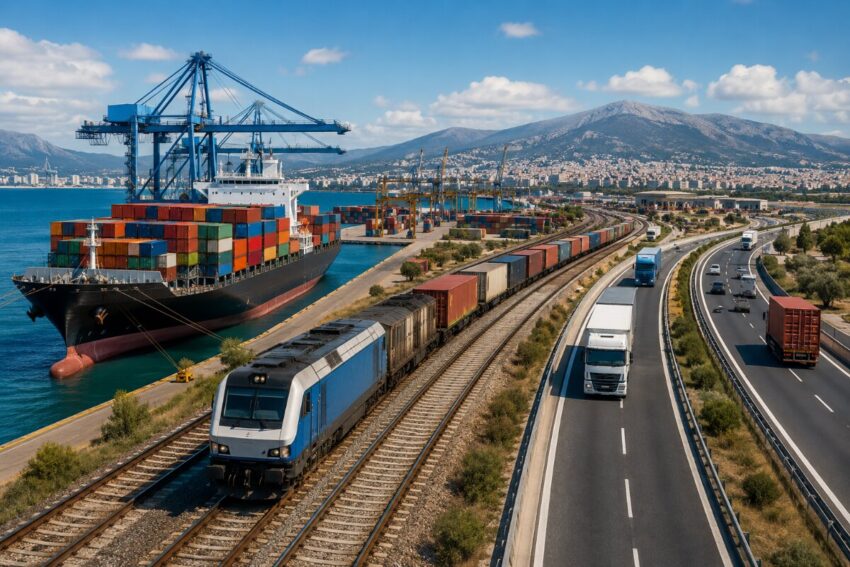 Image generated with Ai
Greece is moving deeper into Europe’s transport and logistics future as new official plans place the country at the centre of a wider South-East European connectivity push. The country is advancing rail, road, port and logistics projects that link the Aegean Sea with the Balkans, the Black Sea and Central Europe. The move is backed by European Union transport cooperation, Greece’s national infrastructure planning and Recovery and Resilience Plan investments. It also strengthens the tourism, freight and business value of Athens, Thessaloniki, Piraeus, Alexandroupolis, Igoumenitsa and Crete.
Greece Moves From Gateway to Strategic Transport Hub
Greece’s transport hub ambition is no longer only about its geography. It is now tied to formal infrastructure planning, cross-border coordination and multimodal transport. The European Commission confirmed that Greece, Bulgaria and Romania signed a Memorandum of Understanding in December 2025 to strengthen key transport links through the Black Sea Aegean Sea Corridor Platform. The platform aims to support strategic rail, road and inland waterway links across South-East Europe.
This matters because Greece controls one of Europe’s most important southern access points. Its ports face the Mediterranean and the Aegean. Its northern land routes connect with Bulgaria, North Macedonia and the wider Balkan network. Its island geography also makes port, airport and ferry connectivity vital for both passengers and goods.
The European Commission described the agreement as a framework for modernisation, interoperability, trade flows, mobility, economic cohesion and regional security. The corridor platform brings together the transport authorities of Greece, Bulgaria and Romania for political coordination and technical work.
Advertisement
Advertisement
Black Sea Aegean Corridor Gives Greece New Weight
The Black Sea Aegean Sea Corridor Platform is the clearest recent sign that Greece is being positioned as a strategic southern anchor in a larger European transport system. The official memorandum covers cooperation between the Government of the Hellenic Republic, the Government of Bulgaria and the Government of Romania. It focuses on cross-border transport infrastructure, planning, implementation and seamless logistics.
The platform also supports joint mobilisation of EU and national funding, smoother administrative procedures and faster deployment of dual-use and climate-resilient infrastructure. Its objectives include stronger alignment with the European Transport Corridors and TEN-T rules, faster cross-border projects, better regulatory coordination, digitalisation and more resilient transport networks.
Advertisement
Advertisement
For Greece, this supports a long-term goal. The country is trying to make its ports and railways more useful not only for domestic traffic but also for freight moving between the Aegean, the Balkans, the Black Sea and Central Europe.
Alexandroupolis Becomes a Powerful Northern Gateway
Alexandroupolis is one of the most important names in Greece’s hub strategy. The Greek Annual Progress Report 2026 states that the Alexandroupolis to Ormenio to Greek Bulgarian border railway line is being promoted for upgrade. The line is 175 kilometres long. The plan includes conversion into a double railway line, signalling systems with ETCS Level 1, electrification, station upgrades and new station construction.
This railway matters because it can strengthen Greece’s logistics role and improve cross-border access towards Bulgaria, South-East Europe and Turkey through Pythio. The same official progress report notes that a funding request for the Alexandroupoli to Pythio section was submitted under CEF2 in January 2025.
Alexandroupolis is also receiving port infrastructure support under Greece 2.0. The official Greece 2.0 projects list includes an upgrade of Alexandroupolis port infrastructure, covering restoration works in the port basin and navigation channel and a road connection with a new ring road. The listed budget is 24.0188 million euros.
Together, the rail and port plans make Alexandroupolis more than a local port city. They place it inside a wider freight, energy, defence mobility and regional transport equation.
Piraeus and Thessaloniki Stay Central to the Hub Plan
Greece’s wider strategy also highlights Piraeus and Thessaloniki as major transport and freight assets. The Greek Government’s growth strategy identified the development of regional transport infrastructure and the promotion of Greece as an international freight hub as core priorities. It also named the need to upgrade links from the ports of Piraeus, Thessaloniki and Northern Greece towards the Balkan inland and Central and Eastern Europe.
Advertisement
Advertisement
The same strategy connected Greece’s hub ambitions with road and rail routes, including links from Thessaloniki towards Skopje, Belgrade, Zagreb and Budapest, and the route connecting Alexandroupolis port with Bulgaria, Romania and further north. It also stated that stronger Greek and Balkan railway networks would improve the competitiveness of Piraeus, Thessaloniki, Alexandroupolis and other Greek ports.
This is important for tourism too. Better roads, railways and ports can support cruise arrivals, intercity travel, regional tours, business travel and smoother movement between mainland Greece and island gateways.
Recovery Plan Adds Green Mobility and Rail Reform
Greece’s Recovery and Resilience Plan adds another layer to the transport story. The European Commission states that the revised plan supports sustainable and multimodal transport. It includes replacement of 220 old buses with electric urban public transport buses in Athens and Thessaloniki. It also includes railway sector reform and investment for restoring railway damage caused by the Thessaly floods.
This shows that Greece’s transport hub push is not only about freight. It also links to cleaner urban mobility, stronger rail systems and better daily movement in major cities. These improvements can help residents, visitors, workers and businesses.
Roads Strengthen Tourism and Freight Access
The Annual Progress Report 2026 also points to major road projects that improve access across Greece. It states that the Cretan Northern Highway links Kissamos, Chania, Rethymnon, Heraklion and Agios Nikolaos and forms part of the TEN-T network. The project aims to improve accessibility between major Cretan cities, ports and airports while supporting passenger and freight traffic.
The report also highlights the E65 Motorway Northern Section. This route is designed to connect Trikala to the Egnatia highway. It can improve connectivity between Southern Greece, Thessaly, Western Macedonia, the Western Balkans and the rest of Europe through the port of Igoumenitsa.
Advertisement
Advertisement
For tourism, these projects can reduce friction in regional movement. For freight, they can improve access between production areas, ports and European routes.
Why This Matters for Travel and Tourism
Greece’s transport hub push can reshape more than logistics. It can improve the visitor economy by strengthening access to heritage cities, cruise ports, island gateways and regional destinations. Athens and Thessaloniki remain the major urban anchors. Piraeus supports cruise and ferry flows. Alexandroupolis adds northern strategic value. Igoumenitsa connects western Greece with Adriatic routes. Crete gains from stronger road access between ports, airports and resort zones.
The result is a broader travel map. Visitors may gain easier links between cities, ports and regions. Tourism businesses may benefit from better supply chains. Hotels, resorts, cruise operators, transport companies and local economies may gain from faster movement and stronger connectivity.
Conclusion
Greece is moving forward with a clear transport hub agenda built around ports, railways, highways, logistics and European corridor cooperation. The Black Sea Aegean platform gives the country fresh regional relevance. The Alexandroupolis rail and port works strengthen northern access. Piraeus, Thessaloniki and Igoumenitsa remain vital gateways. Crete and mainland road upgrades add tourism value. For Europe, Greece is becoming a stronger southern transport link. For travellers and the tourism industry, the shift could mean smoother journeys, better regional access and stronger destination growth.
Advertisement
