


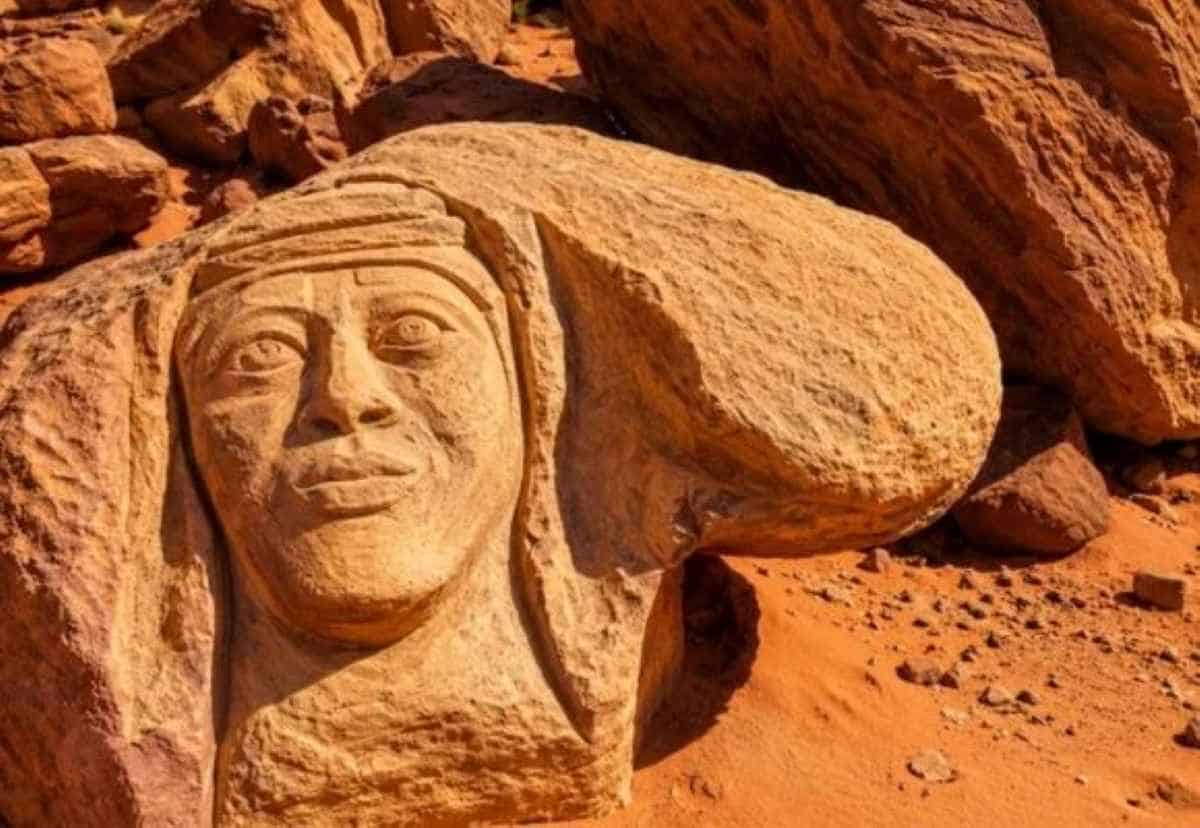
Burqu’, a region in Mafraq Governorate, Jordan, is witnessing emerging interest in nature tourism because of the combination of different wilderness features of the remote northeast Badia. The region’s volcanic desert scenery can attract people interested not only in geological formations but also in the ecological features of the region from a prehistoric past to this very moment. This place is centred around Qasr Burqu ’, which represents a historical oasis that can offer something different from other tourism sites in Jordan, such as the other famous desert attractions. The Royal Society for the Conservation of Nature in Jordan is responsible for the conservation and tourism programs in the area being actively developed. The site of the Burqu’ area is included in the eastern Badia region. The region of black basalt Harrat offers people various geological formations that differ significantly from the sandstone formations of Wadi Rum. Here, visitors can see archaeological ruins and water in the desert. Qasr Burqu’s location appeared as a Roman military base and then received some renovations and improvements during the time of Umayyad period.
Official Website – https://www.rscn.org.jo/ecotourism
The Burqu’ landscape is dominated by dark volcanic rock, gravel plains and expanses of barren terrain. The basalt fields belong to the wider Harrat al-Sham volcanic region, which extends across parts of Jordan and neighbouring countries.
Advertisement
For desert travellers, the terrain offers a different visual experience from Jordan’s famous red sandstone canyons and dunes. The dark volcanic stones create broad, open landscapes where archaeological remains and natural features stand out against the horizon.
The remoteness also makes the region suitable for specialist adventure travel. Four-wheel-drive excursions, hiking, camel journeys and wildlife observation can be combined into longer expeditions across the Badia.
Advertisement
Advertisement
Rather than concentrating visitors around a single landmark, the landscape encourages exploration across a wider geographical area.
Qasr Burqu’ is the principal cultural attraction within the reserve. The fortified structure overlooks a historic water reservoir and oasis, creating an unusual combination of Roman and later Islamic architecture with desert hydrology.
The presence of permanent or seasonal water in such an arid environment has historically made the location significant for travellers and communities crossing the Badia.
For modern visitors, the site provides an opportunity to understand how people navigated and occupied Jordan’s eastern desert. Archaeological exploration can be combined with nature travel, creating an itinerary that moves between ruins, water sources, volcanic terrain and surrounding wildlife habitats.
The oasis also provides an important ecological contrast to the surrounding basalt desert.
Jordan’s eastern deserts support wildlife adapted to extreme conditions. The wider Badia contains species including foxes, wolves, hyenas, gazelles and various smaller desert mammals, while migratory birds can use water sources and wetland environments during seasonal movements.
Burqu’s oasis is particularly important because isolated water sources can attract wildlife in an otherwise dry landscape. This creates opportunities for guided wildlife tracking and observation.
Nocturnal excursions are especially suited to the desert environment. Many desert species are most active after sunset when temperatures fall, allowing visitors to experience the landscape through night-time observation rather than daytime sightseeing alone.
Tracking footprints, identifying animal calls and observing movement around water sources can form part of specialist nature-tourism programmes.
The eastern Badia has long been associated with Bedouin pastoral communities whose knowledge of water sources, routes and seasonal conditions remains closely connected to the landscape.
Community-based tourism can incorporate this knowledge through guided journeys, traditional food, storytelling and demonstrations of desert navigation. Bedouin guides can explain how travellers and pastoralists historically moved across the region while identifying natural features and water sources.
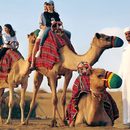
Camel-assisted expeditions provide another way to experience the desert at a slower pace. The journeys can connect archaeological sites, oasis areas and remote sections of the basalt landscape without requiring visitors to remain inside conventional resort compounds.
Local participation also provides opportunities for accommodation, guiding, transport and food services to remain connected with communities in the Badia.
The proposed development of low-impact accommodation around Burqu’ is suited to the destination’s isolation. Off-grid eco-lodges can provide visitors with overnight access to the desert while reducing dependence on conventional infrastructure.
Solar power is particularly appropriate for Jordan’s eastern desert, where strong sunlight provides a consistent renewable-energy resource. Small-scale accommodation can also reduce the need for extensive utility networks in remote areas.
For travellers, staying overnight changes the experience considerably. Visitors can observe sunset over the basalt plains, undertake nocturnal wildlife excursions and experience the desert before sunrise rather than making a short daytime visit.
The accommodation model also creates a base for multi-day expeditions deeper into the Badia.
Burqu’ is particularly suited to travellers interested in landscape-scale exploration. Desert tracking routes can connect the oasis with archaeological remains, volcanic formations and wildlife habitats.
Unlike high-volume sightseeing, these experiences depend on small groups, local guides and carefully planned routes. The emphasis on interpretation allows visitors to understand the relationship between water, wildlife, geology and human settlement.
The region can also be combined with other eastern Jordan destinations, creating a broader Badia itinerary for travellers seeking experiences outside the country’s established tourism circuit.
Mafraq Governorate occupies a large part of northern and northeastern Jordan and contains landscapes that differ considerably from the country’s better-known archaeological and resort destinations.
Travellers based in Amman can use northern routes to reach the Badia, while visitors already exploring Jordan’s archaeological sites can extend their journey towards the eastern desert.
Burqu’ adds another geographical dimension to Jordan’s tourism map. Instead of moving directly between Amman, Petra, Wadi Rum and Aqaba, visitors can incorporate a remote desert environment defined by basalt, oasis ecology and Bedouin heritage.
This creates opportunities for longer itineraries and greater geographical distribution of tourism activity.
Burqu’ demonstrates how Jordan’s desert tourism can extend beyond the sandstone landscapes that dominate international travel imagery. The combination of black basalt, archaeological ruins, water resources and desert wildlife provides a distinct destination identity.
The RSCN’s protected-area approach also places conservation at the centre of nature tourism. Jordan has developed protected landscapes as locations for biodiversity conservation, environmental education and carefully managed visitor experiences.
At Burqu’, the fragility of the oasis and surrounding desert makes responsible access particularly important. Small-scale tourism can limit pressure on sensitive habitats while allowing visitors to experience the area’s natural and archaeological features.
Burqu’ is evolving into a destination in which the volcanic desert landscape, antiquity in terms of water resources, flora and fauna resources and the culture of local tribes come together. The historical centre is Qasr Burqu ‘, and the nearby area of Harrat provides an opportunity for hiking, riding camels, driving four-wheel drives and wildlife tracking. Off-grid lodges and guided community activities will entice more tourists to visit this place instead of limiting their visit to the eastern desert only. For Jordan’s tourism system, Burqu’ is different from Wadi Rum because of its unique attractions that are represented by dark basalt plains, the ancient oasis and the natural habitats of many wild animals. As responsible tourism develops in this place, it will be possible to combine conservation with guides and local accommodation.
Advertisement
Advertisement
Advertisement











Monday, September 7, 2026
Monday, September 7, 2026
Monday, September 7, 2026
Monday, September 7, 2026

Monday, September 7, 2026
Monday, September 7, 2026

Monday, September 7, 2026
Monday, September 7, 2026

