
Tajikistan Unveils Bold Tourism Development Fund To Revolutionize The National Travel Sector With Modern Upgrades

Published
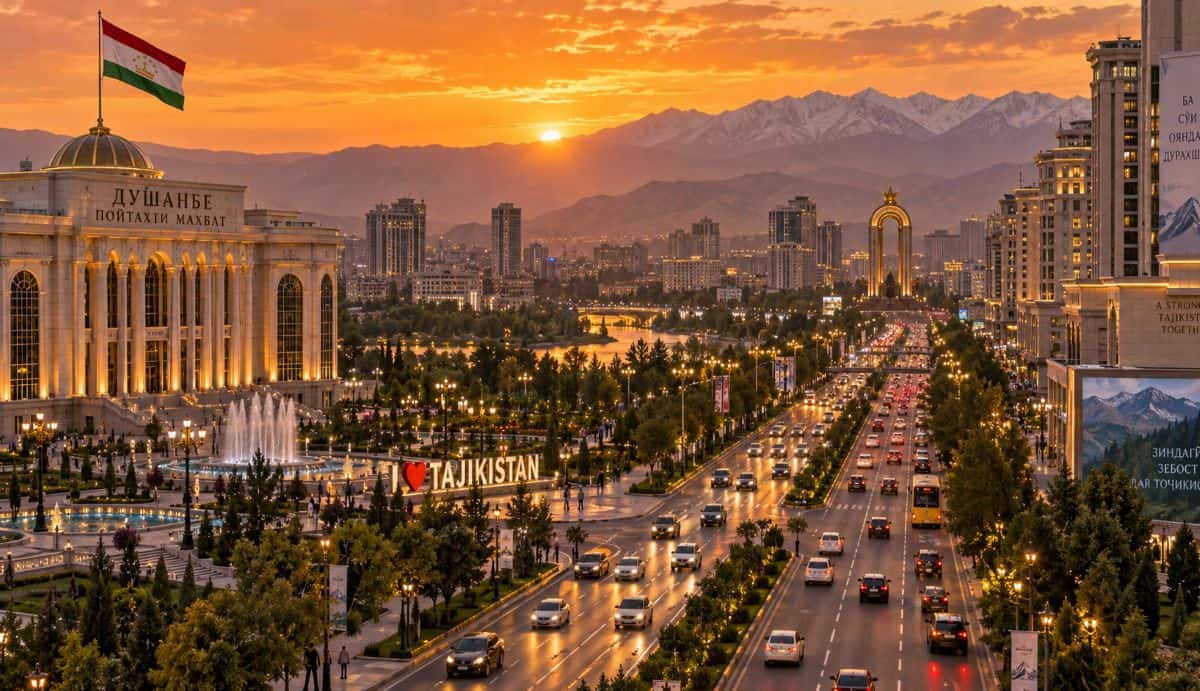
Image generated with Ai
From the Pamir Highway, you’ll witness morning fog veiling stone villages, and you’ll quickly realize that Tajikistan is much more than just another country. There are unparalleled vistas and trade routes along the Silk Road that account for the country’s rich history. The likes of which, until not so long ago, could only be appreciated after a lengthy, difficult journey. Happily, this is no longer the case. These amazing landscapes will be widely accessible and welcoming to guests, thanks to efforts by the government of Tajikistan. They have developed a Tourism Development Fund. The Government passed a small, daily, international guest lodging fee and an intra-country travel fee. All the traveling money goes to the country for road improvements and to soften the hard, unforgiving edges of the passes.
They have also begun to make and preserve historical sites and develop local accommodations. These small daily fees have a huge impact and established a large, local funding source for their developmental efforts. Through the imposition of a Tourism Tax, Tajikistan will be better able to continue developing its history and tourism and to match its security to an acceptable level. It will also allow them to sustain their unique development.
Advertisement
Advertisement
Tajikistan Introduces Tourism Tax to Boost Development
Under this regulatory framework, financial obligations are organized according to specific accommodation categories and travel classifications to maintain equitable contributions across all demographics. Foreign tourists staying in standard hotels and high-grade commercial establishments are required to pay a daily fee of 0.2 calculation indicators, which equals approximately $1.70 per night. Meanwhile, travelers opting for budget options—such as community guesthouses, rural homestays, or youth hostels—will face a lower daily rate of 0.15 calculation indicators, amounting to roughly $1.30 each day. Furthermore, local citizens purchasing international vacation packages through domestic providers must pay a mandatory 5% levy on the total cost of their booked itineraries.
Advertisement
Advertisement
The full volume of capital gathered by the Tourism Development Fund is legally dedicated to essential public engineering projects, vocational education, and international promotional campaigns. A significant share of these funds will immediately target the reconstruction of critical mountain highways, public sanitation infrastructure, and ancient cultural monuments across regions such as Khujand and the Pamir Mountains. Additionally, this capital will support standardized training programs for local hospitality workers, tour guides, and regional lodge operators. Finally, a dedicated portion of this revenue will finance global marketing initiatives designed to showcase the country’s alpine passes, eco-tourism potential, and historic Silk Road heritage to potential visitors worldwide.
Structural Impacts on the Broader Travel Industry and Fiscal Frameworks
Advertisement
Advertisement
The structured collection of targeted lodging fees is set to fundamentally reshape how commercial hospitality businesses operate across urban centers and rural territories. By directing all collected proceeds through the centralized Tourism Development Fund, government authorities can ensure a consistent, predictable supply of capital explicitly allocated for urgent civil works and site management. Major transit routes will undergo extensive resurfacing, while historic monuments will receive structural reinforcement and professional conservation support. Simultaneously, regional hospitality workers will participate in organized skill-building workshops, raising overall service standards across luxury hotels, family guesthouses, and remote alpine lodges.
From a long-term strategic perspective, consistently directing these dedicated tax revenues into physical infrastructure will address severe logistical obstacles that have historically impacted remote mountain regions. Critical access roads leading toward high-altitude passes, isolated valleys, and historic cultural monuments will be expanded to comfortably accommodate large tour buses as well as independent drivers. By systematically resolving these physical infrastructure challenges, the domestic travel sector can build a resilient economic environment capable of steadily attracting private investment. Over time, these localized transportation improvements will reduce highway transit delays, improve supply chain logistics for remote accommodation providers, and significantly raise the baseline quality of hospitality across Tajikistan.
Advertisement
Advertisement
Strategic International Marketing and the Preservation of Alpine Landscapes
A dedicated portion of the collected fund revenues will be systematically deployed to position the nation’s distinctive natural landscapes prominently within international media markets. Tourism authorities plan to feature the country’s granite cliffs, high-altitude alpine highways, and ancient cultural heritage at the core of major global promotional campaigns. By purposefully presenting these natural assets to high-value international markets, regional tourism boards aim to attract a higher volume of eco-conscious travelers, mountaineers, wilderness hikers, and heritage enthusiasts. These promotional strategies specifically target global travelers actively seeking pristine, uncrowded alternatives to heavily congested holiday destinations.
This targeted marketing approach is projected to drive a steady rise in international visitor arrivals while extending the average length of stay for travelers exploring Central Asia. Crucially, the increased revenue streams will simultaneously empower regional heritage management boards to establish and enforce strict environmental conservation protocols. These protective measures will safeguard delicate high-altitude environments, alpine lakes, and native wildlife from the ecological stress often associated with unmanaged foot traffic. As a direct result, international adventurers will experience pristine wilderness areas, well-maintained hiking networks, intact historic ruins, and authentic cultural interactions throughout their journeys.
Global Effects on International Travelers and Outbound Citizens
Advertisement
Advertisement
For international visitors and independent travelers planning trips to Tajikistan, the introduction of nightly lodging fees represents a minor, easily managed addition to overall travel budgets. Although the mandatory daily charge of $1.70 for standard hotel stays or $1.30 for budget hostels remains modest, it sets a clear precedent for how destination management costs are distributed. While visitors will see slightly higher final accommodation bills, they can take confidence in knowing that these funds directly support the ongoing maintenance, cleanliness, and security of public infrastructure, highways, and emergency services.
Concurrently, the mandatory 5% levy applied to international vacation packages purchased by local residents will influence domestic outbound travel patterns. Citizens planning foreign leisure travel will encounter slightly higher upfront costs when booking structured vacation packages through local agencies. This subtle price adjustment naturally encourages domestic holidaymakers to consider exploring high-value travel destinations within Tajikistan rather than immediately traveling abroad. By keeping discretionary leisure spending within national borders, this fiscal policy supports local businesses while ensuring that outbound travel actively contributes to the national tourism infrastructure pool.
Long-Term Sustainability and Systemic Upgrades Across Regional Hubs
As the financial reserves within the Tourism Development Fund accumulate over time, municipal authorities across key destination zones will gain the resources necessary to implement comprehensive civic upgrades. Major urban centers and rural outposts will see the widespread installation of clean public restrooms, interactive visitor information kiosks, clear multilingual signage, and well-equipped emergency response posts along key transit routes. These fundamental enhancements will significantly lower logistical barriers for independent travelers who previously found navigating the region’s limited public facilities challenging.
Ultimately, this visionary financial strategy establishes a balance between immediate revenue collection and long-term economic growth for Tajikistan. By directly reinvesting visitor contributions into public transportation networks, hospitality education programs, and international marketing campaigns, the nation positions itself to become a competitive, well-organized participant in global travel. Consequently, international travelers can look forward to exploring an accessible, well-managed, and ecologically protected destination that preserves its timeless cultural heritage while meeting the standards of modern international tourism.
Strategic Regional Analysis: Central Asian Hospitality Tariffs and Fee Structures
Advertisement
Advertisement
To properly contextualize the newly introduced national policy across the broader Central Asia region, evaluating lodging levies in neighboring markets offers essential industry perspective. Destination leaders and financial planners regularly assess how daily visitor charges influence regional competitiveness relative to adjacent travel routes.
From a comparative pricing standpoint, Kazakhstan currently levies a flexible tourist fee (Bed Tax) ranging between 1% and 5% of the total nightly accommodation rate, depending on local municipal policies in main commercial urban areas like Almaty and Astana. Similarly, Uzbekistan enforces a daily hotel fee scaled by lodging tier, averaging between $2.00 and $4.00 per night for foreign visitors. Market sensitivity data reveals that daily levies below $2.00 such as the $1.30 to $1.70 structure instituted in Tajikistan remain well below the critical 3% threshold of standard daily tourist expenditure, ensuring they will not discourage cost-conscious adventure travelers, backpackers, or international tour operators.
Financial Modeling: Projected Revenue Generation and Capital Allocations
Analyzing the expected annual revenue generated by the Tourism Development Fund underscores the true fiscal power of this national strategy. Quantitative modeling demonstrates how modest daily guest payments accumulate into significant public development capital over multi-year operational cycles.
Based on baseline historical arrivals of roughly 1.2 million international travelers spending an average length of stay of 5.4 days, the daily lodging contribution is projected to generate between $8.4 million and $11 million annually for public infrastructure works. Concurrently, the mandatory 5% levy applied to domestic citizens purchasing foreign vacation packages where average outbound holiday bookings range between $800 and $1,500 per itinerary is expected to yield an additional $1.5 million to $2.8 million each year for the national development pool.
Transportation Network Upgrades and Physical Infrastructure Development Plans
Advertisement
Advertisement
Physical highway connectivity stands as a paramount metric when evaluating destination accessibility and route safety. Reinvesting collected visitor capital directly into major transit arteries improves travel speeds, transit reliability, and road safety across high-altitude regions such as the Pamir Mountains.
The state fund specifically targets the structural repair, resurfacing, and safety reinforcement of over 450 kilometers of high-altitude mountain highways and secondary feeder roads connecting key regional centers including Dushanbe, Khujand, and Khorog. These comprehensive infrastructure improvements along rugged mountain routes are projected to decrease average road travel times between major cultural destinations by 15% to 22%, drastically reducing vehicle maintenance costs and wear-and-tear for commercial tour transit providers.
Hospitality Workforce Capacity Building and Quality Assurance Metrics
Upgrading overall service quality requires continuous, systematic investment in human capital. Standardized vocational training programs funded by foreign visitor levies directly raise guest satisfaction scores and international hospitality accreditations across rural lodging networks.
This workforce development framework aims to train, upskill, and certify more than 3,500 hotel staff, local tour guides, and guesthouse managers across rural provinces during the initial 24 months of implementation. Enforcing standardized quality assurance audits across all registered accommodation providers is expected to elevate average online guest review ratings on global travel platforms from a regional baseline of 3.8 out of 5.0 to targeted performance thresholds exceeding 4.5 out of 5.0.
Alpine Ecosystem Conservation and High-Altitude Environmental Protection Targets
Advertisement
Advertisement
High-altitude natural environments and sensitive alpine ecosystems require active, continuous ecological management to mitigate environmental degradation. Dedicated conservation funding guarantees that tourism growth remains ecologically sustainable across extended operational timeframes.
Approximately 18% to 22% of total revenues gathered within the Tourism Development Fund are legally earmarked for ecological tracking, waste management infrastructure, and habitat conservation within national parks. The development roadmap includes building over 50 eco-friendly, off-grid waste collection nodes and solar-powered public sanitation facilities along heavily trafficked trekking corridors throughout the Pamir Mountains.
Digital Integration and Administrative Tax Compliance Oversight Systems
Modernizing administrative and fiscal procedures ensures accountable fee collection and smooth remittance of daily accommodation levies across luxury urban hotels and isolated family homestays alike.
The government is targeting a 95% digital compliance rate within 18 months, integrating automated digital booking and tax processing software across 800+ registered lodging facilities nationwide. By implementing automated digital reporting platforms, administrative operational overhead for managing the 0.2 and 0.15 calculation indicator charges will remain strictly capped at under 4% of total collected capital.
Cultural Heritage Preservation and Rural Economic Empowerment Mechanisms
Advertisement
Advertisement
Directly reallocating foreign visitor funds into heritage restoration safeguards historic architectural treasures while creating tangible, direct economic opportunities for indigenous rural communities.
Fund proceeds will finance critical structural restoration and visitor site enhancements across 12 primary cultural landmarks, including historic fortresses, Silk Road trading posts, and ancient archaeological sites. Redirecting tourist movement into lesser-visited rural districts is projected to boost local household earnings by 12% to 18% across participating mountain villages, directly benefiting local craftsmen, home-cooks, and regional mountain guides.
International Destination Marketing Strategies and Visitor Growth Demographics
Targeted global promotional initiatives aim to diversify incoming traveler demographics, attracting higher-spending, long-stay eco-tourists and cultural researchers to Tajikistan.
Allocated promotional capital will fund targeted digital, trade, and media campaigns across priority outbound markets in Western Europe, the Gulf Cooperation Council (GCC), and East Asia, driving a projected 25% increase in high-value adventure traveler bookings. Furthermore, strategic promotion of multi-destination itineraries—connecting Dushanbe, Khujand, and alpine trekking circuits—aims to extend the average international visitor stay from 5.4 days to 8.2 days over a three-year implementation window.
Emergency Medical and High-Altitude Rescue Infrastructure Expansion Plans
Advertisement
Advertisement
Creating dedicated capital streams for mountain safety and high-altitude emergency management addresses vital health concerns for international mountaineers and trekkers navigating remote valleys.
Under this development strategy, a specialized allocation of 12% to 15% of the Tourism Development Fund is earmarked for setting up regional emergency response hubs, satellite communication links, and high-altitude medical posts along remote trekking corridors across the Pamir Mountains. Furthermore, establishing trained search-and-rescue units alongside upgraded emergency evacuation transport is projected to reduce medical response times in isolated alpine zones by 35% to 40%, significantly enhancing safety standards for global adventure travelers.
Air Connectivity Expansion and Aviation Gateway Modernization Targets
Upgrading regional air corridors and main transit gateways remains essential for expanding direct visitor arrivals and improving long-haul transport efficiency throughout Central Asia.
Capital generated through tourism levies directly supports long-term air transit network growth, aiming to increase active international flight routes connecting Dushanbe and Khujand to major commercial hubs in Europe, the Gulf region, and Asia by 20% to 25% over a four-year timeline. Concurrently, regional transit infrastructure improvements aim to boost annual passenger handling capacity across primary domestic airports from 1.5 million to over 2.8 million travelers, drastically reducing airport terminal bottlenecks and transit delays.
Indigenous Craft Preservation and Rural Micro-Enterprise Growth Metrics
Advertisement
Advertisement
Connecting foreign visitor spending directly with rural traditional industries strengthens local artisan economies while safeguarding intangible cultural heritage across mountain communities.
The national initiative plans to extend micro-grants and structured vocational training to over 1,200 local craftspeople, textile weavers, and traditional woodcarvers across rural provinces within the next 36 months. Expanding community-managed craft outlets and direct-to-consumer artisan markets is estimated to increase average monthly household income for participating rural families by 15% to 20%, ensuring that national tourism revenue directly alleviates poverty across isolated mountain settlements.
The Final Verdict
This is about a country’s soul. There is a reason why the Pamir Mountains attract those who travel. There is something special about the Pamir region of Tajikistan, especially the people, who provide hospitality with the most warmth one can feel by a cup of tea offered in a vast and remote region. Any country that invests the funds earned from tourism back into projects that care for and protect the soul of their land provides a safe and welcoming place for so many traveling souls from all corners of the world. It restores safety and security to the Silk Road for future generations to engage in Silk Road trade and commerce. Tajikistan guards and upholds the legacy of such souls by preserving the Silk Road for future generations.
Advertisement
