
Chadar Trek Suspended in Ladakh Due to Unstable Ice Conditions: Safety Concerns for Adventurers

Published
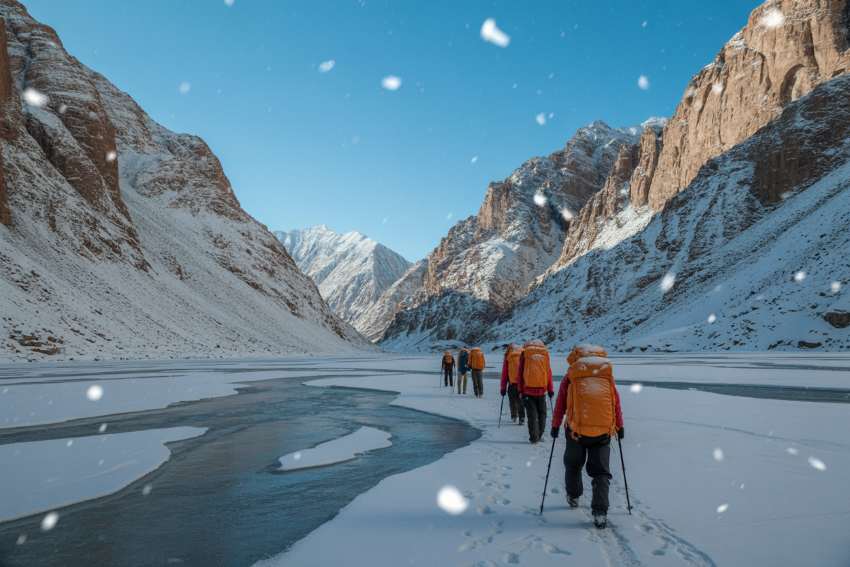 Image generated with Ai
The famous Chadar Trek, a thrilling winter adventure on the frozen Zanskar River in Ladakh, has been postponed until January 20, 2026, due to unstable ice conditions along the 105-kilometre route. The trek, known for its extreme challenges and breathtaking views, was originally scheduled to begin on January 10th but has been delayed due to warmer-than-usual weather patterns, resulting in an unsafe trekking route. The Zanskar River, which typically freezes to a thickness of more than a foot, is thawing, prompting authorities to raise safety concerns for trekkers.
Unstable Ice Conditions Lead to Suspension
The trek, which takes adventurers across the frozen surface of the Zanskar River at an altitude of 11,000 feet, is renowned for its surreal beauty and the physical demands it places on its participants. However, this year, the warmer weather in the region has disrupted the usual freezing cycle, causing a delay in the formation of stable ice sheets on the river. As a result, the trek has been deemed too hazardous to proceed as planned.
Advertisement
Advertisement
The District Disaster Management Authority (DDMA) of Leh, in a recent public announcement, clarified that the decision to suspend the trek was based on reports from a reconnaissance team that highlighted the dangerous conditions along the route. The river’s ice had not solidified sufficiently to ensure safe passage for trekkers. The authorities emphasized that these unstable conditions could pose significant risks to human life, leading to the drastic decision to halt the trek until the ice formations are deemed safe.
Official Orders and Safety Measures
The Ladakh administration, headed by the Chief Executive Officer of the District Disaster Management Authority, issued a formal directive to prevent any trekking activities on the Chadar route during the suspension period. The notice also instructed tour operators and other stakeholders in the region not to organize or promote trekking excursions until further notice. The suspension, lasting until at least 20 January, will ensure that adventurers are not exposed to hazardous conditions that could endanger their lives.
Advertisement
Advertisement
Authorities have urged all trekkers and tour companies to adhere strictly to the suspension order. With the trek considered one of the most difficult in India, trekking on the Chadar route requires careful preparation, equipment, and an in-depth understanding of the conditions. The government’s safety-first approach has been widely appreciated, though it leaves much uncertainty in the hearts of both domestic and international trekkers hoping to experience the iconic trek.
The Challenges of the Chadar Trek
The Chadar Trek is a winter trail that takes trekkers through one of the most isolated regions in India, across the frozen Zanskar River. The name ‘Chadar’ translates to ‘blanket’, which refers to the layer of ice that forms over the river during the harsh winter months. Temperatures often drop to a bone-chilling -25 degrees Celsius, and trekkers face the challenge of walking over this thin sheet of ice, sometimes as thin as two inches. The trek not only tests one’s endurance but also offers a rare glimpse of one of nature’s most unique landscapes, where the harsh beauty of the river and surrounding gorges creates an unparalleled experience.
Advertisement
Advertisement
Despite its popularity, the trek can be highly dangerous, and this is not the first time trekkers have faced unforeseen risks. In 2020, for instance, 41 trekkers were trapped between two camps, Tibb and Neyraks, when the river began to unfreeze and overflowed over the ice. This resulted in an emergency rescue operation involving helicopters, further emphasizing the potential dangers of trekking in these extreme conditions.
A Look at Ladakh’s Winter Tourism
The Chadar Trek has long been a significant part of Ladakh’s winter tourism appeal. Each year, trekkers from across India and the world flock to the region to partake in this iconic adventure. However, the suspension of the trek has raised concerns about the future of Ladakh’s winter tourism, especially given the uncertainty surrounding the region’s ice formations in the wake of warmer weather patterns.
Advertisement
Advertisement
Tourism in Ladakh has seen significant growth over the past few years, with the Chadar Trek playing a pivotal role in attracting winter tourists. As one of the most challenging treks in the country, it has built a reputation for offering a once-in-a-lifetime experience, making it a bucket-list adventure for avid trekkers. However, disruptions like this have raised questions about the long-term viability of such winter trekking activities, particularly if warmer winters continue to affect ice conditions.
Impact on Local Communities and Tourism Stakeholders
The suspension of the Chadar Trek also has implications for local businesses and tourism stakeholders in Ladakh. From the tour operators to local guides, porters, and hoteliers, many depend on the winter trekking season for their livelihood. The uncertainty surrounding the trekking route leaves a financial gap for these stakeholders, who have already been impacted by the ongoing pandemic and shifting travel trends. For the communities living in remote areas along the trek, the cancellation of the trek could result in fewer opportunities for employment and income during the winter months.
While the Ladakh administration’s decision prioritizes safety, the impact on these local businesses cannot be ignored. Many hope that the conditions will stabilize and that the trek can resume later in the season. In the meantime, alternative winter activities in Ladakh, such as snow trekking, cultural tours, and visits to monasteries, are being promoted to keep the region’s tourism sector active.
Moving Forward: What’s Next for the Chadar Trek?
The suspension of the Chadar Trek raises significant concerns about the future of winter trekking in Ladakh. Warmer winters may become more common as the effects of climate change continue to be felt around the world, putting the safety and stability of the ice on the Zanskar River at risk.
Advertisement
Advertisement
The authorities in Ladakh are working closely with experts and tourism professionals to monitor the situation and determine whether future trekking activities can be carried out safely. To reduce risks, more stringent safety protocols are expected to be implemented for the trek in the coming years. Meanwhile, trekkers and adventurers are encouraged to keep up with the latest announcements and plan their visits accordingly.
The Chadar Trek is currently suspended, and those hoping to embark on this daring adventure must wait for the ice to solidify. Meanwhile, Ladakh’s winter tourism sector is looking for new ways to engage visitors while also ensuring the safety of those who continue to visit this unique and challenging destination.
Advertisement
