
China Launches Game-Changing High-Speed Rail Travel Across Central and Western Regions Revolutionizing Journeys, Slashing Travel Times, and Connecting Key Inland Cities Like Never Before

Published
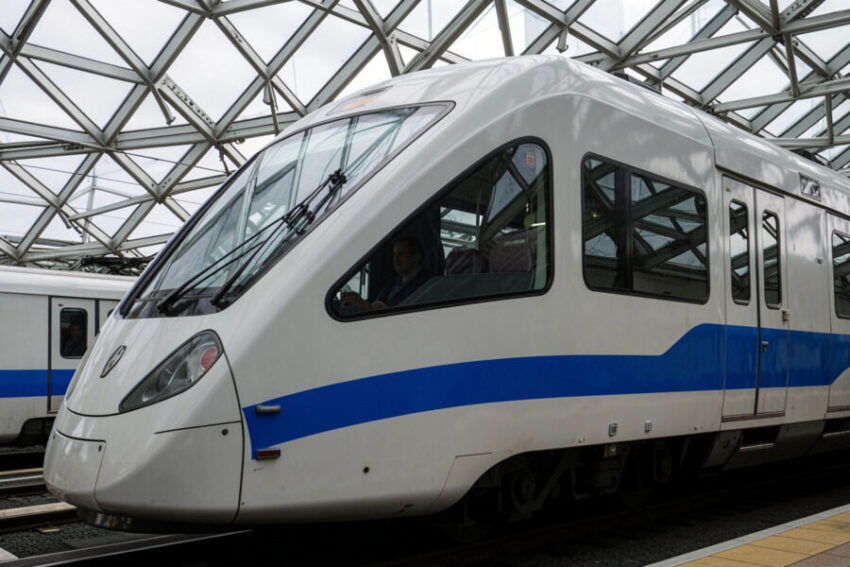
Image generated with Ai
China is set to redefine travel in its inland regions as two major high-speed rail lines near completion, promising to revolutionize journeys, slash travel times, and link previously isolated cities across Central and Western China. By connecting major hubs such as Shanghai, Chongqing, Chengdu, Xi’an, Wuhan, Yichang, and Shiyan, these railways will overcome geographic barriers, streamline transport, and unlock new economic and industrial opportunities. This transformative infrastructure not only accelerates travel but also strengthens regional integration, enabling faster movement of people, goods, and innovation across China’s vital inland corridors.
Advertisement
Advertisement
Advertisement
Advertisement
Advertisement
Advertisement
Central and Western China Set for Transformative High-Speed Rail Connections
Central and Western China are on the brink of a transportation revolution as two major high-speed rail projects enter their final stages of inspection and trial runs, with commercial operations expected later this year. These developments are poised to dramatically enhance regional connectivity, linking three significant inland city clusters for the first time via rail capable of speeds up to 350 kilometers per hour.
The new railways are not just about speed; they represent a strategic effort to bridge economic gaps, reduce travel times, and integrate industrial hubs across multiple provinces. The projects in focus are the Yichang-Xingshan segment of the Shanghai-Chongqing-Chengdu high-speed railway and the Xi’an-Shiyan high-speed railway, both of which address longstanding gaps in the regional rail network.
Advertisement
Advertisement
Key Rail Segments and Their Significance
- Yichang-Xingshan Segment:
- Length: 109 kilometers
- Location: Hubei province
- Travel Impact: Reduces travel from Yichang to Xingshan from two hours to just 20 minutes.
- Strategic Value: Cuts the journey from Yichang to Chongqing to under three hours, alleviating critical transport bottlenecks in the region.
- Xi’an-Shiyan Line:
- Length: 257 kilometers
- Terrain: Traverses the Qinling Mountains, historically a barrier to efficient travel
- Travel Impact: Reduces Xi’an to Shiyan travel time from six hours on conventional trains to about one hour. Trips from Xi’an to Wuhan drop from five hours to under three, bypassing older, indirect routes through Zhengzhou.
- Strategic Value: Closes gaps between the Guanzhong Plain, the middle Yangtze River region, and the Chengdu-Chongqing city cluster, enabling faster, more direct connectivity.
Advertisement
Advertisement
The Shanghai-Chongqing-Chengdu High-Speed Railway
Spanning approximately 2,100 kilometers, this line directly links Shanghai with Chongqing and Chengdu in Sichuan province. Engineered for top speeds of 350 km/h, certain stretches are future-proofed to operate at 400 km/h, signaling China’s ambition for next-generation rail travel.
- Total Investment: Approximately CNY 593 billion (USD 87.2 billion)
- Purpose: Facilitate regional connectivity, reduce journey times, and support coordinated industrial development in Central and Western China.
- Economic Impact: Expected to boost commerce, encourage tourism, and strengthen ties among multiple city clusters.
Advertisement
Advertisement
Industrial and Regional Integration
Experts highlight that the core impact of these railways extends beyond speed. By connecting previously isolated routes and overcoming challenging terrain, the new lines are expected to synergize regional industries:
- Xi’an: Leveraging strengths in scientific research, defense, and aerospace
- Wuhan: Expanding capabilities in optoelectronics, high-end manufacturing, and biomedicine
- Chengdu-Chongqing Cluster: Enhancing logistics, industrial coordination, and economic integration
The combination of these hubs creates a network effect, allowing specialized industries to collaborate more efficiently and drive innovation across Central and Western China.
Advertisement
Advertisement
Dramatic Reductions in Travel Times
The transformative effect of the new lines is evident in specific travel scenarios:
- Xi’an → Shiyan: From six hours to one hour
- Xi’an → Wuhan: From five hours to under three hours
- Yichang → Xingshan: From two hours to 20 minutes
- Yichang → Chongqing: Falls to under three hours
Such reductions make commuting, business travel, and cargo movement significantly faster, promoting economic cohesion between previously distant urban centers.
Advertisement
Advertisement
Strategic Regional Benefits
The railways are more than infrastructure projects; they are instruments for regional transformation. Analysts point out:
- Elimination of Speed Disparities: Uniform high-speed travel across multiple segments
- Overcoming Geographic Challenges: Qinling Mountains and other difficult terrains no longer hinder connectivity
- Industrial Synergy: Closer links enable joint research, manufacturing partnerships, and coordinated development
- Economic Spillover: Improved transport encourages investment, tourism, and labor mobility
Advertisement
Advertisement
Bullet-Point Overview by Region
- Shanghai: Eastern terminus, gateway to international commerce
- Chongqing: Major inland economic hub, enhanced access to central China
- Chengdu (Sichuan): Industrial and technology center, linked to broader network
- Xi’an (Shaanxi): Scientific and aerospace innovation hub
- Shiyan (Hubei): Key mountain-city connection, enabling rapid access to larger markets
- Yichang (Hubei): Waterway and industrial city, now integrated into high-speed network
- Wuhan (Hubei): Optoelectronics and biomedicine powerhouse, now within faster reach of Xi’an
Advertisement
Advertisement
China’s new high-speed rail lines are set to revolutionize travel, slash journey times, and connect key inland cities, unlocking faster movement and unprecedented regional integration.
Advertisement
Advertisement
Looking Ahead
Once operational, these high-speed railways will mark a new era in inland Chinese transport, connecting three major city clusters, fostering industrial integration, and creating unprecedented opportunities for economic growth in Central and Western China. Travel times will shrink, commerce will accelerate, and previously isolated cities will enter a new phase of regional collaboration.
China’s ambitious investment in these projects underscores the country’s commitment to modern, high-speed infrastructure, demonstrating the strategic role of railways in shaping future economic landscapes. The completion of these lines will not only transform travel but also redefine the way industries, cities, and regions interact across Central and Western China.
Advertisement
