
Miami Joins Orlando and More Emerging as the Top Sources for Boosting US Tourism by Welcoming the Most International Tourists in 2026

Published
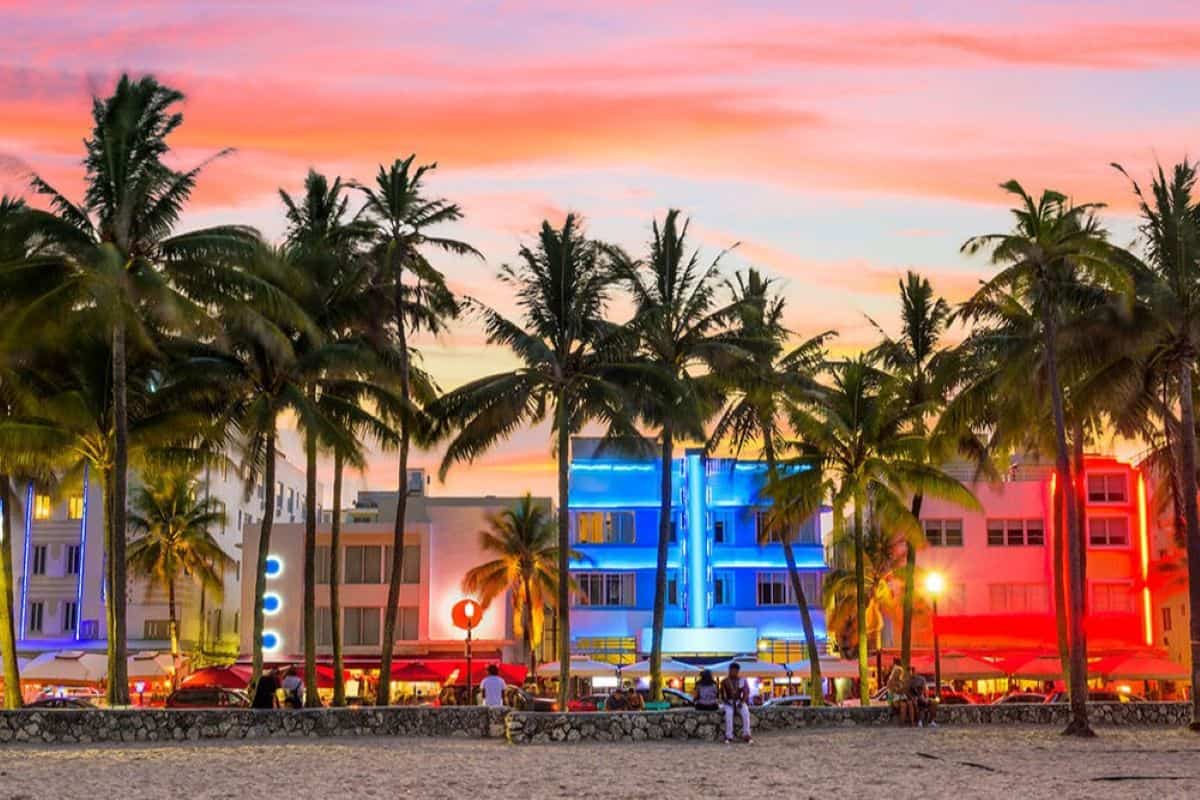
Miami joins Orlando and more emerging gateways as the top sources for boosting US tourism in 2026 by welcoming the most international tourists, driven by strong visitor demand, expanding global connectivity, major attractions and rising travel flows across leading American destinations.
International visitor traffic across major US ports of entry is producing a sharply divided tourism picture in 2026. While several large gateways have recorded declines, Miami, Orlando, Dallas, Houston and Honolulu have moved in the opposite direction, combining positive year-on-year growth with substantial international visitor volumes.
Among these growing gateways, Miami stands comfortably at the top by volume. The Florida gateway welcomed 2,510,046 international visitors from January through June 2026, compared with 2,472,813 during the corresponding period of 2025. Orlando, meanwhile, recorded the fastest growth among the five positive-performing gateways, rising 8.5%.
If their average first-half pace continues, the five gateways could collectively handle approximately 6.93 million international visitors through August 2026. However, those eight-month numbers remain projections rather than officially reported totals.
Advertisement
Advertisement
Miami Leads the Growing US Gateways With More Than 2.51 Million Visitors
Miami emerged as the largest positive-growth international gateway in the supplied data, welcoming 2,510,046 visitors through June 2026. That was 37,233 more visitors than the 2,472,813 recorded during the comparable 2025 period, representing growth of approximately 1.5%.
Advertisement
Advertisement
The percentage increase may look modest beside Orlando and Dallas, but Miami’s sheer scale changes the significance of that growth. Adding visitors while already processing more than 2.5 million international arrivals represents considerable additional tourism volume.
Miami also occupies a distinctive position in US tourism. Its aviation network connects the country extensively with Latin America and the Caribbean, while beaches, cruises, shopping, nightlife, hospitality and major events create demand beyond passengers simply using the city as an aviation gateway.
If the January–June monthly pace continues, Miami could reach approximately 3,346,728 international visitors through August 2026.
Orlando Records the Fastest Growth at 8.5%
Orlando produced the strongest percentage growth among the five expanding gateways.
International visitor numbers climbed from 898,282 in January–June 2025 to 974,267 during the same period in 2026. That represents an additional 75,985 visitors and growth of approximately 8.5%.
Advertisement
Advertisement
The increase is particularly important because Orlando is approaching the 1 million visitor mark within only 6 months.
Unlike many major gateways where business and transit travel can play substantial roles, Orlando has one of the strongest leisure identities in the US. Theme parks, family attractions, resorts, entertainment, shopping and major convention facilities give international travellers multiple reasons to make the city their final destination.
A continuation of the first-half pace would take Orlando to approximately 1,299,023 visitors through August.
Dallas Surges 8.0% as Texas Strengthens International Connectivity
Dallas recorded the second-fastest percentage increase among the positive-performing gateways.
Visitor numbers rose from 538,325 to 581,540, adding 43,215 international visitors and producing approximately 8.0% growth.
Advertisement
Advertisement
Dallas benefits from its position as one of the country’s most important aviation hubs. Its role is therefore broader than traditional leisure tourism. Business travel, conventions, visiting friends and relatives, sporting events and connecting passengers can all influence international arrival numbers.
Under a straight-line projection, Dallas could handle approximately 775,387 visitors through August 2026.
Its performance also becomes more significant when considered alongside Houston, giving Texas 2 gateways among the 5 in this dataset that recorded positive international visitor growth.
Houston Adds More Than 11,000 International Visitors
Houston welcomed 613,708 international visitors through June 2026, compared with 602,398 during the corresponding period of 2025.
That represents an increase of 11,310 visitors, or approximately 1.9%.
Advertisement
Advertisement
Houston’s international visitor economy differs substantially from Orlando’s. Energy, business, medical travel, conventions, cultural attractions and family connections complement conventional leisure tourism.
Its extensive international air network also makes the city an important US entry point, particularly for traffic from Latin America and other global markets.
If the average monthly pace continues through July and August, Houston could reach approximately 818,277 international visitors during the first 8 months of 2026.
Honolulu Keeps Hawaii in Positive Territory
Honolulu recorded the smallest percentage increase among the 5 growing gateways, but its absolute visitor volume remains significant.
The Hawaiian gateway received 521,647 international visitors through June 2026, compared with 518,417 a year earlier. That represents 3,230 additional visitors and growth of approximately 0.6%.
Advertisement
Advertisement
The increase is modest, yet it comes within a destination whose international tourism proposition is heavily leisure-focused.
Hawaii’s beaches, climate, resorts, natural landscapes and Pacific location provide Honolulu with a tourism profile markedly different from mainland gateways.
If its 6-month average continues, Honolulu could reach approximately 695,529 international visitors through August 2026.
Five Growing Gateways Generate More Than 5.2 Million Visitors
Taken together, Miami, Orlando, Houston, Dallas and Honolulu received 5,201,208 international visitors during January–June 2026.
The same gateways recorded 5,030,235 visitors during the comparison period.
Advertisement
Advertisement
That means they collectively added 170,973 international visitors, producing combined growth of approximately 3.4%.
| Port of Entry | YTD June 2026 | YTD June 2025 | Additional Visitors | YoY Growth | Projected YTD August 2026 |
|---|---|---|---|---|---|
| Miami, FL | 2,510,046 | 2,472,813 | +37,233 | +1.5% | ~3,346,728 |
| Orlando, FL | 974,267 | 898,282 | +75,985 | +8.5% | ~1,299,023 |
| Houston, TX | 613,708 | 602,398 | +11,310 | +1.9% | ~818,277 |
| Dallas, TX | 581,540 | 538,325 | +43,215 | +8.0% | ~775,387 |
| Honolulu, HI | 521,647 | 518,417 | +3,230 | +0.6% | ~695,529 |
| Total | 5,201,208 | 5,030,235 | +170,973 | +3.4% | ~6,934,944 |
Florida Emerges as a Powerful Growth Centre
The data give Florida an especially prominent position because both Miami and Orlando appear among the growing gateways.
Together, the 2 Florida ports welcomed 3,484,313 international visitors through June 2026. That represents more than 67% of the 5.20 million visitors handled by all 5 positive-growth gateways in this dataset.
Yet Miami and Orlando are growing for different reasons.
Miami combines leisure tourism with extensive Latin American and Caribbean connectivity, cruise traffic, business and visiting-friends-and-relatives demand. Orlando is much more heavily associated with theme parks, family holidays, resorts and conventions.
Advertisement
Advertisement
The result gives Florida 2 different international tourism engines working simultaneously.
Texas Gains Through Both Houston and Dallas
Texas is another important part of the story.
Houston and Dallas together handled 1,195,248 international visitors through June 2026, with both recording year-on-year increases.
Dallas provides the stronger growth story at 8.0%, while Houston supplies the larger volume with 613,708 visitors.
The presence of both cities among the growing gateways suggests that international traffic is not concentrated solely around America’s traditional coastal leisure destinations.
Advertisement
Advertisement
Business, aviation connectivity, conventions, family travel and major metropolitan economies are also contributing to inbound visitor flows.
August Projection Could Push These Gateways Towards 7 Million
If the January–June average monthly pace were extended through July and August, the 5 growing gateways would collectively reach approximately 6,934,944 international visitors during January–August 2026.
Miami alone could account for around 3.35 million, while Orlando could approach 1.30 million. Houston could exceed 818,000, Dallas could approach 775,000, and Honolulu could reach approximately 696,000.
These projections should be treated carefully. Summer travel patterns can differ significantly from the average recorded during the first 6 months, particularly across leisure-heavy destinations such as Orlando, Miami and Honolulu.
They are therefore an indication of where the current pace could lead, not official August arrival figures.
Advertisement
Advertisement
Growth Is Concentrated Rather Than Universal
The wider dataset makes the positive performance of these 5 gateways more noteworthy.
Several other major US entry points recorded declines during the same comparison period. This means the 2026 international tourism picture is not one of uniform growth across the country.
Instead, demand appears to be shifting between gateways.
Miami demonstrates the power of enormous existing volume. Orlando and Dallas show how rapidly a substantial market can expand. Houston provides steady growth from a large international base, while Honolulu shows resilience within a tourism-dependent island economy.
Together, the 5 gateways illustrate a central feature of US inbound tourism in 2026: international travel demand remains substantial, but the strongest momentum is increasingly concentrated in particular cities and aviation gateways rather than evenly distributed nationwide.
Advertisement
Advertisement
One distinction remains essential when interpreting the numbers. Port-of-entry statistics show where international travellers enter the United States; they do not necessarily identify where every traveller ultimately stays or spends their holiday. The projected January–August figures are also estimates based on the January–June pace and should remain clearly labelled as projections until official 8-month data become available.
Miami joins Orlando and more emerging gateways as top sources for boosting US tourism in 2026 by welcoming the most international tourists, supported by strong travel demand, global connectivity, leisure attractions and growing visitor arrivals across key US destinations.
In conclusion, Miami joins Orlando and more emerging gateways as the top sources for boosting US tourism in 2026 by welcoming the most international tourists through strong visitor demand, expanding air connectivity, world-class attractions and diverse travel experiences. While growth patterns vary across the country, these leading gateways demonstrate how international arrivals are increasingly supporting major cities, leisure destinations and regional economies, strengthening the overall US tourism landscape.
Advertisement
