
Brazil and Colombia Showcase South America Tourism Strength as Infrastructure Gaps Challenge Growth in 2026

Published
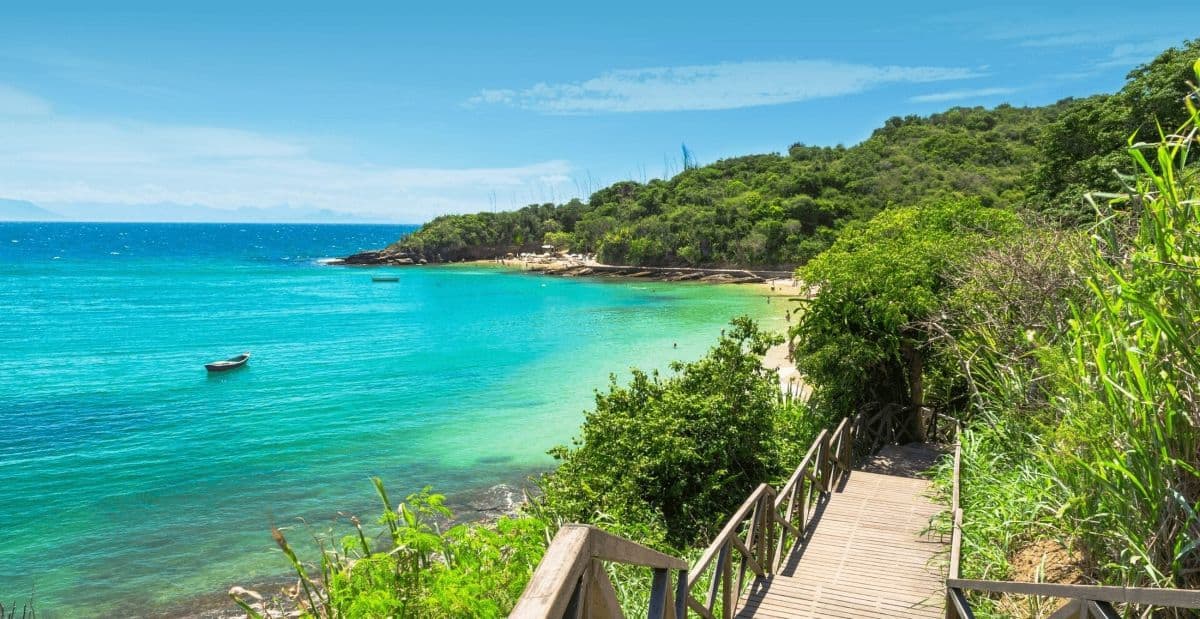
Brazil and Colombia showcase South America tourism strength as infrastructure gaps challenge growth in 2026, with the region’s extraordinary natural and cultural resources giving it a powerful competitive advantage while weaker ground, port and transport systems limit how efficiently rising visitor demand can spread across destinations.
South America enters the latest global tourism-development cycle with an unusual combination of opportunity and constraint. The continent possesses some of the world’s most recognisable landscapes, biodiversity, heritage and urban experiences, yet converting those resources into sustainable tourism growth requires infrastructure capable of moving visitors efficiently between airports, cities, ports and remote attractions.
Advertisement
Advertisement
The World Economic Forum’s Travel & Tourism Development Index 2026 makes that contrast increasingly important. Global tourism is expanding rapidly, with international arrivals reaching a record 1.5 billion in 2025, up 5% year on year and 4.4% above 2019. Around 307 million international trips were recorded during the first quarter of 2026.
For South America, stronger global demand creates enormous potential. But natural beauty alone cannot determine which destinations capture the greatest economic benefits.
Advertisement
Advertisement
South America Has a Natural Advantage Few Regions Can Replicate
South America’s greatest tourism advantage is difficult to manufacture: its extraordinary concentration of natural resources.
The continent includes the Amazon rainforest, Andes, Patagonia, Caribbean and Atlantic coastlines, deserts, wetlands, glaciers, waterfalls and enormous biodiversity.
Advertisement
Advertisement
The World Economic Forum’s TTDI treats natural resources as one of the fundamental reasons people choose destinations. The pillar measures natural capital alongside the development and promotion of outdoor tourism.
Natural resources globally improved 4.1% in the 2026 index, with 96% of assessed economies improving their scores.
Advertisement
Advertisement
Developing and emerging economies are particularly powerful in this category. Among the world’s 30 highest-scoring economies for natural resources, 20 are emerging or developing markets, concentrated mainly in Latin America and Asia-Pacific.
That gives South America a structural tourism advantage.
Unlike airports, highways or hotels, destinations cannot simply build another Amazon, Patagonia or Andes. The challenge is creating infrastructure capable of unlocking those assets without damaging what makes them attractive.
Brazil: Natural Resources Give South America’s Tourism Giant a Powerful Foundation
Brazil illustrates the opportunity better than almost any other country.
Advertisement
Advertisement
The nation combines the Amazon, Atlantic coastline, wetlands, major cities, biodiversity and internationally recognised cultural experiences.
Previous World Economic Forum analysis identified Brazil as South America’s strongest overall TTDI performer, while also placing it among the global leaders for natural resources.
Brazil’s tourism advantage is therefore not based on one attraction.
Rio de Janeiro provides beaches, culture and major events. São Paulo functions as a business and aviation hub. The Amazon supports nature and adventure tourism. The Pantanal provides wildlife experiences, while Brazil’s coastline creates enormous leisure potential.
This diversity can support domestic, international, leisure, nature and business tourism simultaneously.
However, Brazil’s enormous geography also makes infrastructure unusually important.
Advertisement
Advertisement
A visitor may be able to fly into São Paulo or Rio relatively easily, but developing tourism deeper into remote regions requires roads, regional aviation, ports and dependable local transport.
Brazil demonstrates South America’s central challenge: world-class attractions can be geographically difficult to connect.
Colombia: Biodiversity and Culture Strengthen a Rapidly Developing Tourism Market
Colombia provides another powerful example of the region’s resource advantage.
Its tourism portfolio includes Caribbean beaches, Andean cities, coffee landscapes, Amazon territory, biodiversity, cultural festivals and historic destinations.
Bogotá functions as a major aviation and business centre. Cartagena provides heritage and Caribbean tourism. Medellín has developed a growing international city-break profile, while the coffee region and nature destinations expand the country’s visitor offering further.
The country’s biodiversity gives it particular potential for nature tourism.
Advertisement
Advertisement
Colombia also benefits from cultural resources ranging from music and gastronomy to festivals and historic centres.
This creates an important competitive advantage because modern tourism demand is increasingly experience-driven.
Visitors may initially arrive for Cartagena or Medellín but can potentially be encouraged to explore smaller destinations.
That is where infrastructure becomes critical.
Tourism growth creates greater economic value when visitors can move beyond major gateways safely and efficiently. Better roads, regional airports and ground transport can therefore determine whether Colombia’s tourism boom remains concentrated or reaches a wider range of communities.
Argentina: Vast Distances Make Transport Infrastructure Central to Tourism Growth
Argentina demonstrates the relationship between geography and tourism infrastructure particularly clearly.
Advertisement
Advertisement
The country offers an exceptionally diverse tourism map.
Buenos Aires provides culture, gastronomy, entertainment and urban tourism. Mendoza supports wine travel. Patagonia provides landscapes and adventure experiences. Iguazú connects Argentina with one of South America’s greatest natural attractions, while Salta and the northwest add Andean culture and heritage.
But these destinations are separated by enormous distances.
That makes transport a fundamental part of Argentina’s tourism competitiveness.
A traveller visiting Buenos Aires and Patagonia cannot rely on the same compact transport geography available in many European destinations. Aviation, long-distance roads, regional airports and reliable ground connections become essential.
Argentina therefore illustrates why South America’s tourism infrastructure challenge cannot be solved only through additional hotel rooms.
Advertisement
Advertisement
The region needs connectivity between attractions.
Without it, tourists may spend more time and money simply reaching destinations, reducing the number of places they can realistically include in one journey.
Chile: Long Geography Makes Connectivity a Tourism Necessity
Chile faces a similar challenge but in a dramatically different geographic form.
The country stretches thousands of kilometres along South America’s Pacific coast.
Its tourism resources include the Atacama Desert, Santiago, wine regions, Patagonia, mountains and an extensive coastline.
This gives Chile remarkable tourism diversity but also makes efficient internal transportation essential.
Advertisement
Advertisement
Visitors need reliable aviation and road infrastructure to connect experiences separated by vast distances.
Chile’s tourism proposition demonstrates a broader TTDI principle: having attractions is only one component of competitiveness.
Travellers must also be able to reach them conveniently.
A destination with exceptional natural resources but difficult transport can lose demand to a competitor offering a simpler journey.
For South America, that makes transport infrastructure an economic issue rather than simply a construction issue.
Peru: Cultural Power Needs Strong Connections Beyond Major Gateways
Peru adds another dimension to South America’s tourism strengths.
Advertisement
Advertisement
Its global appeal is strongly connected with archaeological and cultural resources, particularly the legacy of the Inca civilisation and internationally recognised destinations around Cusco.
But Peru also offers gastronomy, the Andes, Amazon experiences, coastal tourism and major urban attractions.
The tourism opportunity therefore extends considerably beyond one famous landmark.
Infrastructure determines how effectively that diversity can be commercialised.
Visitors need airports, rail services, roads and local transport to move between Lima, Cusco and more remote destinations.
The World Economic Forum defines Ground and Port Infrastructure around the availability of efficient and accessible road, railway, port and public-transport services connecting travellers with important business centres and tourism attractions.
Advertisement
Advertisement
For Peru and its South American neighbours, improvements in these systems can make existing attractions more economically productive without requiring entirely new tourism resources.
Natural Resources Are South America’s Competitive Weapon
The 2026 TTDI reinforces the growing importance of nature-based tourism.
| Tourism Development Factor | 2026 Global Direction |
| International arrivals in 2025 | 1.5 billion |
| 2025 arrivals vs 2024 | +5% |
| 2025 arrivals vs 2019 | +4.4% |
| Q1 2026 international trips | ~307 million |
| Natural Resources pillar improvement | +4.1% |
| Economies improving Natural Resources score | 96% |
| Emerging/developing economies among Natural Resources Top 30 | 20 |
| TTDI economies improving overall, 2024–2026 | 92% |
The data demonstrates why South America has such a valuable starting position.
Demand for nature is rising while the region possesses many of the resources travellers increasingly seek.
Forests, wildlife, protected areas, coastlines and mountain landscapes give Latin American destinations assets that advanced economies cannot easily reproduce.
But the economic return depends on accessibility and management.
Advertisement
Advertisement
Ground and Port Infrastructure Remains a Critical Weakness
This is where South America’s competitive picture becomes more complicated.
World Economic Forum regional analysis has repeatedly identified infrastructure as a significant weakness across Latin America.
Many economies require greater investment in:
- Ground transport
- Roads
- Rail connectivity
- Port infrastructure
- Air transport
- Tourist-service infrastructure
- Urban public transportation
The problem is particularly important because tourism often depends on the weakest part of the journey.
A modern international airport can bring a visitor into a country, but poor roads can still make the final destination difficult to reach.
Likewise, an attractive cruise port may generate little regional tourism expenditure if passengers cannot easily travel beyond the waterfront.
Advertisement
Advertisement
The infrastructure gap therefore affects not only convenience but also how widely tourism revenue is distributed.
Why Europe and Other Advanced Markets Still Hold an Infrastructure Advantage
South America’s tourism resources can rival almost any region, but advanced Western economies often possess an important advantage: dense transportation networks.
Europe provides the clearest contrast.
Visitors can frequently move between major destinations using high-speed rail, highways, extensive public transportation and short-haul aviation.
That creates efficiency.
A traveller can visit several cities or even several countries during one holiday without spending excessive time in transit.
Advertisement
Advertisement
South America’s geography is naturally different, making direct comparisons imperfect. Distances are often much greater and population centres more dispersed.
Nevertheless, stronger transport networks can still reduce friction.
Improving regional airports, highways, rail where commercially viable, ports and city transport could allow South American destinations to capture more value from resources they already possess.
Tourism Infrastructure Can Spread Revenue Beyond Famous Destinations
The economic argument for infrastructure goes beyond increasing total arrivals.
Better connectivity can disperse visitors.
When travellers can easily reach secondary cities, rural destinations and protected natural areas, tourism expenditure can spread beyond major gateways.
Advertisement
Advertisement
That benefits:
- Smaller hotels
- Restaurants
- Local guides
- Ground-transport operators
- Community tourism
- Attractions
- Regional airlines
- Retail businesses
- Rural destinations
This is especially important for countries such as Brazil and Colombia, where world-class tourism resources extend far beyond the best-known international cities.
Infrastructure can therefore become a mechanism for turning tourism growth into broader regional development.
South America Must Protect the Resources Driving Its Growth
Building infrastructure creates another challenge: development cannot destroy the natural resources attracting tourists.
The TTDI increasingly places tourism development within a sustainability framework.
Roads, airports and accommodation can improve accessibility, but poorly managed construction can create environmental pressure.
Advertisement
Advertisement
South American destinations therefore face a difficult balance.
The objective should not simply be to bring the maximum possible number of visitors into environmentally sensitive destinations.
Instead, infrastructure needs to improve accessibility while managing visitor flows and protecting biodiversity.
This is particularly important around rainforests, islands, protected landscapes and mountain environments.
Nature tourism works economically only while the natural asset remains attractive.
TTDI 2026 Shows Global Competition Is Accelerating
South America is also competing in a tourism market where other regions are improving rapidly.
Advertisement
Advertisement
The World Economic Forum reports that 92% of the 110 economies assessed improved their TTDI scores between 2024 and 2026.
The average score increased 2%, the fastest improvement since 2019.
Fourteen of the index’s 17 pillars improved overall.
Cultural Resources recorded particularly strong global progress, rising 9.6%, while tourism infrastructure and air connectivity also strengthened.
That creates competitive pressure.
South American destinations cannot assume that spectacular natural resources alone will guarantee increasing market share.
Advertisement
Advertisement
Countries across Asia-Pacific, the Middle East and other emerging regions are investing heavily in airports, hotels, technology and attractions.
South America must improve the infrastructure surrounding its existing advantages if it wants to compete for the same international travellers.
What South America Needs to Strengthen Next
The region’s priorities increasingly extend beyond destination marketing.
Key areas include:
- Better road connections between tourism centres
- Modernised regional airports
- Stronger port infrastructure
- Improved urban public transport
- Better digital connectivity
- More tourism accommodation outside major cities
- Safer and more dependable transport
- Stronger links between international gateways and secondary destinations
- Sustainable access to natural attractions
Investment in these areas could make the region’s existing tourism resources substantially more valuable.
South America does not necessarily need to invent new reasons for travellers to visit.
Advertisement
Advertisement
It already possesses them.
The challenge is making those experiences easier to reach, safer to explore and more efficiently connected.
Conclusion: Brazil and Colombia Showcase South America Tourism Strength as Infrastructure Gaps Challenge Growth in 2026
Brazil and Colombia showcase South America tourism strength as infrastructure gaps challenge growth in 2026 because the continent possesses exceptional natural, cultural and non-leisure resources but still needs stronger ground, port, air and tourism infrastructure to convert those advantages into broader and more sustainable visitor growth.
The latest TTDI arrives as global tourism demand reaches historic levels. International arrivals reached 1.5 billion in 2025, while another 307 million international journeys were recorded during the first quarter of 2026.
South America is well positioned to benefit.
Brazil, Colombia, Argentina, Chile and Peru possess tourism resources ranging from rainforests and biodiversity to global cities, archaeological heritage, mountains, coastlines and cultural experiences.
Advertisement
Advertisement
But resources alone are not enough.
The next stage of South America’s tourism development will depend increasingly on infrastructure that connects international gateways with the destinations travellers actually want to experience.
If investment catches up with the continent’s extraordinary natural and cultural advantages, Brazil and Colombia showcase South America tourism strength as infrastructure gaps challenge growth in 2026 could eventually evolve into a much stronger story: a region where world-class attractions are finally matched by world-class connectivity.
Advertisement
