
Delta Air Lines Introduces Luxury Airbus A321neo With Lie-Flat Beds and Premium Cabins for NBA Teams

Published
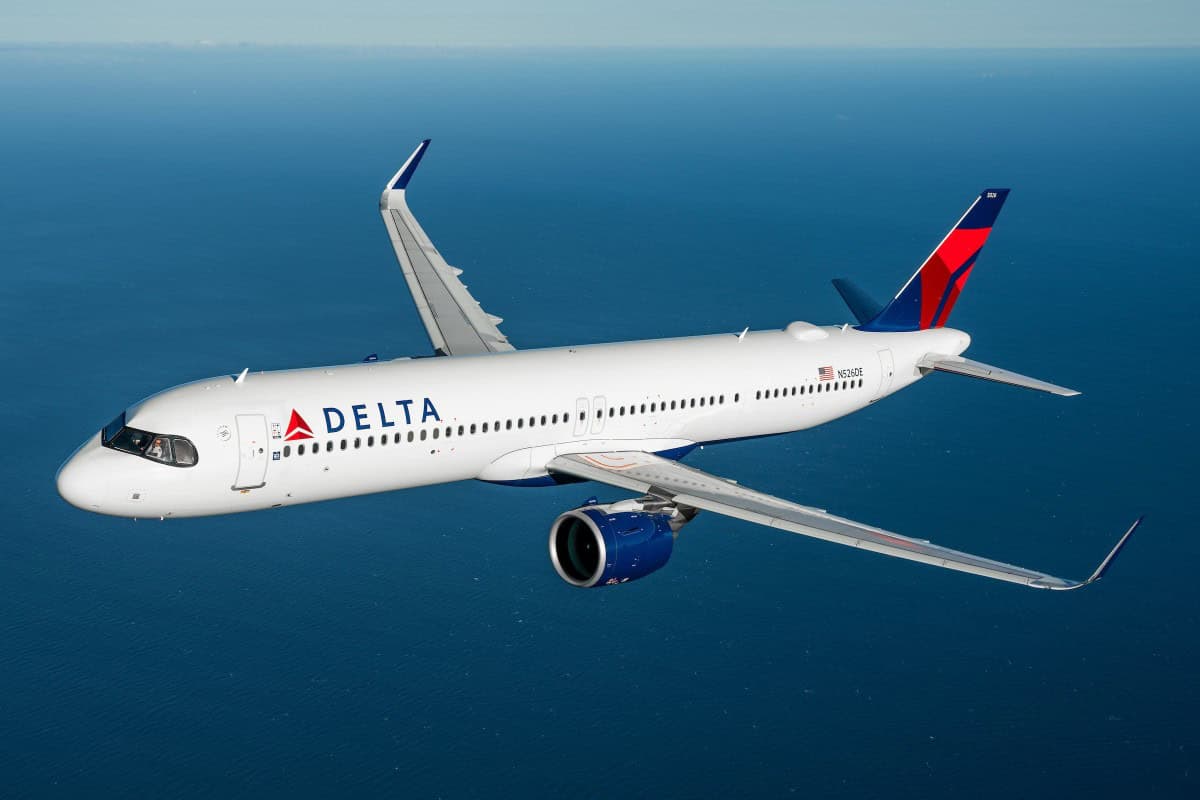
Delta Air Lines is introducing a specially configured Airbus A321neo for National Basketball Association (NBA) team travel, bringing lie-flat sleeping accommodation, spacious reclining seats and customised cabin facilities to professional basketball charters across the United States. The aircraft represents a departure from Delta’s conventional passenger operations, replacing the familiar commercial seating arrangement with an interior tailored to the requirements of athletes, coaches and supporting personnel. The programme also forms part of a broader fleet renewal intended to replace older Boeing 757 charter aircraft. For the aviation industry, it demonstrates how modern narrowbody jets can serve highly specialised travel markets.
The transition is already under way. Aviation fleet reporting dated 23 September 2026 identified the first specially configured Airbus A321neo, registered N701DH, as having commenced NBA charter operations on 13 September 2026. The aircraft marks an important stage in modernising the air transport arrangements supporting professional basketball teams.
Advertisement
Advertisement
Unlike Delta’s scheduled services, these aircraft are not intended to carry ordinary ticket-holding passengers. Their role is to transport basketball teams and accompanying personnel under dedicated charter arrangements, with cabin design taking priority over the high passenger capacity normally associated with narrowbody commercial aviation.
What Makes Delta’s New VIP Airbus A321neo Different From an Ordinary Passenger Aircraft?
The biggest difference is the aircraft’s approach to cabin space. Conventional narrowbody airliners generally balance passenger density, comfort, operating economics and demand for different fare classes. Delta’s basketball charter aircraft instead allocates much of its interior to a comparatively small group of travellers whose physical requirements and working schedules differ considerably from those of the general flying public.
Advertisement
Advertisement
Professional basketball players frequently travel with coaches, trainers, medical specialists, equipment managers and other team personnel. The aircraft must therefore support several activities simultaneously. Athletes may want to rest, staff may need to work and other passengers may require comfortable seating during journeys between games.
The customised A321neo addresses those needs through a combination of sleeping accommodation, reclining seats and shared spaces. Its design allows passengers to use the aircraft for more than transportation between two airports.
Advertisement
Advertisement
One particularly distinctive feature is the reported removal of overhead luggage bins from parts of the forward cabin. This creates additional clearance in an environment intended to accommodate exceptionally tall passengers. It also distinguishes the aircraft visually from conventional A321neo interiors, where overhead storage is an important element of passenger convenience.
The result is a narrowbody aircraft that retains the external dimensions of a commercial jet but uses its interior much more like a dedicated sports-team transport facility.
Inside Delta’s VIP Airbus A321neo: What Do the Lie-Flat Beds and Premium Cabins Offer?
The aircraft’s most prominent passenger feature is the inclusion of lie-flat seating, supported by wider reclining accommodation and a rear section of conventional-style seats.
Cabin descriptions circulated in October 2026 show an interior divided into several distinct zones, including a forward area with tables, dedicated sleeping sections and other seating areas intended for team personnel.
Forward Cabin Designed for Privacy and Team Activities
At the front of the aircraft, the reported design incorporates a spacious lavatory, storage for large personal items and a small seating arrangement with full-sized tables.
These facilities have a practical role in professional team travel. Tables can provide a useful surface for meals, documents and routine planning. Separate seating arrangements may also make it easier for travelling personnel to discuss upcoming schedules without occupying the principal rest areas.
Advertisement
Advertisement
Storage is another important consideration. Basketball teams do not travel with exactly the same baggage requirements as holidaymakers or corporate travellers. Their journeys may involve sporting equipment, personal belongings and operational materials that require careful accommodation.
The availability of additional storage is therefore relevant to how efficiently the aircraft can support its specialist passengers.
Lie-Flat Seating Creates Dedicated Rest Areas
Lie-flat seats are among the most significant features of the new cabin concept.
Unlike conventional recliners, these seats allow passengers to adopt a substantially flatter resting position during a flight. For professional athletes travelling between games, that distinction makes the seating particularly relevant.
The source material supplied for this article describes two lie-flat sections, with 16 seats in one area and 12 in another, both arranged in a 2-2 configuration. However, those counts have not been corroborated by an official Delta or NBA seating plan.
It is important to distinguish the presence of lie-flat accommodation from the precise number of beds installed. The overall 90-seat description widely associated with the aircraft is inconsistent with the sum of the individual cabin counts in the supplied report. Until an authoritative cabin plan resolves that discrepancy, those sectional figures should not be treated as a verified 90-seat breakdown.
Advertisement
Advertisement
The underlying passenger benefit remains clear: the aircraft provides sleeping-style accommodation as part of a purpose-built charter interior, rather than depending exclusively on conventional domestic first-class seats.
Premium Recliners Provide Additional Seating Flexibility
Reclining seats form another important part of the reported cabin configuration.
These are broadly comparable in function to premium seats used on domestic services, offering a seated travel experience without requiring the greater floor space associated with fully flat beds.
Their inclusion allows the aircraft to accommodate passengers with different requirements. Not every member of a travelling basketball organisation necessarily needs sleeping accommodation during every journey.
Recliners can be particularly useful for personnel who intend to remain seated, work, read or converse during a flight. They also allow the cabin to carry more passengers than a layout composed entirely of beds.
The distinction between recliners and lie-flat seats is essential. The terms should not be used interchangeably, since they describe different levels of seat adjustment and cabin space.
Advertisement
Advertisement
How Does the VIP A321neo Compare With Delta’s Regular Aircraft?
Delta’s published Airbus A321neo information provides a useful comparison with the customised basketball charter configuration.
The airline lists a standard 194-seat layout, as well as a separate 164-seat arrangement. These scheduled-service aircraft offer cabins marketed as Delta First, Delta Comfort and Delta Main, with specifications differing according to aircraft configuration.
Delta’s official aircraft information also lists a typical cruising speed of approximately 525 mph (845 km/h), a length of 146 feet (44.5 metres), and a wingspan of approximately 117 feet 5 inches (35.8 metres).
These published dimensions describe Delta’s A321neo aircraft type, not a separate set of performance figures established for the basketball charter interior.
| Feature | VIP NBA charter A321neo | Regular Delta A321neo |
|---|---|---|
| Primary purpose | Professional basketball team charters | Scheduled commercial passenger flights |
| Passenger capacity | Reported as 90; exact breakdown requires confirmation | 194 or 164, depending on configuration |
| Lie-flat accommodation | Reported in the dedicated charter cabin | Not part of the published 194-seat or interim 164-seat layouts |
| Premium seating | Custom reclining sections | Delta First and Delta Comfort |
| Main seating | Reported rear conventional-style section | Delta Main |
| Forward cabin | Customised areas and tables described | Standard airline cabin arrangement |
| Public ticket sales | Not offered as a scheduled passenger service | Available through Delta’s booking channels |
| Operational role | Dedicated team transport | General passenger network |
The comparison illustrates the commercial trade-off involved in specialist charter aviation. A lower-density cabin carries fewer passengers but gives each traveller, on average, access to considerably more space.
For operators serving professional sports organisations, the objective is not necessarily to maximise the number of seats sold. Instead, aircraft configuration supports the requirements of the charter customer.
Advertisement
Advertisement
Why Is Delta Replacing Its Older Boeing 757 Basketball Charter Aircraft?
The introduction of the VIP Airbus A321neo is connected to the longer-term renewal of aircraft used for professional basketball transportation.
Delta has relied on specially configured Boeing 757 aircraft for its charter operations. Although the 757 remains a capable narrowbody aircraft, the type belongs to an earlier generation of commercial aviation.
The NBA charter programme requires aircraft that can transport teams between cities throughout a demanding sporting calendar. A dedicated fleet must be available for repeated journeys, often involving tightly coordinated departure times and arrival arrangements.
Retaining an older aircraft type for specialised operations creates a different planning challenge from operating a modern aircraft delivered specifically for the purpose.
The new A321neo introduces a contemporary aircraft platform while preserving the advantages of a dedicated charter interior.
Why Fleet Age Matters in Professional Sports Aviation
Fleet age influences several aspects of airline operations, including maintenance planning, component availability and the long-term economics of aircraft utilisation.
Advertisement
Advertisement
These considerations do not mean an older aircraft is inherently unsafe. Commercial airlines must maintain aircraft in accordance with applicable airworthiness and operational requirements, irrespective of age.
However, replacing ageing aircraft with newly manufactured models can provide opportunities to introduce different cabin arrangements, contemporary aircraft systems and updated operating practices.
For Delta’s basketball charter operation, the transition is particularly significant because the aircraft are not simply receiving cosmetic cabin upgrades. The programme represents a change of aircraft generation alongside a substantial redesign of the passenger environment.
Aviation fleet reporting from September 2026 identifies the new A321neo as the successor to the Boeing 757-200 aircraft previously used for NBA transportation. That is the clearest confirmed direction of the fleet transition, even though the complete retirement timetable for the older charter aircraft has not been publicly established in the official material reviewed.
How Many VIP Airbus A321neo Aircraft Are Planned for NBA Travel?
The supplied October 2026 report describes a planned fleet of 14 aircraft, while a September 2026 aviation fleet report identifies a 2024 leasing agreement involving 13 A321neo aircraft.
That distinction requires careful treatment.
Advertisement
Advertisement
The 13-aircraft leasing arrangement has been reported in connection with SMBC Aviation Capital, with Delta designated to operate the aircraft. Other reports describe the overall programme as comprising 14 aircraft.
These figures should not be presented as interchangeable without clarification of their contractual scope.
Aviation fleet reporting identifies N701DH as the first aircraft involved in the new programme and records its initial charter operations in September 2026. An independently published delivery schedule for every remaining aircraft, supported directly by the NBA or Delta, was not identified during this research.
Key Fleet and Programme Information
| Category | Reported or verified information | Status |
|---|---|---|
| Operating airline | Delta Air Lines | Established |
| Aircraft type | Airbus A321neo | Established |
| Primary charter customer | NBA team travel | Reported |
| Initial aircraft registration | N701DH | Independently reported |
| First identified charter operation | 13 September 2026 | Reported from flight-tracking data |
| Lease agreement | 13 aircraft involving SMBC Aviation Capital | Reported by aviation fleet publication |
| Wider programme size | 14 aircraft | Reported, but not reconciled with the 13-aircraft agreement |
| Cabin capacity | Approximately 90 seats | Reported; exact breakdown unresolved |
| Aircraft being replaced | Boeing 757-200 charter fleet | Reported |
| Remaining delivery dates | Not fully established | Unconfirmed |
| Standard commercial availability | Not intended for ordinary scheduled ticket sales | Charter-specific arrangement |
The most important confirmed operational milestone is the arrival of the first aircraft in September 2026. The number ultimately delivered, and the completion date of the transition, remain matters that warrant further confirmation.
Who Owns Delta’s NBA Charter Aircraft and How Does the Leasing Arrangement Work?
The reported ownership structure is another feature distinguishing the new fleet from Delta’s ordinary passenger aircraft.
According to aviation industry reporting, the aircraft are supplied through a leasing arrangement involving SMBC Aviation Capital, while Delta provides the air transport operation.
Advertisement
Advertisement
This separates several functions that passengers might otherwise assume belong to the same organisation.
An aircraft lessor supplies aircraft through a contractual arrangement. The charter customer secures transportation services to meet its requirements. The operating airline is responsible for carrying out flights under the applicable operating approvals.
In this case, reporting indicates that the NBA’s specifications have influenced the aircraft’s interior design, allowing the cabin to be tailored to basketball team travel rather than a conventional airline product.
Delta’s responsibilities as the operating carrier are separate from the financial ownership of the aircraft.
Why Leasing Can Be Useful for Dedicated Sports Charters
Aircraft leasing is an established part of the global aviation industry. It allows airlines and other customers to obtain aircraft through contractual arrangements rather than necessarily purchasing them outright.
SMBC Aviation Capital’s published fleet information demonstrates the scale of this wider market. Its June 2026 figures, adjusted for an aircraft order announced in July, describe a portfolio covering owned, managed and committed aircraft, with the A321neo representing an important type in its business.
Advertisement
Advertisement
The arrangement is relevant to sports aviation because specialist aircraft can require significant capital investment even though they serve a comparatively narrow customer base.
A dedicated NBA charter aircraft also needs to maintain the configuration specified for its principal purpose. Converting between that interior and a normal 194-seat commercial arrangement would not be a routine operational adjustment.
For this reason, the reported arrangement is best understood as a specialised aviation service rather than simply an ordinary scheduled aircraft hired for a single journey.
Why Do NBA Players Need Specially Configured Aircraft?
Professional basketball presents unusual travel requirements because of the combination of player height, competitive schedules and the geographic distribution of teams.
The NBA operates across the United States and Canada. Its schedule requires frequent travel between home and away venues, with some journeys occurring between games played on consecutive or closely spaced dates.
The league’s official 2026–27 schedule confirms that the regular season began on 20 October 2026 and is scheduled to conclude on 11 April 2027. The season involves 30 teams, with each team scheduled to play 82 regular-season games, including games whose opponents depend on NBA Cup results.
Advertisement
Advertisement
More Comfortable Seating for Tall Athletes
One of the most obvious reasons for a specially designed cabin is passenger height.
Basketball players can find conventional aircraft accommodation restrictive, particularly where seat pitch, foot space and head clearance limit movement.
The absence of overhead lockers in the reported forward cabin design helps address one aspect of that challenge.
Lie-flat seats address another by providing space for passengers to rest in a more extended position than an upright airline seat normally permits.
The benefits are practical rather than merely decorative. More space may make a journey more comfortable, especially for passengers who find standard commercial seating unsuitable.
However, the availability of lie-flat beds should not be interpreted as a guarantee of improved athletic performance. Any claims about recovery, injury prevention or competitive results would require evidence specific to the players and operating circumstances.
Advertisement
Advertisement
Better Organisation for Coaches and Support Teams
Professional basketball charters carry more than players.
Coaches and supporting personnel are responsible for a range of activities before and after games, including coordinating schedules, reviewing information and managing the team’s travel arrangements.
A cabin with different seating areas provides opportunities to separate quieter rest spaces from areas suited to conversation or work.
Full-sized tables may be particularly useful for routine tasks during travel.
The precise activities undertaken aboard individual flights will depend on each team’s requirements. Nevertheless, the cabin design illustrates how transport arrangements can be adapted to support a travelling organisation rather than a collection of unrelated passengers.
Why the 2026–27 NBA Season Makes the Aircraft Introduction Important
The timing of the aircraft introduction is notable because it coincides with the beginning of the 2026–27 professional basketball season.
Advertisement
Advertisement
The NBA officially opened its regular season on 20 October 2026. The Emirates NBA Cup group stage is scheduled to begin on 30 October, with the broader regular season continuing into April 2027.
These dates create an extended period of scheduled sporting activity during which teams must move between cities.
The NBA’s official calendar also includes a Mexico City game scheduled for 7 November 2026 between Denver and Indiana. That fixture demonstrates the league’s wider geographic footprint, although it does not establish that the new Delta charter aircraft will operate the specific journey.
How the Schedule Shapes Team Travel
Unlike conventional business travel, professional team transport must align with competition schedules, training needs and venue commitments.
Teams may have relatively limited flexibility when determining when to travel. Arrival dates, preparation periods and onward journeys need to be coordinated around scheduled games.
A dedicated aircraft can provide greater control over the arrangements than a team might obtain by purchasing individual tickets on scheduled services.
Advertisement
Advertisement
It also allows the travelling organisation to maintain its own seating arrangements and baggage procedures, subject to the charter operator’s requirements.
That flexibility helps explain why an airline would maintain aircraft dedicated to a specialised sports charter programme, even when their total passenger capacity is considerably lower than that of commercially configured equivalents.
Does the Airbus A321neo Offer Better Efficiency Than the Boeing 757?
The A321neo belongs to Airbus’s modernised A320-family programme, which incorporates updated engines and aerodynamic improvements.
Airbus states that the A321neo can deliver approximately 20% lower fuel burn and carbon dioxide emissions per seat compared with previous-generation aircraft, depending on the stated comparison and operating assumptions.
That is a manufacturer-level comparison for the aircraft programme. It is not a verified fuel-consumption figure for Delta’s specially configured NBA charter fleet.
Why VIP Cabin Density Changes the Environmental Calculation
The distinction matters because the VIP aircraft carries substantially fewer passengers than an ordinary A321neo.
Advertisement
Advertisement
Fuel efficiency per seat is influenced partly by the number of passengers accommodated. A 90-seat charter aircraft cannot automatically claim the same per-seat performance as a higher-density commercial example of the same model.
Actual fuel burn also depends on factors such as aircraft weight, flight distance, weather conditions, operational routing and the specific aircraft configuration.
Consequently, the introduction of a newer aircraft generation provides a basis for discussing technological improvements, but does not establish an exact reduction in emissions for the NBA operation.
A fair comparison with the older Boeing 757 charter fleet would require comparable journey data, fuel consumption figures and passenger load information.
No such verified route-specific comparison was established in the publicly available primary material reviewed.
The environmental significance should therefore be described as a potential operational advantage of newer aircraft technology, rather than a proven percentage reduction for basketball charters.
Advertisement
Advertisement
What Does Delta’s VIP Aircraft Programme Mean for the Wider Aviation Industry?
The NBA charter programme illustrates how commercial aircraft can be adapted for specialist travel requirements without abandoning the operational structure of a major airline.
The Airbus A321neo is normally associated with short- and medium-haul scheduled passenger services. Airbus specifies typical two-class seating of approximately 180–220 passengers, with higher-density configurations accommodating more.
A basketball charter version carrying approximately 90 passengers demonstrates the flexibility of the aircraft platform, although the precise seating total remains subject to verification.
The programme also highlights a market in which aircraft interiors can be designed around a particular organisation’s requirements rather than conventional passenger demand.
For airlines, specialist charters can provide a distinct commercial activity alongside scheduled flights. For aircraft lessors, they demonstrate potential uses for narrowbody aircraft outside traditional airline fleet arrangements.
Yet the NBA programme should not be taken as evidence that other professional sports leagues will adopt identical aircraft. Fleet procurement depends on individual contracts, budgets, travel patterns and operational requirements.
Advertisement
Advertisement
How Delta’s WNBA Partnership Provides Wider Context
Delta’s involvement in professional basketball transportation extends beyond the NBA.
In August 2024, the airline announced a multiyear agreement making it the official airline of the Women’s National Basketball Association.
At that time, Delta confirmed that its charter relationship covered all 12 WNBA teams participating in the 2024 season, including regular-season and playoff travel.
A subsequent official Delta publication reported that the programme covered 13 WNBA teams as the league expanded.
This history establishes that the carrier already has experience supporting league-wide professional basketball charter operations.
However, Delta’s WNBA agreement should not be confused with the new NBA A321neo aircraft configuration. The existence of both relationships does not establish that the same aircraft are used interchangeably.
Advertisement
Advertisement
Why This Matters
Delta’s new VIP Airbus A321neo represents a significant development in specialised aviation because it combines modern narrowbody aircraft technology with a customised interior intended for professional sports travel.
For NBA teams, its importance lies in the availability of dedicated sleeping accommodation, premium seating and spaces designed for travelling personnel. These facilities address requirements that differ considerably from those of ordinary commercial airline passengers.
For Delta, the programme offers an opportunity to renew an older charter fleet while continuing an established role in professional basketball transportation.
For aircraft lessors and cabin designers, it demonstrates how a mainstream aircraft model can be adapted to meet a highly specific commercial requirement.
For ordinary travellers, the immediate implications are limited. These aircraft are not being introduced as a new public passenger service, and their lie-flat accommodation should not be confused with seating offered on bookable Delta flights.
The wider significance lies in the evolution of specialist aviation. Rather than using traditional high-capacity passenger interiors, operators can increasingly tailor aircraft to the actual requirements of their charter customers.
Advertisement
Advertisement
What Travellers Should Know
Passengers interested in Delta’s new VIP Airbus A321neo should understand that the aircraft is part of a dedicated sports charter programme, not a newly launched commercial premium travel product.
The appearance of lie-flat beds and customised seating does not mean those facilities are available for purchase through Delta’s ordinary booking system.
Before Booking
- Public availability: The VIP NBA charter aircraft is not advertised for ordinary scheduled ticket sales.
- Seat selection: Its customised lie-flat and reclining seats are not part of the regular published Delta A321neo seat maps.
- Commercial flights: Delta operates several A321neo seating configurations, so passengers should check the aircraft and cabin details attached to their actual reservation.
- Lie-flat services: Delta’s separate passenger-cabin programmes should not be confused with the basketball charter fleet.
- Future changes: Travellers should rely on Delta’s official channels for announcements about public passenger products and aircraft deployments.
Delta announced in February 2026 that seven A321neo aircraft would temporarily enter scheduled passenger service with 44 Delta First seats while awaiting installation of flatbed suites. That separate commercial programme provides an example of why identifying the precise aircraft configuration matters.
Frequently Asked Questions
1. How many seats are on Delta’s new NBA Airbus A321neo?
The aircraft is widely described as having approximately 90 seats. However, the sectional seat counts contained in some October 2026 reports are inconsistent with that figure. An official, reconciled seating chart is needed to establish the exact breakdown.
2. Can ordinary passengers book Delta’s VIP basketball charter aircraft?
No scheduled public ticket offering has been identified for these specialist aircraft. They are configured for NBA team charter operations rather than Delta’s ordinary passenger network.
3. Does Delta’s NBA A321neo have lie-flat beds?
Yes. The specialised interior is reported to incorporate lie-flat accommodation alongside reclining seats and more conventional seating. The exact number of each seat type requires further confirmation.
Advertisement
Advertisement
4. Which aircraft will the new Airbus A321neo replace?
The VIP-configured Airbus A321neo is intended to replace older Boeing 757-200 aircraft used in Delta’s professional basketball charter operations. The complete transition timetable has not been independently verified.
5. When did Delta’s first new NBA charter A321neo begin flying?
Aviation fleet reporting identifies 13 September 2026 as the date of the first recorded NBA charter operation involving N701DH. This is an operational milestone reported from aircraft-tracking information, rather than a date established through an official Delta announcement.
Delta’s Basketball Charter Fleet Enters a New Era
Delta’s VIP Airbus A321neo programme marks an important change in the way professional basketball teams can be transported across North America. By combining a contemporary aircraft platform with a customised cabin, the airline’s charter operation moves beyond the conventional approach to narrowbody passenger seating.
The introduction of lie-flat accommodation, premium recliners, dedicated team spaces and modified cabin storage reflects the practical requirements of professional athletes and the wider organisations accompanying them.
The transition from Boeing 757 aircraft also demonstrates how airlines can modernise specialist fleets without converting them into conventional scheduled passenger operations.
Important details remain unresolved, particularly the definitive cabin seat count, the relationship between the reported 13-aircraft leasing agreement and 14-aircraft programme, and the delivery timetable for the remaining aircraft. Those distinctions matter because they separate documented operational progress from broader programme expectations.
Nevertheless, the first aircraft’s reported September 2026 entry into charter service establishes that the renewal has moved beyond planning. For NBA team travel, the A321neo introduces a different kind of flying environment: one designed around the people travelling aboard it, rather than the number of tickets an airline can sell.
Advertisement
