
Flights Cancelled Throughout the Gulf as 75 Cancellations and 1,262 Delays Impact Travel at Kuwait, Jeddah and Other Airports

Updated
Published
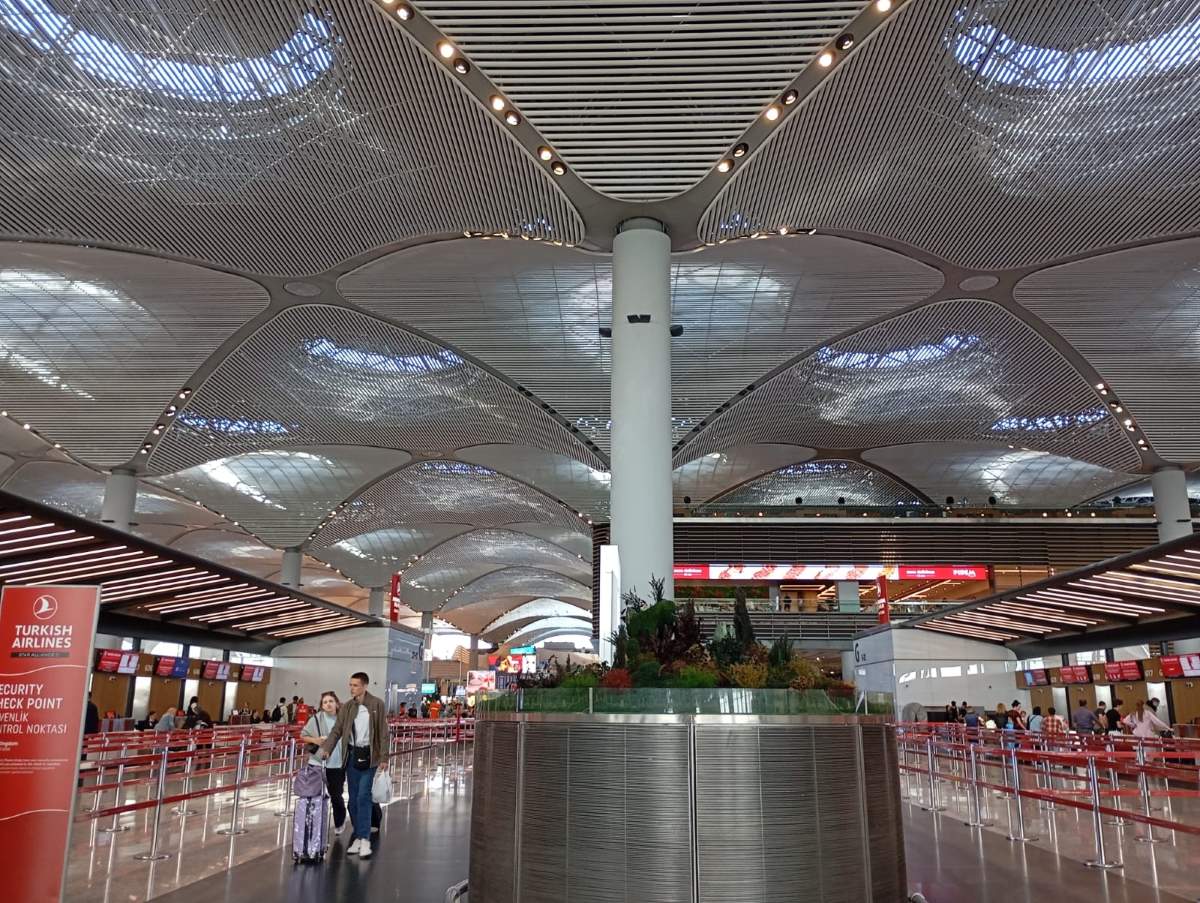
Travel is being disrupted by 75 cancellations and 1,262 delays at airports in Kuwait, Jeddah, and other parts of the Gulf region, resulting in hundreds of travelers having to adjust their itineraries. Airspace constraints, airline operating changes, and ongoing regional security concerns are all contributing factors to the inconvenience. Additionally, certain services are being rerouted by airlines across accessible aviation corridors, which increases air traffic strain and causes delays. Major hubs around the Middle East are also experiencing severe disruption, with Kuwait and Jeddah being among the impacted airports. As local conditions change, airlines continue to adjust their timetables. Individual flights may also be impacted by weather, crew availability, aircraft rotations, and airport traffic.
How Severe Is the Gulf Airport Disruption?
Saudi Arabia stands out because disruption is spread across several airports rather than being concentrated at a single gateway.
Saudi Arabia Records Heavy Disruption Across Riyadh and Jeddah
King Khalid International Airport in Riyadh recorded 222 delays and 11 cancellations, making it the most heavily delayed airport in the supplied dataset.
King Abdulaziz International Airport in Jeddah followed with 129 delays and eight cancellations.
Advertisement
Advertisement
Elsewhere in Saudi Arabia, Abha Regional Airport recorded 32 delays and four cancellations. Gizan Regional Airport had no delays but four cancellations, while Najran Domestic Airport similarly recorded zero delays and four cancellations. Yanbu Domestic Airport also had no recorded delays but four cancellations.
UAE Airports Face Delays Across Dubai, Abu Dhabi and Sharjah
The disruption is also clearly visible across the UAE’s three airports included in the data.
Advertisement
Advertisement
Dubai International Airport recorded 146 delays and 10 cancellations. Abu Dhabi International Airport experienced 99 delays and five cancellations, while Sharjah International Airport reported 54 delays and two cancellations.
Together, the figures indicate disruption across multiple UAE gateways rather than at Dubai alone.
Advertisement
Advertisement
The airline data reinforces that picture. Etihad Airways recorded one cancellation and 77 delays, representing a 0% cancellation rate and 23% delay rate in the supplied figures.
flydubai recorded one cancellation and 60 delays, corresponding to a 0% cancellation rate and 20% delay rate.
Bahrain and Kuwait See Different Patterns of Disruption
Bahrain International Airport registered 22 delays and eight cancellations. Although its absolute delay figure was considerably lower than those recorded at Riyadh, Dubai or Jeddah, the eight cancellations remain significant within this dataset across the Gulf region.
Gulf Air recorded eight cancellations, equivalent to 5%, alongside 15 delayed flights, or 11%.
Advertisement
Advertisement
Kuwait International Airport, meanwhile, recorded 14 delays and two cancellations.
Kuwait Airways Corporation reported two cancelled flights, representing 2%, and one delayed flight, representing 1%.
These figures illustrate why passengers should assess cancellations and delays separately. A location or airline with relatively few delayed services can still experience meaningful cancellation disruption.
Which Gulf Airlines Are Most Affected?
Saudia recorded the largest cancellation and delay numbers among the airlines listed.
The carrier experienced 17 cancellations, representing 3% of its measured operations, and 138 delays, representing 27%.
Etihad Airways followed with 77 delays, or 23%, and one cancellation, listed at 0%. flydubai recorded 60 delays, or 20%, alongside one cancellation at 0%.
Advertisement
Advertisement
Gulf Air reported eight cancellations at 5% and 15 delays at 11%. Kuwait Airways Corporation had two cancellations at 2% and one delay at 1%.
Royal Jordanian recorded one cancellation at 0% and eight delays at 6%.
Yemenia – Yemen Airways experienced one cancellation, representing 4%, and three delays, representing 14%.
Beyond the Gulf carriers, Israir recorded four cancellations at 5% and 39 delays at 50%, the highest supplied delay percentage among the listed airlines.
Turkish Airlines recorded one cancellation at 0% and 129 delays at 8%.
Which Other Airports, Cities and Countries Are Affected?
The disruption extends beyond the core Gulf markets.
Advertisement
Advertisement
Cairo International Airport in Egypt recorded 93 delays and one cancellation.
In Israel, Ben Gurion International Airport recorded 173 delays and five cancellations, making it the second-highest airport for delays in the supplied dataset. Ramon Airport recorded two delays and three cancellations.
Türkiye also recorded substantial delay numbers. Istanbul Airport had 166 delays and two cancellations, while Antalya Airport registered 85 delays and one cancellation.
In Jordan, Queen Alia International Airport in Amman recorded 25 delays and one cancellation.
These numbers demonstrate that the disruption represented in the dataset stretches across a broad aviation network connecting Gulf hubs with other important regional markets.
Gulf Airport Disruption at a Glance
| Airport | Destination canc. % | Origin canc. % |
|---|---|---|
| Abha Regional (AHB) | 5% | 4% |
| Abu Dhabi Int’l (AUH) | 0% | 1% |
| Bahrain Int’l (BAH) | 4% | 4% |
| Ben Gurion Int’l (TLV) | 0% | 1% |
| Dubai Int’l (DXB) | 0% | 0% |
| King Abdulaziz Int’l (JED) | 1% | 1% |
| King Khalid Int’l (RUH) | 1% | 1% |
| Najran Domestic (EAM) | 50% | — |
| Ramon Airport (ETM) | 20% | — |
| Yanbu Domestic (YNB) | — | 50% |
What Should Affected Gulf Passengers Do Now?
- Passengers travelling through the affected airports should verify their flight status directly with their airline before travelling to the airport. A scheduled departure time may change as airlines manage delayed aircraft and subsequent rotations.
- Travellers with connections should pay particular attention to transfer times. A delay on the first sector can make an onward connection difficult even when the second flight remains scheduled.
- Passengers whose flights are cancelled should contact their airline or booking provider to determine available rebooking, refund or alternative-routing options under the conditions applying to their ticket.
- Travellers should also keep booking confirmations, boarding passes and any notifications concerning schedule changes. Passengers already at an airport should follow airline and airport instructions concerning revised gates, departure times and rebooking arrangements.
Data Verification Notice
The Gulf disruption data in this report was carefully compiled by our editorial team using real-time aviation figures recorded on 5 October 2026 at 5:28 pm ET, USA (6 October 2026 at 1:28 am).
Advertisement
Advertisement
Primary Source: FlightAware, Local Correspondent
Verification Process: Our editorial desk independently reviewed and cross-checked all reported statistics for accuracy. Timestamped records, aviation data logs and relevant feed snapshots have been securely archived to maintain historical accuracy, accountability and editorial transparency.
Editorial Note: Real-time flight-tracking information reflects active aviation operations and airspace conditions at the time of recording. Figures may change as airlines and airports update their operational systems. Therefore, minor differences may appear between these recorded figures and information displayed at individual airport terminals, airline departure gates or other live operational channels.
You can read earlier reports of flight disruptions over Gulf airports. Check here.
Advertisement
