
France Joins UK, Germany, Spain, Italy, Belgium, Netherlands and Other EU Member States to Lead Naval Mine-Clearing Mission in Strait of Hormuz Protecting Global Trade, Travel and Tourism Routes Across the Middle East

Published
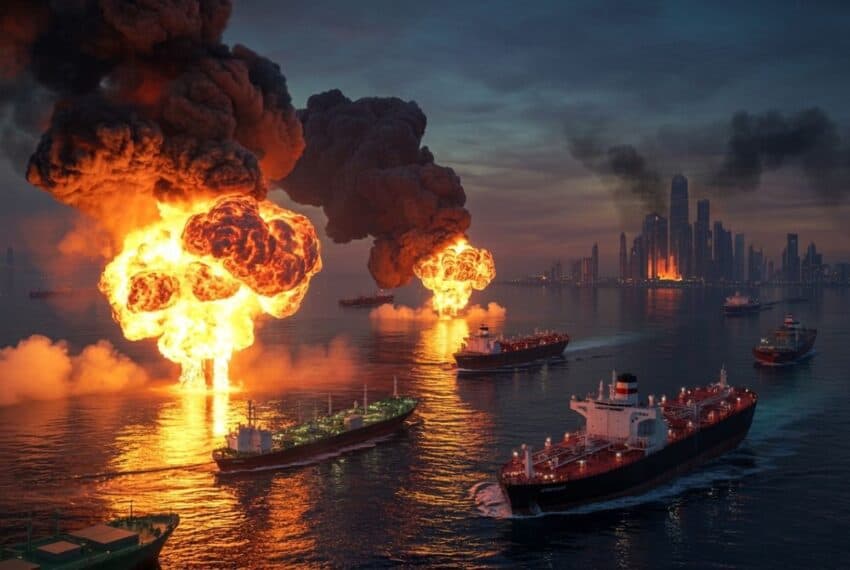
France joins the UK, Germany, Spain, Italy, Belgium, Netherlands, and other EU member states to lead a naval mine-clearing mission in the Strait of Hormuz, securing vital maritime routes, protecting global trade, and ensuring safe travel and tourism across the Middle East. A coordinated naval mine-clearing mission in the Strait of Hormuz is underway, led by France, the UK, Germany, Spain, Italy, Belgium, the Netherlands, and other EU member states, to secure one of the world’s most critical maritime chokepoints. The operation under Operation Aspides safeguards vital shipping lanes for oil, LNG, and commercial trade, while protecting travel and tourism across the Middle East. By deploying advanced mine-countermeasure vessels and integrating European naval assets, this mission mitigates maritime hazards, strengthens regional security, and ensures uninterrupted trade and tourism flows essential for global economic stability and energy markets.
Operation Aspides: Europe’s Maritime Shield Against Strait Hazards
Operation Aspides is the EU’s flagship naval mission tasked with protecting shipping lanes in high-risk waters. Initially operating in the Red Sea, its mandate now includes mine detection and clearance in the Strait of Hormuz, safeguarding commercial vessels and energy shipments. The mission integrates specialized mine-countermeasure vessels, surveillance assets, and advanced coordination among EU states, ensuring maritime security. Aspides strengthens Europe’s crisis response capabilities, providing a flexible platform for both military and humanitarian missions while reinforcing EU leadership in international maritime safety and protection of global trade routes. EU has been involved in coordinated efforts and direct talks to reopen the critical waterway.
- EU naval mission for mine clearance and security
- Deploys advanced mine-countermeasure vessels
- Protects commercial shipping and energy lanes
- Integrates EU maritime coordination and intelligence
- Enhances Europe’s operational readiness and crisis response
France’s Strategic Lead in EU Naval Mine Clearance in the Strait of Hormuz
France plays a central operational and diplomatic role in the EU’s proposed naval mine‑clearing mission in the Strait of Hormuz by leveraging its maritime capabilities and alliance partnerships. Paris has extensive experience in Middle East naval operations, and its leadership helps coordinate assets and rules of engagement under Operation Aspides, ensuring safe passage for global energy and commercial traffic.
France contributes surface combatants, minehunters, and command staff, integrating with partners to detect and remove naval mines. French forces also help store and share real‑time maritime data essential to safeguarding routes that handle about 20% of worldwide oil and LNG shipments. This leadership strengthens EU influence in Middle East security.
Advertisement
Advertisement
- Leads operational planning for EU mine‑clearing efforts
- Deploys advanced mine countermeasure vessels
- Coordinates with UK and EU partners
- Supports secure global trade and energy routes
- Contributes intelligence and logistics
United Kingdom’s Role in EU‑Led Maritime Security at the Strait of Hormuz
The United Kingdom contributes significant naval expertise to the EU’s mine‑clearing mission in the Strait of Hormuz, providing warships and specialized units that improve detection and neutralization of maritime explosives. London’s Royal Navy has decades of experience in the Gulf, reinforcing coalition efforts to protect vital shipping lanes that underpin global trade flows.
Although not an EU member state, the UK joins as a coalition partner with France and others in Operation Aspides‑linked efforts, aligning with European and NATO frameworks. The UK’s involvement boosts interoperability and enhances regional deterrence, reinforcing secure passage for energy exports crucial to the US, Europe, and Asia.
Advertisement
Advertisement
- Provides naval assets and expertise in mine countermeasures
- Strengthens coalition operations with EU forces
- Enhances maritime domain awareness
- Supports energy and commercial shipping safety
- Improves regional deterrence
Germany’s Contribution to EU Maritime Mine‑Clearing Operations
Germany contributes naval vessels, resources, and diplomatic support to the EU’s Strait of Hormuz mine clearance initiative, emphasizing safe global trade and energy routes. Berlin’s participation aligns with its commitment to collective European security under Operation Aspides, prioritizing de‑escalation and lawful navigation through international waterways.
German frigates and support ships strengthen fleet capabilities, while Berlin coordinates with EU partners on logistics, funding, and rules of engagement. Germany also backs diplomatic initiatives to reduce tensions in the Middle East. Its role supports the free flow of crude oil and LNG through key chokepoints that affect global markets and industrial stability.
- Deploys naval assets for mine detection and clearance
- Advocates diplomatic solutions to reduce regional tensions
- Enhances EU maritime security framework
- Supports secure global energy transit
- Integrates EU and NATO capabilities
Spain’s Naval and Strategic Support for Hormuz Corridor Security
Spain bolsters the EU’s mine‑clearing mission in the Strait of Hormuz by contributing naval vessels and political backing to ensure uninterrupted maritime trade and energy flows. Madrid emphasizes stability and adherence to international law, reinforcing Operation Aspides’ mission to protect commercial sea lines of communication.
Spanish frigates and offshore patrol vessels enhance surveillance and response capacity, while Spain works within EU policy forums to secure unanimous approval for the expanded mandate. Spain’s contribution also reassures global investors and shipping firms that the Mediterranean‑Gulf trade corridor remains resilient against disruption by maritime hazards.
- Provides patrol and escort vessels
- Advocates international law and maritime safety
- Supports EU mandate expansion
- Enhances surveillance and response
- Promotes global trade resilience
Italy’s Operational Role in Strait of Hormuz Mine Neutralization
Italy plays a significant part in the EU’s Strait of Hormuz naval mine‑clearing initiative by deploying mine countermeasure vessels and command personnel, aiming to secure key transit routes for global commerce. Rome’s participation under Operation Aspides reinforces Italian commitment to maritime security and international stability.
Italian naval units bring advanced sonar and remote vehicle capabilities to the mission, improving detection of naval mines that threaten oil tankers and LNG carriers. Italy also supports coalition logistics and interoperability, contributing to coordinated efforts that maintain free navigation for shipping companies and energy exporters spanning Europe, Asia, and the Middle East.
Advertisement
Advertisement
- Contributes mine countermeasure vessels
- Provides advanced detection technologies
- Supports operational coordination
- Enhances free navigation for energy exports
- Strengthens EU maritime presence
Belgium’s Contribution to EU Mine‑Clearing Mission in Hormuz
Belgium contributes to the EU’s Strait of Hormuz mine clearance operation through naval assets and engagement in coalition planning, emphasizing safe global shipping and trade continuity. Belgian frigates and support units integrate with partners under Operation Aspides to detect and neutralize maritime threats affecting international routes.
Brussels also participates in EU defence policy discussions that secure unanimous approval for mission mandates and cost‑sharing through the European Peace Facility. Belgium’s involvement demonstrates its commitment to collective security and resilient supply chains that underwrite global commerce and tourism flows dependent on unrestricted maritime access.
- Deploys naval units in coalition operations
- Participates in defence policy coordination
- Supports cost‑sharing mechanisms
- Enhances maritime domain awareness
- Promotes trade and tourism security
Netherlands’ Role in Securing Hormuz for Trade and Travel
The Netherlands supports the EU’s mine‑clearing mission in the Strait of Hormuz by providing naval resources, strategic planning, and maritime expertise. Dutch participation strengthens Operation Aspides’ capacity to protect one of the world’s busiest shipping lanes, ensuring that oil, LNG, and containers transit safely to markets in North America, Europe, and Asia.
The Dutch navy’s contribution includes patrols, reconnaissance, and technical support to detect underwater hazards. The Netherlands also engages in EU policy forums to sustain mandate consensus among member states. Dutch involvement promotes global trade security while enhancing the EU’s reputation as a stabilizing force in maritime operations.
- Provides patrol and reconnaissance vessels
- Enhances detection of maritime hazards
- Engages in policy consensus building
- Supports free and safe navigation
- Promotes global trade and economic stability
Understanding the Strategic Importance of the Strait of Hormuz for Global Energy and Trade
The Strait of Hormuz is one of the world’s most critical maritime chokepoints, connecting the Persian Gulf to the Gulf of Oman. Roughly 20% of global oil and LNG exports pass through this narrow corridor, making its security essential for international trade and energy stability. Any disruption, whether from conflict or maritime hazards, can sharply impact global markets, affecting both energy prices and supply chains. Maintaining safe navigation through the strait ensures uninterrupted commercial shipping and international economic resilience, while reducing risks to critical energy infrastructure and regional stability.
- Channels 20% of global oil and LNG
- Vital for commercial shipping and energy security
- Vulnerable to conflict or maritime hazards
- Directly influences global energy prices
- Critical for regional and international economic stability
| Feature | Description | Impact on Global Trade & Energy | Related EU Action |
|---|---|---|---|
| Location | Connects Persian Gulf to Gulf of Oman | Vital chokepoint for oil & LNG exports | EU deploys Operation Aspides for security |
| Daily Oil Flow | ~20% of global crude oil shipments | Critical for energy price stability | Ensures safe navigation for commercial vessels |
| LNG Transit | Millions of tons pass through annually | Supports European & Asian energy supply | Naval mine clearance protects LNG transit |
| Narrow Channel Width | ~21 miles at its narrowest point | High vulnerability to blockades or mines | EU mission prioritizes mine detection |
| Regional Geopolitical Tension | Hostilities & military activity by Iran and neighboring states | Threatens uninterrupted trade | EU-led coalition ensures operational coordination |
European Leadership and Coalition Coordination for Strait Safety
EU member states, led by France, Germany, Spain, Italy, Belgium, and the Netherlands, are coordinating a comprehensive coalition effort to secure the Strait of Hormuz. Operation Aspides provides a central platform, aligning operational planning, surveillance, and logistics with broader multinational partners. Unanimous approval of the EU mandate ensures all 27 states contribute politically or financially. This collaborative framework balances operational efficiency with diplomatic oversight, enhancing interoperability among European forces and NATO allies, while reinforcing EU credibility in global maritime security.
Advertisement
Advertisement
- France and EU partners lead coalition planning
- Ensures interoperability with NATO and international partners
- All 27 EU member states approve mandates and contribute
- Combines operational, financial, and diplomatic support
- Strengthens Europe’s credibility in global maritime security
EU Countries Leading the Mine-Clearing Mission
| Country | Role in Operation Aspides | Assets Contributed | Operational Focus | Strategic Impact |
|---|---|---|---|---|
| France | Lead coordinator & operational commander | Minehunters, frigates, command staff | Mission planning, mine clearance | Strengthens EU credibility and coalition synergy |
| United Kingdom | Coalition partner (non-EU) | Warships, specialized units | Mine detection, neutralization | Enhances interoperability and Gulf security |
| Germany | Operational & diplomatic support | Frigates, support vessels | Logistics, intelligence sharing | Supports safe navigation, stabilizes energy flows |
| Italy | Operational contributor | Mine countermeasure vessels | Detection & clearance of mines | Ensures commercial shipping safety |
| Spain | Strategic and naval support | Frigates & patrol vessels | Maritime surveillance | Maintains trade route stability |
| Belgium | Operational & policy support | Patrol units | Mine detection, logistics coordination | Protects shipping and trade continuity |
| Netherlands | Tactical & planning support | Reconnaissance & patrol vessels | Mine detection and reconnaissance | Promotes secure maritime energy transit |
Global Trade Implications of Secure Navigation Through the Strait of Hormuz
Securing the Strait of Hormuz directly impacts global commerce. With millions of barrels of oil and LNG passing daily, any maritime disruption could trigger price spikes, supply chain delays, and economic instability. Operation Aspides’ mine-clearing mission mitigates these risks, ensuring uninterrupted transit of goods and energy. Reliable shipping through the strait supports industries from manufacturing to energy distribution, protects international investors, and maintains confidence in global markets. EU involvement safeguards both trade flows and energy-dependent economies in Europe, the Middle East, and beyond.
- Ensures uninterrupted oil and LNG transit
- Prevents global supply chain disruptions
- Maintains stable energy prices
- Supports international commerce and industry
- Protects economic interests of EU and global markets
Impacts on Tourism and Travel from Maritime Security in Hormuz
Safe navigation through the Strait of Hormuz benefits not only trade but also tourism and travel. Cruise lines, passenger ferries, and regional transportation rely on secure waters. EU-led mine clearance reduces the risk of maritime accidents, allowing uninterrupted tourism flows across the Middle East and connecting regions. Stabilizing these routes supports the travel industry, secures international flight and ferry schedules, and protects tourism-dependent economies. By maintaining navigational safety, the EU ensures that travelers, cruise operators, and tourism businesses can operate with confidence, fostering regional economic recovery and global tourism resilience.
- Secures cruise lines and ferry operations
- Reduces maritime accident risks
- Ensures consistent travel schedules
- Supports tourism-dependent economies
- Enhances confidence for international travelers
| Sector | Potential Risk if Strait Is Disrupted | EU Mission Mitigation Strategy | Real-World Benefits |
|---|---|---|---|
| Oil and Gas | Supply chain disruption, price spikes | Mine clearance & safe navigation | Stable energy prices, uninterrupted exports |
| Commercial Shipping | Delays, accidents, shipping rerouting | Patrols, convoy escort, maritime monitoring | Predictable logistics and delivery timelines |
| Tourism & Cruise Operations | Cruise route cancellations, travel hazards | Secure waterways & risk management | Consistent cruise itineraries, safe passenger travel |
| International Trade | Container flow delays, global market instability | EU-led coordination with coalition partners | Reliable supply chains for global commerce |
| Regional Economies | Economic slowdown in Gulf & EU regions | EU naval protection & infrastructure oversight | Preserves tourism revenue and industrial stability |
In conclusion, France alongside UK, Germany, Spain, Italy, Belgium, Netherlands and other EU member states have taken decisive action to lead a coordinated naval mine-clearing mission in the Strait of Hormuz. This operation ensures the protection of global trade, secures vital maritime routes, and guarantees safe travel and tourism across the Middle East. By deploying advanced mine-countermeasure vessels and integrating European naval assets, the mission mitigates risks from maritime hazards, reinforces regional stability, and demonstrates collective European responsibility, safeguarding commerce, energy shipments, and tourism flows essential for the stability and resilience of the global economy.
FAQ Snippets
Q1: Why is the Strait of Hormuz strategically important?
A1: The Strait of Hormuz is a vital maritime chokepoint linking the Persian Gulf to the Gulf of Oman. Approximately 20% of global oil and LNG shipments pass through it daily. Its security ensures uninterrupted energy flow, protects commercial shipping, and stabilizes global trade and tourism routes. EU-led initiatives like Operation Aspides safeguard this critical passage.
Q2: What is Operation Aspides and what role does it play in the Strait of Hormuz?
A2: Operation Aspides is the European Union’s naval mission originally focused on the Red Sea. Its mandate now includes mine detection and clearance in the Strait of Hormuz, protecting commercial vessels and energy shipments. The mission uses specialized ships, advanced surveillance, and coordinated EU naval assets to maintain maritime security and safe navigation.
Q3: Which EU countries are leading the mine-clearing mission in the Strait of Hormuz?
A3: France, Germany, Spain, Italy, Belgium, and the Netherlands are leading the EU’s mine-clearing initiative under Operation Aspides. Each country contributes naval assets, technical expertise, and operational coordination, while all 27 EU member states participate politically and financially to ensure the mission’s success and safeguard global trade and energy routes.
Advertisement
Advertisement
Q4: How does the EU mission impact global trade?
A4: By clearing mines and securing navigation, the EU mission protects the transit of millions of barrels of oil, LNG, and containerized goods through the Strait of Hormuz. This reduces supply chain disruptions, stabilizes energy prices, and ensures reliable shipping, directly benefiting international commerce, energy markets, and economic stability worldwide.
Q5: What are the tourism and travel benefits of securing the Strait of Hormuz?
A5: Safe navigation enables cruise lines, ferries, and maritime tourism operations to function without disruption. EU-led mine clearance ensures uninterrupted travel, protecting tourism-dependent economies in the Middle East and beyond. Secure waters support consistent travel schedules, enhance traveler confidence, and promote regional economic resilience.
Q6: How does EU coordination enhance the mission’s effectiveness?
A6: EU member states work together under Operation Aspides, integrating naval assets, intelligence, and logistics. Coordination with France, the UK, and NATO allies ensures operational efficiency and safety. Political consensus across all 27 member states guarantees shared responsibility, funding, and strategic oversight for the Strait of Hormuz’s security.
Q7: What is the significance of unanimous EU approval for the mission?
A7: A unanimous decision among EU member states is required to expand Operation Aspides’ mandate to include the Strait of Hormuz. This ensures collective ownership, legal authority, and shared funding, enhancing both operational legitimacy and global credibility for EU-led maritime security initiatives.
Advertisement
