
Paris and Other Cities Transform Luxury Hotels with Acoustic Place-Making as Guests Reconnect with Authentic Travel

Published
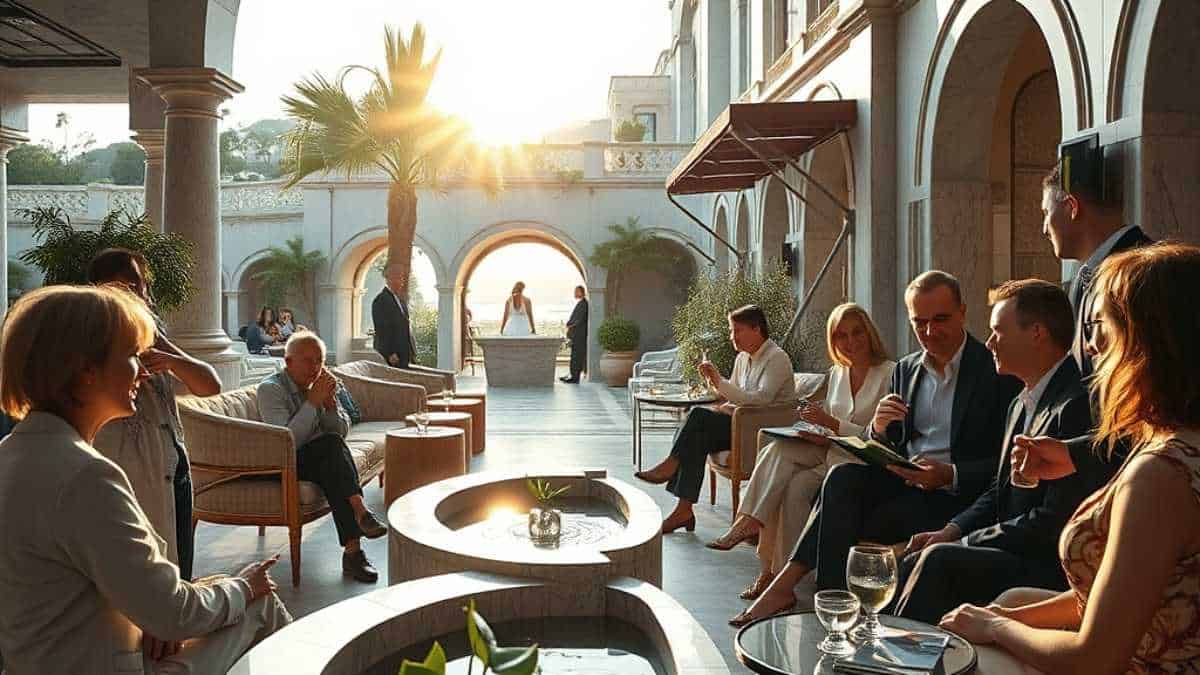
In luxury resorts, destination immersion faces the problem of a worrying behavioral trend wherein sophisticated lounges are filled with rich travelers hiding themselves through the use of noise-canceling headphones. The experience of disconnection from the environment is fostered through the act of self-seclusion into an artificial silence that leads to the loss of social energy as well as 30% decrease in lounge dwell time. To counter this problem of digital isolation, acoustic place-making is being experimented as an important hospitality approach by prestigious hotels in Europe. Through the integration of architectural acoustics, directional sound systems, and regional sounds of nature, hotel visionaries have been able to turn sterile hotel lobbies into exciting auditory oases.
The Psychoacoustics of Digital Isolation and Spatial Disconnection
The visual splendour of European palace hotels and Mediterranean coastal retreats has long been treated as the cornerstone of luxury hospitality marketing. However, an unprecedented behavioural barrier is being confronted by hoteliers across Southwestern Europe: communal lounges, garden verandas, and cocktail bars are occupied by visitors who are physically present yet cognitively sealed behind active noise cancellation (ANC) hardware. Through the donning of high-end headphones, the sensory feedback loops that connect individuals to their immediate physical surroundings are inadvertently severed. To counteract this phenomenon, intentional and restorative acoustic environments are being implemented by luxury operators through acoustic place-making, whereby guests are encouraged to remove their headphones and actively inhabit communal areas.
Active Noise Cancellation and the Spatial Dwell Deficit
Inverted phase waveforms generated by external miniature microphones are relied upon by active noise cancellation to neutralise incoming ambient sound waves. While the sustained low-frequency roar of commercial jet engines or urban rail networks is effectively mitigated by this mechanism, distinct psychoacoustic distortions are introduced when ANC hardware is continuously deployed within destination environments. Subtle ambient reflections, spatial reverberations, and environmental sound cues are required by the human brain for the subconscious mapping of physical space. When these spatial references are eliminated by ANC algorithms, the auditory cortex is deprived of its perceptual frame, cognitive fatigue is accelerated, and a subtle state of spatial detachment is induced.
Quantifiable operational deficits are directly produced for hotel properties through this sensory detachment. Reductions in public space dwell times of up to 30% among guests wearing ANC headphones have been documented through behavioural hospitality studies and spatial occupancy tracking. Rather than lingering over an aperitivo, reading in a historic library lounge, or participating in serendipitous conversations with staff and fellow travellers, public rooms are treated by headphone-wearing patrons as transitory thoroughfares prior to retreat into private guest suites. The core premise of experiential luxury—authentic destination immersion—is eroded by this disconnection. When a property’s unique atmosphere is substituted with generic digital streaming algorithms, the capacity to foster an emotional connection with the guest is lost.
Advertisement
Advertisement
| Operational State | Ambient Sound Level | Psychoacoustic Perception | Guest Behaviour and Commercial Outcome |
| Severe Hypo-Acoustic | Below 40 dB(A) | Eavesdropping anxiety; clinical sterility; acute vulnerability | ANC headphones are deployed by guests to secure conversational privacy |
| Calibrated Equilibrium | 45 to 55 dB(A) | Restorative calm; natural privacy masking; cognitive ease | Optimal social dwell time (+20% to +35%); increased lounge and dining spend |
| Acoustic Discomfort | 58 to 68 dB(A) | Cognitive friction; vocal strain; ambient clutter | Lombard effect is initiated; vocal volumes are raised subconsciously |
| Chaotic Clatter | Exceeding 70 dB(A) | Auditory exhaustion; autonomic stress; severe annoyance | Rapid space abandonment; patrons retreat to private suites |
Decibel Calibration: The 45 to 55 dB Acoustic Equilibrium
Precise decibel calibration is required if guest headphone reliance is to be overcome. Historically, noise complaints were addressed by hotel management through indiscriminate acoustic dampening. However, an adverse psychological phenomenon known in architectural acoustics as the acoustic paradox is triggered when ambient sound is eliminated entirely: low-level operational disturbances—such as clattering silverware, service trolleys, and distant whispers—are rendered prominent and disruptive once background resonance has been stripped away. In a deadened, hypo-acoustic room, exposure is felt acutely by patrons, prompting the swift donning of headphones to avoid overhearing private conversations or being overheard.
Conversely, the Lombard effect is triggered within untreated hospitality spaces: as background operational noise rises, vocal levels are subconsciously raised by patrons to maintain intelligibility, causing ambient noise to spiral upward. Autonomic nervous system stress—marked by elevated cortisol levels and elevated heart rates—is triggered by persistent exposure to chaotic acoustic environments, as established by the World Health Organization (WHO). Patrons are driven out of public areas by this sensory fatigue within luxury hospitality settings.
Advertisement
Advertisement
This tension is resolved through strategic soundscape curation by maintaining background sound levels within a calibrated window of 45 to 55 dB(A). Sufficient acoustic energy is provided within this specific range to mask mechanical HVAC hums and service noise, thereby safeguarding conversational confidentiality. Simultaneously, effortless dialogue is permitted without vocal fatigue. Grounded in the international standards of ISO 12913-1 and ISO 12913-2, in which a soundscape is defined as an acoustic environment perceived in context, high perceived pleasantness and calm are fostered by this equilibrium, establishing an inviting atmosphere in which guests feel comfortable removing their personal audio devices.
Architectural Acoustics and Bio-Acoustic Engineering in Southern Europe
Significant architectural challenges must be resolved if sophisticated audio design is to be deployed within Southwest European luxury hospitality. Historic structures—such as Parisian Haussmannian stone palaces, Tuscan Renaissance castellos, and Portuguese quintas—are frequently occupied by the region’s premier properties. Reflective hard surfaces are featured throughout these historic interiors, demanding rigorous acoustic remediation.
Managing Reverberation Time in Heritage Stone and Marble Structures
Extensive use is made in historic European architecture of high ceilings, polished marble, glazed tiles, and exposed masonry walls. Up to 95% of incident sound energy is reflected by these non-porous surfaces, resulting in extended reverberation times across untreated heritage lobbies and dining halls, where syllables are caused to collide and speech clarity is severely degraded.
Strict parameters are established for these environments by building regulations across Southwestern Europe. In Spain, an $RT_{60}$ of 0.9 seconds or less is mandated for dining spaces and commercial restaurants under the Código Técnico de la Edificación (CTE DB-HR) to ensure occupants are shielded from excessive reverberation. Similarly, strict performance criteria are set by the French standard NF S 31-080, under which reverberation times between 0.4 and 0.8 seconds are recommended in reception areas and commercial dining rooms to secure acoustic comfort.
Concealed absorption treatments are installed by acoustic engineers to ensure regulatory compliance without compromising protected architectural features. Micro-perforated acoustic plasters matched to heritage lime finishes, sound-absorbent mineral cores concealed behind breathable heritage fabrics, and acoustic dampeners integrated into bespoke millwork and upholstery are deployed. Once baseline reverberation has been brought down to an optimal 0.6 to 0.8 seconds, the room is stabilized, enabling curated sound designs to be delivered with clarity.
Directional Audio Arrays and Real-Time Generative Soundscapes
Directional sound systems can be introduced once physical room acoustics have been balanced. Uniform, compressed background music is broadcast across entire floor plans by conventional commercial ceiling speakers. An undifferentiated sound wash is generated by this approach, causing audio to feel intrusive in quiet reading nooks while simultaneously being drowned out in lively bar areas.
Advertisement
Advertisement
Distributed mono speakers are superseded in modern spatial audio design by narrow-beam, parametric directional arrays. Sound is projected along tight dispersion angles through the use of ultrasonic carrier waves and phased transducers. In a manner comparable to a focused spotlight illuminating an exhibit while leaving adjacent perimeters dark, localized sound fields are projected into designated zones by directional arrays without auditory spillover. Soothing ambient textures can be supplied to a library reading area while silence is maintained in an adjoining walkway two metres away.
Generative audio engines operating in real time are deployed to complement directional hardware. Rather than cycling through static recorded playlists, soundscapes are continuously composed algorithmically using live environmental inputs. Sound designs are modulated dynamically through integration with outdoor weather stations, solar monitors, and lobby occupancy sensors. On a rainy morning, warm mid-range frequencies are introduced by the system to cultivate a sense of shelter and quietude; as afternoon occupancy rises, higher-tempo organic rhythms are subtly introduced to complement social energy, preventing chaotic perceptions while maintaining comfortable conversational privacy masking.
Biophilic Acoustic Mapping and Native Ecological Soundscapes
Natural sound elements are introduced into indoor spaces through biophilic acoustic mapping. Nervous system recovery, lower stress hormones, and reduced mental fatigue are supported by natural sounds—encompassing both biophony (animal vocalizations such as birdsong) and geophony (physical natural sounds including rainfall and wind)—as demonstrated by psychoacoustic research.
Optimal effectiveness is achieved when biophilic soundscapes are calibrated to the destination’s native ecosystem. Cognitive dissonance is generated and artificiality is signalled to discerning guests when synthetic rainforest loops are broadcast within a Mediterranean heritage setting. Conversely, high-resolution spatial recordings of regional wildlife, indigenous flora rustling in the wind, and local water channels are integrated through authentic biophilic mapping. An immersive environment is established through this sensory branding, anchoring guests to their immediate geographic setting in ways that cannot be replicated by personal headphones.
Market Leaders: How Southwest European Hoteliers Pioneer Sonic Architecture
Southwestern Europe has emerged as a premier incubator for acoustic place-making in luxury hospitality. Leading hotel groups across Portugal, Spain, France, and Italy are collaborating with master acousticians, sound scenographers, and audio manufacturers to develop site-specific sound environments.
Six Senses Douro Valley: River Biophony and Concealed Transducers
A restored 19th-century manor house overlooking Portugal’s Douro River is occupied by Six Senses Douro Valley within a UNESCO World Heritage wine region. Native river and forest biophony have been woven into the physical architecture as part of the property’s wellness philosophy. High-resolution spatial recordings capturing native birdsong, river currents, and breezes moving through hillside vineyards were acquired across the Douro basin by bio-acoustic specialists.
Advertisement
Advertisement
Invisible high-fidelity transducers were installed directly behind timber wall paneling, vaulted stone ceilings, and slate finishes across the 2,200-square-metre spa and relaxation lounges, completely eschewing visible ceiling speakers. The structural materials themselves are utilized as acoustic diaphragms, radiating sound waves uniformly without revealing a physical source. Guests entering thermal suites or garden lounges are enveloped by an organic sound field calibrated to 48 dB(A), through which mechanical ventilation noise is masked and physiological calm is induced. Guests are encouraged to leave their personal devices aside and engage with their environment as a direct result of anchoring the auditory experience in the surrounding landscape.
W Ibiza: Zoned Architectural Audio and Dynamic Transition Engineering
Seaside relaxation is balanced with vibrant Balearic music culture at W Ibiza, situated on Santa Eulalia Beach. Complex circulation pathways are featured throughout the property, requiring seamless transitions from quiet morning wellness sessions on the WET Deck to lively evening cocktail gatherings within the amphitheatre-style W Lounge. Jarring volume spikes that risk frustrating guests seeking rest are prevented through specialized audio zoning.
A zoned architectural audio system powered by Italian manufacturer K-Array was devised by sound consultant Mark Netto. Ultra-slim Vyper line arrays, compact Lyzard micro-loudspeakers, and flush-mounted Tornado point-source speakers paired with Rumble subwoofers were installed throughout internal and external venues. Consistent auditory continuity is preserved between floors through the placement of slim arrays inside guest elevators. Automated transitions are managed via digital signal processing (DSP) and Kommander power amplifiers. As afternoon shifts to evening, frequency distributions are gently adjusted, cross-fading from low-density ambient layers to high-definition Balearic grooves without sudden volume increases, thereby cultivating an engaging social atmosphere that invites interaction.
Hôtel Ritz Paris and Plaza Athénée: Sonic Holography in Grand Heritage Palaces
Audio design has been embraced by historic Parisian grand hotels to protect guest privacy across opulent, marble-clad interiors. Following an extensive four-year restoration of the historic Hôtel Ritz Paris on Place Vendôme, a comprehensive sonic identity was commissioned from French sound designer Marc Debiès, creative partner Laurent Sauvagnac, and acoustic consultant David Guérin.
The acoustic paradox was addressed within spaces such as Bar Vendôme, Salon Proust, and the main arrival galleries, where harsh acoustic reflections were generated by extensive marble and glass surfaces. “Sonic holography”—a technique refined during the development of the audio chandelier at Hôtel Plaza Athénée—was deployed. Multi-layered, localized sound fields are projected by specialized electroacoustic transducers positioned to minimize visual impact, softening the harsh reverberation of hard marble. Effortless speech privacy is provided without guests being forced to raise their vocal levels. Within private guest suites, an “inhabited silence” was established, preventing an oppressive void through the introduction of delicate, comfortable acoustic textures that soothe the nervous system while preserving historic palace character.
Belmond in Tuscany and Amalfi: Acoustic Heritage and Unamplified Micro-Acoustics
Live, unamplified micro-acoustics have been championed by Belmond across historic Italian properties, including Castello di Casole in Tuscany and Hotel Caruso in Ravello. Recognizing that generic digital playlists are encountered by travellers throughout their daily routines, authentic local acoustic performances that celebrate regional culture are prioritized.
Advertisement
Advertisement
Standard background music has been eliminated from outdoor courtyards and open-air gardens across the 3,200-acre estate of Castello di Casole. Subtle acoustic environments are crafted through natural stone fountains, trickling water runnels, and live, unamplified performances. During evening aperitivo hours overlooking Tuscan vineyards, traditional nylon-string repertoires are performed by local guitarists, interacting with surrounding stone architecture to project a warm, natural resonance. At Hotel Caruso, situated on the cliffs of Ravello above the Tyrrhenian Sea, the sea breeze is merged with localized, unamplified instrumentation, creating an authentic atmosphere that encourages guests to disconnect from personal devices and engage with the destination.
K-Array Hardware Innovations: Invisible Audio in Heritage-Listed Architecture
Architectural acoustics across European heritage hotels have been reshaped by Italian audio manufacturer K-Array, based near Florence. Historic preservation regulations enforced across France, Italy, and Spain typically prohibit wall chasing, dropped ceilings, or the mounting of bulky enclosures within heritage-listed palazzos and castellos. Ultra-slim architectural line arrays measuring mere centimetres in width—such as the Lyzard and Vyper series—were engineered in milled aluminium and matched to custom architectural finishes, including 24-karat gold leaf and aged bronze patinas.
Direct integration into door jambs, decorative cornice mouldings, and architectural millwork is achieved with these systems. Sound is projected evenly along long stone corridors and expansive public halls through cylindrical wavefront dispersion, avoiding the excitation of unwanted vertical ceiling reflections. Luxury operators are enabled to implement sophisticated sound designs within historic buildings without contravening heritage protection statutes by pairing minimal visual intrusion with high acoustic fidelity.
Macroeconomic Shifts: Tourism Policy, Wellness Demand, and Commercial Yield
The widespread adoption of acoustic place-making is driven by macroeconomic developments across the European visitor economy. Sensory wellness is increasingly prioritized by discerning travellers, leading destinations and luxury brands to treat sound as a foundational component of the guest journey.
European Travel Commission Trends and High-Yield Visitor Spending
High travel sentiment across European source markets has been documented by quarterly research from the European Travel Commission (ETC), with leisure travel accounting for over three-quarters of total intent. Southern and Mediterranean Europe captures nearly 60% of planned European travel, with Spain, Italy, France, and Portugal ranking prominently. Tourist expenditure has consistently outpaced arrival volume across Southern Europe, indicating strong demand for premium experiential offerings. In parallel, substantial expansion within the global wellness tourism sector has been recorded.
Affluent travellers are increasingly seeking emotional restoration, environmental authenticity, and holistic well-being, as highlighted in joint publications by UN Tourism and the European Travel Commission. Within this framework, acoustic comfort is regarded as an essential wellness pillar: noise pollution is viewed as a sensory irritant, while well-crafted acoustic environments are recognized for their restorative benefits.
Advertisement
Advertisement
Financial Dividends: Lounge Dwell Times and Food and Beverage Spend Amplification
Tangible commercial returns are delivered to hotel owners and asset managers through investments in acoustic place-making. Patrons dwell significantly longer in high-margin food and beverage venues when public spaces achieve balanced acoustic comfort.
Average guest dwell times are extended by 20% to 35% when public lounge and terrace acoustics are optimized—bringing ambient noise within the 45 to 55 dB(A) window and reverberation below 0.8 seconds. An 18% to 24% uplift in secondary food, premium wine, and cocktail consumption is generated by this extended dwell time. Furthermore, acoustic comfort is directly correlated with review sentiment and brand loyalty; negative guest feedback across independent five-star luxury hotels is consistently driven by acoustic deficiencies, such as echoing corridors, clattering dining rooms, or invasive mechanical noise. Premium room rates are protected, Net Promoter Scores are lifted, and full capital expenditure payback is achieved within 12 to 18 months of deployment through this architectural approach to sound design.
Strategic Playbook for Destination Management and Hotel Operators
A disciplined, phased approach uniting interior architecture, sound engineering, and daily operations is required if acoustic place-making is to be successfully deployed. Sound must be treated as an architectural material requiring the same consideration as illumination, air quality, or interior finishes.
| Stage | Operational Objective | Core Technical Actions | Primary Deliverable / Milestone |
| 1. Diagnostic Sound Audit | Baseline assessment of acoustic performance | Full-frequency impulse testing; logging of equivalent continuous sound levels and reverberation times across octave bands | Diagnostic heat map identifying echo flutter and mechanical noise intrusion |
| 2. Spatial Zoning Taxonomy | Functional division of property spaces | Mapping guest circulation patterns, target occupancies, and conversational density | Acoustic master plan specifying target decibel levels and masking criteria |
| 3. Architectural Engineering | Surface absorption and hardware integration | Installing hidden micro-perforated plasters, acoustic felts, and sovereign line arrays | Target reverberation times compliant with Spanish CTE DB-HR and French NF S 31-080 |
| 4. Generative Content Curation | Developing location-specific soundscapes | Recording local biophony; programming algorithmic sound engines tied to sensors | Dynamic multi-zone soundscape responsive to weather, light, and occupancy |
| 5. Operational Governance | Continuous calibration and performance review | Deploying IoT decibel monitors; linking acoustic logs with POS spend and dwell times | Scheduled recalibration protocols and staff service noise training |
The Five-Stage Implementation Framework
- Diagnostic Sound Audit and Reverberation Mapping: An exhaustive acoustic assessment of all public spaces, circulation corridors, and outdoor terraces is undertaken initially. Baseline equivalent continuous sound levels are documented across operational hours using calibrated Class 1 sound level meters. Reverberation times are mapped across octave bands (from 125 Hz to 4,000 Hz) via impulse response testing, allowing hard-surface resonance and speech interference zones to be identified.
- Spatial Zoning and Functional Taxonomy: Clear acoustic zones must be defined based on functional utility, circulation flow, and time-of-day dynamics. Calming geophonic textures are designated for arrival foyers to slow patron cadence; subtle pink-noise masking (48–52 dB) is introduced into central lounges to ensure conversational privacy; and directional arrays are assigned to outdoor terraces to deliver warm musical textures without environmental spillover.
- Invisible Hardware and Material Integration: Concealed audio solutions are prioritized in collaboration with heritage architects. High-fidelity dispersion is achieved without visual clutter through compact micro-line arrays, in-wall invisible transducers, and subwoofers concealed within millwork. Concurrently, hidden micro-perforated acoustic panels and absorptive plasters are installed to fulfill regional acoustic building codes.
- Biophilic Soundscape Creation and Generative Software: Bespoke sound compositions are prioritized over generic stock audio loops. Field recordings of indigenous biophony, flowing water, and traditional instruments are captured by sound scenographers. These layers are fed into generative audio engines that dynamically modulate playback based on real-time weather conditions, solar elevation, and interior occupancy.
- Operational Calibration and Performance Verification: Acoustic environments must be actively monitored by hospitality managers and facilities teams. Real-time heat maps of public spaces are generated through networked micro-decibel sensors, alerting staff whenever ambient sound approaches elevated thresholds or drops into uncomfortable silence. Soundscape performance is regularly correlated with bar spend, dwell times, and guest sentiment through systematic behavioural audits.
Regulatory Governance: Aligning with the EU Noise Directive and ISO 12913 Standards
Alignment with emerging European environmental policies must be maintained throughout acoustic place-making strategies. Under the European Union Environmental Noise Directive (Directive 2002/49/EC), the designation and preservation of urban and rural “quiet areas” are being expanded by municipal authorities across France, Spain, Italy, and Portugal. Acoustic sustainability must be demonstrated by luxury resorts situated adjacent to national parks, coastlines, and cultural landscapes, ensuring local wildlife and surrounding communities remain undisturbed by external sound emissions.
Furthermore, hospitality operations are elevated from basic noise mitigation to holistic sensory design by adhering to ISO 12913 standards for soundscape characterization. Soundscapes that enhance guest restoration, mitigate stress, and reinforce cultural identity can be curated through the measurement of human perceptual responses along dual axes of pleasantness and eventfulness.
A new benchmark for experiential luxury is being established by Southwestern European luxury hotels through this transition from passive soundproofing to proactive acoustic place-making. Personal defences are lowered, noise-cancelling headphones are set aside, and physical surroundings are re-embraced when acoustic clutter and sterile silence are replaced with living, authentic soundscapes. The most enduring luxury in an increasingly digital era remains the restorative feeling of true presence.
Advertisement
Advertisement
Conclusion
European luxury hotels are redefining guest experiences through acoustic place-making, replacing sensory isolation with carefully designed soundscapes. By balancing acoustic comfort, heritage architecture, and authentic local sounds, properties can encourage deeper engagement with their surroundings. This evolving approach positions sound as a powerful element of wellness, cultural immersion, and hospitality.
Advertisement
