
EU Shakes Up European Tourism: France, Germany, Italy, Spain, Netherlands Set for Game-Changing Rail Adventure!

Published
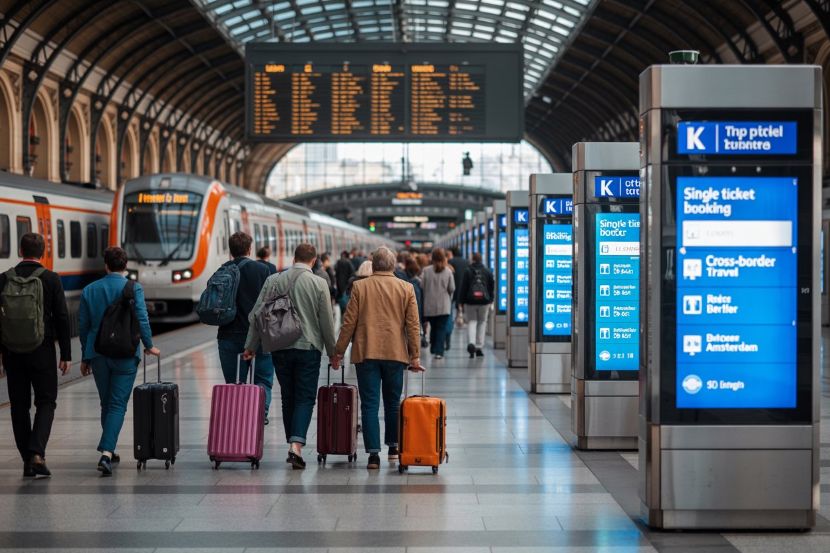 Image generated with Ai
Travelers across Europe could soon enjoy easier and more seamless rail journeys as the European Union moves to dramatically simplify cross-border train travel — a development expected to significantly boost tourism across the continent. The new proposal aims to let tourists book multiple train segments in different countries using a single ticket, making rail travel almost as simple as booking a flight. This change could open up iconic routes between cities such as Paris, Berlin, Rome, Vienna, Amsterdam, and Brussels for millions of holidaymakers and explorers.
The reform package, unveiled in May 2026, is officially titled “One journey, one ticket, full rights” and represents a major shift toward a unified digital rail network across the EU. It tackles the long-standing fragmentation in rail ticketing where tourists often struggle to book continent-wide routes because national rail operators use separate systems. Under the new rules, passengers will be able to compare, select, and purchase cross-border train journeys in one transaction, instead of buying several separate tickets.
This proposal responds to frequent complaints that booking trains across borders is confusing and time-consuming. Many Europeans have avoided planning multi-leg rail trips because of the booking complexity and lack of transparent options. In contrast, flying remains straightforward thanks to comprehensive booking platforms. The EU’s plan seeks to change that by making rail travel more accessible and attractive to tourists.
Under current arrangements, if a traveller wants to journey from Berlin to Barcelona, for example, they may need to buy separate tickets from different national carriers and navigators — an often frustrating process for holiday planners and visitors. With the new system, they will be able to make a single purchase covering all legs of the journey, whether on high-speed or regional trains. This is expected to improve trip planning for tourists who want to explore multiple destinations in one trip.
Advertisement
Advertisement
A key feature of the plan is strengthened passenger rights throughout the entire rail journey. At present, if separate tickets are held for different legs and a connection is missed due to a delay, passengers may have little protection or assistance. The new proposal ensures that a single ticket gives travellers rights to rerouting, assistance, reimbursement, and compensation for missed connections, regardless of the number of operators involved. These uniform protections are particularly important for visitors unfamiliar with local rail systems.
Officials within the European Commission say this reform will help harness rail travel’s potential as a sustainable tourism option. Trains generate significantly lower carbon emissions than short-haul flights, aligning with the EU’s climate and tourism goals. By making rail booking easier and more predictable, the EU hopes to encourage more tourists — both from within the bloc and internationally — to consider scenic rail trips instead of flying.
Advertisement
Advertisement
The initiative also aims to foster fair competition in digital ticketing by encouraging national rail companies and independent platforms to share schedule and fare data neutrally. This could give travellers better visibility of options, helping them compare and choose the best routes and prices. The goal is to create a consumer-friendly market where both well-known and independent platforms can compete, ultimately benefiting holidaymakers planning complex itineraries.
Tourism agencies and travel planners see this single-ticket system as a potential game-changer for multi-destination European trips. Currently, many popular itineraries involving cities like Florence, Prague, Zurich, or Budapest can be booked only at high effort, with travellers juggling multiple apps or websites. Simplified single-ticket booking could unlock new tourism circuits and make spontaneous planning easier for rail enthusiasts.
Moreover, the streamlining of digital ticketing could help promote lesser-known destinations that are presently overshadowed by major air travel hubs. Tourists seeking authentic regional experiences are likely to benefit from transparent route comparisons and easier access to cross-border connections that pass through picturesque countryside, UNESCO World Heritage sites, and historic towns.
However, industry observers note that simplifying ticketing alone cannot solve all barriers to rail tourism. Some stakeholders argue that physical rail infrastructure still needs substantial investment, especially on longer routes connecting distant cities. Upgrading tracks, reducing travel times, and improving border station facilities remain essential for rail tourism to thrive. EU officials acknowledge this, saying that the ticket reform forms part of a broader transport strategy that includes infrastructure improvements.
The proposal now goes to the European Parliament and the Council of the EU for review, and if adopted, could be implemented well before 2029. Tourism promoters and sustainable travel advocates are optimistic it will create a more unified and user-friendly European experience. For travelers, this shift promises to make Europe’s rich cultural tapestry more accessible — encouraging visitors to explore the continent by rail from capital to countryside without the frustration that often clouds cross-border bookings today.
The EU’s passenger package makes it easier to book cross-border train trips in one transaction, with stronger rights and a better tourism experience. If approved, this change could lead to a more integrated rail network that appeals to travellers seeking sustainable, scenic journeys across Europe.
Advertisement
