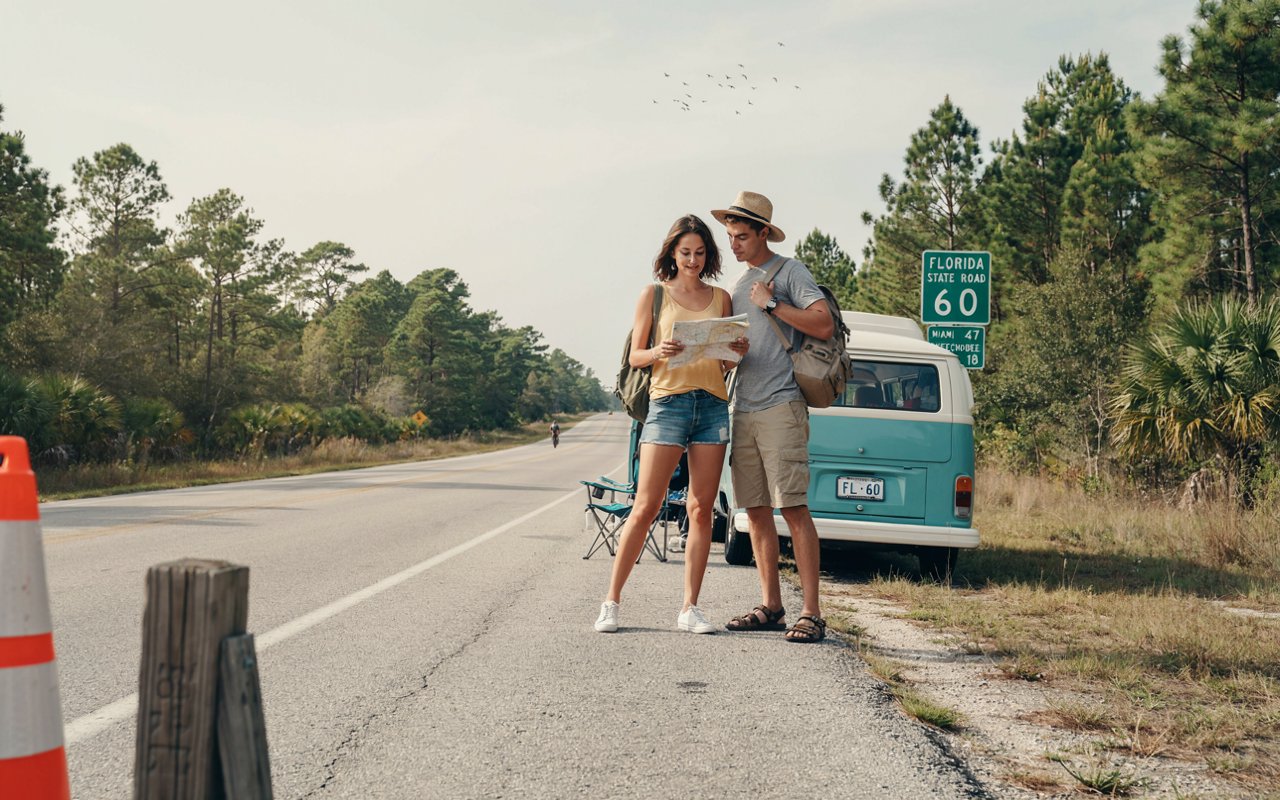
Image generated with Ai
Florida travel could enter a transformative new chapter as State Road 60 moves closer to becoming a scenic highway showcasing rural landscapes, small towns, agricultural communities and historic attractions often missed by traditional visitors. Stretching across Florida from Clearwater on the Gulf Coast to Vero Beach on the Atlantic Coast, the proposed Route 60 Scenic Highway concept aims to turn an everyday transport corridor into a destination experience. Initially focused on Polk County, the initiative highlights farms, conservation areas, heritage locations and local businesses while encouraging travellers to slow down and explore inland Florida. The project reflects a growing tourism trend where visitors increasingly seek authentic experiences beyond crowded attractions and famous coastal destinations.
State Road 60 is one of Florida’s most important east-west corridors, connecting communities across the centre of the state.
The proposed scenic highway designation aims to encourage travellers to view the journey itself as part of the tourism experience rather than simply a route between major destinations.
The idea follows the success of famous scenic routes across the United States where landscapes, communities and local experiences become attractions in their own right.
Advertisement
Advertisement
Instead of encouraging visitors to quickly move between Florida’s beaches, theme parks and major cities, the Route 60 concept focuses on highlighting the communities, landscapes and stories found along the corridor.
The proposed scenic highway would showcase agricultural landscapes, small-town heritage, historic locations, nature preserves, wildlife areas and locally owned businesses.
For Florida tourism, the initiative represents a shift towards experience-driven travel, where visitors increasingly search for meaningful connections, local culture and less crowded destinations.
State Road 60 stretches across the Florida peninsula, connecting the Gulf Coast and Atlantic Coast while passing through diverse landscapes.
Advertisement
Advertisement
The route moves through urban communities, agricultural areas, rural towns and natural environments, creating opportunities for a wide variety of tourism experiences.
The scenic highway proposal aims to encourage travellers to stop in communities that are often overlooked during traditional Florida road trips.
In Polk County, the corridor highlights communities including Lake Wales, Indian Lake Estates, Alturas, Bartow and Mulberry.
These destinations represent a different side of Florida tourism, away from theme parks and major beach resorts.
Visitors could discover historic towns, local farms, citrus groves, ranch landscapes, nature trails and cultural attractions.
The project aims to create a stronger identity for inland communities while encouraging visitors to spend more time exploring Florida beyond traditional tourism centres.
Agritourism is becoming an increasingly important part of rural tourism, allowing visitors to experience farming, food production and local traditions.
Florida’s agricultural landscape creates opportunities for travellers to explore farms, learn about food systems and connect with rural communities.
Route 60 passes through regions known for agriculture, including citrus operations, cattle ranches and farming communities.
The scenic highway concept could allow visitors to support agricultural businesses that traditionally receive less benefit from Florida’s large tourism economy.
Future agritourism experiences could include farm visits, local markets, food experiences, seasonal events and educational tours.
For travellers, these experiences provide a deeper connection with Florida’s culture and landscape, while for local businesses they create additional revenue opportunities beyond traditional farming.
Small towns along Route 60 could gain significant economic benefits if the scenic highway attracts more visitors.
Many rural communities across Florida have historically captured a smaller share of tourism spending because travellers often move quickly between major attractions.
A scenic highway strategy could encourage visitors to stop longer, explore local attractions and spend money with community businesses.
Potential benefits could include increased hotel stays, restaurant growth, new tourism businesses, local employment opportunities and stronger community visibility.
The initiative reflects a wider tourism movement where travellers are increasingly searching for authentic experiences rather than only visiting famous attractions.
Small towns can offer unique stories, traditions and landscapes that differentiate them from large resort destinations.
Florida’s interior offers diverse natural experiences that could become major attractions along the Route 60 corridor.
Visitors exploring the region could discover conservation areas, wildlife habitats, trails and outdoor recreation opportunities.
Nature tourism continues growing as travellers increasingly seek hiking, birdwatching, cycling and environmentally focused experiences.
The Route 60 corridor connects areas featuring forests, wetlands, wildlife, lakes, rural landscapes and conservation lands.
These experiences provide an alternative perspective on Florida beyond its famous beaches and theme parks.
Nature-based tourism can also encourage longer visitor stays because travellers often combine outdoor activities with local dining, shopping and cultural exploration.
Road trips remain one of America’s most popular travel styles, especially among families and domestic visitors.
Florida’s extensive highway network allows travellers to explore destinations beyond traditional tourism centres.
A scenic Route 60 could become a major road-trip attraction by encouraging visitors to slow down and experience communities between Florida’s two coasts.
The corridor offers an alternative experience compared with Florida’s heavily visited attractions.
Instead of focusing only on theme parks, large resorts and coastal destinations, travellers could discover rural landscapes, local communities and hidden attractions.
This aligns with changing traveller preferences as visitors increasingly seek meaningful journeys and memorable experiences.
Tourism is one of Florida’s largest economic sectors, supporting hotels, restaurants, attractions, transportation companies and local businesses.
While major destinations receive significant visitor spending, rural communities often capture a smaller share of tourism revenue.
The Route 60 Scenic Highway concept could help distribute tourism benefits more widely across the state.
By encouraging visitors to explore inland areas, the project could create opportunities for small businesses, farm operators, local attractions, heritage sites and outdoor recreation providers.
The initiative supports the idea that tourism growth depends not only on attracting visitors but also encouraging them to explore more communities.
Polk County is expected to play an important role in the early development of the Route 60 Scenic Highway concept.
The county combines agricultural heritage, historic communities and natural attractions, creating a strong foundation for rural tourism growth.
Communities along the corridor are working to highlight their unique identities and create stronger connections with visitors.
The region’s tourism appeal includes historic downtowns, farm landscapes, outdoor recreation, cultural experiences and local businesses.
For Polk County, the scenic highway could provide a new tourism identity beyond traditional perceptions of Central Florida.
If successfully developed, Route 60 could become a slower-paced alternative to Florida’s traditional travel routes.
Visitors could experience local stories, small-town communities, farm visits, natural attractions, heritage tourism and scenic landscapes.
The highway would encourage travellers to explore the communities that represent Florida’s historic and agricultural character.
Rather than simply passing through, visitors would have opportunities to connect with local people, businesses and landscapes.
The proposed Route 60 Scenic Highway reflects the future direction of Florida tourism, where authenticity, sustainability and local experiences are becoming increasingly important.
As travellers search for alternatives to crowded destinations, scenic routes and rural communities are gaining attention.
The project could transform State Road 60 into a tourism asset connecting Florida’s coasts while showcasing the state’s hidden interior.
With community involvement, investment and destination marketing, Route 60 has the potential to become one of Florida’s most memorable road-trip experiences.
Florida travel could experience a major transformation if State Road 60 becomes a recognised scenic highway connecting farms, small towns, conservation areas and historic communities across the state. The proposal offers travellers a new way to experience Florida beyond traditional beaches and theme parks by encouraging slower, more meaningful journeys through local communities. From agricultural landscapes and rural heritage to outdoor adventures and hidden attractions, Route 60 reflects the growing demand for authentic road-trip tourism. As travellers increasingly search for unique destinations and memorable experiences, the proposed scenic highway could become a powerful driver of rural tourism growth and economic opportunity throughout Florida.
Advertisement
Tags: Bartow, Clearwater, florida, Lake Wales, Mulberry
Advertisement
Advertisement













Monday, September 14, 2026

Monday, September 14, 2026

Monday, September 14, 2026

Monday, September 14, 2026

Monday, September 14, 2026

Sunday, September 13, 2026
Monday, September 14, 2026

Monday, September 14, 2026