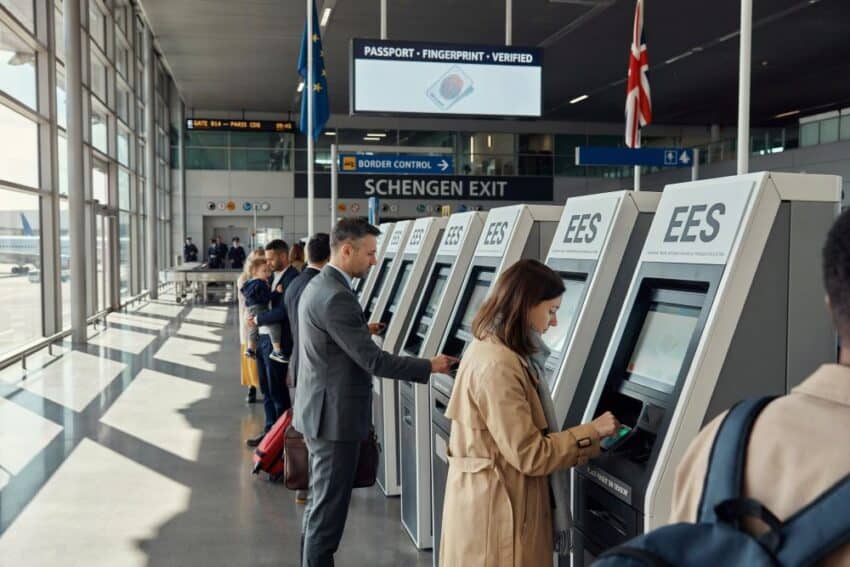
Europe is undergoing a major transformation in border management as the Entry/Exit System (EES) and the European Travel Information and Authorisation System (ETIAS) are fully operational in 2026. These measures aim to streamline immigration procedures, enhance security, and provide accurate monitoring of non-EU travelers entering the Schengen Area. While tourists from countries like Canada, the United States, China, India, and Australia face new digital registration and biometric checks, several member states have temporarily adjusted enforcement during peak travel seasons to protect tourism flows. Countries such as Spain, Germany, France, Italy, Portugal, and Greece are adopting flexible approaches to accommodate the surge in international visitors while maintaining compliance with EU regulations.
Advertisement
The Schengen Area includes 26 EU member countries along with Iceland, Liechtenstein, Norway, and Switzerland. Ireland and Cyprus remain outside the Schengen framework, and therefore, travel rules for these countries differ. Non-EU travelers are permitted a maximum stay of 90 days within any 180-day period, with strict penalties for overstays including fines, deportation, or future entry bans. The EES system automatically records biometric data facial images and fingerprints—upon entry to enforce accurate monitoring and prevent irregular stays. ETIAS requires travelers from third countries to obtain pre-travel authorization through official EU portals, ensuring eligibility and security before arrival. Travelers are strongly advised to rely solely on official government portals for ETIAS and EES applications to avoid fraudulent websites. Each country may implement temporary controls at internal borders for operational reasons or during high-demand periods, making it essential to check the latest guidance prior to departure.
Germany maintains visa-free entry for Canadian citizens and other eligible nationals for stays up to 90 days. Travelers staying longer must obtain a visa in advance from embassies or consulates. Temporary border controls can be applied even within Schengen, so visitors are advised to verify operational procedures prior to arrival. Spain has introduced flexible measures during peak seasons, temporarily suspending full biometric checks under the EES to reduce airport congestion. Visitors must carry valid passports, proof of onward travel, and sufficient financial means. Security is heightened around major events, requiring travelers to plan transit and access carefully. France applies the EES system to all non-EU short-stay visitors while exempting long-term visa holders. Authorities warn travelers to apply for ETIAS only through official portals and caution against third-party sites to avoid fraud. The French government emphasizes compliance with visa and biometric requirements to ensure smooth entry. Italy, Portugal, and Greece follow Schengen rules, requiring travelers to comply with EES registration and ETIAS authorization. During high-traffic periods, some countries have temporarily adjusted enforcement to protect tourism operations. Travelers should allow additional time at airports for biometric processing, especially at major hubs like Rome, Lisbon, and Athens. United Kingdom has implemented an Electronic Travel Authorisation (ETA) system effective from 25 February 2026, mandating travelers from 85 countries to pre-register digitally. This streamlined system allows easier border checks compared to multi-entry Schengen regulations. British tourists entering the Schengen Area are advised to register biometric information upon first arrival and to anticipate longer processing times at border kiosks.
While these entry systems enhance security, they have created operational challenges across European airports. Member states prioritize smooth tourism flows during peak travel seasons by temporarily relaxing enforcement of certain biometric checks. Countries like Spain and France have used flexible EES enforcement to maintain high visitor satisfaction while ensuring security standards are upheld. Airlines and immigration authorities are coordinating to pre-screen travelers and confirm documentation before departure, reducing congestion and delays upon arrival. For travelers, this means adhering to new digital protocols, carrying proper documentation, and planning additional time for airport check-ins and border processing. Pre-arrival ETIAS approvals and EES registration help prevent denied boarding or extended queues, especially during summer or around major events.
Advertisement
Advertisement
Visitors to Europe must ensure their passport is valid for at least three months beyond the planned departure date. It is recommended to maintain printed and digital copies of travel bookings, proof of accommodation, and return tickets. Travelers from countries requiring ETIAS authorization must complete the online application prior to arrival and comply with EES biometric procedures. Even visa-exempt travelers may be asked for proof of funds and travel intentions at border control. Careful preparation is critical for countries hosting major sporting events, cultural festivals, and peak-season tourism, including Spain, France, Italy, Portugal, and Greece. Medical insurance coverage is also essential, particularly for travelers to Schengen countries, as proof of travel or health insurance may be requested during immigration checks. Preparing for potential delays or temporary adjustments to border rules will help ensure a smoother travel experience in 2026.
These border changes have a significant effect on travel planning and tourism trends. Countries like Germany, France, Spain, Italy, and Portugal have seen a continued influx of high-spending tourists from North America, Asia, and Australia, despite new entry procedures. The ETA and EES systems also aim to streamline arrivals, enhancing efficiency for legitimate travelers while reducing risks associated with overstays or undocumented entry. Temporary relaxation of certain biometric checks during high-demand periods demonstrates Europe’s commitment to balancing security with tourism revenue. Airlines, in coordination with immigration authorities, have strengthened pre-departure verification, ensuring travelers meet all entry requirements. Travelers are advised to check official government websites frequently for updates on Schengen and non-Schengen countries, especially in dynamic conditions where temporary border adjustments may occur.
Europe in 2026 is marked by a balance between digital border security and visitor convenience. With EES and ETIAS fully operational, travelers experience enhanced safety while Schengen member states carefully manage tourism flows during peak periods. Travelers from key international markets including Canada, the United States, China, India, and Australia are adapting to these changes, preparing digital approvals, and allowing extra time at major airports to accommodate biometric processing. The result is a more structured, secure, and predictable travel experience, while countries continue to attract millions of visitors seeking cultural, historical, and leisure experiences across Europe.
Advertisement
Tags: chengen travel 2026, EES entry rules, ETIAS authorization, Europe visa requirements, Germany Spain France Italy Portugal Greece
Advertisement
Advertisement













Saturday, September 5, 2026

Friday, September 4, 2026

Saturday, September 5, 2026

Thursday, September 3, 2026

Wednesday, September 2, 2026

Saturday, September 5, 2026

Saturday, September 5, 2026