
Wildfire Emergency Escalates in Wyoming as Ponderosa Fire Triggers Level 2 Evacuations and Closes a Key Tourist Route, Disrupting Journeys Across the Black Hills Region – A Critical Travel Advisory for Holidaymakers

Published
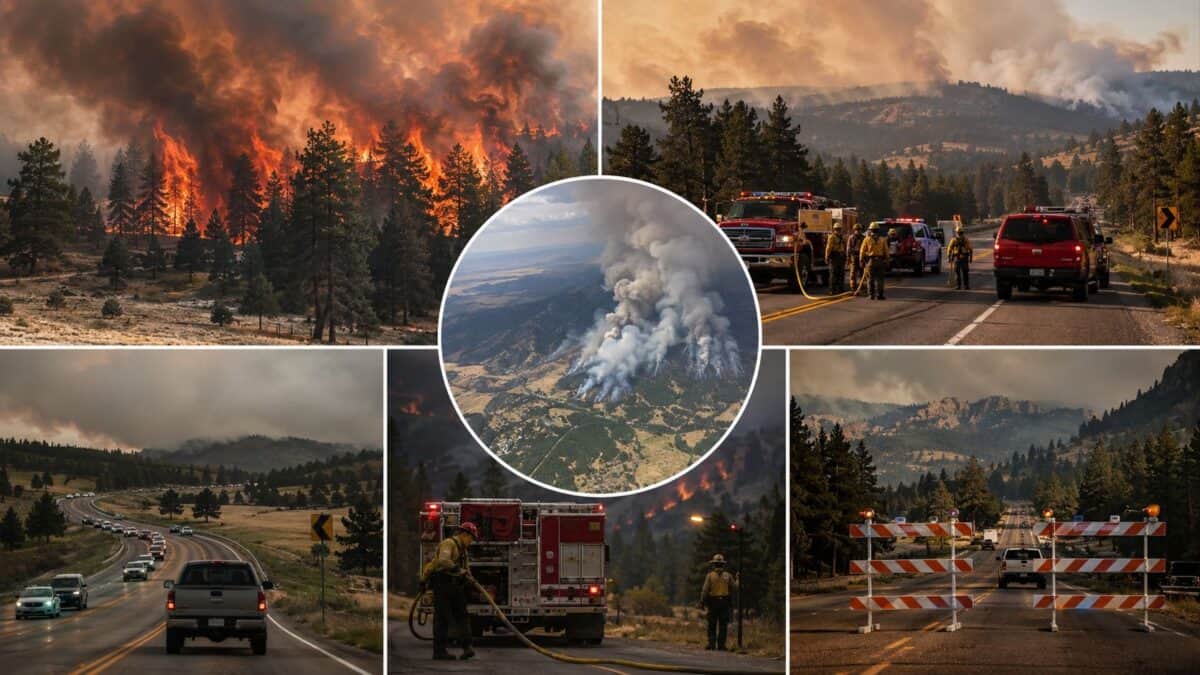
The Ponderosa Fire Wyoming has rapidly emerged as a significant travel and public safety concern in northeastern Wyoming after prompting Level 2 (“SET”) evacuation notices near Upton and forcing the closure of a section of US Highway 16, one of the region’s key scenic transport corridors. As firefighters battle a blaze that expanded to approximately 50 acres, emergency managers have urged motorists to avoid the affected area while authorities establish evacuation support facilities and deploy additional firefighting resources. The developing wildfire comes at the height of the summer travel season, when thousands of visitors use the highway to access destinations across the Black Hills, Devils Tower region, and western South Dakota. The combination of wildfire activity, road closures and heightened fire danger has immediate implications for leisure travellers, road-trippers, commercial transport and local tourism businesses.
Although the wildfire remains relatively modest in size compared with many major western US fires, its location makes it particularly disruptive. Emergency officials have elevated evacuation readiness around Oliver Road and Ponderosa Court, while US Highway 16 between Moorcroft and Upton has been closed because of active fire behaviour near mileposts 210 to 214. Authorities have simultaneously opened community support facilities for residents preparing to evacuate and requested that non-essential traffic stay away from the incident area. For travellers exploring Wyoming’s scenic byways, the incident demonstrates how even comparatively small wildfires can trigger extensive transport disruption, itinerary changes and broader tourism impacts during peak holiday periods.
Advertisement
Advertisement
Wildfire Quickly Becomes a Travel Disruption Across Northeastern Wyoming
Emergency management officials in Weston County upgraded evacuation readiness to Level 2 – SET, indicating residents should prepare to leave at short notice if fire conditions worsen.
The precautionary measure covers the vicinity of Oliver Road and Ponderosa Court, west of Upton, where firefighting crews continue working to contain the advancing fire.
Advertisement
Advertisement
Authorities also announced that the Upton Community Centre would serve as an emergency support location for residents requiring temporary assistance while preparations continue.
For travellers, however, the immediate impact has centred on transportation rather than evacuation.
Advertisement
Advertisement
The closure of US Highway 16 significantly affects one of northeastern Wyoming’s principal east-west travel corridors connecting Interstate 90 with communities across Weston County and the Black Hills region.
Emergency responders have warned motorists that active fire operations require unrestricted access for fire engines, bulldozers, water tenders and emergency vehicles, making unnecessary travel unsafe.
Advertisement
Advertisement
Current fire activity has been reported between mileposts 210 and 214, forcing highway restrictions until conditions improve.
Table: Confirmed Incident Overview
| Category | Current Information |
|---|---|
| Fire Name | Ponderosa Fire |
| Location | Near Upton, Weston County, Wyoming |
| Estimated Size | Approximately 50 acres |
| Evacuation Status | Level 2 (SET) |
| Affected Area | Oliver Road and Ponderosa Court |
| Highway Impact | US Highway 16 closure |
| Community Shelter | Upton Community Centre |
| Primary Concern | Fast-moving wildfire and road safety |
US Highway 16 Plays a Critical Role in Regional Tourism
While interstate highways often receive greater attention, US Highway 16 serves an equally important function for visitors exploring northeastern Wyoming.
The highway connects travellers with numerous tourism assets including rural communities, scenic grasslands, recreational areas and links towards the Black Hills.
Upton itself promotes its location along Wyoming’s Scenic Byway, positioning the community as a convenient stop for visitors travelling between Interstate 90, Devils Tower National Monument and western South Dakota. During summer months, the route experiences substantially higher recreational traffic from campers, caravans, motorcyclists and self-drive holidaymakers.
Advertisement
Advertisement
Unlike urban road closures where multiple alternatives exist, rural Wyoming highways often have limited diversion options.
Consequently, even a temporary closure can increase journey times considerably, affecting hotel arrivals, campground reservations, fuel planning and organised sightseeing itineraries.
For international visitors unfamiliar with western US geography, rerouting may involve travelling dozens of additional miles through sparsely populated areas where services remain limited.
Why a Fifty-Acre Fire Can Cause Major Travel Problems
To many travellers, 50 acres may appear relatively small compared with the hundreds of thousands of acres burned during major western wildfire seasons.
However, wildfire specialists evaluate incidents using far more than acreage alone.
Critical operational factors include:
Advertisement
Advertisement
| Operational Factor | Impact on Travellers |
|---|---|
| Fire proximity to highways | Immediate road closures |
| Wind direction | Rapid changes in travel conditions |
| Fuel type | Faster fire spread |
| Terrain | Difficult firefighter access |
| Smoke production | Reduced driving visibility |
| Evacuation requirements | Community access restrictions |
The Ponderosa Fire illustrates this principle.
Because flames developed adjacent to an important transport corridor, authorities prioritised public safety and firefighter access over maintaining vehicle movement.
This approach aligns with wildfire management practices used across western states, where even relatively limited fires can temporarily interrupt transport infrastructure until crews establish control lines.
Wyoming Faces Elevated Wildfire Pressure During the Summer Season
The incident also reflects broader wildfire conditions affecting Wyoming during late July.
According to the Wyoming State Forestry Division, much of the state is currently experiencing heightened wildfire risk, with widespread fire restrictions implemented across numerous counties.
Recent operational updates indicate thousands of lightning strikes have been recorded across Wyoming within short periods, increasing the likelihood of multiple wildfire ignitions.
Advertisement
Advertisement
Dry vegetation, seasonal heat and gusting winds continue creating conditions favourable for rapid fire spread.
These environmental factors help explain why emergency officials acted quickly despite the comparatively limited fire size.
Preventative evacuation notices and early highway closures reduce the likelihood of motorists becoming trapped if conditions deteriorate unexpectedly.
Table: Wyoming Wildfire Conditions Supporting Higher Risk
| Risk Indicator | Current Situation |
|---|---|
| Seasonal Period | Peak summer wildfire season |
| Fire Restrictions | Active across most Wyoming counties |
| Lightning Activity | Thousands of recent strikes reported |
| Vegetation | Dry summer fuels |
| Fire Behaviour Potential | Elevated |
| Travel Implication | Increased likelihood of temporary road closures |
What Travellers Should Know Before Driving Through Northeastern Wyoming
Visitors planning road journeys across northeastern Wyoming should recognise that wildfire conditions can change rapidly.
Unlike severe winter weather, wildfire closures may occur with relatively little advance notice because emergency managers must respond to changing wind direction, fire intensity and public safety requirements.
Before departing, motorists should verify highway conditions through official state transport services and monitor local emergency updates.
Advertisement
Advertisement
Those travelling between South Dakota, Devils Tower, Newcastle, Moorcroft and Upton should remain particularly alert while fire suppression continues.
Holidaymakers using motorhomes, towing caravans or travelling with recreational trailers should allow additional time for possible diversions, especially given the limited number of major east-west routes across the region.
Fuel availability should likewise be considered when detours become necessary.
Tourism Businesses Often Feel Immediate Economic Effects
Wildfire-related travel disruption extends beyond visitors.
Hotels, restaurants, fuel stations, convenience stores and local attractions frequently experience immediate changes in customer volumes following emergency highway closures.
Small gateway communities such as Upton depend substantially upon seasonal visitor spending generated by motorists exploring Wyoming’s scenic landscapes.
Advertisement
Advertisement
Although closures are typically temporary, even short interruptions during the peak tourism season can influence accommodation occupancy, restaurant traffic and visitor expenditure.
Businesses generally recover quickly once transport routes reopen, but uncertainty surrounding wildfire behaviour often prompts travellers to postpone journeys until conditions stabilise.
This pattern has become increasingly familiar across western North America as climate variability contributes to longer wildfire seasons and greater operational complexity for emergency managers.
Weston County’s Landscape Creates Both Tourism Opportunities and Fire Challenges
Weston County combines rolling grasslands with extensive ponderosa pine forests, creating landscapes that attract outdoor recreation while simultaneously increasing seasonal wildfire exposure.
County natural resource planning identifies more than 116,000 acres of forest, with ponderosa pine representing the dominant commercial tree species across the region.
These forests support wildlife habitat, recreation and tourism, yet they also provide continuous fuel capable of sustaining wildfire spread during prolonged dry periods.
Advertisement
Advertisement
For tourism authorities, balancing visitor access with environmental resilience has become increasingly important.
Roadside fire prevention campaigns, seasonal restrictions and public awareness initiatives now play a larger role in destination management throughout Wyoming than they did only a decade ago.
How Wildfire Disruptions Are Reshaping Road Travel Across the American West
The Ponderosa Fire Wyoming is part of a broader pattern that has become increasingly familiar across western North America, where wildfires are no longer viewed solely as environmental emergencies but also as major transportation and tourism challenges. Over the past decade, states including Wyoming, Montana, Colorado, Idaho, California and Oregon have experienced more frequent temporary road closures during the summer holiday season as prolonged drought, higher temperatures and changing weather patterns have extended wildfire activity.
For travellers, this evolving landscape means flexibility has become an essential part of itinerary planning. Scenic highways that once offered uninterrupted access to national parks, monuments and mountain communities can now experience temporary restrictions with little warning. Consequently, tourism authorities increasingly encourage visitors to build additional travel time into road trips, maintain flexible accommodation bookings where possible and monitor official transport updates before setting out.
According to the National Interagency Fire Center (NIFC), the United States regularly records tens of thousands of wildfires each year, with millions of acres affected depending on seasonal conditions. Although many incidents remain small and are quickly contained, those located near transportation corridors frequently have the greatest impact on travellers because public safety requires immediate traffic management.
Table: Wildfires and Their Common Impact on Tourism
| Travel Sector | Typical Wildfire Impact | Recovery Pattern |
|---|---|---|
| Road travel | Highway closures and detours | Usually resumes quickly after containment |
| Hotels | Short-term booking cancellations | Occupancy generally recovers within days |
| Campgrounds | Temporary closures | Reopen after safety inspections |
| National parks | Restricted access to selected areas | Phased reopening |
| Tour operators | Itinerary changes | Alternative routes introduced |
| Restaurants and local businesses | Reduced visitor traffic | Business returns as transport resumes |
Practical Guidance for Travellers Exploring Wyoming During Wildfire Season
Although emergency responders continue working to contain the Ponderosa Fire, the incident provides an important reminder for anyone travelling across Wyoming during the summer months.
Advertisement
Advertisement
Preparation begins well before departure. Travellers should routinely review official highway conditions, monitor wildfire alerts and ensure navigation systems can accommodate changing road conditions. Mobile signal coverage may also vary considerably across rural Wyoming, making it advisable to download offline maps before travelling through remote areas.
Visitors undertaking longer road journeys should avoid allowing fuel levels to fall too low. Detours in rural western states may add significant mileage between service stations, particularly outside larger towns.
Accommodation providers should likewise be informed if travellers expect delayed arrivals because wildfire-related traffic restrictions may extend journey times without much notice.
Drivers should also avoid stopping along active wildfire corridors to photograph smoke or firefighting operations. Such behaviour not only creates unnecessary congestion but can interfere with emergency response vehicles operating in challenging conditions.
Table: Recommended Traveller Preparations
| Before Departure | During the Journey | If Conditions Change |
|---|---|---|
| Check official road conditions | Follow all emergency signage | Leave immediately if instructed |
| Review wildfire updates | Avoid restricted areas | Use official diversion routes |
| Carry extra drinking water | Keep fuel tank well supplied | Contact accommodation regarding delays |
| Download offline navigation | Monitor local radio where available | Remain patient during traffic management |
| Charge mobile devices | Allow additional travel time | Follow instructions from emergency officials |
Emergency Preparedness Has Become an Essential Part of Destination Management
Across Wyoming and neighbouring states, destination managers increasingly integrate wildfire preparedness into tourism planning.
Rather than viewing emergency management and tourism as separate disciplines, many regional authorities now coordinate communication strategies that help visitors receive timely travel information while minimising disruption to local communities.
Advertisement
Advertisement
This approach reflects broader developments across the western United States, where tourism remains one of the principal economic drivers in many rural regions. Maintaining visitor confidence therefore depends not only on responding effectively to emergencies but also on providing accurate, transparent and timely travel advice.
For communities such as Upton, rapid communication regarding evacuation readiness, road closures and available support facilities helps reduce uncertainty for both residents and visitors.
At the same time, highway agencies, forestry officials and emergency management teams continue working together to restore normal travel conditions as quickly as operationally possible.
Lessons From Previous Western Wildfire Seasons
Although every wildfire develops under unique weather and landscape conditions, recent years have demonstrated that early intervention often limits broader disruption.
Across the American West, numerous highway closures associated with relatively modest fires have prevented motorists from entering hazardous areas while enabling firefighters to establish containment lines without interference from civilian traffic.
The Ponderosa Fire follows this established operational approach.
Advertisement
Advertisement
Rather than waiting for flames to threaten motorists directly, authorities acted proactively by restricting highway access and raising evacuation readiness before conditions became more severe.
Such measures may inconvenience travellers temporarily, yet they substantially reduce the likelihood of larger public safety incidents requiring complex rescue operations.
Historical wildfire management consistently demonstrates that early road closures, combined with timely evacuation notifications, remain among the most effective tools available to emergency managers during rapidly evolving incidents.
Table: Comparison With Typical Western Wildfire Response
| Response Measure | Ponderosa Fire | Standard Western Practice |
|---|---|---|
| Early evacuation readiness | Yes | Common |
| Highway closure | Yes | Common |
| Community assistance centre | Yes | Frequently implemented |
| Public travel advisory | Yes | Standard practice |
| Emergency vehicle priority access | Yes | Standard practice |
Why Accurate Travel Information Matters During Fast-Moving Emergencies
For both domestic and international visitors, access to reliable information has become almost as important as the physical transport network itself.
Modern travellers increasingly depend upon digital navigation platforms, accommodation applications and tourism websites throughout their journeys. However, emergency road closures are not always reflected immediately across commercial mapping services.
Consequently, official government information remains the most reliable source during rapidly changing situations.
Advertisement
Advertisement
State transport agencies, emergency management organisations and forestry departments receive operational updates directly from incident commanders, enabling them to publish verified travel information considerably faster than many third-party navigation platforms.
For travel businesses, maintaining links to official emergency information has likewise become an important component of customer service, particularly during peak holiday periods.
Balancing Tourism Growth With Public Safety
Wyoming welcomed millions of visitors in recent years, with iconic attractions including Yellowstone National Park, Grand Teton National Park, Devils Tower National Monument and the Black Hills region continuing to drive strong seasonal demand.
This popularity places increasing importance on maintaining resilient transportation networks capable of adapting quickly when natural hazards emerge.
The Ponderosa Fire demonstrates that protecting travellers sometimes requires short-term restrictions that ultimately support longer-term tourism resilience.
Although highway closures inevitably affect visitor movement, decisive emergency action enables firefighters to work safely while reducing the possibility of significantly larger disruptions later.
Advertisement
Advertisement
For tourism businesses, destination marketing organisations and transport authorities, such coordinated responses help reinforce traveller confidence by demonstrating that visitor safety remains the foremost operational priority.
As suppression efforts continue near Upton, authorities will closely monitor weather conditions, fire behaviour and containment progress before determining when travel restrictions can safely be lifted. Until then, motorists planning journeys through northeastern Wyoming should remain prepared for changing conditions, follow official instructions and allow additional flexibility within their travel schedules. The Ponderosa Fire Wyoming serves as a timely reminder that wildfire awareness has become an increasingly important element of responsible road travel across the American West.
Advertisement
