
Ottawa Along With Halifax and More in Supercharging Canada Domestic Tourism With Record Travel Demand in 2026

Published
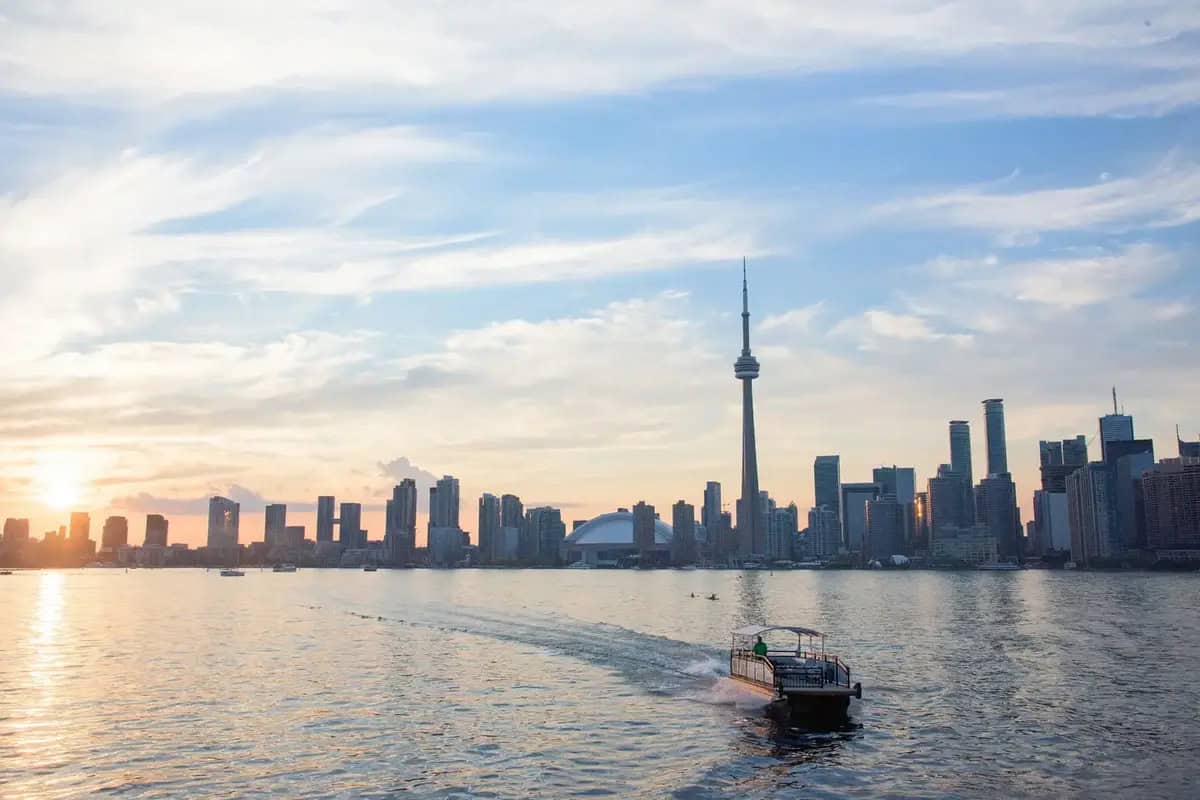
Ottawa along with Halifax and more destinations across Canada are supercharging Canada domestic tourism in 2026 as record travel demand, major events, festivals and growing interest in regional experiences encourage Canadians to explore their own country. Driven by strong local travel momentum, accommodation growth and event-led tourism, cities and regions including Ottawa, Halifax, Quebec, Nova Scotia and other destinations are attracting more domestic visitors, creating new opportunities for hotels, attractions, restaurants and communities while reshaping Canada’s travel landscape.
Canada’s domestic tourism market is showing remarkable resilience in 2026, with Canadians continuing to explore their own country while major sporting events, festivals and cultural celebrations generate fresh demand across provinces and territories.
Advertisement
Advertisement
The trend is not confined to Toronto, Vancouver or other traditional tourism heavyweights. Hotel data show strong performances in Nova Scotia, Newfoundland and Labrador, Quebec and New Brunswick, while accommodation data point to Canadians increasingly exploring destinations within their own provinces and travelling into smaller communities.
The underlying domestic market entered 2026 from a position of strength. More than 9.5 million domestic guest arrivals were recorded on Airbnb in Canada during 2025, representing more than 60% of trips on the platform and growth of more than 50% compared with 2019.
Advertisement
Advertisement
Domestic Tourism Is Becoming a Structural Part of Canadian Travel
The shift towards travelling within Canada is no longer simply a short-term reaction to disruption in international travel.
In 2025, Canadians recorded more than 9.5 million domestic guest arrivals on Airbnb, setting a platform record. Domestic travel represented more than 60% of trips booked through the platform in Canada.
Advertisement
Advertisement
That provides an important foundation for understanding 2026. Canadians already had a strong appetite for holidays closer to home before this year’s major events began stimulating additional demand.
The economic implications extend beyond accommodation. Domestic travellers spend money in restaurants, shops, attractions, transport businesses and small communities, allowing tourism revenue to circulate within provincial and local economies.
Advertisement
Advertisement
Ontario Benefits From Major Events and Canadians Staying Close to Home
Ontario entered this tourism cycle with one of the strongest domestic retention patterns in Canada.
Around 70% of domestic trips made by Ontario residents in the available accommodation-platform data remained within Ontario. That points to a substantial market for provincial city breaks, cottage stays, nature holidays and local events.
Ottawa provided a particularly strong example during summer 2026. Hotel room demand increased 3% from June through August compared with the previous year.
The city benefited from the Ottawa bicentennial programme and major events including RBC Bluesfest and IRONMAN Canada-Ottawa. Together, cultural celebrations and sporting events provided travellers with additional reasons to visit the capital and stay overnight.
Advertisement
Advertisement
Outaouais Records a 9.1% Surge in Overnight Stays
The Outaouais region of Quebec, directly across the Ottawa River from the Canadian capital, experienced an especially strong summer.
Overnight stays in registered accommodation increased 9.1% between May and July 2026.
Tourism-industry sentiment was also exceptionally positive. Around 87% of surveyed tourism operators reportedly characterised their summer season as good to exceptional.
The performance demonstrates how tourism growth generated around a major metropolitan area can spill across provincial boundaries. Visitors drawn towards the Ottawa-Gatineau region can support hotels, restaurants, attractions and outdoor tourism businesses on both sides of the river.
Quebec Turns Festivals Into Strong Hotel Performance
Quebec delivered one of the clearest examples of events translating into measurable tourism performance.
In July 2026, Quebec hotel occupancy increased 7.8% to 81.7%. Revenue per available room climbed 17.1% to CAD213.11.
Advertisement
Advertisement
Montreal performed even more strongly. Occupancy increased 11.8% to 84.5%, average daily rate rose 10.7% to CAD268.71, and RevPAR jumped 23.7% to CAD227.11.
Major festivals, conferences and cultural events helped generate demand. This demonstrates the economic power of event-led tourism, where accommodation growth can be accompanied by spending across restaurants, nightlife, transport, retail and attractions.
Quebec Travellers Are Also Exploring Their Own Province
Quebec benefits not only from visitors arriving from elsewhere but also from a substantial internal tourism market.
Around 62% of domestic travel undertaken by Quebec residents in the available accommodation-platform data remained within Quebec.
That creates a powerful built-in customer base for destinations outside Montreal and Quebec City.
Local tourism can support rural communities, nature destinations, food tourism, winter resorts and smaller cultural centres. It also means provincial tourism does not depend entirely on international travellers or Canadians arriving from other provinces.
Advertisement
Advertisement
Nova Scotia Turns Major Events Into Higher Hotel Revenue
Nova Scotia has emerged as one of the most striking hotel-performance stories of 2026.
During June, the province recorded a 15.7% year-on-year increase in average daily rate, taking ADR to CAD270.46. Revenue per available room climbed an even stronger 20.2% to CAD228.22.
The 2026 Canada Sail Grand Prix in Halifax was among the major events supporting demand.
Momentum continued into July. Nova Scotia recorded a 12.1% increase in average daily rates, reaching CAD272.46. A busy events calendar helped maintain tourism activity beyond a single major weekend.
The results show how sporting events, festivals and cultural programming can work together to extend visitor demand.
Newfoundland and Labrador Turns Nature and Festivals Into Tourism Growth
Newfoundland and Labrador also delivered strong accommodation performance.
Advertisement
Advertisement
In June 2026, hotel occupancy increased 4.6% to 86.4%. Average daily rate increased 13.8% to CAD235.68, while RevPAR surged 19.0% to CAD203.61.
The Iceberg Festival provided another reason for visitors to travel during the period.
The results illustrate an important part of Canada’s domestic tourism story. Travellers are increasingly willing to build holidays around distinctive regional experiences rather than concentrating exclusively on major cities.
Icebergs, coastal landscapes, wildlife, small communities and local festivals give Newfoundland and Labrador experiences that cannot easily be replicated elsewhere.
New Brunswick Gains From Festival-Led Tourism
New Brunswick joined the Atlantic Canadian momentum during July 2026.
The province recorded an 11.2% increase in average daily hotel rates, reaching CAD200.55. RevPAR increased 13.0% to CAD167.88.
Advertisement
Advertisement
Events such as the Shediac Lobster Festival helped create additional reasons to travel.
These figures reinforce the importance of Atlantic Canada’s festival economy. Food, coastal culture, local traditions and community events can turn smaller destinations into seasonal tourism hotspots while spreading visitor spending into local businesses.
Atlantic Canada Emerges as a Domestic Tourism Growth Leader
The strength of Nova Scotia, Newfoundland and Labrador and New Brunswick is part of a broader regional pattern.
Atlantic Canada entered 2026 with strong domestic travel momentum after leading the country in domestic guest-arrival growth during 2025.
That matters because the region has increasingly established itself as more than a secondary tourism market.
Road trips, coastal landscapes, seafood, cultural festivals, small communities and nature-based experiences provide Canadians with alternatives to conventional urban holidays.
Advertisement
Advertisement
For tourism businesses, stronger domestic recognition can also extend demand beyond international visitor peaks.
British Columbia Keeps Travellers Inside the Province
British Columbia demonstrates another powerful domestic tourism dynamic: provincial retention.
Around 70% of domestic travel undertaken by British Columbians in the available accommodation-platform data remained inside British Columbia.
Few Canadian provinces can offer such variety without travellers crossing a provincial border. Vancouver provides urban tourism, Whistler offers mountain recreation, Vancouver Island supports coastal travel, while the Okanagan provides lakes, food and wine experiences.
The FIFA World Cup also provided a major tourism stimulus to Vancouver in 2026, bringing additional accommodation demand and international attention while creating opportunities for visitors to explore destinations elsewhere in British Columbia.
Alberta Combines Domestic Loyalty With Western Growth
Alberta retained around 51% of its residents’ domestic accommodation-platform travel within the province, while also entering 2026 with some of Western Canada’s strongest domestic visitor momentum.
Advertisement
Advertisement
Its tourism proposition is unusually diverse.
Banff and Jasper provide globally recognised mountain landscapes, while Calgary and Edmonton support urban, event and business tourism. Smaller destinations add road-trip, outdoor and rural experiences.
This mix makes Alberta well positioned for travellers seeking shorter domestic breaks as well as longer journeys through the Canadian Rockies.
Northwest Territories Signals Growing Demand for Remote Canada
One of the most interesting domestic travel developments is occurring far from Canada’s largest tourism centres.
The Northwest Territories recorded the strongest percentage increase in domestic guest arrivals among individual Canadian destinations in the available accommodation-platform data.
That does not mean the territory attracts the largest number of travellers. Its visitor base remains much smaller than Ontario, Quebec or British Columbia.
Advertisement
Advertisement
However, rapid percentage growth suggests increasing interest in remote experiences.
Northern lights, wilderness, Indigenous tourism and adventure travel provide Canadians with opportunities to experience dramatically different landscapes without leaving the country.
Canadian Hotels Show Tourism Growth Is Not Completely Uniform
The national picture requires some caution.
Canada’s hotel occupancy stood at 73.0% in June 2026, down 3.5% year on year. However, average daily rate increased 5.4% to CAD252.63, while RevPAR still rose 1.6% to CAD184.33.
July produced a stronger result.
National hotel occupancy reached 78.9%, increasing 1.6% year on year. ADR rose 7.2% to CAD267.44, while RevPAR jumped 9.0% to CAD211.01.
Advertisement
Advertisement
The contrast between June and July demonstrates why Canada’s tourism performance should not be described as uniformly booming. Events, destination mix, pricing and timing are producing substantial differences between provinces and individual cities.
FIFA World Cup Creates a Tourism Ripple Beyond Toronto and Vancouver
The 2026 FIFA World Cup added another dimension to Canada’s tourism year.
Toronto and Vancouver experienced additional accommodation and visitor demand during the tournament, while some travellers used their World Cup journey as an opportunity to explore other Canadian destinations.
Around 1 in 5 guests booking tournament-period accommodation in Toronto or Vancouver also booked another stay elsewhere in Canada, according to accommodation-platform data.
That demonstrates how a mega-event can function as a national tourism gateway rather than benefiting only the city hosting the matches.
Canadians Are Looking Beyond Famous Tourism Centres
Another emerging pattern is hyperlocal travel.
Advertisement
Advertisement
Bookings across 10 trending Canadian neighbourhoods increased by nearly 180% year on year in the available platform data during 2026.
A typical guest was also estimated to spend more than CAD300 per day, with approximately 50% of that spending occurring within the neighbourhood where the visitor stayed.
That has important implications for domestic tourism.
When travellers stay outside conventional hotel districts, visitor expenditure can reach neighbourhood restaurants, independent shops, cafés and attractions that previously captured a smaller proportion of tourism spending.
Canada’s Domestic Tourism Boom Is Becoming More Than a Staycation Story
The evidence from 2026 points towards a deeper change in Canadian travel behaviour.
Canadians are not simply staying home instead of travelling abroad. They are increasingly treating their own provinces and neighbouring regions as destinations in their own right.
Advertisement
Advertisement
Major events are accelerating the trend. Festivals have strengthened Quebec and Atlantic Canada. The FIFA World Cup boosted Toronto and Vancouver while creating opportunities for wider travel. Nature and wilderness tourism are supporting Newfoundland and Labrador and the Northwest Territories.
Meanwhile, strong provincial retention means Ontario, British Columbia, Quebec and Alberta have substantial pools of residents willing to spend tourism dollars closer to home.
For Canada’s visitor economy, that diversification could prove especially valuable. International tourism remains critical, but a strong domestic market provides hotels, restaurants, attractions, transport operators and smaller communities with another important source of demand.
The result is a Canadian tourism landscape in 2026 where opportunities are increasingly spreading beyond the country’s most famous attractions — from Atlantic festivals and Quebec communities to Alberta’s mountains, British Columbia’s local escapes and the remote wilderness of northern Canada.
Ottawa along with Halifax and more destinations are supercharging Canada domestic tourism in 2026 as record travel demand, major events, festivals and strong regional experiences encourage Canadians to explore their own country and boost local economies.
In conclusion, Ottawa along with Halifax and more destinations are supercharging Canada domestic tourism in 2026 as record travel demand, major events, festivals and unique regional experiences continue to encourage Canadians to travel within their own country. The strong performance of cities, provinces and smaller communities highlights how domestic tourism is expanding beyond traditional gateways, creating fresh opportunities for hotels, attractions, restaurants and local economies while strengthening Canada’s travel sector.
Advertisement
