

Dunning Has No Train Station But Its Wild Iron Age Secrets And Hidden Roman Camps Are Sparking A Major Global Revolution For Slow Travel In Scotland

Published
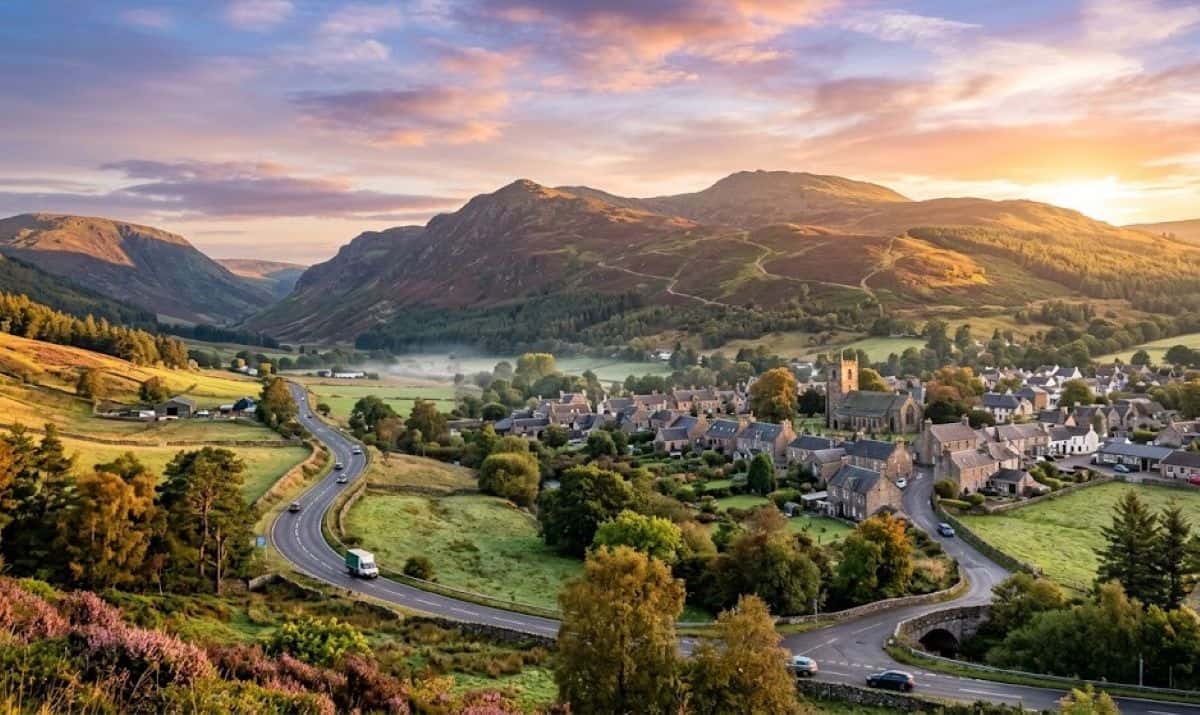
The contemporary tourism landscape increasingly prioritizes authentic, off-the-beaten-path locations over congested urban hubs. Dunning, a remote Scottish village with no train station and a remarkable history stretching back to the Iron Age, perfectly fulfills this demand. Consequently, this unique destination is reshaping how global travel operators design regional itineraries. International adventurers now seek out immersive, long-stay options that favor quiet historical preservation over commercialized attractions. By redirecting visitor traffic away from oversaturated hotspots, such ancient settlements distribute economic benefits more evenly across regional economies. This shift fosters long-term sustainability within the global travel sector. Furthermore, the absence of modern transit infrastructure acts as a protective shield, preserving local heritage while offering an educational template for slow tourism worldwide.
Travelers from across the globe find themselves deeply drawn to destinations that offer an untamed connection to antiquity. The preservation of such secluded locales ensures that future generations can interact directly with untouched landscapes. Ultimately, this specific brand of historic tourism creates a highly resilient market segment that thrives on cultural curiosity and environmental stewardship.
Navigating the Scars of Medieval Devastation and the Protective Shield of Modern Structural Isolation
Historical documentation reveals that Dunning faced near-total annihilation during the early eighteenth century. Specifically, in the year 1716, retreating Jacobite military forces deliberately set fire to the entire settlement. This drastic tactical maneuver aimed to deny essential winter shelter or tactical headway to advancing enemy battalions. Following this catastrophic event, only the resilient stone tower of St. Serf’s Church remained standing amidst the ash. Over the subsequent decades, resilient local communities meticulously rebuilt their homes, slowly reshaping the layout of the settlement into the architectural form that visitors can observe today.
Advertisement
Advertisement
During the nineteenth and twentieth centuries, monumental advancements in transportation infrastructure permanently altered the surrounding geography of Perth and Kinross. Major regional railway networks expanded rapidly, and engineers later constructed the prominent A9 dual carriageway to link major Scottish hubs. However, these modern transit corridors completely bypassed Dunning, leaving it entirely without a dedicated train station. Rather than causing economic decline, this physical isolation inadvertently acted as a brilliant preservation mechanism. It successfully locked the village inside a quiet, authentic historical capsule that remains completely insulated from the destructive pressures of mass modernization.
Deciphering the Enigmatic Cultural Mysteries and Spooky Monuments of a Forgotten Time
Advertisement
Advertisement
On the immediate outskirts of this historic settlement, an eerie architectural enigma continues to fascinate researchers and folklore enthusiasts alike. Travelers will encounter a distinct, weather-worn stone cairn that is prominently topped by a traditional Christian cross. The structure features a chilling, hand-painted inscription in stark white lettering declaring that Maggie Wall was burnt there in 1657 as a witch. This evocative site stands as a solemn monument to the dark eras of historical witch trials, capturing the imaginations of global dark tourism enthusiasts.
Despite the fame of the monument, extensive archival searches have failed to produce any official civil or ecclesiastical records proving that a woman named Maggie Wall ever existed. This profound historical void transforms the monument into an enduring cultural mystery that continues to baffle historians. Intriguingly, the site remains an active cultural touchpoint, as anonymous visitors consistently place fresh flowers and small tokens at the base of the cross to this day. This ongoing phenomenon illustrates how ancient folk legends can actively drive modern heritage tourism and inspire profound communal reverence across centuries.
Advertisement
Advertisement
Tracing the Footsteps of Pictish Royalty and the Enduring Legacy of Ancient Legends
During the sixth century, this specific territory served as a primary seat of administrative and spiritual power within the ancient kingdom of Pictland. Local folklore dictates that a revered Christian missionary known as Saint Serf arrived in the region to spread early religious doctrines. According to enduring mythical accounts, the saint heroically saved the terrified inhabitants of the village by tracking down and slaying a ferocious dragon that had been terrorizing the local countryside. This legendary battle established the settlement as a vital sanctuary of early Christian folklore, deeply intertwining spiritual devotion with the physical landscape.
Today, the architectural crown jewel of the area is the historic St. Serf’s Church, which safely houses one of the most significant archaeological treasures in Western Europe. Visitors can view the magnificent Dupplin Cross, a rare, three-meter-tall monolithic sandstone masterpiece sculpted around AD 800. This breathtaking Pictish monument features highly intricate figurative carvings dedicated explicitly to Constantine, King of the Picts. It provides global travelers and academics with an unparalleled window into the sophisticated artistry, complex socio-political hierarchies, and early medieval heritage of sovereign Scotland.
Unearthing the Deep Roots of Human Civilisation from the Dawn of the Iron Age to Rome
Advertisement
Advertisement
Long before the arrival of medieval kings, human communities were thriving continuously along the fertile plains of Perth and Kinross. Comprehensive archaeological excavations have uncovered wealths of prehistoric evidence, including ancient tools, pottery fragments, and structural foundations. These invaluable discoveries confirm that continuous human habitation across this landscape stretches back over 5,000 years. The surrounding terrain serves as a vast, open-air archive containing physical remnants that bridge the Neolithic, Bronze, and Iron Ages.
The historical significance of the region escalated dramatically during the classical era when the imperial Roman army marched into northern Britain. Directly adjacent to the borders of the modern village lies the hidden footprint of an astronomical, 115-acre Roman marching camp. Military engineers constructed this massive fortified base around AD 83 during the aggressive northern campaigns led by General Julius Agricola.
Charting a New Frontier: How Pristine History Is Navigating the Future of Global Exploration
Ultimately, the captivating narrative of Dunning serves as a monumental wake-up call for the international vacation sector. By stepping away from synthetic, neon-lit tourist traps, contemporary travelers are actively redefining luxury as a quiet rendezvous with untouched antiquity. This rustic Scottish sanctuary demonstrates that the absolute absence of standard, high-speed transit infrastructure is not a geographic weakness; rather, it is a destination’s greatest crown jewel. As global foot traffic continues to shift toward meaningful, slow-paced exploration, secluded settlements across Perth and Kinross offer an invaluable blueprint for economic balance and cultural preservation worldwide.
For the modern voyager, walking the historic boundaries of an ancient Roman marching camp or deciphering the cryptic folklore of Maggie Wall provides an irreplaceable, raw connection to human civilization. These timeless encounters build a deeply resilient, highly sustainable market segment rooted in intellectual curiosity and environmental stewardship. As the global hospitality landscape continues to evolve, off-the-grid treasures like this one will cease to be hidden anomalies. Instead, they are swiftly becoming the definitive anchor points for a completely humanized, authentic era of worldwide exploration.
Advertisement
