

Yosemite Teams Up With Kings Canyon and More California National Parks in Seeing Visitor Surge Despite Fee Increases in 2026

Published
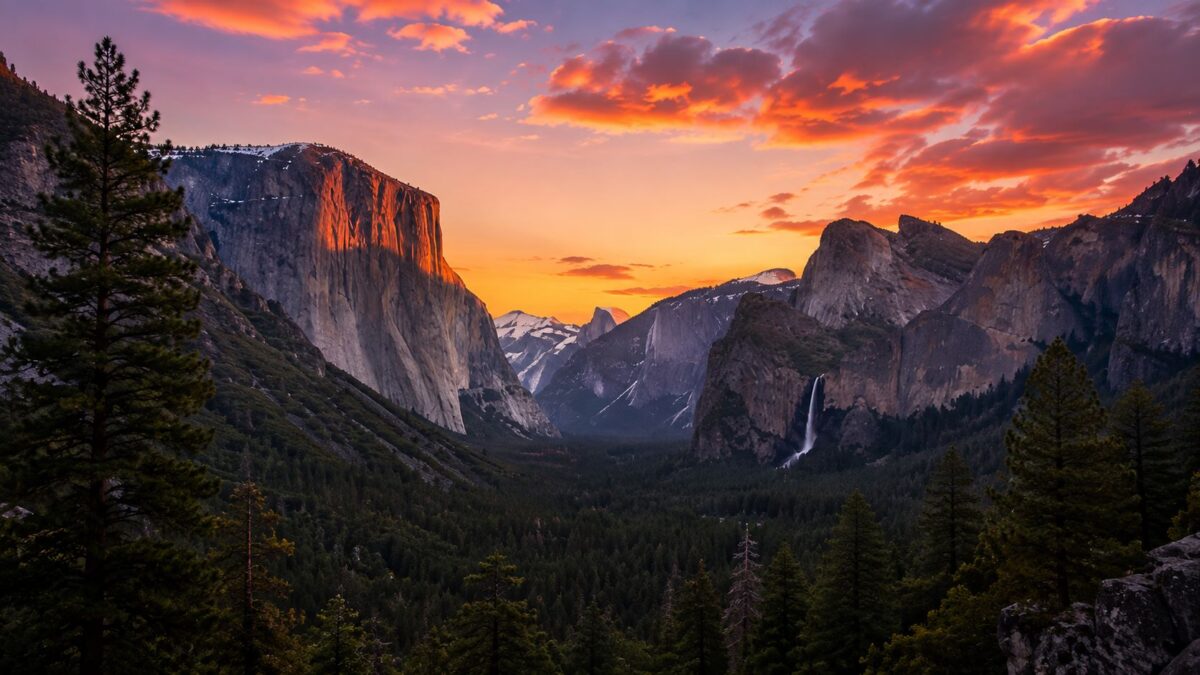
Yosemite teams up with Kings Canyon and more California national parks in seeing a visitor surge despite fee increases in 2026, as iconic landscapes, strong domestic road-trip demand, unique natural experiences and multi-park itineraries continue attracting travellers. The three parks recorded higher visits, showing resilient tourism interest despite rising travel costs.
Yosemite National Park: Nearly 1.92 Million Visits Put California Icon Out Front
Yosemite National Park recorded the strongest increase among the three California parks in the supplied dataset, reaching 1,923,948 visits in 2026 YTD, compared with approximately 1.748 million during the comparable 2025 period. That represents an estimated increase of around 176,000 visits, or roughly 10.1%. Yosemite’s extraordinary brand recognition helps explain its resilience. Yosemite Valley, Half Dome, El Capitan, waterfalls, hiking and spectacular Sierra Nevada scenery make the park a bucket-list destination for domestic and international travellers. Strong road-trip demand and California’s enormous resident population provide additional support. Even when travellers face higher trip costs or changing fee structures, Yosemite’s iconic status can keep demand comparatively resilient.
Sequoia National Park: Giant Trees Keep Visitors Coming Despite Higher Travel Costs
Sequoia National Park also moved higher in 2026, with visitation reaching 588,504, compared with 571,732 during the equivalent 2025 period. That represents 16,772 additional visits and growth of approximately 2.9%. The park has a powerful competitive advantage: visitors come specifically to experience some of the world’s largest trees, including the famous General Sherman Tree, alongside Sierra Nevada scenery, hiking and wildlife. Its proximity to Kings Canyon also allows travellers to combine two national parks within one journey, improving the value of a California road trip. The relatively moderate but positive increase suggests Sequoia retained demand despite broader pressures on travel budgets, demonstrating how distinctive natural attractions can continue drawing visitors even during a more challenging tourism environment.
Kings Canyon National Park: Smaller Increase Shows Regional Road Trips Remain Resilient
Kings Canyon National Park recorded more modest growth but still remained on the positive side of the tourism ledger. Visits increased from 321,652 in 2025 YTD to 325,338 in 2026, producing an additional 3,686 visits and approximately 1.1% growth. Kings Canyon benefits considerably from its relationship with neighbouring Sequoia National Park. Travellers can experience giant sequoia groves, deep canyons, mountain scenery, hiking trails and wilderness within a wider Sierra Nevada itinerary rather than making a completely separate journey. That multi-park appeal can make the destination attractive to road-trip travellers seeking more experiences from a single holiday. The increase is relatively small, but remaining in growth territory is noteworthy when other National Park Service destinations are experiencing softer visitation.
Advertisement
Advertisement
Three California Parks Add Nearly 196,000 Visits
Taken together, Yosemite, Sequoia and Kings Canyon produced a much stronger result than any one park’s performance might initially suggest. Combined visitation increased from approximately 2.641 million in 2025 YTD to 2.838 million in 2026 YTD, representing an estimated gain of around 196,000 visits, or approximately 7.4%. Yosemite generated the overwhelming majority of that increase, but all three parks remained in positive territory. Their performance highlights the continuing strength of California’s Sierra Nevada tourism corridor. Travellers can combine several internationally recognised landscapes within a road trip, while California’s large domestic population creates an enormous drive-market audience. This combination of iconic attractions, accessibility and multi-park itineraries can provide resilience when tourism demand elsewhere begins to soften.
| California National Park | 2025 YTD Visits | 2026 YTD Visits | Visitor Gain | Approx. Growth |
|---|---|---|---|---|
| Yosemite | ~1,748,000 | 1,923,948 | ~+175,948 | ~+10.1% |
| Sequoia | 571,732 | 588,504 | +16,772 | +2.9% |
| Kings Canyon | 321,652 | 325,338 | +3,686 | +1.1% |
| Combined | ~2,641,384 | 2,837,790 | ~+196,406 | ~+7.4% |
Why These California Parks Can Grow When Other Parks Are Losing Visitors
The strongest explanation is destination strength rather than one single factor. Yosemite has worldwide recognition that can make it a priority even when travellers reduce the number of trips they take. Sequoia offers an experience travellers cannot easily reproduce elsewhere, while Kings Canyon benefits from being naturally paired with Sequoia. California also provides an enormous domestic drive market, allowing residents to visit without purchasing expensive long-haul flights. Road trips can combine national parks with destinations such as the Sierra Nevada, Central Valley and other California attractions. These characteristics can help the parks outperform destinations that depend more heavily on long-distance travel, narrower seasonal windows or a smaller local visitor base.
Advertisement
Advertisement
Fee Changes Need Careful Treatment
The visitation growth is especially interesting against the backdrop of changes to National Park Service fees, but the fee angle should be described precisely. A surcharge does not necessarily affect every visitor equally, and entrance fees represent only one component of the total cost of a national park holiday. Accommodation, petrol, rental cars, food and transportation can cost considerably more than park admission. Travellers who have already committed significant money and time to reaching Yosemite or the Sierra Nevada may therefore be relatively insensitive to a modest change in entrance costs. Annual passes and other qualifying passes can also alter what individual visitors ultimately pay. The positive visitation figures suggest that, for these three parks, demand remained resilient despite a more expensive travel environment.
Iconic Experiences Can Override Price Sensitivity
National parks are unusual tourism products because travellers cannot simply find an identical alternative nearby. There is only one Yosemite Valley, and the giant sequoias of California provide an experience with exceptional natural and emotional appeal. That uniqueness can reduce price sensitivity. A traveller planning a once-in-a-lifetime California holiday may be less likely to cancel Yosemite because of an entrance-fee increase than to abandon an attraction that has many substitutes. The same principle can help Sequoia and Kings Canyon. Once visitors reach the Sierra Nevada, combining several parks can also spread transportation costs across multiple experiences. This makes the overall itinerary potentially more attractive even when individual elements of the holiday become more expensive.
Advertisement
Advertisement
Growth Does Not Mean Every California National Park Is Booming
There is an important limitation to the comparison. These figures cover Yosemite, Sequoia and Kings Canyon, not every national park in California. California also contains Joshua Tree, Death Valley, Redwood, Lassen Volcanic, Pinnacles and Channel Islands national parks. Therefore, the combined 7.4% increase should be described as growth across the three parks in the supplied dataset, rather than evidence that every California national park is experiencing a visitor boom. Similarly, a wider claim that a majority of US national parks are declining requires a complete comparable National Park Service dataset before it can be stated as fact. The strongest defensible conclusion is that these three California parks are outperforming several parks experiencing weaker visitation in 2026.
California’s Sierra Nevada Parks Show Tourism Resilience in 2026
The numbers ultimately point towards a pocket of resilience within US national park tourism. Yosemite’s approximately 10.1% increase dominates the story, while Sequoia’s 2.9% and Kings Canyon’s 1.1% gains show that the wider Sierra Nevada park circuit is also holding visitor interest. Combined, the three destinations added roughly 196,000 visits compared with the equivalent 2025 period. Iconic landscapes, California’s huge domestic market, road-trip accessibility, multi-park itineraries and experiences unavailable elsewhere provide plausible reasons for that strength. The growth does not prove travellers are unaffected by higher costs. Instead, it suggests that when an attraction is sufficiently distinctive, visitors may continue prioritising the experience even when the overall cost of travelling becomes more challenging.
US National Parks Show a Divided Tourism Picture in 2026
US national park tourism is showing a sharply divided picture in 2026, with some of America’s most famous parks losing visitors while others are recording notable growth. In the supplied YTD data, Grand Canyon recorded the steepest decline, falling 5.5% from 2,173,906 visits in 2025 to 2,053,555 in 2026, a loss of 120,351 visits. Everglades followed with a 5.3% decline, while Bryce Canyon fell 2.6%. Acadia, Glacier and Yellowstone also moved lower. In contrast, Yosemite emerged as the strongest performer, rising roughly 10% to 1,923,948 visits. Grand Teton increased 3.7%, Sequoia 2.9%, Rocky Mountain 2.7% and Kings Canyon 1.1%, highlighting significant differences in visitor demand across America’s major parks.
US National Park Visitation — 2025 vs 2026 YTD
| National Park | State | 2025 YTD Visits | 2026 YTD Visits | Visitor Change | Approx. Change | 2026 Trend |
|---|---|---|---|---|---|---|
| Grand Canyon | Arizona | 2,173,906 | 2,053,555 | −120,351 | −5.5% | Sharp decline |
| Everglades | Florida | 481,991 | 456,240 | −25,751 | −5.3% | Sharp decline |
| Bryce Canyon | Utah | 883,115 | 860,054 | −23,061 | −2.6% | Decline |
| Acadia | Maine | 1,896,341* | 1,870,707* | −25,634 | −1.4% | Decline |
| Glacier | Montana | 923,014 | 915,937 | −7,077 | −0.8% | Slight decline |
| Yellowstone | Wyoming, Montana, Idaho | 1,690,922 | 1,676,678 | −14,244 | −0.8% | Slight decline |
| Kings Canyon | California | 321,652 | 325,338 | +3,686 | +1.1% | Increase |
| Rocky Mountain | Colorado | 1,472,507 | 1,512,641 | +40,134 | +2.7% | Increase |
| Sequoia | California | 571,732 | 588,504 | +16,772 | +2.9% | Increase |
| Grand Teton | Wyoming | 1,268,597 | 1,314,916 | +46,319 | +3.7% | Strong increase |
| Yosemite | California | ~1.748m | 1,923,948 | ~+175,000 | ~+10% | Strongest increase |
Acadia figures retain the qualification attached to the supplied dataset. Yosemite’s 2025 figure, visitor gain and percentage change are approximate.
Advertisement
Advertisement
The contrast is striking. The six declining parks collectively lost around 216,000 visits, with Grand Canyon alone accounting for more than half of that reduction. Meanwhile, the five growing parks added approximately 282,000 visits, largely because of Yosemite’s exceptional increase. This suggests that national park demand in 2026 is not moving uniformly downward. Visitor behaviour appears to be shifting between destinations, with accessibility, weather, road conditions, reservation systems, accommodation costs, park-specific conditions and the strength of individual road-trip routes potentially influencing performance. The figures also show California performing particularly strongly in this sample, as Yosemite, Sequoia and Kings Canyon all recorded increases while several other iconic US parks moved in the opposite direction.
Yosemite teams up with Kings Canyon and more California national parks in seeing visitor surge despite fee increases in 2026, driven by iconic landscapes, strong road-trip demand, unique experiences and multi-park travel appeal that continue attracting visitors despite higher holiday costs.
In conclusion, Yosemite teams up with Kings Canyon and more California national parks in seeing visitor surge despite fee increases in 2026, as world-famous landscapes, strong domestic travel demand, road-trip accessibility and unique outdoor experiences continue attracting travellers. Yosemite’s growth, supported by positive performance from Sequoia and Kings Canyon, highlights how iconic destinations can maintain visitor momentum even when travel costs rise. The combined strength of these California national parks shows that distinctive natural attractions, multi-park itineraries and strong regional connectivity remain powerful drivers of tourism growth in 2026.
Advertisement
